The fact that Lake Okeechobee, the St Lucie River, and other water bodies of our state are in such poor condition puts the state of Florida “between a rock and a hard place.” After all, for centuries just saying the word “Florida” conjured up visions paradise…
Early rendition of the Everglades area including the rivers of the SLR/IRL. (Thurlow Collection.)Cyanobacteria, that often becomes “toxic algae,” is bad for business. In fact, perhaps nothing is worse for business. It is also bad for people’s health. Hmm? How does the state report toxic algae and fulfill their responsibility for safety without scaring people away? And without hurting business?
The answer is of course that “you really can’t…” But you can be honest and take leadership. You can turn a bad situation into a good one, because after all, a very powerful force of human nature is a common enemy.
Cyanobacteria, toxic algae, is our common enemy. For ALL of us.
The state has known that Lake Okeechobee has been eutrophic (prone to algae blooms) since at least the 1960s–the time of my birth. Early documentation from the state Geological Societies and Water Management Districts clearly documented the over nutrification of the lake, due to agriculture and development’s run-off exacerbated by channelization of rivers, lakes, the draining of lands, later the spreading of bio-solids (treated human waste) on fields, and a population explosion.
It is time to start diligently approaching the reporting of algae blooms and tracking their sources. There is a lot of area to cover; we can’t just test from the side of the road. Algae is living and changing and morphing every second. It is worth the investment to monitor it for what it is, an enemy. 24 hours a day…
Ed, my husband, and Todd my brother, algae hunters! The Cub.The Baron, Todd and Ed. All of Todd’s photos are linked at the bottom of this post.
On Saturday, my husband, Ed, took my brother, Todd, up in both the Cub and the Baron to look for a the large algae bloom Ed and I had seen last Wednesday in Lake Okeechobee. I went along for the Baron ride, but the Cub only holds two.
Maybe you, like me, after listening to the news the past few days, realized there were other blooms reported, even a “small one” in Pahokee on May 20th by famed biologist Barry Rosen, of USGA. I wondered if Todd and Ed would see more blooms, other blooms…
Saturday, July 22, 2017, was much more overcast than the previous Wednesday, so the lake photos Todd took are not as bright in color, but the “southwest of Port Mayaca” bloom is definitely still there. Todd did not report any others during the trip and the GPS track shows that he and Ed went quite far north and west. (Channel 12 reported on two blooms on Lake O’s western shore…)
Before the flight, Todd also shared the most recent Landsat 8 satellite image that shows where the large “southwest of Port Mayaca” bloom is located although here too, there are a lot of clouds blocking the image…
Approaching Lake O with widespread cloud cover.
After Wednesday’ s post, many were asking me if there were visible blooms in the St Lucie River or C-44 Canal.
The answer: “No.” From 1000 feet up, there are none visible. But there are the “bubble like nutrient swirls” that seem to proceed the blooms in some areas. (You’ll notice these in Todd’s photos and all 350+ photos are linked at end of post.)
I did notice that on Facebook a small bloom was reported at Rivers’ Landing in Palm City, and another one on rocks in the North Fork. The Caloosahatchee has indeed reported a pretty significant bloom…blooms are in the estuaries but the motherload is Lake O.
Have you seen any blooms? If so, here is the link to report algae blooms to the Department of Environmental Protection, “DEP.”
I happened to notice when I visited the DEP website that DEP states: “Blooms are naturally occurring.”
…Yes this is true; so is cancer.
However, nutrient pollution that feeds these algae blooms and is killing our estuaries, and possibly us, is entirely man-made. We know what causes it.
We must be more diligent and creative in stopping the nutrient run of from agriculture and development. “Taking measures”as noted in the DEP quote as the game plan just isn’t enough. After all, this is a war to save our Florida.
Florida’s five water managements districts map DEP.
“There are no short term solutions to rectifying the situation; this is a naturally occurring phenomenon that the State monitors closely. However, the state is taking measures that in the long-term will reduce nutrient loading and improve water quality.” DEP, 2017 website
GPS of trip. 1. Blue Cub. 2. Red Baron.South Fork that connects to C-44 and then Lake O at Port Mayaca, near Palm City; following photos just going west towards Lake Okeechobee. Notice the bubble trails.Rowers near Palm CityAmerican Yachts and 195 overpass is near where C-44 connects to South Fork of St Lucie RiverS-80 where area basin water is allowed into South Fork of St Lucie as well as water from Lake O if S-308 is open at Port MayacaPart of C-44 Reservoir project, the biggest in the state, to hold area basin water, clean and return to C-44.Water and sediment leaving ag canals entering C-44 canalIndiantown area and C-44.FPL cooling pond. This area was once a cypress tree forestPort Mayaca’s S-308 at Lake OkeechobeeC-44 is “running backwards” into Lake O right now, dark color is visibleAlgae is present south west of Port Mayaca but not as bright on this cloudy day…S-308Lake O southwest of Port MayacaS-308 looking east from LakeOthe northwestern shorelineS-308 with C-44 area basin waters going into lake. Usually these waters flow into C-44 and the SLRNorthwestern shorelineWater in northwest
Photo in 2nd plane, the Baron. I went along for this one as you can get a more overall view…Again algae present in Lake O southwest waters but not as intense as seen in blog photos I published four days prior as this day was cloudy and there was little sunlight.My brother noted the algae around the Okeechobee Waterway canal cut into the lake. Interesting!The water flowing backwards from C-44 area basin is certainly one of the things fouling Lake Okeechobee.2. This 1995-2005 map shows phosphorus loads to lake and SRL for that time. (SFWMD)
My husband and I have decided we are algae hunters…
Hello Readers. Hope you are having a good summer!
Even though I am supposed to be on a “blogcation,” my husband, Ed, and I decided to fly over Lake Okeechobee this morning as yesterday Dr Susan Gray of the South Florida Water Management District reported on the Army Corp of Engineer Periodic Scientist Call that recent Landsat Satellite images had revealed significant algae in the middle of the lake- – – an area known as “LZ40.”
Sure enough, once Ed and I got up in the air, just a few miles west of Port Mayaca, the strings of bright green algae were visible from about 1000 feet —-looking down— up to as far as eye could see…
Very strange to be surrounded by water and bright-colored lines of algae; it resembled miles of suspended fluorescent paint. I have heard the scientists talking about how the algae comes up in the morning for sunlight and then goes back down into the water column later in the day. It is intelligent, like an animal, and knows how to hide. You have to track it….
The living bloom was quite extensive, going on for many miles. My photos do not do the color or amount justice, but do document. This is important.
Thank God the ACOE is not dumping into the St Lucie River/Indian River Lagoon this summer. Poor lake O, on the other hand, has been getting “backwards flowing” C-44 water and back-pumped water from the EAA, STAs, and WCAs. No wonder its a mess!
Thank you to the SFWMD for the heads up! We do appreciate your work. We have inherited and created “quite an animal.”
*Reader, Professor Geoff Norris recommends we ask NOAA to create a bulletin for Lake O like this one here for Lake Erie since basically we are “in the same boat:” I think this is a great idea. I will have to contact NOAA.
Tracking of journey upon return from Ed’s watch 7-19-17 around 9amCenter area of Lake O LZ40 is where SFWMD reported 7-18-17 that algae was showing on Landsat satellite images
Ed approaching Lake OkeechobeeFPL pond, Herbert Hoover Dike, and Lake OS-308 and dikeAlgae starts to appear just a few miles outAlgae get thicker and brighter as we continue flying west
I wanted to personally thank the South Florida Water Management District for their awesome new website “Everglades Agricultural Area Reservoir Project, A Timeline Toward More Water Storage South of Lake Okeechobee” that tracks Senate Bill 10 and the EAA Reservoir’s progress. I saw many people Tweet and post on this wonderful new tool, and wanted to share also and say THANK YOU!
6-28-17 JTL
_____________________________________
Note below from District, what a nice gesture!
Jacqui:
Hello, I’m not sure we have ever been formally introduced. My name is Jerry Eisenband and I’m the Comms Director at the SFWMD.
I was on your website the other day and saw this posting about SFWMD deadlines in relation to the EAA Reservoir.
I wanted to reach out and make sure you saw our latest and greatest webpage dedicated to this exact topic. Our goal is to keep the public informed.
I hope you like this website and encourage your followers to utilize it. If you can give us any help to promote it, we would be extremely grateful.
West Palm Beach, FL – The South Florida Water Management District (SFWMD) today launched a new webpage, featuring an interactive map and milestone tracker to allow the public to follow the progress of the Everglades Agricultural Area Reservoir south of Lake Okeechobee.
“This project was approved by the Florida Legislature and signed into law by Gov. Rick Scott, as part of an effort to reduce harmful Lake Okeechobee discharges to the Caloosahatchee and St. Lucie estuaries,” said SFWMD Governing Board Chairman Dan O’Keefe. “This new web page allows citizens to see how their tax dollars are being spent on this project, as well as track the progress of this reservoir.”
The Water Resources Law of 2017 — Senate Bill 10 — calls for SFWMD to construct a reservoir that can hold 240,000 acre-feet of water on about 18,000 acres of state-owned land in the Everglades Agricultural Area (EAA) south of the lake. This property was originally purchased with the intention of building a shallow Flow Equalization Basin (FEB), which would have been known as the A-2 FEB.
The project was included in the Comprehensive Everglades Restoration Plan, as well as Central Everglades Planning Project to improve the conveyance of water south from the lake to Everglades National Park. Instead, the land will now be used to build the much deeper 240,000-acre foot reservoir. The EAA Reservoir is intended to help reduce damaging estuary discharges from the lake.
The web page displays to the public where the reservoir will be located, what steps required by the Legislature have already been completed and what key points remain. To date, SFWMD has identified the approximately 3,200 acres of land it owns (currently leasing to private entities) that would be used for the project and about 500 acres of privately owned land that would need to be acquired. SFWMD has already contacted the private landowners to express interest in acquiring their property.
By July 1, SFWMD will take the next step by sending a letter to the U.S. Army Corps of Engineers requesting that the Corps develop with SFWMD a “Post Authorization Change Report” to the project for approval by the U.S. Congress. This is necessary since the land was originally slated to be used as part of the Congressionally-approved Central Everglades Planning Project.
In recent years we along the St Lucie River/Indian River Lagoon have been screaming because the ACOE and SFWMD have been discharging water from Lake Okeechobee and the C-44 basin into our waterways causing destructive toxic algae blooms and other issues to our area …
This year some are screaming because C-44 basin runoff water in southern Martin County is being pumped back into Lake Okeechobee. Yes, C-44 is “running backwards.” It’s a crazy world here in South Florida even through the water managers are working hard at “getting the water right…”
So two odd things are going on right now. First, water is being sent into Lake O from the C-44 canal as we were in a long-time drought, and also, now, water is being back-pumped into the lake from the south to help alleviate flooding in the Water Conservation Areas— as it has rained so much recently “down there.” This whole situation is exacerbated because the EAA, in the middle, “is kept dry to protect the property of the agricultural industry and safety of communities south of the dike.”
SLR basins. C-44 and surrounding man-made basin is in pink. This is the area that is being back pumped into Lake O as the lake has been low due to drought. But area rains in southern Water Conservation Areas are so full water “cannot be sent south…” South Florida Conundrum…SFMWD, 2017.The graph and short write-up below are from friend and engineer Dr Gary Goforth. The graph “shows” the C-44 basin runoff (see image above) being sent to Lake Okeechobee in 2017 compared to other years since 1980 (other than ’81) “is at 100%.”
I have also included some articles and images on the other “back into Lake O” subject. Back-pumping was made illegal in the 1990s, but is allowed under certain circumstances such as endangering communities and agriculture in the EAA, and danger to wildlife in the conservation areas due to flooding…All of this is “back-pumping” not good for the health of the lake. In all cases, it is helping one thing while hurting another…
One day we will have to truly get the water right. Images below may help explain things.
ISSUE OF BACK-PUMPING:
This satellite photo shows water on lands in 2005. One can see the lands in the EAA are devoid of water. This water has been pumped off the lands into the Water Conservation Areas, sometimes back pumped into the lake, and also stored in other canals. *This slide is similar to what is going on today in June of 2017. Wildlife is drowning in the Water Conservation Areas (south of EAA) while the Everglades Agricultural Area is pumped dry to protect agriculture. (just south Lake O) Crazy. (Captiva Conservation 2005.)ISSUE OF C-44 CANAL BASIN WATER BEING SENT INTO LAKE O RAHTER THAN TO SLR:
” For the period 1980-2016, about 32% of the C-44 Basin runoff was sent to the Lake, while 68% was sent to the St. Lucie River and Estuary. Historically (i.e., before 1923) virtually none of the C-44 Basin runoff went to the St. Lucie River and Estuary: some went to the Lake, some went to the Loxahatchee River and some went north to the St. John’s River. So far in 2017, virtually all of the basin runoff has been sent to the Lake.”
The following is a handout Mark Perry of Florida Oceanographic passed out yesterday at the Rivers Coalition meeting. It is created by John Ullman of the Florida Sierra Club and gives clear presentation on what is necessary for the EAA Reservoir and SB10’s success. I am reprinting here as a resource and reference. Getting the legislation passed for Senate Bil 10 was just the beginning. As we know, for the reservoir to come to fruition we must be diligent over the coming years.
Notice the July 1st, 2017 deadline for the SFWMD to”request that the US Army Corps jointly develop a post-authorization change report for the Central Everglades Planning Project to revise the A-2 parcel element of the project.”
Relationships with the District continue to be strained; a nice phone call or email to Executive Director Peter Antonacci or board member would prove helpful. We must rebuild relationships for future success. We all do have a common goal, clean water for Florida.
SIERRA CLUB, FLORIDA’S SB10 Blog-by John Ullman
SB10, Important Deadlines:
By July 1, 2017 SFWMD must request that the US Army Corps jointly develop a post-authorization change report for the Central Everglades Planning Project to revise the A-2 parcel element of the project.
By July 31, 2017, SFWMD must contact the lessors and landowners of 3,200 acres of state-owned land and 500 acres of privately-owned land just west of the A-2 parcel. SFWMD must express interest in acquiring this land through purchase, exchange, or terminating leases.
If the US Army Corps agrees to begin developing the post-authorization report, work on the report must begin by August 1, 2017.
SFWMD must report the status of the post-authorization change report to Fla Legislature by January 9, 2018.
SFWMD and Corps must submit the post-authorization change report to Congress by October 1, 2018.*
The House passed the measure with a 99-19 vote; the Senate passed it 33-0.
The Governor signed SB 10 into law on May 9, 2017
Details of SB 10:
• Accelerates the state’s 20-year goal of storing water south of Lake Okeechobee.
• Requires SFWMD to develop a project plan for an Everglades Agricultural Area (EAA) Reservoir that provides at least 240,000 acre-feet (about 78 billion gallons) of water storage by utilizing the A-2 parcel (14,000 acres of state-owned land), land swaps, early termination of leases, and land acquisition.
• Provides for at least two-thirds of the water storage capacity of the Comprehensive Everglades Restoration Plan (CERP) Component G.
• Allows the A-1 parcel to remain a Flow Equalization Basin (FEB) as provided for in the Central Everglades Planning Project (CEPP), or to be utilized for the EAA Reservoir if SFWMD can provide for at least 360,000 acre-feet of water storage.
• Requires SFWMD to include increased canal conveyance improvements, if needed, and features to meet water quality standards in the EAA Reservoir project.
• Provides deadlines for submitting the plan to Congress as a post-authorization change report, which will seek approval of the use of the A-2 parcel in a different manner than was authorized in CEPP.
• If the Corps has not approved the post-authorization change report and submitted it to Congress by October 1, 2018 or the post-authorization change report is not approved by Congress by December 31, 2019, SFWMD must request the Corps to develop a project implementation report for the EAA Reservoir Project located somewhere else.
• Prohibits the use of eminent domain to obtain privately held land.
• Provides for termination of the U.S. Sugar option agreement prior to the October 2020 expiration date if the post-authorization change report receives congressional approval or SFWMD certifies to the Board of Trustees of the Internal Improvement Trust Fund, the President of the Senate, and the Speaker of the House that acquisition of the land necessary for the EAA reservoir project has been completed.
• Authorizes the use of Florida Forever bonds in an amount of up to $800 million for the costs of land acquisition, planning and construction of the EAA reservoir project.
• Appropriates $30 million from the Land Acquisition Trust Fund (LATF) to the Everglades Trust Fund, in the 2017-18 fiscal year, for the purposes of acquiring land or negotiating leases to implement or for planning or construction of the Everglades Agricultural Area reservoir project.
• Appropriates $3 million from the LATF to the Everglades Trust Fund in the 2017-18 fiscal year for the development of the CEPP post-authorization change report.
• Amends the LATF distribution to include $64 million of additional funding for the EAA reservoir project.
• Appropriates $30 million from the General Revenue Trust Fund to the Water Protection and Sustainability Program Trust Fund to provide a loan for implementation of Phase I of the C-51 reservoir project.
• Appropriates $1 million from the LATF to the Everglades Trust Fund in the 2017-18 fiscal year for the purpose of negotiating Phase II of the C-51 reservoir and provides the LATF as a potential funding source for the implementation of Phase II of the C-51 reservoir.
• Creates the water storage facility revolving loan fund and requires the Department of Environmental Protection (DEP) to adopt rules for its implementation.
• Creates the Everglades Restoration Agricultural Community Employment Training Program within the Department of Economic Opportunity (DEO) to provide grants to stimulate and support training and employment programs that seek to re-train and employ displaced agricultural workers.
• Requires SFWMD to give preferential hiring treatment to displaced agricultural workers, consistent with their qualifications and abilities, for construction and operation of the EAA reservoir project.
• Terminates the inmate labor work program on state-owned lands in the EAA.
The post-authorization change report must be approved by Congress by December 1, 2019.*
*If these two deadlines are not met (and no extension is granted), then the SFWMD must request that the Corps initiate the planning for the EAA Reservoir project that will result in a new Project Implementation Report (PIR) and may continue to build CEPP components as planned in the 2014 PIR.
There is incredible footage of the 2016 toxic algae event caused primarily by forced discharges by the ACOE and SFWMD from Lake Okeechobee into the estuaries, St Lucie and Caloosahatchee. South Florida locals such as Mary Radabaugh, Dr Edie Widder, Dr Brian LaPointe, Mark Perry, Phil Norman, Dr Larry Brand, Dr Steve Davis, and Col. Jennifer Reynolds are prominently featured. Edie Widder’s political commentary at the end is priceless.
CHANGING SEAS Toxic Algae: Complex Sources and Solutions. Aired: 06/21/2017
Water releases from Lake Okeechobee periodically create putrid mats of blue-green algae. Scientists think water pollution is to blame, and if something isn’t done about it there could be irreparable damage to the environment, the local economy and people’s health.
You can Like Changing Seas on Facebook and attend their DIVE IN Summer series on this topic June 28th, 2017. See link:
Poppleton Creek and St Lucie River, April 17, 1952, courtesy archives Sandra Henderson Thurlow.
This remarkable 1952 historic aerial photograph shows Poppleton Creek and what were once pioneer Hubert Bessey’s lands near Downtown Stuart. Within the bucolic photograph early stages of C-23’s white sands, as seen piled on the land in the upper right hand corner of the photograph, foreshadow the river’s future. This canal divides Martin and St Lucie County and is considered the “most polluting,” excluding C-44 when open for Lake Okeechobee.
Looking across the beautiful St Lucie River we see in the distance the virgin pinelands and wetlands of parts of today’s Palm City. Interestingly, if one continues west one will stumble upon the proposed lands to be developed by the Kiplinger Family, Pineland Prairie.
Go west young man, go west?
Time shall tell…
If we do, we may have more regard for the land than we did in 1952 and bring relief to the river that brought development and love of our area here in the first place.
You can use Poppleton Creek on the right as a reference point, Google Earth 2017Google Earth image 2017.
I am adding additional photos to this blog post for reference to questions posed. The Fairchild photos below are dated 1925 and in them you can see the white sands of the C-44 piled on the land connecting to the South Fork of the St Lucie River. The C-44 canal was built between 1915 and is documented to have opened in 1923. Dates vary by a few years depending on sources and it too was enlarged/deepened in the 40s and thereafter.
“What is that huge white stripe on the horizon??” I said. It’s looks like a giant 20-mile-long spaceship runway.
Well, it’s the spoil from the freshly-dug Okeechobee waterway. See it in the attached comparison from Google Earth.” Todd Thurlow
1925 Fairchild aerial, note white sands from C-44 canal in upper right area of photo. (Courtesy Thurlow Archives)Another perspective showing white sands more clearly of C-44 canal linking with South Fork of St Lucie River.My brother Todd’s Google Earth comparison showing C-44 and South Fork today. (Google/Todd Thurlow)
TCPalm’s Elliott Jones reported this morning that Stuart has received a whopping 11.30 inches of rain just so far this month! (The average being 7.14.)
Although due to the recent drought, the ACOE/SFWMD are not dumping Lake Okeechobee through Canal C-44, canals C-23, C-24, C-25, and areas along C-44, as well as our own basin, are draining right into the St Lucie River/Indian River Lagoon. Very little of this water is cleansed before it enters and thus is damaging to the eco system. Next time you see water draining through a grate in a parking lot, think about this. Remember too that before the major canals were constructed the 1900s, the river received less than half the water it gets every time it rains today.
SLR at “Hell’s Gate” looking at Sewall’s Point, Sailfish Point and the St Luice InletDrainage changes to the SLR. Green is the original watershed. Yellow and pink have been added since ca.1920. (St Lucie River Initiative’s Report to Congress 1994.)
The aerials below were taken 6-13-17 by my husband Ed Lippisch and pilot Dave Stone. It is important to monitor the river all of the time so we can view changes.
“Rain stained” we are; please remember not to fertilize during the rainy season. The birds on Bird Island will appreciate it! (http://befloridian.org)
TC Palm, Elliott Jones, 6-19-17Bird Island, IRL east of Sewall’s PointBird IslandIRL St Lucie Inlet and Sailfish PointSailfish Flats, IRLCrossroads, confluence SLR/IRL off Sewall’s PointSpoil Island off Sailfish, bird also roosting here!Sick looking seagrass beds in IRL looking south towards Jupiter Narrows““SL Inlet near Sailfish Point, no black plume but darker colored watersJupiter Island’s state park at St Lucie InletSailfish PointSt Lucie Inlet looking southinlet againClear ocean water at jetty, St Lucie InletLooking back to St Lucie Inlet mixed colored waters but not black as with Lake O water releasesSt Lucie Inlet between Jupiter Island’s state park and Sailfish Pointinlet againLooking north to SL InletJettyHutchinson Island and Sailfish Flats in IRL. Sewall’s Point in distance.Parts of the Savannas near Jensen , IRL and Hutchinson Island in distanceSavannas State Preserve Park
Canals draining water into SLR/IRL after rain events:
My brother, Todd, wrote to me on June 8th noting that the C-44 canal was flowing westwards into Lake Okeechobee rather than dumping eastwards into the St Lucie as is standard operating procedure after a big rain…
Yes this canal, as most of the others, can “flow” in either direction, seemly “backwards.”
So how can this happen? This backwards flow?
Dr Gary Goforth says the following:
“Yes this is normal operations; generally when the Lake level is below 14 ft the Corps leaves the locks at S-308 wide open which allows any local runoff to flow into the lake.”
Another way Lake Okeechobee can receive water in an unusual way is if the water is pumped into it–back pumped. This has recently been done from the EAA. Back pumping into Lake O has been outlawed, but it is allowed if communities or farmland would flood.
According to an exchange yesterday on Facebook, with Audubon’s Dr Paul Grey:
“St Lucie (C-44) backflows are just one of many southern inflows now, S-2 is backpumping, three other southern outlets are flowing backward into the low lake (L-8, S354, S-352) the Caloosahatchee was backflowing but appears equalized today. More water is flowing into the lake from downstream areas than upstream right now. Not the end of the world but not desirable either, it is very polluted water. http://w3.saj.usace.army.mil/h2o/reports/r-oke.html “
When I asked Dr Grey if this was being done to gather water in the lake as we’ve recently been in a drought, or to keep the farmlands in the EAA and surrounding areas dry, this was his response:
“Both, they want to fill the lake this summer, and so do I, in concept, but much of this backpumping and flowing is because the farmers have been pumping water so rapdily off their own lands they have made the canals too deep, and risk fooding the communities. And rather than tell the farmers the canal its too deep and they have to modererate their pumping, the SFWMD backpumps/flow it to the lake.”
In any case, when I visited yesterday during my trip to Belle Glade, S-308 was closed at Port Mayaca and no more water was entering Lake O from C-44. I’m not sure about S-2.
The water looks dark and full of sediment. The once beautiful beach is full of gritty rocks. Maybe the lake is healthy in the shallows south, near the islands, but by Port Mayaca it looks terrible. Algae has been reported by S-308 a few weeks ago according to a report from Martin County at the River’s Coalition meeting. But thankfully there is not algae reported in C-44 right now.
We have really made a mess of it. For our rivers and for Lake Okeechobee, the reservoir must be built and we must continue to advocate for sending cleaned water south and re -plumb this outdated system. Forward flow or backwards flow, just say NO.
6-13-17 JTL
____________________________________
Todd Thurlow notes 6-8-17
Jacqui,
Interesting note: if this data is correct, C-44 has poured 10.7 billion gallons (aka 13.82 Stuart Feet) of water into Lake Okeechobee in the last three days. With all the recent “local” runoff into the canal, they have opened S-308, sending the water west to the Lake to help get the low lake level up.
48.5 million gallons passed through S-80 to the St. Lucie on June 5th…
Structures and canals south of LOCanal and basin map, Martin and St Lucie Co,SLR/IRL. SFWMDC-44 canal from Stuart to Lake O.S-308 at Lake O and C-44 canal Port Mayaca
Numerous wood storks and great egrets eating fish in the polluted side canals of C-44:
“Eden,” the name says it all. Wouldn’t it be cool to say you lived in Eden?
Today there is a historic sign, but there is no longer a town. In 1879 “Eden” was named by Captain Thomas E. Richards who decided this spot along the high ridge of the Indian River would be a good place to grow pineapples. According to historian, Sandra Henderson Thurlow, “Richards felt he had arrived in a tropical paradise, and named his new home Eden.”
In Sandra’s book, “Historic Jensen and Eden on Florida’s Indian River,” she talks about how today’s Jensen Beach evolved from both the historic communities of Eden and Jensen, but over time, while Jensen had room to grow, Eden faded, as it was hemmed in by the wet, fragile ecosystem of the savannas. This marshy savannas system once stretched along the lagoon for over a hundred miles, but today, the only remnant lies right behind the lost town of Eden, and to the north and south of close-by extending lands.
This very special photo was given to my mother, historical Sandra Henderson Thurlow, by Capt. Thomas Richards’s great-granddaughter, Mary Simon.The town of Eden was located between the IRL and the wet savannas, Ruhnke/Thurlow Collection. “Historic Eden and Jensen on Florida’s Indian River,” by Sandra Henderson Thurlow.
These rare lands known today as Savannas Preserve State Park, “encompass more than 5,400 acres and stretch more the ten miles from Jensen Beach to Ft Pierce containing the largest, most ecologically intact stretch of freshwater marsh in southeast Florida.” Remarkable!
If you haven’t ever seen it, I can promise, “Eden awaits you…”
This past weekend, my husband Ed and I put on our wet weather gear, and walked from Jensen Beach Blvd to “west of Eden. ” It is amazing to have this treasure right in our own backyards, a study in plant and animal life that “used to be.” ~A study in what we can bring back, if we want to…
Historic postcard, St Lucie River looking from “Dudley’s,” today’s Palm City, near Sandhill Cove, across the river to Stuart, undated. Courtesy, Sandra Henderson Thurlow.
In this historic postcard we see many things that today we often do not see: a well dressed man in a hat; women also with lavish hats and donning long dresses; tall grasses along the shoreline; and an extensive pine forest across the St Lucie River…
Martin County, like most of Florida was once a giant forest. Logging companies harvested much of the area starting in the mid 1800s. We can only really guess what it looked like, and only imagine what the world was like for the animals and native peoples that lived under its cover.
Harshberger vegetation map 1913.
The famous Harshberger vegetation map of 1913 gives us an idea of what Martin County would have looked like, noting mostly pine forests of Caribbean and Sand Pine, but other plant communities near the St Lucie River would have included: beach; strand; tropical hammock; mangroves; low hammock; scrub; dry prairie; wet prairie; pine flat woods; swamp and marsh. The United States woodland density map of 1873 shows Florida to be one of the greenest areas of the continent having had the most trees. Wouldn’t that have been something to see!
Woodland density map 1873, William H. Brewer.
We cannot return the forests, but we can choose what plants and trees to put in our yards. The business of landscaping has us in a cycle of turf, fertilizing, pesticides, and often bushes and trees that don’t really “go” here.
One way to help the St Lucie River is to take into our own hands what we plant in our yards. This can take time and that’s part of the fun of it. Creating a Florida Friendly yard using a mixture of native and Florida tolerant plants, less turf, requiring fewer chemicals and maintenance really does help. What if everyone did it?
When you drive across the bridge, or look across the river, or look at your yard, just for fun, ask yourself: “What would have been here, what would have been naturally beautiful, what would have attracted wildlife one hundred years ago?”….and then if you feel like it–recreate!
A photo from DEP showing a yard along the North Fork of the SLR. In instances like this it is easy to see the negative effects of fertilizer runoff in river from a yard that is mostly turf grass. A better choice would be like the image below.
Cover to ACLU report, “Tainted Waters,” by John Lantigua, released 6-7-17.
Civil Lib·er·ty/(definition) noun “the state of being subject only to laws established for the good of the community, especially with regard to freedom of action and speech. individual rights protected by law from unjust governmental or other interference.”
Today I am sharing a report that came out only yesterday and is spreading through social media and news channels like ~ toxic algae…
“Tainted Waters, Threats to Public Health, and People’s Right to Know” is written by award-winning journalist and ACLU investigative reporter, John Lantigua.
After being contacted, Mr Lantigua approached me and many others months ago, traveling and interviewing numerous stakeholders from various backgrounds. He was a consummate professional with an air that only an experienced, savvy, and hard-hitting journalist can attain. I will never forget being interviewed by him at a diner in Belle Glade and saying to myself: “Holy cow, this is the real deal…”
In today’s TCPalm article by Tyler Treadway, Mr Lantigua states: “We don’t typically focus on environmental concerns but getting timely and trustworthy information about a public health issue is a civil right…”
Thank you Mr Lantigua for recognizing the “lack of urgency and transparency” on the part of the state of Florida in reporting information about the 2016 Toxic Algae Crisis caused by the Army Corp of Engineers and South Florida Water Management Districts’ releases of tainted waters from Lake Okeechobee into our St Lucie River/Indian River Lagoon.
Reporter, John Lantigua, 2017.
ACCESS REPORT “Tainted Waters, Threats to Public Health, and the People’s Right to Know,”HERE:
Lake O 239 square mile algae bloom, NASA satellite image, July 2, 2016.Toxic St Lucie River June 2016, photo pilot Dave Stone.Toxic algae flowing through locks from Lake O into SLR May 2016. Photo Ed and Jacqui Thurlow-Lippisch.
IRL in Jensen, ca. 1948 Seymour Gideon property, courtesy Sandra Henderson Thurlow Archives. (Note clear water and abundant seagrasses.)
This photo is on page 23 of my mother’s book Historic Jensen and Eden on Florida’s Indian River. The insert reads:
“This photograph of the Seymour Gideon property was made after 1948 when Arthur Ruhnke started taking photographs locally, and before the August 26th 1949 hurricane that destroyed the fish houses. A trail leads to the ridge called “Mt. Washington” (Killer Hill, Skyline Drive today) by the pioneers. The watery expanses of the Jensen Savannas are in the distance. Notice the clear water and the abundance of river grass.” (Thurlow/Ruhnke Collection)
It is a beautiful photograph….isn’t it? Certainly after the Hurricane of ’49 hit the seagrasses of Jensen in the Indian River Lagoon were impacted too!
~Wind gusts reached 160 mph (260 km/h) at Stuart.
~Stuart (Jensen) experienced the most severe damage from the storm in south Florida; hundreds of homes, apartment buildings, stores, and warehouse buildings lost roofs and windows. Interior furnishings were blown through broken glass into the streets.
When hurricanes Frances and Jeanne hit within three weeks apart in 2004, entering both times at my hometown of Sewall’s Point, there was reported loss not only of property, but also of seagrasses in the Indian River Lagoon. Seagrass is very slow to recover…
Photo by Lauren Hall, SJRWMD, showing healthy seagrasses in the IRL. (From Save the Manatee Website)
As some locations of the grasses were experiencing recovery, they died back again due to the extreme discharges and toxic algae blooms in 2013 and 2016 ~linked to Lake Okeechobee, and canals C-44, as well as C-23, C-24 and C-25.
Canal and basin map SLR/IRL. (Public)
The South Florida Water Management District reports periodically on not overall numbers but rather “patch dynamics” at certain locations of the lagoon. (For Martin County: Boy Scout Island and Willoughby Creek.) I feel this is limited. The best way to see seagrass bed coverage is from the air. I am hoping in the future there will be money in the budget or the District could coordinate with local pilot for aerial seagrass surveys. Another way to approach this is though Google Earth mapping/aerials, and my brother Todd Thurlow and Mark Perry of Florida Oceanographic are working on this now.
Hurricanes, discharges, fertilizer from our yards…Seagrasses are as important as property as they are the nurseries of the oceans and keep the lagoon “living.” Look at the aerials below to see the losses, so that we may be inspired to work for and better document a recovery.
Jacqui
Frances, September 4, and 5th 2004. NOAA image.Aerial of seagrasses in 1977 in and between Sailfish and Sewall’s Point, courtesy FOS, Chris Perry.Murky greenish water could be seen in the area of the Sandbar, between Sailfish and Sewall’s Point, and some remaining sickly looking seagrass beds were visible, 3-15. (Photo JTL.)5-25-16 remaining seagrasses with algae on top SLR/IRL between Sewall’s and Sailfish Point, JTL5-7-17 blue water but no visible seagrasses between Sailfish and Sewall’s Point, JTL SLR/IRL
Waters off of Sewall’s Point in August 2013 during high levels of discharges from Lake Okeechobee. Seagrass beds between Sewall’s and Sailfish Point used to be the lushest in the southern lagoon…(photo, JTL)
Ariel 1925, SLR/IRL courtesy Archives of Sandra Thurlow as shared by Higgins Engineering WPB.
I have shared this 1925 aerial previously, but it is worth sharing again. What a wonderful photograph of a healthy confluence of the St Lucie River/Indian River Lagoon!
Every time I see it, I see something new.
I see the white sands of the newly dug St Lucie Canal, today’s C-44 connected to Lake Okeechobee, in the far middle distance; I see dark, prevalent natural vegetation; I see an undeveloped Sailfish Point, Rocky Point, Manatee Pocket, Sewall’s Point, and Stuart; there are a few roads, but no airport; no spoil islands along Sewall’s Point; there are no “bridges to the sea; ” I see shoaling, as the St Lucie Inlet had been opened/widened not too long before ~located just around the left hand corner of the photograph; I see beaches at Hutchinson Island with beautiful coquina sands that had not been “re-nourished;” I see lush seagrass beds, the nurseries of life, cradled against the shoreline; I see Paradise…
What would we do as far as development in this paradise, if we had it to do all over again?Or would we do just the same?
How we develop lands, of course, affects the health of surrounding waters. Today, what can we do to reinvigorate our rivers, our paradise? How can we help bring back the seagrasses especially? Well, we can do a lot.
Think of all the lawns that would be in this photo today! All the development, and how when it rains everything on our streets, parking lots, and lawns runs into our drainage systems and into our river.
Yesterday was June 1st, the beginning of rainy season. The beginning of fertilizer restrictions that were especially inspired for the entire Indian River Lagoon by the work of Sewall’s Point, the first to have a strong fertilizer ordinance, in 2010. I am proud of this and thank my fellow commissioners of that era.
Do what you can by not fertilizing your yard this rainy season, and if you haven’t considered changing out your yard to a more natural, Florida Friendly landscape, perhaps begin the process.
Every little thing we do, counts. And the more we do, the pressure we can put on the “big polluters” to do the same.
Public image, human waste to biosolids-fertilizer, 2017
Today is June 1st, the beginning of the fertilizer ban in Martin County, especially Sewall’s Point that goes through November.
It was Mr Gary Roderick who worked for Martin County that first taught me about Biosolids, or “fertilizer” made from all of our human waste. It was Gary who taught me about the business of spreading this on the lands, the state basically paying farmers to do so, and how no matter how hard we all worked, no matter a reservoir and water sent south or not, the truth of the matter is that we just keep over-nutrifying and polluting the land and thus our waters just as fast as we can try to fix them.
On Sunday , May 27th, 2017 TCPalm ran an article by Lucas Daprile, part of an outstanding series they are doing on this issues. The article begins: “The state plans to allow a massive farm (Sunbreak Farms) on the St Lucie/Indian River County line to annually fertilize its cornfields with 80,000 tons of compost comprised of one-fourth treated human waste.”
Chances are the Department of Environmental Protection will approve this because “it’s safe”…as they have for decades.
This waste-made-fertilizer should be shipped and sold to areas outside of the state that do not have the nutrient issues we do in here Florida –not spread in watersheds that drain into Lake Okeechobee and the Indian River Lagoon.
Drowning in our human excrement? You’ve got to be kidding me.
_____________________________________________
St Lucie County Commission Meeting on this issue “Sunbreak Farm’s Permit”
6pm, June 6th, 2017, 23000 Virginia Ave, 3rd Floor, Ft Pierce, Florida
Useful links/and some articles where Gary Roderick is quoted:
“Wastewater treatment plants (WWTPs) in the United States generate approximately
7 million dry tons of biosolids each year. Since biosolids are rich in plant nutrients, farmers, landscapers, and homeowners use about 50 percent of the annual production of biosolids as fertilizer for plants. Biosolids must meet standards for nutrient, metal, and pathogen content before it can be used to fertilize plants and to improve the quality of soil. Because a variety of pharmaceuticals and other household chemicals have been found in the wastewater discharged from WWTPs, questions have been raised about the presence of these chemicals in biosolids. To help answer the questions the scientists purchased or obtained nine different commercially or publicly available biosolids and analyzed them for 87 organic chemicals found in cleaners, personal care products, pharmaceuticals, and other products.” USGS
Toxic Algae bloom washes up along the shoreline, St Lucie River, Riverside Drive, Stuart, Florida. (Photo Jenny Flaugh, 7-13)
Sandbar, St Lucie River/Indian River Lagoon, Memorial Day Weekend, 5-29-17, Todd Thurlow.
Today I am comparing and contrasting photos of the St Lucie River/Indian River Lagoon in May of 2016 to photos in 2017. A Lake O dump year to a non-Lake O dump year. “A picture speaks a thousand words”…maybe more.
Jacqui
________________________
Photos of the Sandbar at the confluence of the St Lucie River and Indian River Lagoon this Memorial Day weekend, 2017. Clear, clean water, although meadows of seagrass in Sailfish Flats has not yet returned.
Toxic algae blooms in St Lucie River/Indian River Lagoon in May and June of of 2016 due to dumping of Lake Okeechobee and area canals.
Sandbar area May/June 2016Sandbar 2016, JTLC-44 Lake Okeechobee dumping into St Lucie River May 28 2016. Photo JTLSt Lucie River May 2016, Shepherd’s Park. JTLSt Lucie River, May 2016. ,L.D.
Chase with a tarpon he recently caught and released, St Lucie River/Indian River Lagoon region. Photos courtesy of Chase’s iPhone, 5-24-17.
Happy 17th Birthday to Chase! If you don’t already know him, Chase is one of Stuart’s leading sports fishermen, in any age category. This photo is of a recent catch of my favorite fish, the beautiful and unforgettable, “Silver King Tarpon.”
Since Chase was thirteen years old, when we ran into each other, he would share photos of his fishing expeditions. I always stood there, mouth wide open…”Are you kidding me?” I would ask. He would just smile with his wide, blue eyes saying it all:” THIS IS NO FISH STORY…
In 2015, Chase and I, together with many others tried to save a pigmy whale that had beached at Stuart. Chase loves the outdoors and has respect for all of the water’s creatures.
Yesterday, in Jensen, I ran into Chase celebrating his 17th birthday with family and friends.
Perhaps it is his mother’s wonderful name, “Cobia,” that inspires her son! 🙂
If you are a reader of my blog you know, the ancient, acrobatic, and historic tarpon is my favorite fish as it was the original sports fish of the St Lucie River/Indian River Lagoon, until its numbers were destroyed by canals, C-44, C-23, C-25 and C-25. Had these canals not been allowed to decimate our river, Tarpon would still be King, not the famous off-shore Sailfish….
Thank you Chase for sharing and inspiring us all! We know you have a great future ahead of you!!!! I can’t wait ’til you have your own show!!!!!!
Chase w/Tarpon . What a beautiful fish!Chase w/Tarpon!Tarpon Fishing in the St Lucie River/S. Indian River Lagoon ~ by famed artist or the time, Kent Hagerman, 1893-1978. Image courtesy, Sandra Henderson Thurlow archives.
Canals in Martin and St Lucie Co.: C-23, C-24, C-25 constructed in the 50s and 60s. C-44 connected to Lake Okeechobee, the worst, constructed in the 1920s. These canals, assisting agriculture and development, destroyed the “fishing grounds of presidents” from the early 1900s, the famed St Lucie River. In the 30s and 40s the offshore Sailfish was marketed and Stuart became known as the “Sailfish Capital of the World” as so many of the tarpon and other fish of the river had declined. The tarpon was forgotten as the original main game fish of the St Lucie River. May he rise again! JTL
1940s Agricultural Dept. cropped aerial, showing Stuart, Florida’s ponds, wetlands and sometimes “lakes.”1950 Anniversary Edition of the Stuart News, courtesy of Sandra Henderson Thurlow.Nov. 9, 1950 Stuart News reprinting 1924 account by Edwin A. Menninger. Courtesy, historian Sandra H. Thurlow.For some stories there are no pictures, only your imagination…Today I will share a story brought to my attention by my mother in line with my recent interest in ponds.
It was September of 1924, Stuart was still part of Palm Beach County, and few people lived here. It was the “boom era” and residents were excited about building the future. But then it started raining, and raining, and raining…
By Edwin A Menninger, reprinted in the 1950 Anniversary of the Stuart News with my location references.
JUST WHAT WAS STUART LIKE 25 YEARS AGO? THE YEAR STUART ALMOST WASHED AWAY…
…We had just had four days of torrential rain. At one time it rained 36 inches in 36 hours. Stuart was flooded. The railroad tracks washed away at Rio. They washed away also just south of Salerno, and two FEC passenger trains carrying about 500 people were marooned in Stuart till the tracks could be rebuilt. The Vanderbuilts just happened to be on the train!…I published a special FLOOD EXTRA and sold 400 copies…the heavy rains made an enormous lake in th heart of Stuart. (It was before 4th Street (East Ocean) was graded and paved) and a huge lake stretched from the court house to the school.(Today’s Stuart Middle School and Ad. Buildings)
A small ditch to drain off the worst was dug from the lake’s edge (where W.V. King’s house now stands) (Across from Willie Gary’s office on Osceola today) to the St Lucie River; in an hour this became a raging torrent. Water ran so fast it dug a ditch 75 feet wide to the river, undermined houses nearby, threatened extensive damage before Curt Schroeder and his crew got things under control again. The ground was s waterlogged that drainage problems were difficult. Water stood across 4th Street (East Ocean) in deep, big ponds for more than a month in front of where John Demich now lives (today’s 5th and Cortez) and at the tennis court. The old hospital building was surrounded by water for weeks and physicians came and went in boats…
A raging torrent that dug a 75 foot ditch from East Ocean Blvd to the St Lucie River! Doctors going to the hospital in boats? Holy cow. That must have been something. How did they put back the land that washed out? Below I have tried to figure out where that area might have been…
In closing, hope you have enjoyed this week’s pond series. The message remains the same, Lake Okeechobee or a little pond on East Ocean Blvd. “Over drainage has consequences….”
________________________________________________
Notes of location referred to in the 1924 article, by Sandra Thurlow, help to figure out location:
The red dot in this Google Earth image is the historic Pelican Hotel and today the office of famous attorney Willie Gary. The King house referred to in the article was “across from here.” I believe the 75 wide inlet that formed as the canal from the pond eroded away from E Ocean to the St Lucie River would have been somewhere around this location. What do you think? JTL
Mom, where is the King’s house?
The King house was Kay Norris’s parents’ house across from the Pelican Hotel (Willie Gary’s ) The corner of our church property where Mary’s Closet is today used to flood terribly. There was once a rectory there that had to be demolished because it flooded and was ruined. Uncle Dale could tell you all about that. The King house still stands on Osceola I believe. At one time it was Dr. Eckersley’s office.
2. Where was the Dumich house?
Dumich lived on 5th Street about where Cortez intersects it.
3. Mom, remined me about the flooding when I was a kid.
Think of the courthouse. As you probably remember Memorial Park was always flooding. When it was suggested for a site for the library years before, Mary Kanner, (Kanner Highway, Highway 76, is named after her Judge husband) said “I am not going to have the library built in that sometime lake.” The pond that was dug in front of where the Log Cabin was constructed, later became the Middle School Pond. Now, it too, has been made to disappear.
Dept of Ag 1940, Martin County, showing ponds and wetlands, courtesy of UF arrives and help of Todd Thurlow.Notes of Edwin Menninger:
~Edwin A Menninger, The South Florida Developer, 1924
(Menninger purchased the weekly paper, South Florida Developer, in 1923, moving its publication headquarters to Stuart from Canal Point. In 1928 he bought the Stuart Daily News. This excerpt was reprinted in the 1950 Anniversary Edition of the Stuart News.) (This excerpt can also be found on page 453 of a History of Martin County.)
Thank you to my awesome brother Todd Thurlow who created this image after reading today’s blog post. He writes: “Hi Jacqui – If you want to see the 1924 lake, the FEMA flood maps show the low spot pretty well. Check thiis out:” ~Todd
Left, 1947 photo of Stuart High School that today is the location of the Martin County School Board Administrative Buildings. Right, “The Log Cabin,” that is now located at Langford Park in Jensen Beach/Rio. Today’s Stuart Middle School along East Ocean Blvd. is located exactly where this pond used to be. Photo shared by historian Alice Luckhardt from Clyde Counant, Thurlow/Collection.Google Earth (from opposite direction) shows 2017 image of today’s Stuart Middle School (large roof in middle of photo, marked as #102 East Ocean, Stuart) at corner of Georgia Ave and East Ocean Blvd. The school is built IN the area where large pond once was located that you see in the 1947 black and white photo above . Notice the small depression to the right of the building. That is what is left of the pond.
This week, with a short reprieve from politics, I have been sharing historic photos and videos of the once wetlands and ponds of East Ocean Boulevard. Land use changes interest me as land use is of course directly connected to the water quality and health of our St Lucie River/Indian River Lagoon.
After reading yesterday’s blog, historian and family friend Alice Luckhardt, shared the remarkable 1947 photo above. I wanted to make sure everyone saw it as well! Look at the size of that pond that once was at Stuart Middle School! I remember it; do you? Now it’s gone.
The question posed to Alice in a conversation thread on Facebook was “why was the school board allowed to drain and build over the pond?”
It appears “the powers that be” had been eyeing the land under the pond for some time…
Alice has included two old news articles, featured below, explaining how students, two different times, did save the pond from destruction in both 1964 and 1971, but no one spoke up during the real estate boom era of the 2000s when the “new Stuart Middle School” was built. Why didn’t the adults save it?
Now I must state that I love Stuart Middle School as I attended there as a student and taught there as a teacher, but this disappearing pond act is incredible and should be noted. At the time I saw it happening, I did write a personal note of concern and disbelief to the current principal who did not write me back. Now that I am a “politico” person, I understand the principal does not make these decisions.
Many locals who grew up here still have memories of the pond. My Dad does as he went to hight school here in the 50s. Generational Stuart resident Boo Lowery says:”Jay Davey and I fished in that pond a lot 1949-53, we caught a lot of bream.. there were two islands then, –they later connected them to shore; I guess to make mowing easier.”
Yes, the goal is always to make it “easier,” for we humans, unfortunately over time this adds to the desolation of our St Lucie River…Easier is not the answer.
Well enjoy Alice’s articles below! Thanks, everyone; see you at the fishin’ pond.
Jacqui
P.S. Go Jaguars!
Center JTL 6ht grade at SMS. Nice hair doo.Full page SMS 1975-76, recognize anyone? 🙂
_____________________________________
Photo Stuart, Florida, in 1947. Source: Clyde Coutant Photography, Thurlow/Collection. An aerial with Stuart High School on left and the pond and Log Cabin on right.
JULY 16, 1964, THE STUART NEWS, SCHOOL POND IS TO BE ‘SAVED’ BY CONSERVATIONIST GROUPS The pond at Stuart Junior High School will not be filled. Instead, its water level will be restored, its banks will be graded to stop erosion and it will again be the habitat of water lilies and fresh water fish. Martin County School Board Monday night approved a plan advanced by six local conservation groups: Garden Club of Stuart, Izaak Walton League, St. Lucie-Indian Rivers Restoration League, the Historical Society, Junior Conservation Club and U. S. Soil Conservation Service. Charles Kindred, president of the Isaak Walton League, detailed the plan, which involves grading of the banks with county equipment, stabilizing them with Bahia grass and other plantings, installation of a well and one and a quarter-inch pump, operated by the city, to maintain the water level at three or four feet during drought periods and the planting of bream and bass.
JAN 10, 1971, THE STUART NEWS JUNIOR HIGH POND IS DUG OUT
The pond on the campus of the Stuart Seventh and Eighth School is in the final stages of renovation. Assistant Superintendent of Schools Jack Smouse said that the pond is somewhat of a landmark in the community and that it has been here “as long as I can remember.” School officials have intended to update the pond for some time, Smouse said and with the cooperation of the city and the county the work has been done. The county donated a dragline and the city provided fill for the project. The pond was originally designed with two separate islands in the center. Smouse said the design made maintenance difficult. Transporting mowers and other equipment from one island to the other was virtually impossible without a boat. With the fill which the city provided, the two islands have been connected. Smouse said the pond was originally dug to provide fill for other areas and that the spoil taken from the recent work will be used on the campus. Moves to fill in the pond in the past were blocked by local conservationists, Smouse said. They felt that if the pond is eliminated the city will lose one of its areas of beauty. The digging is now completed and the next step is to clear the area of cattails and other debris. When this work is complete the area will be planted and stocked with fish. Smouse said it will provide a fresh water pond for the area and will be used primarily as a “classroom” by the science department at the school. The pond is filled by surface water from the campus. In the past, storm sewer drainage went into the pond, but with the present drainage system this is impossible, Smouse explained. With the present low water table the surface water will be the only method of fill in the pond. Smouse said that eventually the school hopes to erect a flagpole at either end of the island with a school sign.
2000s: “quiet as a mouse”….pave it over!
Stuart Middle School along East Ocean Blvd. 2017. Photo courtesy of website.The remaining pond at Stuart Middle School. Photo courtesy of website.
Today’s blog post, created by my brother, Todd Thurlow, just totally blows my mind. His time-capsule flight through images of Google Earth, historic maps from 1850 and 1940, and an aerial from 1958, takes us on a journey through the extensive pond-land/wetland that used to be the area of Downtown Stuart and beyond. Today we all live here, most of us not even realizing what the land once was…this wetland now “magically” drains into the St Lucie River.
In Todd’s video you can see that Stuart Middle School actually is now sitting where an old pond used to be; there were ponds expanding and contracting with the rains in today’s Memorial Park; there were ponds in the areas of today’s County Courthouse; there were ponds scattered over today’s airport, Witham Field; there were extensive ponds along East Ocean Boulevard and Dolphin as featured in last Friday’s popular blog post. Yes, there little ponds just about everywhere!
Sometimes we think the wetlands are “out west” and they are, but years ago they were also here. I have to say am guilty of this too. When I came home after university in 1986 and just about everything was developed, once again, amnesia! Look, after you watch Todd’s video, and notice the drainage canals around Monterey Blvd., St Lucie Blvd, back by Kingswoods Condo, and on the edges of Witham Field and there are many more. Of course like the grates and drains in every parking lot, these canals drain into our ailing St Lucie River. Lake Okeechobee is the big toxic hammer but there is local destruction too…
She describes a 1958 aerial photograph that hangs in my law office. The photo is from my parent’s “Thurlow/Ruhnke” collection. I had used the photo for a Google Earth presentation for Stuart Heritage on May 8, 2012. http://www.stuartheritagemuseum.com/
This is a recording of maps and photographs used for part of that presentation: 1850s Government Land Office Plats, 1940 USDA aerials and the 1958 Thurlow/Ruhnke photo.
There is no sound or text overlays but here are a few features to note:
0:50 –What was called the “Stuart Middle School Pond”. We jumped in that pond on the last day of school to celebrate graduating from 8th grade. A few years ago the pond was filled in to make room for a new building.
1:00 – The end of Fourth Street (what is now called East Ocean Blvd). East Ocean Blvd. ended at the intersection of St. Lucie Blvd/ Oriole Ave. on the left (north) side and Dolphin Drive on the right (south) before it was extended to the “Bridges to the Sea”.
1:14 – The oblique aerial described in Jacqui’s blog. Note the building in the bottom right corner. That is the Broadway Service Center which still stands today. See https://goo.gl/iODQwU
1:47 –The Evan’s Crary Bridge (aka the Ten Cent Bridge) under construction in the background
2:24 – 1940 flyover of Dolphin Drive. Note the single building in the middle of nowhere. That residence is still standing on the corner of SE 6th Street and Flamingo Ave. According to the Martin County Property Appraiser, it was built in 1925, years before the photo was taken.
2:30 –The 1940 view before our current airport. The previous Krueger Airport was off of East Ocean Blvd. Dolphin Drive continued all the way from East Ocean Blvd. to St. Lucie Blvd. by the river. If you have ever taken the “back exit” from the Stuart Air Show onto St. Lucie Blvd, that still existing right-of-way is what used to be the other end of Dolphin Drive.
~Todd Thurlow
Thomas H. Thurlow III
“Time Capsule Flights,” created by my brother, Todd Thurlow, has been a shared favorite on my blog since 2014. In these remarkable videos, Todd uses his legal and historical knowledge to create a living collage juxtaposing historic and modern-day images to achieve dramatic insights into watershed and land use changes in Florida over the past hundred years. These videos are a must for anyone wishing to understand our state’s history or working to restore its waters and lands in the future. You can access all of Todd’s videos here: http://maps.thethurlows.com.
1940s Dept. of Ag. aerials Martin Co. Dark areas are ponds/wetlands.
4th Street/East Ocean Blvd 1957, Stuart, Florida, Arthur Ruhnke. Courtesy archives of historian, Sandra Henderson Thurlow.“See that white strip just below the wetland? That is the extension of Flamingo Drive that skirts the pond behind the old car wash. They just dug a retention pond and conducted the water to it. All of that pineland is covered with condominiums today.” (Cedar Point, Vista Pines, and Kingswood)~ Sandra H. Thurlow
Today we drive over the Indian River Lagoon and St Lucie River surrounded by “civilization,” and forget that once it was once a wetland and pine forest full of wildlife. In the course of a lifetime, these things are long forgotten.
The above 1957 photograph hangs in my brother’s law office. When I visit him, I find myself staring at it for long periods of time. It is one of those rare photos that really puts things into perspective. The road construction through the wetlands, (note it going through the pond, and pine forest) was all taking place around the same time that the “Bridges to the Sea,” from Stuart to Sewall’s Point, and Sewall’s Point to Hutchinson Island, were completed. It’s amazing to see what the landscape once looked like. The road in the photograph, Fourth Street, was renamed “East Ocean Boulevard” in 1960, and is a major thoroughfare to the beaches today.
Jenny, Todd and I 1973, alligator in background.I remember early East Ocean Blvd, although it was already quite changed by the time I was born in 1964. My family lived at 109 Edgewood Drive in Stuart, a short distance away from these wetland ponds under development. I recall Scrub Jays in our back yard and feeding them peanuts. By 1974 the family moved across the river to Sewall’s Point “growing and improving” with the changing landscape.
By 1979, when I was fifteen years old, riding my bike over the bridge to Stuart to work at the Pelican Car Wash, the beautiful wetland pond had been relegated to a retention pond for run off. Over the next two decades, you didn’t see wetlands and ponds anymore, or wildlife, just condominiums, office buildings, and shopping plazas. The state four-laned East Ocean Boulevard and built higher bridges to the ocean too.
Believe it or not, the pond in the aerial is still located behind a gas station that used to be the car wash. It is not even a shadow of its former self. Two days ago, I drove by and noticed that there was an extensive algae bloom in the pond backed up to the parking lot and gas pumps; the water reflecting a sickly shade of green.
I sat there thinking about the long forgotten pond in the middle of East Ocean Boulevard in the photo I love in my brother’s office, wishing the developers had figured out a way to go around the pond. As the shortest distance between two points, over time, is not always a straight line.
East Ocean Blvd 1957, courtesy historian, Sandra Henderson Thurlow
Flamingo and retention pond at Flamingo and East Ocean 2017, once a wetland.Google map of East Ocean Blvd. through what was once wetland and forest, 2017.1940s Dept of Agriculture photographs of Martin County showing wetlands. Courtney Todd Thurlow and UF archives.Overlay 1940 aerials over Google map today, Todd Thurlow.USDA History of Wetland Development in Florida: https://www.nrcs.usda.gov/wps/portal/nrcs/detailfull/fl/newsroom/features/?cid=stelprdb1252222
1st Methodist Church, Belle Glade, post 1928 Hurricane, courtesy Lawrence E. Will Museum of the Glades, 2017.
Today I am sharing a very moving and disturbing historic letter written in the days following the hurricane that killed thousands of migrant workers and pioneer farmers south of Lake Okeechobee on September 16th, 1928. It is not an easy letter to read; please be warned. I do not believe it has ever been shared publicly before…
So how did I come upon this remarkable letter?
In January of 2017 I made it my goal to learn more about the communities south and around Lake Okeechobee. At this time, after a discussion with my historian mother, I offered my services as a volunteer at the Laurence E. Will Museum of the Glades in Belle Glade. This made sense as my mother’s friend, and Stuart local, Linda Geary, had opened the museum. Thankfully, present Museum Director Dorothy Block accepted my offer.
For weeks I went through old files and later, myself and a young Pahokee student from Palm Beach Community College scanned hundreds of photographs of the 1928 Hurricane for archival purposes. This was quite the education.
After one of my “museum days,” while having dinner at my parents, my mother, noting my interests in the 1928 Hurricane subject gets up from the table saying: “I do think I have a letter written after the 1928 Hurricane. It was given to me by Iris Wall.” (Some of you know, Iris Wall is a legend of Indiantown and the state of Florida.)
When my mother brought the hand written letter down, I read it out loud at the table, struggling with some of the cursive handwriting of the era. In spite of not getting every word, at one point tears streamed down my face. To think of what Floridians lived through, and reading it first hand almost a century later really puts things in perspective. I have read and listened to many first hand accounts of the storm, but this may top them all…
Letter About the Aftermath of the 1928 Hurricane, transcribed by historian Sandra Henderson Thurlow. Letter was given to Sandra by Mrs Iris Wall of Indiantown in 2003.
Tuesday Nite
Dear Papa:
We arrived here at four A.M. this morning and tried to sleep for an hour and a half then started to work. This is undoubtedly as bad a mess as I ever care to see. They are bringing in dead people all the time and they are swollen up about as big as cows and stink something awful. The old Dog Fennels are where they are lodged up. The water is about three feet over the farms and deeper in other places. The town is about two feet deep all over. Everything is ruined. Houses look like trash heaps—lot of them are scattered for a mile, just a piece here and there. Dead cows and hogs everywhere. The place smells like a corpse. It is awful but I am about used to smelling it now. Don’t know what I will do when I smell fresh air again. The water in the lake is awful on account of the dead things in it. They will not allow us to even bathe as all the water we get comes in on boats and is used to drink and cook with. We cannot even shave on account of the danger of cutting ourselves and getting it infected and we have to [be] looked over ever so often and any scratch doctored.
Awful does not describe it at all. I saw one man identify his father, mother, and brother and wife in a batch of bodies brought in. Now that was a pitiful sight. He had not closed his eyes since Friday looking and waiting for them and then to find them all downed and they were in awful shape. Hardly any clothes left on them, just rags. One man identified his fifth child this afternoon and his wife is still missing. One old man about eighty identified his wife this morning when they brought her in with hardly a rag on her, that was awful to see the old fellow. Some bodies come in with all the skin and hair gone and their eyes swollen until they have busted and their tongues sticking out and swollen larger than your hand and their faces all out of shape. One man brought in here looked as tho he would weigh about 250 pounds they said only weighed about 110.
They do not embalm them any more, just put them in a box and haul them to Cities Center and bury them. Two trucks have been busy now two days hauling bodies out to the solid ground and two hauling in coffins. I guess they built about 20 coffins out of rough lumber today and they have to wait for boxes –some bodies have to lay on the ground for several hours before they have any thing to put them in.
The State is sending in a bunch of antitoxin to inoculate us with tomorrow to prevent us from getting sick. I saw a paper today but they don’t describe it near as bad as it is.
The town is under Martial Law and they are sending people out of here as fast as they can get a means of getting them out. They have to get them out because there is no place for them to sleep and nothing for them to eat.
I took a second lieutenant in tow this afternoon. He was drunk and just raising sand and Chesterfield told him to quiet down and he was in for getting his gun and he was standing right in front of me. I grabbed his arm and got a “Hammer Lock” on him and believe me he hit the ground like a sack of sand and…I held my holt until a deputy took him over. That is the only fun I have had since I left Arcadia.
I am on guard duty now and have been on for eight straight hours. Got up at 5:30 and it is nearly two A. M. now. How is that for a day. All I have to do is sit here and see that there is no stealing. My orders are to stop them and if they did not stop use my own judgement. Things are pretty quiet so don’t guess I will have any trouble. Most of the people are gone and no one is allowed in here.
There are houses or rather what is left of them, with lily pads on top of them the water was so high. The people say that when the dykes broke the water came in a wall and a lot of people were drowned before they could get out of it. Cars are left in the road right where the water caught them. There is a steel coal care one mile from the track and two big Gul Ref. Co tanks about four miles from town where they were washed. The water just picked up about a mile of the railroad track and just turned it bottom upwards. Now that was some force. The embankment was not washed away either.
Well, Papa, it is time for my relief so will close and try to mail this tomorrow.
Love to you all
Dick
No need to write as no mail comes in and I will have to meet a train or find someone who will to mail this as the train does not come closer that 12 miles. DBJ
Award winning conservation, hunting and fishing journalist, Hal Herring over S-308, the connection from Lake Okeechobee to canal C-44 and the St Lucie River/IRL, JTL 5-13-17Award page Hal Herring, from his web site
At the recent Bullsugar “Fund the Fight” event, Captain Mike Connor introduced me to Montana based, award-winning fishing and hunting journalist, Hal Herring. I looked Hal straight in the eye, shook his strong hand and said, “It’s so nice to meet you Mr Herrington.” He smiled, eyes sparkling, and replied, “Herring mam. Like the fish.”
Fly Life Magazine writes: “Herring, one of the leading outdoor writers of our time, co-manages the Conservationist Blog for Field & Stream, is the author of several books and is a regular contributor to numerous other well-known outdoor news outlets including High Country News, Montana’s Bully Pulpit Blog and the Nature Conservancy magazine.”
To say the least, I felt honored to be chosen as a tour guide for Hal Herring as my husband and Mike Connor arranged an aerial journey for the visiting journalist. After researching Hal, checking out his website, and reading his article on the Clean Water Act, I knew I was dealing with a gifted journalist. What a great person to have learn about the problems of our St Lucie River!
Hal Herring and JTL, Baron’s back seatContemporary Florida canal map ACOE/SFWMD1839 military/Everglades mapDan, Ed, Hal and JTLCanals C-23, C-24, C-25 and most southerly C-44 connected to Lake Okeechobee.
We prepared the Baron for Saturday. My husband Ed invited friend and fellow fisherman Dr Dan Velinsky. The flight stared with a rough take off. I steadied myself. “Please don’t let me puke Lord…” As Ed gained altitude, things settled down and we were on our way…
After taking off from Witham Field in Stuart, we followed the dreadful C-44 canal west to Lake Okeechobee; diverting north at the C-44 Reservoir under construction in Indiantown; traveled over the FPL cooling pond and S-308, the opening to C-44 and the St Lucie River at Port Mayaca. Next we followed Lake Okeechobee’s east side south to Pahokee, and then Belle Glade in the Sugarland of the EAA; here we followed the North New River Canal and Highway 27 south to the lands spoken about so much lately, A-1 and A-2 and surrounding area of the Tailman property where Senate Presidient Joe Negron’s recently negociated deeper reservoir will be constructed if all goes well; then we flew over the Storm Water Treatment Areas, Water Conservation Areas, and headed home east over the houses of Broward County inside the Everglades. Last over West Palm Beach, Jupiter, north along the Indian River Lagoon and then back to the St Lucie Inlet. Everywhere the landscape was altered. No wonder the water is such a mess…
See red triangle left of right circle. This area of A-1 and A-2 and the reservoir is to be located on top of and closebyOld orange grove being made into the C-44 Reservoir/STA, IndiantownFPL cooling pond on edge of Lake O, IndiantownS-308 at Lake O, Port MayacaOver Lake OA-1 and A-2 area, southern EAA with WCA on leftEdge of Conservation areas next to A-1 and A-2 areasBroward County built into EvergladesAlong the SE coast looking south, FPL’s St Lucie Nuclear Power PlantMartin County, St Luice Inlet
I explained the history, Dan told fish stories, Ed ducked in and out of clouds. All the while, Hal Herring took notes on a yellow legal pad with calmness and confidence. Nothing surprised him; he was a quick study in spite of all the variables. He was so well read, not speaking often but when he did, like a prophet of sorts. He spoke about this strange time of history, the time we are living in, when humans have overrun the natural landscape. He spoke about mankind being obsessed with transcending the limits of the natural world…and the control of nature…but for Hal there was no anger or disbelief, just wisdom. In his biography, he says it best:
“My passions as a writer and storyteller lie where they always have – in exploring humankind’s evolving relationship to the natural world, and all the failures, successes and deep tensions inherent in that relationship…”
In the Everglades region, Hal may just have hit the jackpot!
Today I am again honored to feature the writing of Professor Geoff Norris. This most recent work is a tremendous achievement of time, research, and puzzle piecing. Professor Norris’ past shared articles “Blue Green Algal Blooms in the Lakes, Rivers, and Marine Waters of South Florida Surrounding Lake Okeechobee,” and “Sugarcane and Indians” were extremely popular with many of my readers. Professor Norris has a way of communicating complex topics in an easy and interesting way so that everyone can understand and make the connections. In the 1960s Professor Norris lived and worked as a petroleum exploration geologist in Tulsa, Oklahoma. Subsequently, he spent 40 years at the University of Toronto teaching and performing research in geology. A geologist by training, Professor Norris has a specialized knowledge of fossil algae, their ecology, morphology, and distribution. He has published hundreds of scientific papers on fossil algae and related topics…I encourage you to contact him by email with any questions at rosalex@interlog.com
Thank you Professor Norris. “Together we will create a “better water future!”
Jacqui
Lake Okeechobee blue-green bacterial blooms in Florida: lessons from Lake Erie
In the following article, I have attempted to summarize some of the voluminous literature on Lake Erie and its problem blue-green blooms, and how this might help to understand similar events in Lake Okeechobee. I have included URL web addresses for some of the topics, which can be used to access further information.
Although the blooms are often referred to as blue-green algae, this is quite inaccurate and I can see no further point in perpetuating this misnomer. The blooms are largely or entirely composed of Cyanobacteria, or blue-green bacteria as I have chosen to call them for this article. This is not just for precision and to point up their lack of a nucleus and other organelles in each cell, but serves to underline how these organisms earn a living and perpetuate themselves that is quite different compared to nucleated organisms, the latter including algae, fungi, all green plants, and all animals. This difference is really important.
The topic is vast and my review barely scratches the surface – it’s not meant to, because I am not an expert and am still trying to understand the vast complexity of blue-green bacterial bloom formation. I have tried to unravel and clarify some of the science and scientific investigations that have been important for me, and have used these as examples of the work that is going on or has led to current advances. For every paper I have cited, however, there could be tens or hundreds more that haven’t been consulted or mentioned. I apologize in advance to those many talented scientists that I haven’t mentioned or that I am simply unaware of.
Steel Town
I used to live in Hamilton, Ontario, a prosperous city with thriving iron and steel mills, other manufacturing industries, an excellent university and a great football team, a sort of Pittsburg of the North. It sits on the shores of Lake Ontario on a sliver of land – the Niagara Peninsula – that separates Lake Erie from Lake Ontario. In the early summer after the ice had melted, many of the locals in the mid-1900s would take advantage of the beaches along Lake Ontario to sun themselves and wait until the water was warm enough to swim in. However, you could get a head start on summer by taking a short drive south (less than an hour) to the beaches along Lake Erie where the water was warmer earlier in the summer, and resorts and tourism thrived. Fish were abundant and the lake was very productive for commercial fishing and equally attractive for sport fishing. The beaches were superb for tourism and sun lovers. Lake Erie is large but shallow (average depth about 60ft) and so a baby on a Great Lakes scale from a volumetric point of view (most of the Great Lakes are hundreds of feet deep, the deepest being Superior at more than 1300 ft maximum depth). However, Lake Erie’s smaller volume and shallow waters helped it to warm up quickly in the spring and summer.
The Dead Sea of North America
Then something happened to Lake Erie, starting in the 1960s. The water of Lake Erie became murky and discolored, mass fish kills led to piles of rotting marine life polluting the beaches, the tourists and anglers and sun worshippers stayed away in droves, the resorts closed down, the commercial fisheries were badly hit, and the economy suffered enormously. Algae were blamed but no one was quite sure why they had become so abundant – “eutrophication” was the buzzword of the time. Lake Erie was declared “dead”, which was quite inaccurate since it was swarming with life, but the wrong sort of life. The culprits polluting the environment were a mixture of true green algae (such as Cladophora) and so-called “blue green algae” (such as Microcystis and Aphanizomenon), which in truth are types of bacteria using chlorophyll and other pigments that allow them to live in sunlight (their technical name is Cyanobacteria –called blue-green bacteria in this article), and this is discussed in more detail in my previous blog: https://jacquithurlowlippisch.com/tag/dr-geoffrey-norris/). The plight of the Dead Sea of North America (as Lake Erie became known) was so notorious that one of Dr Seuss’s books for children – The Lorax (1971) – made reference to it in his famous style of doggerel:
You’re glumping the pond where the Humming-Fish hummed!
No more can they hum, for their gills are gummed.
So I’m sending them off. Oh, their future is dreary.
They’ll walk on their fins and get woefully weary
In search of some water that isn’t so smeary.
I hear things are just as bad up in Lake Erie.
The Fix
Very fortunately the mystery of Lake Erie’s “death” was soon solved, thanks to a treaty between the U.S. and Canada dating back to the early 1900s that acknowledged the need to maintain water quality in the Great Lakes’ waters bordering the two countries.
By the middle of the 20th century this had morphed into the International Joint Commission for the Great Lakes. These international efforts were underpinned by government and university-based research in both the U.S. and Canada, which identified phosphorus entering the waters as a major contributor, particularly from agricultural fertilizers on the one hand and from domestic laundry detergents on the other. In 1972 the Great Lakes Water Quality Agreement (GLQWA) was signed between the United States and Canada, by Prime Minister Pierre Trudeau for Canada and President Richard Nixon for the United States. They loathed one another personally, but they knew what was the right thing to do for their countries.
Prime Minister Pierre Elliott Trudeau and President Richard Nixon signing the Agreement.
The Agreement emphasized the reduction of phosphorous entering lakes Erie and Ontario, and, in 1977, maximum levels for phosphorous were added to the Agreement. Also, phosphorus in laundry detergents was finally drastically reduced or banned. Coupled with the U.S. and Canadian Clean Water acts, the International Joint Commission did much to reduce the phosphorus levels in Lake Erie.
International Joint Commission (IJC): “More than a century of cooperation protecting shared waters. Canada and the United States each appoint three of the six IJC Commissioners, including one chair from each country. The two chairs serve concurrently.The Commissioners are appointed by the highest level of government in each country, but once appointed they do not represent the national governments; they operate at arm’s length.The Commissioners traditionally work by consensus to find solutions that are in the best interest of both countries. The Commissioners are supported by U.S. and Canadian Section offices in Washington, D.C. and Ottawa, Ontario.”
So everyone breathed a sigh of relief, phosphorus levels went down, farmers applied fertilizers to their fields differently, consumers chose phosphorus-free detergents, municipalities improved their storm water and sewage treatment facilities, the fish and other wildlife came back to Lake Erie, and Dr Seuss was persuaded to remove the last line in his poem. Further details can be found in a report by the National Wildlife Federation:
For almost 20 years, Lake Erie was not plagued by the blue-green bacteria problem, but other problems did emerge such as exotic zebra mussels that interfered with the distribution of elements important in nutrition, but they seemed at the time to be unrelated to bacterial infestations. Then starting in the mid-1990s, the blue-greens reappeared and became progressively worse leading to super-gigantic blooms that choked the western end of Lake Erie with green muck inches thick and hundred of square miles in extent. Dead zones – biological black holes – reappeared in the Lake as the rotting organic matter sucked the oxygen out of the water, promising certain death to animals that ventured in.
In the summer of 2011 the mother of all blue-green bacterial blooms exploded in Lake Erie, the bloom at its peak being more than 1900 square miles in extent. That is more than 50% greater than the entire state of Rhode Island, or 35% larger than Long Island, or more than six times larger than all of New York City’s five boroughs. This super-giant bloom had an estimated weight of 40,000 metric tons dry weight. The wet weights of algae and blue-green bacteria are generally at least 10 times the dry weight. So, this supergiant bloom had at least half a billion tons of blue-green bacteria living within it – a true monster.
MODIS (Moderate Resolution Imaging Spectroradiometer) satellite Image of Lake Erie on September 3, 2011, overlaid over map of Lake Erie tributaries. This image shows the bloom (in green) about 6 weeks after its initiation in the western basin. From Michalak et al, 2013.
These blooms had a devastating effect on the areas flanking the western end of Lake Erie – Ohio, Michigan, and Ontario – with large agricultural areas and several major cities and industrial towns. Toxins from the blue-green bacteria polluted the drinking water supplies of large cities, and potable water had to be trucked in for the residents.
The “greening” of Lake Erie has been documented by Prof. Tom Bridgeman of the University of Toledo in a presentation:
In his presentation Prof. Bridgman showed how increasing phosphorus in the lake water favored the blue-green bacteria and shut out the normal tiny floating plants (true algae), a situation that had culminated in the American Dead Sea catastrophe of the 1960s. The international agreement on phosphorus reduction in the Great Lakes was a huge success story for Lake Erie, but by the mid 1990s algal biomass was beginning to increase again (eutrophication was returning), and by the early 2000s blue green bacteria such as Microcystis were increasing ten-fold, as the reactive phosphorus in the lake waters increased beyond levels recorded in the 1970s.
What the heck was going on here? Everyone had played their part in reducing phosphorus run-off from agricultural lands, and the municipalities and citizens had cleaned up their act. So where was the phosphorus coming from? Well now the plot thickens.
Farming and Phosphorus
This time, the main problems are thought to be ones that governments have much less direct control over, according to a file posted by Emily Chung of the Canadian Broadcasting Corporation News (2014).
To some extent, they include the application of fertilizers to lawns and golf courses, growing expanses of pavement in urban areas that cause water to drain more quickly into waterways without being filtered by vegetation, and invasive zebra mussels that release extra nutrients into the water as they feed. But those aren’t thought to be the biggest cause.
“We think farming is the major culprit behind the current levels of phosphorus that’s in runoff and the phosphorus loads that are getting dumped into the western basin of Lake Erie,” said Dr. Glenn Benoy (senior water quality specialist and science adviser with the International Joint Commission in Ottawa).
Dr Glenn Benoy
So why is this? Well, there are several things going on. Firstly, corn production is at an all time high because of the push to increase alcohol biofuel production, and soybeans are being produced in gigantic quantities for use as animal feed, oil and protein for human consumption, plastics and biodiesel. Secondly, the introduction of no-till farming practice in the U.S. has led to increased run-off of fertilizer. Thirdly, there’s just not enough infrastructure to deliver in the spring the huge amounts of fertilizer that are required by the corn farmers. Prof. Ivan O’Halloran of Guelph University, Ontario and a specialist in soil fertility and nutrient use commented that the demand by corn farmers is such that there are simply not enough rail cars to satisfy the need. So companies offer discounts to farmers who are willing to apply fertilizer in the fall, which in turn leads to enhanced run-off of phosphorus during the winter storms.
Prof. Ivan O’Halloran
No-till Farming and Glyphosate
And then there is the matter of no-till farming. No-till farming (also called zero tillage or direct drilling) is a way of growing crops or pasture from year to year without disturbing the soil through tillage, and in current practice depends on the use of powerful herbicides such as glyphosate (Monsanto’s Roundup brand being the most popular formulation). Application of glyphosate kills weeds and other vegetation in preparation of the seedbed. Later in the year, another application of the herbicide is used to reduce weeds that might be harming the crop. However, this is only possible if the farmers use genetically modified seeds that are resistant to glyphosate – often referred to as Roundup Ready seeds. In 2014 in the U.S. 98% of soybeans and more than half of corn was Roundup Ready. Advocates of Roundup point out that glyphosate is a compound derived from phosphonic acid in which the phosphorus is strongly bonded to carbon and therefore is not available to plants, unlike fertilizer which contains phosphates (not phosphonates) which has phosphorus bonded less strongly to oxygen, and is therefore more readily available for uptake by plants (often referred to by the acronym DRP – dissolved reactive phosphorus).
Prof. Chris Spiese is a chemist at Ohio Northern University and he decided to test the contribution that glyphosate might make to the amount of dissolved reactive phosphorus running off of cultivated fields. He found that glyphosate acts on the soil to allow the phosphorus bonded to the soil (either being naturally present or due to fertilizer use) to be released by the chemical process known as desorption. He also found that soils richer in both iron oxides and iron hydroxides tend to release by desorption more phosphorus, as do soils that are more acidic. Overall, he calculated that glyphosate is responsible for releasing 20-25% of the dissolved reactive phosphorus in the Maumee watershed, a river discharging into the western end of Lake Erie. Prof. Spiese calculated that for every acre of Roundup Ready soybeans, one-third of a pound of phosphorus comes down the Maumee River. In 2010, according to the Ohio Soybean Council, 4.6 million acres were planted in soybeans, of which about 2 million acres of soybean fields drain into Lake Erie.
If Prof. Spiese’s calculation for the Maumee watershed hold true for all the soybean acreage in Ohio draining into Lake Erie, this would suggest that each year hundreds of tons of dissolved reactive phosphorus are entering the Lake from this source alone. And then there are the other states and provinces bordering Lake Erie that are also involved in soybean production: Ontario 2 million acres; Michigan 1.5 million acres; NW New York, 1/3 million acres; Pennsylvania 1/2 million acres. Of course, not all these agricultural lands drain into Lake Erie but these numbers give some idea of potential dissolved reactive phosphorus input related to soybean production alone.
The Monster Revisited
The super-giant blue-green bacterial bloom of 2011 in Lake Erie required a concerted response from the scientific community to understand just why this had happened. There was no doubt in scientists’ minds that dissolved reactive phosphorus as run-off from agricultural land was a major factor. But why should a super-giant bloom happen in 2011 and not in 2012 when the same agricultural land and its phosphorus run-off were still flanking the Lake and continued to be a constant factor? Something else was involved. So an elite team of scientists from universities, government laboratories, and industrial laboratories got together to investigate, headed up by Prof. Anna Michalak of Stanford University.
Prof. Anna Michalak
In 2013 this team of 29 scientists came up with their report, which was published in the prestigious Proceedings of the National Academy of Sciences.
The team concluded that long-term trends in agricultural practices (e.g. no-till farming) plus increased acreage under intense cultivation (notably soybeans and corn) led to a major pulse of phosphorus into Lake Erie during some unusually intense spring rainstorms in 2011. Then in the late spring and summer unusually quiet but warm weather conditions provided just the right conditions to seed, incubate and grow the bloom in the waters of Lake Erie. The team stated “If a scientifically guided management plan to mitigate these impacts is not implemented, we can therefore expect this [super-giant blue-green bacterial] bloom to be a harbinger of future blooms in Lake Erie.” – because unusual weather events, lower wind speeds, warmer waters, and higher rainfalls are becoming more common and can be expected in the future.
Glyphosate and Blue Green Bacteria
Recent work by scientists at Bowling Green State University has reported the presence of glyphosate in Lake Erie. It is evidently washing out of the no-till crop fields, and reaches a maximum in the summer months. Also it has been found in water treatment plants, peaking in the summer months. Prof. McKay and his colleagues raised the possibility in 2010 that the presence of glyphosate in Lake Erie together with phosphates from fertilizers tend to stimulate the growth of blue-green bacteria, whereas phosphates alone do not do this but favor diatoms, a normal algal component of Lake Erie. It seems that blue-green bacteria can utilize the phosphorus in the glyphosate, which was believed to be otherwise not normally bio-available. Many questions remain to be answered but the intense use of glyphosate in the area around Lake Erie demands rapid action in the very near future to establish just how much glyphosate is involved in blue-green bacterial blooms.
An even more disturbing piece of microbiological and genetic research was done by Prof. Victoria López-Rodas in Madrid together with other Spanish colleagues in 2007. They studied Microcystis, one of the bad boys of the blue-green bacteria family. They found that rare mutations during growth and division of cells could clone a glyphosate-resistant strain that could survive in glyphosate polluted waters. In other words, Microcystis has the potential to develop into a “superbug” unaffected by glyphosate. The odds of a mutation like this occurring were calculated to be a few times in 10 million by Prof. Lopez-Rodas’ team. That’s better than the odds for winning the Jackpot in the Florida Power Ball Lottery (1 in 292 million), but still not great. If you bought hundreds of millions of ticket in the lottery, you would have a good chance of winning at least once, perhaps several times (but at $2 a ticket you financial advisor might have some things to say to you about your investment strategy). However, given a little phosphorus and nitrogen, Microcystis can keep on dividing trillions and trillions of time to form blooms in warm water. With such astronomical numbers, a rare mutation becomes a virtual certainty at some point during cloning, and in the presence of an antibiotic such as glyphosate, a superbug is born.
So far the emphasis has been on phosphorus and how it is important in blue-green bacterial bloom formation. But nitrogen is also very important as a nutritional component for blue-greens and indeed for all life. Green plants need nitrogen to synthesize proteins and other important components in their cells. Although nitrogen is abundant in the atmosphere, it is an inert gas and simply unavailable as a nutrient for many green plants. It needs to be combined with hydrogen (as an ammonia compound) or with oxygen (as a nitrate compound) to be absorbed by the plant. These nitrogen compounds may be naturally occurring in soil, but in agricultural land they need to be added frequently as fertilizer for crops to thrive.
Blue-green bacteria have an advantage over green algae and other green plants because some blue-greens have the ability to synthesize nitrogen compounds directly from gaseous nitrogen – they are said to be able to “fix” the nitrogen. But some other blue-green bacteria are unable to fix the nitrogen and have to depend on another source. Microcystis is a case in point (the blue-green bacteria that are often dominant in the giant blooms in Lake Erie and Lake Okeechobee). Microcystis is highly dependant on a source of nitrogen to thrive. This can of course be provided by run-off from crop fertilizer, but it does not always explain the fluctuations of this and other blue-green bacteria that have or do not have nitrogen fixation ability in Lake Erie, in spite of the fact that the experts all agree that phosphorus – not nitrogen – is the principal limiting factor.
Lucas Beversdorf and colleagues at the University of Wisconsin decided in 2010 to try and solve the problem and improve predictability of toxic blue-green episodes in a beautifully designed and detailed study of Lake Mendota, Wisconsin a much smaller lake (15 square miles) than Lake Erie but about the same depth and with similar temperate seasonal weather patterns.
They found that Microcystis (blue-green non-nitrogen fixer) rode on the back of Aphanizomenon (blue-green nitrogen fixer) in a nutritional sense. Without the nitrogen fixer doing its work first in the spring, Microcystis as a non-nitrogen fixer could not attain dominance and pollute the water with toxic microcystin in the summer. This could be relevant to understanding how the blooms that occurred in the mid-20th century in Lake Erie came about, both Microcystis and Aphanizomenon being important contributors to large blue-green blooms at that time. It could also be important in predicting when blooms can be expected.
Prof. Karl Havens, a biologist at the University of Florida (and formerly of the South Florida Water Management District) has discussed the implications of nitrogen and phosphorus as nutrients for blue-green bacteria in Lake Okeechobee, and the need to reduce both given the physical and biological complexities in a shallow lake.
It has been known for some time that non-nitrogen fixing bacteria are highly competitive when it comes to ammonium compounds in freshwater lakes, possibly explaining why Microcystis and similar blue-green bacteria do achieve dominance in the blue-green blooms when in proximity to agricultural run-off.
Researchers are looking for ways to monitor assess and predict algal blooms of all types. This can be done by sampling the lake waters and analyzing them for various organisms and chemical compounds, such as Dr Beversdorf did for his detailed study of Lake Mendota. However, in very large lakes such as Lake Erie the shear size of the lake makes rapid response to a growing giant algal bloom impossible.
Prof. Joseph Ortiz of Kent State University, Ohio has been actively involved in developing new ways to gather information on giant blue-green bacterial blooms using an instrument on board the International Space Station. From space it can image all of Lake Erie in two days – remember Lake Erie is about 9,900 square miles (241 miles long, 57 miles wide). He uses a technique called hyperspectral visible derivative spectroscopy, quite a mouthful but very important. The hyperspectral imager works in orbit about 220 miles above the Earth’s surface and transmit the results to Dr Ortiz who uses sophisticated analytical methods to identify various types of algae and bacteria in the lake water.
This and related techniques are now being used to forecast blue-green bacterial blooms, in cooperative ventures between NASA and NOAA (National Oceanographic and Atmospheric Administration). For example this was their forecast summary for 2014:
“This year’s forecast is for a western basin Lake Erie cyanobacteria bloom of 22,000 metric tons dry weight (MT), with a 95% predictive interval of 11,000 to 33,000 MT. The bloom size over the last decade (2004-2013) has averaged 14,000 MT, such that this year’s bloom will likely be above average. However, the 2014 bloom is expected to be less than the record bloom of 40,000 MT, which occurred in 2011.”
In August of 2014 the City of Toledo shut down its water supply because of contamination by blue-green bacterial toxins (microcystin), which made it undrinkable for 400,000 residents, confirming the astonishing power of this predictive method.
A Florida Mismanagement Plan for Niagara Falls
Just imagine if the same planning “logic” had been applied to Lake Erie as has happened with Lake Okeechobee. In the case of Lake Okeechobee, agricultural interests took over an Everglades river and associated sawgrass wetlands to drain them for use as sugar plantations. To do this the ancient course of an Everglades river was disrupted by damming its 25-mile wide outflow from Lake Okeechobee, upstream from the Everglades Agricultural Area. In so doing the lake level rose because it had no other natural outlet. Therefore higher shoreline dike construction was needed (the Herbert Hoover Dike) to impound the water to prevent flooding of the adjacent land. All this destroyed a large part of the Everglades, a natural wonder of the world designated an International Biosphere Reserve and a World Heritage Site by UNESCO and a Wetland of International Importance. The “river of grass” in the Everglades became starved for water.
Everglades River of Grass
Meanwhile, the Kissimmee River feeding into Lake Okeechobee and draining another agricultural area was straightened and canalized to remove those annoying meanders that characterize river systems as they approach local base level (the lowest point to which a river can flow). The straightened channels thus allowed rapid fertilizer run-off from the fields, preventing filtering and bio-cleansing in the natural wetland vegetation of the flood plain meanders that would otherwise exist, further contributing to heavy phosphorus loading in Lake Okeechobee and the consequent blue-green bacterial blooms. The straightened channels also contributed voluminous extra water that the lake could not handle. Therefore, the lake managers and flood controllers (the Army Corps of Engineers) directed the overflow waters down a number of canals with outlets to the highly populated Atlantic and Gulf coastlines and the sea, the overflow water being heavily polluted with blue-green bacteria from the giant blooms that grew in the lake.
So let’s work this through for our imaginary Niagara Gorge Agricultural Area, a 7-mile stretch that would be ideal land for growing grapes and other fruits in a valley just below Niagara Falls. Once drained, the imaginary agricultural area would eventually develop lime-rich soils, which would be perfect for high quality wine grapes, and would be similar to the soils in the adjacent Niagara Wine Country. The fruit would be sheltered from the worst of the Canadian winter that might otherwise be unfavorable for growing and ripening the grapes. There would be one big problem: there is too much water in the Niagara Gorge, which transports the Great Lakes waters through the Niagara River into Lake Ontario.
So, the imaginary managers deemed that a dam would be necessary across the Niagara River upstream from Niagara Falls to divert the water elsewhere, and help to drain the Gorge. They knew this would be entirely possible because the Army Corps of Engineers had dammed the Niagara River once before to make repairs to the Falls, back in 1969. Of course, the magnificent Niagara Falls, a real wonder of the world, would cease to exist. Meanwhile, the Lake Erie water level would start to rise and bigger and better dikes would be needed, particularly around population centers such as Buffalo, Cleveland, Toledo, and Detroit, to prevent flooding. This in turn would raise the base level of the inflowing rivers and they would back up and tend to flood more frequently. The imaginary managers decided to straighten the meander channels of the rivers to allow quicker drainage, but this in turn sent a high discharge of agricultural phosphorus run-off into the Lake. The higher loading of phosphorus triggered gigantic blue-green bacterial blooms.
Clearly an outlet would be needed for the imaginary re-engineered Lake Erie high-level water, so the imaginary lake managers decided to discharge the lake water somewhere else. Very fortunately, an older structure – the Erie Canal – still existed and would be ideally suited for modification to act as a spillway or overflow channel. The Erie Canal in turn would channel the water from Niagara into the Hudson River and out into the Atlantic Ocean near New York City. Unfortunately the voluminous discharge of polluted freshwater from the Lake would do two things. First, the blue green bacteria would thrive as the discharge water slowed and became semi-stagnant in the estuaries and coastal regions around Manhattan during the summer. Secondly, the marine wildlife would be severely impacted due to the drastic reduction in salinities by mixing with freshwater. This would lead to the mass death of marine life, together with animals and plants that thrive in marginal marine and brackish environments such as oysters and clams. Millions of New Yorkers and those in adjacent areas would become enraged because the grape and fruit growers in the Niagara Gorge Agricultural Area have caused all this in the first place, due to their insistence on the change of land usage. Meanwhile, the farmers in the newly established Niagara Gorge Agricultural Area are thriving and unaffected by these changes, and blame the towns and cities for inadequate sewage treatment and leaky septic tanks.
Of course, all this is nonsense and absurd – a figment of my imagination. It wouldn’t happen in real life, would it? No one could be that inept or uncaring – or could they?
The chances of such a catastrophe happening in real life are very slim in the Niagara region. Any move by a special interest group planning to monopolize a Great Lakes’ resource would come under the immediate scrutiny the International Joint Commission. In all likelihood they would jump on such a rapacious scheme like a ton of bricks and it would never see the light of day.
It’s a great pity that the people of Florida don’t have an equivalent body with overarching responsibility for maintaining the quality of Florida waters for all Floridians. Unfortunately, sensible planning initiatives over the decades have been circumvented, and most state politicians have been incapable or reluctant to fund policies directed towards protecting Florida’s water resources. It is a dismal story of failure to protect Florida’s natural resources, and continues to be fueled by campaign contributions from Big Sugar to Tallahassee. The more-than-century-long story has been insightfully summarized recently by Jaclyn Blair, a law student at Florida Coastal Law School, Jacksonville, graduating this year (2017) as Juris Doctor. It is recommended reading for anyone wanting to understand the various parts played by corporate interests, citizens concerns, politicians, policies, legalities, and constitutional amendments regarding the destruction of Florida’s natural resources.
I didn’t think up this sub-header, but thanks to PBS for producing a video of that name. In 2007 PBS published this synopsis of their program:
“During the past 125 years, a series of well-intentioned decisions, actions and policies have turned what should have been one of Florida’s greatest natural treasures into an environmental villain. Six thousand years later after if was formed, residents and agencies across the state are now raising the questions: Is it too late for Lake O?”
In 2017 the question is still valid.
Let’s start with the Manager of Lake Okeechobee, the South Florida Water Management District (SFWMD), which describes itself as follows in its mission statement:
“OUR MISSION: To manage and protect water resources of the region by balancing and improving flood control, water supply, water quality and natural systems.
The South Florida Water Management District is a regional governmental agency that manages the water resources in the southern half of the state, covering 16 counties from Orlando to the Florida Keys and serving a population of 8.1 million residents. It is the oldest and largest of the state’s five water management districts. Created in 1949, the agency is responsible for managing and protecting water resources of South Florida by balancing and improving flood control, water supply, water quality and natural systems.
A key initiative is restoration of the Everglades – the largest environmental restoration project in the nation’s history. The District is also working to improve the Kissimmee River and its floodplain, Lake Okeechobee and South Florida’s coastal estuaries.”
Now, let’s take a look at Lake Okeechobee’s basic statistics. It is 730 square miles in area (about 36×29 miles in longest dimensions), very shallow with an average depth of about 9 feet, varies from about 12 ft to 18 ft above sea level, and has a total volume of water of about 1 cubic mile (for comparison, Lake Erie is more than 100 times greater in volume but only about 13 times larger in water surface area). Lake Okeechobee is the largest lake in the contiguous United States, outside the Great Lakes.
Until about 1930, the lake had a natural outflow about 25 miles wide on its south side allowing water to enter the Everglades system. From about 1930 to 1960 a dirt dam was progressively built, 143 miles in length, and extended all around the Lake as the Herbert Hoover Dike. This converted Lake Okeechobee from a dynamic system of seasonal inflow and outflow into a semi-stagnant reservoir, with emergency releases of overflow water into canals discharging east and west into the Atlantic Ocean or the Gulf of Mexico, along heavily populated coastal areas.
Muddy Waters
SFWMD has scientists and engineers working on various aspects of water quality in south Florida, including Lake Okeechobee. For more than half a century, the Lake Managers have been collecting information on water quality such as water chemistry, amounts of phosphorus and nitrogen, temperature, turbidity, and so on. That, of course, is their job as a management agency, and each year they and their contractors collect more than a quarter million samples for analysis, many from Lake Okeechobee. In addition, NOAA has a weather station on the southern rim of the lake and these meteorological data can be integrated with the Managers’ observations on lake water. This is really important information. However, their attention to details of biological data seems to be less precise. Their definitions of bloom formation is based, generally, on the amount of a particular type of chlorophyll extracted from water samples, rather than information on the number and concentration of particular types of bacteria or algae. Nevertheless their information is important, and the Lake Manager’s scientific staff have produced many significant reports analyzing these data to try to explain why bacterial blooms form in the waters of Lake Okeechobee.
Of first rank importance was the assessment by the Lake Manager’s scientists that Lake Okeechobee was eutrophicating, that is becoming enriched in dissolved nutrients (such as phosphates) that stimulate the growth of aquatic plant life usually resulting in the depletion of dissolved oxygen.
Another report by the Lake Manager’s scientists documented the continuing increase and doubling of total phosphorus in the Lake between 1973 and 1984. Fluctuating lake levels and/or resuspension of soft bottom muds my have been involved in the increase. However other studies drew attention to the burgeoning intensive dairy and beef cattle industries to the north, starting in the 1950s, providing nutrients from agricultural run-off flowing down the Kissimmee River into Lake Okeechobee, together with nutrients entering the Lake system from the sugar cane industry to the south of the Lake, often by back-pumping.
Other scientists employed by the Lake Manager attempted calculations to balance the amount of phosphorus flowing from the Kissimmee River into the Lake from the cattle farms to the north, compared with the amount being discharged principally through the St Lucie and Caloosahatchee Canals to the east and west. Their numbers suggested that between 1973 and 2002, each year on average almost 300 tons of phosphorus ended up sinking to the bottom of the Lake. In the early 2000s the situation had reached crisis proportions because the bottom sediments in the Lake had become thoroughly saturated with phosphorus. Any further phosphorus would not have bonded firmly to the bottom sediments but would be available in the lake water for biological activity. In other words, eutrophication was predicted to become much worse, which meant more organisms growing in the lake waters.
Other studies by the Lake Manager’s scientists looked at meteorological information from NOAA and discerned a complex inter-relationship between wind speed, rainfall, inflow from the Kissimmee River, and lake levels, apparently related to “algal” (i.e. bacterial) bloom formation (that is as judged by the amount of chlorophyll extracted from water samples). They also noted a steady increase in lake levels between 1972 and 1978. The maximum amount of algal/bacterial material occurred between May and September in calm summer months when the water temperature typically reaches into the mid-80s.
So the Lake Manager’s scientists had come up with some interesting possibilities as to what conditions promote blue-green bacterial bloom formation, but not everything matched and not everyone agreed. This was a real tough nut to crack. Something seemed to be missing in the puzzle. But some scientists were concerned enough to state in 2009 “that the [Lake Okeechobee] ecosystem is at risk for continued and perhaps worsened eutrophication symptoms under current P [phosphorus] loading conditions.”
Descending the Murky Depths
In 1994 Dr. P. Moore, a soil science researcher attached to the University of Arkansas and Prof. K.R. Reddy of the University of Florida came up with a new idea. It might not be just the lake water that was involved in bloom formation, but the sediments on the bottom of the lake might be implicated in promoting higher phosphorus levels, and particularly the extent of acidity and oxidation or reduction near the sediment-water interface. They arranged for scuba divers to swim down to the lake bottom with special plastic tubes to be pushed into the mud. The divers brought back several cores of the mud for analysis in the laboratory. What they found was that phosphorus can be released from the lake muds when the water mixing with the mud is reducing (i.e. little or no oxygen) and/or acidic, and particularly if iron oxides and iron hydroxides are also present. This is important in a shallow lake where wind can cause the water column to be mixed, bringing oxygen down to greater depths, which assists in retaining phosphorus in sediments. However, in the case of Lake Okeechobee, winds in the calm summer months tend to be minimal, and oxygen concentrations diminish at the lake bottom. Therefore, the reducing conditions help to release phosphorus in the water, just as the water temperatures increase optimally to 75-80 degrees F favoring the growth of bacteria.
Prof. Ramesh Reddy
Glyphosate in Lake Okeechobee
It’s interesting that Dr. Moore’s and Prof. Reddy’s observations about phosphorus release being favored by acid conditions and iron oxides/hydroxides parallels Prof. Spiese’s work on glyphosate in Ohio, which also implicates acidity and iron oxides and hydroxides in the release of phosphorus from cultivated fields and the growth of blue-green bacterial blooms in lakes. Maybe something similar is happening in Lake Okeechobee and surrounding cultivated land.
Well, is glyphosate really present in Lake Okeechobee? I searched the Lake Manager’s website and noted that as early as 2000 glyphosate was being used to exterminate several thousand acres of cattails in and around the lake by aerial spraying.
In addition, the agricultural areas around Lake Okeechobee and in the Kissimmee River watershed are awash with glyphosate, and the farmers appear to have been enthusiastic users since the early 1990s according to the U.S. Geological Survey, whose maps are reproduced below (one for 1992 and another for 2014, but there are others for the in between years).
But the strongest evidence of all for recent years comes from the website of the US Army Corps of Engineers. They head up the Lake Okeechobee Aquatic Plant Management Interagency Task Force, which has this mission statement:
The Corps of Engineers shall chair, and actively solicit participation in the Lake Okeechobee Aquatic Plant Management Interagency Task Force. The Task Force members will represent State of Florida agencies (including the Florida Fish and Wildlife Conservation Commission and the South Florida Water Management District), state Universities, the Corps of Engineers, and other Federal agencies. The Task Force will serve in an advisory capacity, providing multi-disciplinary technical and scientific data from which the Corps’ aquatic plant management strategy, methodology, and research planning and operational efforts will evolve. The focus of the aquatic plant effort will be to benefit the overall ecological health of Lake Okeechobee.
So now it seems that there are two lake managers: The US army Corps of Engineers on the one hand, and the South Florida Water Management District on the other. The Army Corps of Engineers, as well as having absolute authority to open the floodgates for Lake Okeechobee whenever it deems this necessary, has also now got control of the program to exterminate various aquatic plant species by use of powerful herbicides. Is this a matter of too many chiefs and not enough Indians? The Mission of the Army Corps of Engineers is clear: The U.S. Army Corps of Engineer’s mission is to provide vital public engineering services in peace and war to strengthen our Nation’s security, energize the economy, and reduce risks from disasters. Their Vision is equally clear “Engineering solutions for our Nation’s toughest challenges.” Their Motto is clear “Building Strong”. The potential conflict between the two Managers (ACE on the one hand, SFWMD on the other) needs to be rationalized and sorted out to achieve sensible results.
So what can ACE tell us about glyphosate? From time to time the Army Corps of Engineers posts their schedule for spraying programs to control aquatic plants in Lake Okeechobee. For example, they used glyphosate in July 2016 for extermination of cattails in Lake Okeechobee and again in March 2017. So glyphosate is present in Lake Okeechobee, definitely from Army Corps of Engineers’ activities and the SFWMD, starting as early as 1988:
The presence of glyphosate is highly probable from farming activities around and upstream from Lake Okeechobee. It has already been noted that glyphosate may stimulate blue-green bacterial growth, and that the cloning by natural selection of glyphosate-resistant strains is also possible. The Lake Managers have yet to come up with an up-to-date, complete analysis of Lake Okeechobee waters, showing how much herbicide is present – at least I have not been able to find it on their websites or other relevant publications – and how many toxins such as microcystin have been detected on a routine basis. Surely the public has a right to know this vital information.
Where has all the Water Gone?
Well the problem is that the water in Lake Okeechobee generally does not go anywhere, or not where it is meant to be, that is into the southern Everglades. The various planning decisions and missteps over the years have converted Lake Okeechobee into a vast semi-static reservoir. From time to time it gets overfull, even with an enlarged dike, and great volumes of water have to be released by the Army Corps of Engineers to the St Lucie River and the Caloosahatchee Rivers with dire results.
An impressive report appeared in 2015 by a team of experts headed up Prof. Wendy Graham of the Water Institute of the University of Florida. The title of the report says it all: “Options to Reduce High Volume Freshwater Flows to the St. Lucie and Caloosahatchee Estuaries and Move More Water from Lake Okeechobee to the Southern Everglades. An Independent Technical Review by the University of Florida Water Institute”.
It is a very detailed and comprehensive report and well worth reading because it was produced independently at arm’s length from the politicians, and it is for the most part written in plain and comprehensible language. It discusses many options to solve the problem and to start getting the lake water back down to the southern Everglades.
To my mind, the key thing is to include bio-cleaning and remediation of the lake water before it passes south too far down the Everglades system. Constructed wetlands for water treatment have been in use since the mid-1950s, including several system using cattails, reeds, and other aquatic plants to remove such things as nitrogen, phosphorus, and other pollutants from waste water. Such systems could be utilized to good effect in the reservoirs anticipated in areas south of Lake Okeechobee, in effect being “reconstructed wetlands” in place of the former sawgrass plains.
To its credit, the South Florida Water Management District has constructed several large wetlands called Stormwater Treatment Areas, which are designed to remove excess phosphorus and other nutrients from waters immediately north of the Everglades Protection Area. One of them in western Palm Beach County STA-3/4) is the largest constructed wetland in the world.
If the overflow water from Lake Okeechobee is not cleaned to rigorous standards, it will fail to reach the high standards of purity required by federal regulators of the Miccosukee Indian tribal lands in the Everglades south of Alligator Alley (see my blog “Sugar and Indians”):
Well, all the above makes for pretty dismal reading for the most part. But there are several rays of sunshine cutting through the mess that has been created to suggest that all is not lost. Up in Lake Erie there’s a lot of activity on both sides of the border in reconstructing wetlands to replace those lost to drainage and infill schemes over the last century. New treatments are being invented to remove phosphorus and other pollutants from the run-off water before it hits the lake. Some of the links below will lead you to more details.
Down in Lake Okeechobee, the South Florida Water Management District is showing the world how to build gigantic constructed wetlands as a start to cleaning up the Okeechobee water ultimately destined for the southern Everglades. And Florida’s politicians are now making major inroads into passing legislation to fund these schemes, such as Senator Joe Negron’s continuing efforts to get the state House and Senate to agree.
We all know that young people are the largest key to a “better water future” for our great state of Florida. Recently I opened my mailbox to find the “Florida Coastal Law Review’s Special Symposium Issue: A look into the 2017 Florida Constitution Revision Commission/Fall Issue, Volume 18.” It is very excited to see what topics the students are covering. I read the whole thing! All of the articles are powerful expressions. My favorite? “Sugar, Politics, and the Destruction of Florida’s Natural Resources,” by Jaclyn Blair.
After such a difficult few weeks watching the state legislature pass the ball back and forth and finally catch SB10 and HB761, and then the false cry that Florida Forever could not be funded, the Law Review publication really lifted my spirits. I was so excited that I decided to call the law school, garnering more information and received permission to share.
The best way I know how, and with my limited time today, I am just going to photograph the article and post it. Even if you read the first few pages, you will be impressed. I have a better format, but cannot post PDF format on my blog. Email me if you’d like a PDF or call the law school at 904-680-7700. The Editor-in Chief, Dylan W. Retting, is a great help.
Close up toxic algae, SLR, 2016, JTLIn closing as I’m off to Panama City, more than anything…more than any bill or any politicking…. seeing young people pick up the torch for our waters and our environment is an inspiration. An inspiration for a true and longer-lasting, “better water future.”
Thank you to the students of Jacksonville’s Florida Coastal Law Review! I am impressed!
Tarpon Fishing, Kent Hagerman 1893-1978. Courtesy, Sandra Henderson Thurlow.Fishing map of McCoy Bros. SLR/IRL date unknown, notice the extensive tarpon fishing grounds, Thurlow Archives.Tarpon on the line! Dave Preston
If we look into the mirror of history, we begin to see…
We begin to see how we destroyed one of the most famous and beloved inland fishing waters in North America and how we learned to do better. And if we are able, in time, not only to do better, but to return “health and glory” to the St Lucie River/Indian River Lagoon, it should be the tarpon, not the sailfish, that becomes our symbol, our king.
The first formal fishing club documented in Stuart was the 1916 St Lucie River Tarpon Club. The late 1800s and early 1900s were an era of great fame for the St Lucie River, build upon President Grover Cleveland and other presidents fishing trips to the area. Yes, the St Lucie was known as the “Fishing Grounds of Presidents.”
Ironically, at this same time, the Commercial Club, that evolved into today’s Chamber of Commerce, was promoting not just Stuart’s remarkable fishing, but also enthusiastically encouraging and awaiting the completion of the St Lucie Canal.
SFWMD canal and basin map. C-44 canal is the canal most southerly in the image.
“Once the muddy water flowed into the St Lucie River, they began to realize that the canal was not the blessing they envisioned,” writes Sandra Henderson Thurlow. Historian Alice Luckhardt more directly notes, “at one time tarpon were often caught in the St. Lucie River, but “disappeared” from those waters soon after the opening of the canal system to Lake Okeechobee in 1923.”
Ingeniously, and with more insight, in the years following the loss of tarpon and other river fish as seen in the McCoy map above, the ocean-going sailfish was marketed to replace the tarpon and become “the most prized fish of all…” as well as in time the symbol for both the city and county governments.
The magnificent Silver King? Just a dying memory, or no memory at all…
By the mid 1930s the Chamber of Commerce began publishing the “Stuart Fishing Guide.” In 1941 the largest sailfish run in Florida’s history occurred off the St Lucie Inlet. Remarkable! More than 5000 sailfish were caught in a 90 day period. “Thousands were slaughtered only to be dumped in the river, carted off by garbage collectors, and used for shark bait.” Stuart as the Sailfish Capital of the world was affirmed, but as my mother states, if “Stuart’s fame was to endure, so was the need for conservation of the species.”
The idea for conservation/protecting the industry had been in the works, the Sailfish Club had been talking about it and a few sailfish were returned to the ocean…. But after the sailfish run of “41, the idea of an organized conservation effort was solidified, and Sailfish Club of ’31 updated their charter in “41 “to further and promote sports fishing and conservation in the waters of the City of Stuart and Martin County.” Visiting sportsmen were awarded and inspired to work for the most coveted bronze, silver, and gold lapel pins based on the size of the sail they caught and released, not killed.
This is a great story, but what of the tarpon?
I can see his giant, ancient, dorsal fin rising from the waters of a healthier St Lucie River/Indian River Lagoon. For me, no fish will ever compare. As we restore our rivers, it is he who shall be KING! 🙂
Close up of solidarity fish on Florida’s Capitol steps, Clean Water/Amd. 1 Rally 2-17-15.) (JTL)
House Speaker Richard Corcoran, public Twitter photo“Corcoran is a fearless political marksman who uses laws, rules, tweets, videos, lawsuits and sheer nerve to lay waste to what he calls “a culture of corruption” in Tallahassee.” –Tampa Bay Times
Due to passionate public input and the remarkable political will of Senate President Joe Negron, last Wednesday, SB10, passed its first goal, the Florida Senate. Today, TC Palm’s headline reads: “Gov. Rick Scott Supports South Reservoir to Curb Lake Okeechobee Discharges.” Amazing. Now, just the House of Representatives remains. And at the Florida House’s helm, is a very interesting man, Speaker Richard Corcoran.
In the news we have read about warring between the House Speaker and the Governor….Negron with his Harvard training stays above the fray, but of course is affected.
Today we are going to put aside the fighting and look deeper. And in doing so we just might find that Richard Corcoran is the “perfect match” to help the problems plaguing the St Lucie River/Indian River Lagoon- because he helped write “Blueprint Florida,” in 2010, the blueprint to overcome corruption and special interest in Tallahassee.
Hmmm? Corruption? Special Interests? Need I name names? 🙂
Some have said this is hypocritical as Corcoran himself is a product of Tallahassee culture, but I say he is for real. It’s kind of like family… like it or not you are part of it, but in very serious ways as you grow up you don’t agree with parts of it. You want better, you want change, especially for your kids.
Let’s check the Blueprint out:
Here are some excerpts and the entire document is linked below. It reads like a manifesto for change. The goal is to leave a legacy by fighting special interests.
Blueprint Florida
“Thomas Jefferson said, “One man with courage is a majority.”
“Our legacy may be forged in fires of resistance to new culture to which we have committed. There many be times where we hear the call to retreat to safety of self-preservation, the shelter of self-promotion, or the promises of security and ease made by the special interests. When those times come, we must remember our pledge to leave a legacy….”
“We desire a future generation to mark our service as a turning point in Florida’s history. The time when we turned toward independence and made our government truly accountable to the people who matter most, Florida’s citizens.”
“Our legacy can only be a gift for future generations if we choose today to put Floridians first no matter what he cost to our own political career. Working together we can crate an effective Blueprint for Florida.”
“We will all leave a legacy. Some will leave legacies that are truly gifts to future generations while others make choices that result in a legacy of burden. This should cause us to pause and consider why we’re doing what we’re doing. What we value the most will determine what kind of legacy we leave.”
Senate Bill 10, the bill associated with Senate President Joe Negron and his goal to stop the damaging discharges of Lake Okeechobee to the St Lucie River and Caloosahatchee… my gosh, up and then down, and then up again…Why such a roller coaster ride?
The last time I went on a roller coaster ride was many years ago when I in my twenties and teaching German at Pensacola High School. I took my IB high school students and 14 visiting German exchange students to Six Flags. I got so sick on the ride that I had to sit on a bench the remainder of the day. The students? They loved it and went multiple times! Roller coasters are not fun for everyone. But one thing’s for sure, if you’re on the ride, and you feel sick, be assured that it will end, but when it hasn’t, hold on! This bill, this ride, won’t end for another month plus, as it has to be voted on by the full Senate and achieve a matching bill in the House….
Thus far, the bill has really gone “double-full-circle-upside down-roller-coaster” in that Stuart’s Dr Gary Goforth ( http://garygoforth.net) mentioned the many configurations available to achieve “the goal” during the January 11th 2017 meeting of the Senate Natural Resources Appropriations Committee. At this time he pointed out that some of those “loopy configurations” on his visual went back to CERP’s birth year of 2000 and the first goals the state and federal government had for an EAA reservoir!
You can watch Dr Goforth’s presentation and see his handout linked at the top of this post. Gosh, I kind of feel sick, yes, there have been so many changes and so many numbers… 60,000, 14,000, 360,000, 240,000, A-1, A-2, my head is spinning! There is so much back and forth! Yes there is, but goodness, you can’t say this isn’t exciting! The St Lucie River and Indian River Lagoon a roller coaster for the whole world to see! Personally, I am going to try NOT to sit out on the bench this time, how about you? 🙂
Here is a Senate staff summary of what part of the rollercoaster ride the bill is on today:
CS/SB 10:
Establishes options for providing additional water storage south of Lake Okeechobee, including the:
o Everglades Agricultural Area (EAA) reservoir project with the goal of providing a minimum of 240,000 acre-feet of water storage; and
o C-51 reservoir project with the goal of providing approximately 60,000 acre-feet of water storage.
Authorizes the Board of Trustees of the Internal Improvement Trust Fund (TIITF) and the South Florida Water Management District (SFWMD) to negotiate the amendment or termination of leases on lands within the EAA for exchange or use for the EAA reservoir project.
Requires lease agreements relating to land in the EAA leased to the Prison Rehabilitative Industries and Diversified Enterprises, Inc., (PRIDE Enterprises) for an agricultural work program to be terminated in accordance with the lease terms.
Requires the SFWMD, upon the effective date of the act, to identify the lessees of the approximately 3,200 acres of land owned by the state or the district west of the A-2 parcel and east of the Miami Canal and the private property owners of the approximately 500 acres of land surrounded by such lands;
Requires the SFWMD, by July 31, 2017, to contact the lessors and landowners of such lands to express the SFWMD’s interest in acquiring the land through the purchase or exchange of lands or by the amendment or termination of lease agreements.
Requires the SFWMD to jointly develop a post-authorization change report with the United States Army Corps of Engineers (USACE) for the Central Everglades Planning Project (CEPP) to revise the project component located on the A-2 parcel for implementation of the EAA reservoir project.
Requires that if, for any reason, the post-authorization change report does not receive Congressional approval by October 1, 2018, unless the district has been granted an extension by the Legislature, the SFWMD begin the planning study for the EAA reservoir project by October 31, 2018, and proceed with the A-2 parcel project component of CEPP in accordance with the project implementation report.
Requires the SFWMD to give preference to the hiring of former agricultural workers primarily employed during 36 of the past 60 months in the EAA, consistent with their qualifications and abilities, for the construction and operation of the EAA reservoir project.
Establishes the Everglades Restoration Agricultural Community Employment Training Program within the Department of Economic Opportunity to provide grants for employment programs that seek to match persons who complete such training programs to nonagricultural employment opportunities in areas of high agricultural employment, and to provide other training, educational, and information services necessary to stimulate the creation of jobs in the areas of agricultural unemployment. The program is required to include opportunities to obtain the qualifications and skills necessary for jobs related to federal and state restoration projects, the Airglades Airport in Hendry County, or an inland port in Palm Beach County.
Establishes a revolving loan fund to provide funding assistance to local governments and water supply entities for the development and construction of water storage facilities.
Revises the uses of the Water Protection and Sustainability Program Trust Fund to include the water storage facility revolving loan program.
Prohibits, beginning July 1, 2017, the use of inmates for correctional work programs in the agricultural industry in the EAA or in any area experiencing high unemployment rates in the agricultural sector.
Beginning in Fiscal Year 2018-2019, appropriates the sum of $100 million from the Land Acquisition Trust Fund (LATF) to the Everglades Trust Fund for the purpose of implementing the water storage reservoir projects, with the remainder of such funds in any fiscal year to be made available for Everglades projects.
The bill provides the following appropriations for the 2017-2018 fiscal year:
The sum of $30 million in nonrecurring funds from the LATF is appropriated to the Everglades Trust Fund for the purposes of acquiring land or negotiating leases pursuant to s. 373.4598(4), F.S., or for any cost related to the planning or construction of the EAA reservoir project.
The sum of $3 million in nonrecurring funds from the LATF to the Everglades Trust Fund for the purposes of developing the post-authorization change report pursuant to s. 373.4598, and the sum of $1 million in nonrecurring funds from the LATF to the Everglades Trust Fund for the purposes of negotiating Phase II of the C-51 reservoir project pursuant to s. 373.4598, F.S.
The sum of $30 million in nonrecurring funds from the LATF to the Water Resource Protection and Sustainability Program Trust Fund for the purposes of implementing Phase I of the C-51 reservoir project as a water storage facility in accordance with ss. 373.4598 and 373.475, F.S.
“Multiple combinations of location, configuration, land area and water depth can achieve the storage and flow objectives of the EAA Storage Reservoir.” Dr Gary Goforth
A few months ago I met Donald Neal. I was at the “Laurence E. Will Museum of the Glades” in Belle Glade. I saw him first from afar, and I knew, even though I did not know who he was, that he was someone special, someone I wanted to meet. His graying hair in dreads ….donning a carelessly worn paint be-speckled dress shirt and trousers looked so stylish a New York fashion designer would have certainly found a “new look.” His eyes seemed to contain generations of local history: drainage, planting, harvesting, deathly hurricanes, flooding, backbreaking work, destruction of the environment, the good and evil of money, prejudice, love, hate, sugarcane, water, and hope.
Today I will share some of his paintings that are on display at the Museum of the Glades and I encourage you to make the drive yourself. After years in the spotlight and then in the darkness, Donald is making a comeback. I think he’s going to make it big again as the time for Donald’s message seems just about right…
Today I share the second paper of guest, Geoffrey Norris Ph.D. I recently shared Blue-green algal blooms in the lakes, rivers, and marine waters of south Florida surrounding Lake Okeechobee.
I must admit, I hesitated publishing this second paper, “Sugarcane and Indians,” as I am sure some may interpret it as “politically incorrect.” I apologize to anyone who may, but I decided to print Dr Norris’ paper because the main message is important.
The message is:
“Is Sugar’s use of ripening stalks with “Roundup” feeding toxic algae blooms and why are lands/waters south of Lake Okeechobee “protected” while ours of the northern estuaries are not? “
You will learn something about this in Dr Norris’ paper below, and I thank him for sharing his work.
In closing, I believe we have something important to learn from history and the Native People of North America; I admire them. They are great warriors and respect Nature, the gift of our Creator. And in the case of the Miccosukee, they “never surrendered” and if I have anything to do with it, neither will we.
..”In the 1960s, I lived and worked as a petroleum exploration geologist in Tulsa, Oklahoma. Subsequently, I spent almost 40 years at the University of Toronto in teaching and research in geology…A geologist by training, I have a specialized knowledge of fossil algae, their ecology, morphology, and distribution. I have published hundreds of scientific papers on fossil algae and related topics.” ~Geoffrey Norris Ph.D.
rosalex@interlog.com
Sugarcane and Indians
Executive summary
The area around Lake Okeechobee accounts for almost half the total production of sugarcane in the United States.
Sugarcane in south Florida is very needy of phosphorus and potassium fertilizers, but nitrogen fixed in the muck soils largely eliminates the need for extra nitrogen fertilizers.
Sugarcane also demands the use of the phosphorus-rich herbicide “Roundup” (glyphosate) several times each year. Firstly, in the fallow season (approximately May-September) to control weeds and allow the sugarcane underground rhizomes to regenerate. Secondly, as the new shoots come through in the Fall to continue weed control. Thirdly, during maturation and harvesting (October through March) glyphosate is applied to “chemically ripen” the sugarcane and improve sugar yields.
Land south of Lake Okeechobee could be used for storage and bio-cleansing of excess lake water. However, the 1997 water quality agreement between the Environmental Protection Agency and the Miccosukee Indians (aka Mikasuki, Miccosuki) states that phosphorus shall not be present in quantities greater than 10 parts per billion, and that no substance shall be present to stimulate algal growth and produce objectionable algal densities in the 300,000 acres of tribal lands in the Everglades south of Alligator Alley.
This legal agreement would suggest that Lake Okeechobee waters destined for southern storage must be cleaned to rigorous standards before discharge into southward flowing streams feeding the Everglades, at least near the Miccosukee tribal lands.
A case could be made for the sugar industry and related agriculture to “clean up its act” to mitigate the effects of heavy fertilizer and herbicide usage on the environment in general and on lake and stream waters in particular.
Sugarcane and Indians
First about nutrients and farm land and how much is planted in sugarcane.
Here are three maps that graphically answer the question about the extent of sugarcane plantations:
A couple of years ago I had the opportunity the fly over the area south of Lake Okeechobee in a light plane at about 1000ft altitude. The extent of the sugarcane is truly mind-boggling. Its plantations surround the entire southern perimeter of the Lake and reach to the horizon. Smaller plantations occur elsewhere around the Lake. It is a very big operation.
Now to the nutrients themselves. I had a great deal of difficulty finding precise information on how much fertilizer is applied per unit area. There were general articles that confirmed that sugarcane is very needy of nitrogen, phosphorus, and potassium fertilizers together with other elements. It is after all a giant grass, so just think how much stuff you have to put on your own lawn to make it grow green! Apparently, in the south Florida area the need to apply nitrogen fertilizer to sugar cane is not so critical because the mucky soils generate their own nitrates through soil microbial activity. However, phosphates must be applied as fertilizer for sugarcane at various times of the year together with potassium etc. But actual numbers were hard to come by, other than that sugarcane is voracious for fertilizers. This is when I stumbled upon some marvellous work that the U.S. Geological Survey has been doing on the extent and the total quantitates of pesticides being applied to farmland across USA. I used their maps of glyphosate (Roundup) as what I thought might be a reasonable proxy for phosphate fertilizer. In other words, if you use Roundup as a weedkiller on crops, then very likely you will be using fertilizer as well. It turns out I was right and I was wrong! First take a look at this summary map for two separate years, 1992 being the earliest year available in this USGS study:
Details are difficult to see in these summary maps but the originals are much clearer. The area around Lake Okeechobee was already in 1992 applying large amounts of glyphosate, and this intensified in succeeding years. What I didn’t understand was why the sugarcane fields should be so needy of weedkiller – fertilizers OK, but why so much weedkiller? It would seem that 25% of the cost of sugar production is due to heavy nutrient need (up to 75 lbs phosphate per acre, with 400,000 acres in sugarcane in south Florida). But weedkiller. Then I dug deeper following your email comments and found out why. Indeed glyphosate is used at least three ways on sugarcane as follows:
Firstly, during the fallow season (approx. May-September 2016) following harvesting, glyphosate is applied to control weeds which would otherwise grow up and choke out the underground cane sugar rhizomes left in the ground to regenerate as the next crop.
Secondly, glyphosate application continues in different amounts as the new shoots come through in the Fall. This is tricky because glyphosate kills just about anything that is green, but careful control can kill the young weeds while not harming – at least not very much – the young sugarcane shoots. Other herbicides are also involved but glyphosate is the big one.
Thirdly, the sugarcane matures and is harvested in the winter months at various times from October through March. During this time the stem of the sugarcane ripens and becomes rich in sugar (sucrose) prior to going to the mill. Astonishingly (to me anyway) it has been found that about a month or two prior to harvesting, another application of glyphosate will help ripen and enrich the crop with significantly more sugar. This process is called “chemical ripening”. Other chemicals can be involved but glyphosate is a popular choice (it got cheaper once Monsanto’s patent expired in the year 2000).
So yes, I think cane sugar farming is being pursued intensively, but I’m not sure how it can be stopped. Its effects on Lake O could be mitigated as discussed in my previous document but stopping an entire industry would be almost impossible to my mind. Cleaning up the sugar industry might be a more realistic aim.
Change of land usage and water flow.
It would be nice to think that Lake Okeechobee water could be redirected southwards along its original historic course on its way to the Everglades. Here’s a graphic of how things used to be:

For thousands of years, water drained from Lake O through a wide series of shallow tributaries and interconnected lakes to the Everglades. It’s unlikely that this could be recreated but certainly use of land south of the Lake for water transport and storage and bio-cleansing of some sort or another would be an improvement. However, it would seem that this is unlikely given the actions of the U.S. Environmental Protection Agency and its agreement in 1997 re the Clean Water Act with the Miccosukee Indians, a tribe which occupies part of the Everglades.
This agreement set out comprehensively water quality standards for the Tribes drinking water, wildlife habitat water, and recreational water (boating, swimming etc). In particular, Section 3 reads:
MICCOSUKEE ENVIRONMENTAL PROTECTION CODE
SECTION 3. Tribal Water Quality Standards
The following minimum water quality criteria shall apply to all surface waters of the Miccosukee Tribe of Indians of Florida unless those water bodies are designated with higher or stricter water quality standards. Stricter standards for a given water body shall supersede these general Water Quality Standards. These standards shall provide a legal basis for including whole effluent toxicity requirements in all federally issued permits.
(there follows a list of 16 physical, biological, and toxicological conditions of which these two are particularly germane):
E. NUISANCE CONDITIONS: Plant nutrients or other substances stimulating algal growth, from other than natural causes, shall not be present in concentrations that produce objectionable algal densities or nuisance aquatic vegetation, or that result in a dominance of nuisance species instream, or that cause nuisance conditions in any other fashion. Phosphorus and nitrogen concentrations shall not be permitted to reach levels which result in man-induced eutrophication problems. Total phosphorus shall not exceed 10 parts per billion in Class III-A waters. In Class III-B waters, total phosphorous discharges shall not be made which result in undesirable aquatic life effects or which result in chronic or acute toxicity to aquatic life.
N. NUTRIENTS: In no case shall nutrient concentrations of Tribal Class I or Class III-A surface waters be altered so as to cause an imbalance in natural populations of aquatic flora or fauna. Total phosphorus concentrations shall not exceed 10 parts per billion in Class III-A waters. In Class III-B waters, nutrients shall not be discharged which result in undesirable aquatic life effects or which result in chronic or acute toxicity to aquatic life.
So what this and other sections of agreement mean is that nutrient-rich water from Lake Okeechobee must be cleaned to rigorous standards before discharge into southward flowing streams feeding the Everglades. So bio-cleansing within the Everglades – or at least near the Miccosukee tribal lands (about 300,000 acres in the vicinity of the Tamiami Trail and Alligator Alley) is not a possibility within this legal framework.

However what’s good for the goose is surely good for the gander. I looked into the history of the Miccosukee Indians, and it would seem they are only fairly recent arrivals in Florida, arriving about the same time as Stuart was being settled. The Miccosukee appear to have originated in what is now Georgia and then migrated south to north Florida where they became entwined with the Seminoles. After the Seminole wars of the 19th century they migrated to central Florida in the late 1800’s and then decided to disentwine themselves from the Seminoles as a culturally distinct society. They appear to have seen an opportunity during the construction of the Tamiami Trail in the first quarter of the 20th century and migrated further south and became embedded in the adjacent Everglades. First Florida (1957) then federally (1962) they became recognized as a tribe distinct from the Seminoles.
Meanwhile in th early 20th century, as the migrant Miccosuki Indians were settling down in their new home in the Everglades as “Trail Indians”, Stuart was incorporated as a town (1914) then a city (1925) after being settled by migrant northerners about half a century earlier. Total population of Stuart is now about 16,000.
640 migrant Indians – how many are fishing and frogging? 16,000 migrant non-Indian northerners – how many lives and livings are being disrupted by ruined beaches and waterfronts?
the Indians pushed for a great deal from EPA and got it. So now a total of about 640 Miccosukee (Mikasuki) Indians (some now living in Miami-Dade and not the Everglades) can pursue their supposedly traditional way of life (fishing, frogging, subsistence agriculture) plus gaming resorts and casinos and tobacco shops – while many of the 151,000 citizens of Martin County are prevented from pursuing their traditional way of life. Surely our waters (habitat, recreational, drinking) should be subject to the same rigorous standards as laid down by the EPA/Clean Water Act for the people living in the Everglades.
We are all equal – as George Orwell said – but some are more equal than others. Well, so it seems. What do you think?
_________________________________________________________
Comparison of 1883 historic map and Google Earth image 2017, Ft Lauderdale’s New River Inlet
Today I am sharing two creations of my brother, Todd Thurlow. Entitled “Ft Lauderdale House of Refuge/Life Saving Station,” and “Short Version,”they were originally for my mother, Sandra Henderson Thurlow and Timothy Dring’s “Image of America, U.S. Life Savings Service” book presentation at the Elliott Museum.
For me, Todd’s videos are mind-boggling as they bear witness to how much and how fast we humans can change the environment. Like an army of ants, we organize; we build; we destroy; we create…
By comparing and contrasting Google Earth maps of today with historic maps from 1883, 1887, and 1935, Todd’s “time capsule flight,” takes us through time and space to see the shifting sands of the multiple New River Inlets; Lake Mabel that morphed into Port Everglades; remnants of the forgotten Middle River that spread and contracted into new canals and developments; and of course, for mom, House of Refuge #4, that once rested north of a New River Inlet that today we can see is completely filled in, while beach-goers relax in reclining chairs like nothing ever happened!
Maybe one day we humans can use all this energy and ability to really fix our waters that have been destroyed during all this construction? Wouldn’t that be a dramatic video?
In closing, in the early 1900s, the New River… that was believed by the Seminoles to once be an underground river that collapsed and the Great Spirit revealed during an earthquake… was selected by modern-day humans as the “natural channel” to connect two of the largest drainage canals from Lake Okeechobee to the Atlantic Coast, the North New River/South New River, and the Miami.
River Kidz, an organization created in 2011 in the Town of Sewall’s Point “by kids for kids,” whose mission is “to speak out, get involved, and raise awareness, because we believe kids should have a voice in the future of our rivers,” is expanding its range.
The group’s message will now encompass not only the St Lucie River/Indian River Lagoon, but also the Caloosahatchee and Florida Bay. These three south Florida estuaries all suffer due to longstanding mis-management practices of Lake Okeechobee by the Army Corp of Engineers and the South Florida Water Management District. You may have most recently heard about these three estuaries together as Senate President Joe Negron has proposed a land purchase in the Everglades Agricultural Area and a deep reservoir to improve the situation.
So what’s the problem?
Ft Meyer’s Calooshahatchee River on the west coast gets too much, or too little water, “depending.” And Florida Bay, especially in regards to Taylor Slough near Homestead, hardly gets any water at all. In fact the waterbody is reported to have lost up to 50,000 acres of seagrass due to high salinity. No way! And here at home, as we know first hand, during wet years the St Lucie/Indian River Lagoon is pummeled with Lake O water causing toxic algae blooms beyond comprehension as experienced in 2016.
In all cases, whether it is too much, or too little water, algae blooms, destruction of water quality, and demise of valuable wildlife habitat ensues. Kids know about this because the most recent generation has lived this first hand. -A kid growing up, not being able to go in the water or fish or swim? No way!!!!
We can see from the satellite photo below how odd the situation is with the EAA lands just south of Lake Okeechobee engineered to be devoid of water so the EAA plants “don’t get their feet wet” while the rest of the southern state suffers. Yes, even a four-year old kid can see this! 🙂
This satellite photo shows water on lands in 2005. One can see the lands in the EAA are devoid of water. This water has been pumped off the lands into the Water Conservation Areas, sometimes back pumped into the lake if flooding, and also stored in other canals. (Captiva Conservation 2005.)
To tell this story, in Kidz fashion, new characters have been created. Familiar, Marty the Manatee of the St Lucie River/Southern Indian River Lagoon, has been joined by two new friends: Milly the Manatee from the Caloosahatchee, and Manny the Manatee from Florida Bay. Quite the trio!
Also joining the motley crew is a white pelican, sometimes visitor to Lake Okeechobee, Florida Bay, and the Central IRL; also a stunning orange footed Everglades Snail Kite complete with Apple Snail; and last but not least, the poor “blamed for mankind’s woes of not being able to send water south,” the Cape Sable Seaside Sparrow. Finally, she will have a chance to share her story. Endangered species, weather, and the water-cycle will be added to the curriculum.
Workbooks will be available free of charge thanks to donations from The Knoph Family Foundation, and Ms. Michelle Weiler.
Cover of 2nd Edition River Kidz Workbook, with Marty the Manatee and friends of the St Lucie River and Southern Indian River Lagoon. For the 3rd Edition, new characters have been added.
Workbook Brainstormers: River Kidz co- founders Evie Flaugh and Naia Mader; the River Kidz, (especially River Kidz member #1, Jack Benton); Julia Kelly, artist; Valerie Gaynor, Martin County School System; Nic Mader, Dolphin Ecology Project; Crystal Lucas, Marine Biology teacher and her daughter Hannah; and Jacqui Thurlow-Lippisch, former mayor and commissioner of the Town of Sewall’s Point. Workbooks will meet Florida Standards and be approved by the Martin County School System thanks to Superintendent, Laurie Gaylord.
Our Indian River Lagoon neighbor to the north, Ft Pierce, was recently voted as one of Florida’s “most affordable beach cities.” I have always loved Ft Pierce, and felt like it was underrated. Growing up in Martin County I was aware of its history and some shortfalls, but Martin County has its fair share too.
These aerial photos were taken recently by my husband Ed Lippisch and his friend Scott Kuhns. They show the beautiful turquoise water the area usually experiences. Yes, Taylor Creek is attached to the C-25 canal and at time spews dark, polluted water primarily from draining agricultural fields, but work is slowly being done to improve the situation. As we can see from some of the photos, seagrass has suffered in this area from repeated poor water quality too.
In the mid 1800s the area was called Edgartown, famous for an oyster cannery and fishing village. It was later named for a lieutenant colonel and fort of the Seminole Wars. Ft Pierce was incorporated 1901.
One thing the area can consistently brag about is its usually beautiful water. Certainly a better bet than the St Lucie River/Southern Indian River Lagoon in Martin County. As one the most affordable beach towns in Florida, maybe it’s time to take out our checkbooks…
Photos show Ft Pierce around the IRL, Taylor Marina, the Ft Pierce Inlet, and C-25.
SFWMD canal and basin map. C-25 canal is the northern most canal in the image.
“History, Encyclopedia Britanica: Fort Pierce, city, seat (1905) of St. Lucie county, east-central Florida, U.S. It is situated on the Indian River (a lagoon connected to the Atlantic Ocean by inlets), about 55 miles (90 km) north of West Palm Beach. The fort (1838–42), built during the Seminole Wars, was named for Lieutenant Colonel Benjamin K. Pierce (brother of President Franklin Pierce), who commanded a detachment. Permanent settlement began around the fort site in the 1860s, and the small fishing village of Edgartown and an oyster cannery were also established. In 1901 these entities were incorporated as the City of Fort Pierce. Pineapple growing was an early factor in the city’s economic growth that was later replaced by citrus farming.”
Witham Air Field in Martin County is north, just outside of the circles….the circles that designate “No Fly Zones”during Presidient’s Trump’s return home today to Mar-a-Lago in Palm Beach. Many Palm Beachers will be flying into Witham who can’t get into Palm Beach due to the flight restrictions. Perhaps as they pass through they will be learning about the vociferous but sleepy little town of Stuart, to their north, with the toxic water problems stemming from discharges from Lake Okeechobee?
Martin and Palm Beach counties have a long history. In fact, Martin County was formed of north Palm Beach County in 1925. Our destiny is connected…
Looking at the circles on the “Temporary Fly Restriction” map above, sent to my husband, reminded me of some other circles that are also causing a stir. Senate President Joe Negron’s proposed circles for land purchase in the EAA. I know you are familiar with that map! I hope President Trump reads the local paper while he’s here. Or maybe he’ll even get a chance to meet with the President of the Florida Senate?
As we know, in today’s world, anything can happen…
Circles showing Senate President Joe Negron’s proposed land purchase in the EAA
Below is an explanation of the NO FLY as explained by Palm Beach Post reporter Eliot Kleinberg, January 24, 2017
Planned flight restrictions when President Trump is at Mar-a-Lago:
A “no fly” zone in a 1-mile radius. Commercial flights that normally would leave or arrive on a straight line from PBIA must instead angle north or south.
A ring of 10 nautical miles bars all private planes from landing at either PBIA or Lantana unless they came from a “gateway airport,” at which they’ve been screened by the Transportation Safety Administration. Any planes that land at Lantana can’t leave until Trump is gone.
A ring of 30 nautical miles allows only planes traveling to or from fields outside the 10 mile ring, all of those closely monitored by air traffic controllers.
Banned at Lantana during visits: all flight training, practice approaches, parachuting, and flights of aerobatic aircraft, gliders, seaplanes, ultralights, gliders and hang-gliders, balloons, and even crop-dusters. Also banned: banner-towing and sightseeing, maintenance test flights, model rockets and aircraft, utility and pipeline surveys and drones.
A ring of 10 nautical miles bars all private planes from landing at either PBIA or Lantana unless they came from a “gateway airport,” at which they’ve been screened by the Transportation Safety Administration. Any planes that land at Lantana can’t leave until Trump is gone.
And a ring of 30 nautical miles allows only planes traveling to or from fields outside the 10 mile ring, all of those closely monitored by air traffic controllers.
More ominously for Lantana: the restrictions ban from that airport, at leeast while Trump is in town, all flight training, practice approaches, parachuting, and flights of aerobatic aircraft, gliders, seaplanes, ultralights, gliders and hang-gliders, balloons, and even crop-dusters. Also banned: banner-towing and sightseeing, maintenance test flights, model rockets and aircraft, utility and pipeline surveys and drones.
Below is the Report from https://www.aopa.org : Over Palm Beach, FL beginning Friday, February 3, 2017(((Change in times)))
30 NM RADIUS TFR
Location
On the PALM BEACH VORTAC (PBI) 094 degree radial at 1.6 nautical miles.
From the surface up to but not including 18,000 feet MSL.
2 NM EXCLUSION
Location
On the PALM BEACH VORTAC (PBI) 349 degree radial at 30.9 nautical miles.
From the surface up to but not including 18,000 feet MSL.
Location
On the FORT LAUDERDALE VOR/DME (FLL) 004 degree radial at 7.4 nautical miles.
From the surface up to but not including 18,000 feet MSL.
Times:
4:15 PM local Friday, February 3, 2017 until 11:30 AM Monday, February 6, 2017
10 NM RADIUS NO-FLY ZONE
Location
On the PALM BEACH VORTAC (PBI) 094 degree radial at 1.6 nautical miles.
From the surface up to but not including 18,000 feet MSL.
Times:
4:15 PM local Friday, February 3, 2017 until 11:30 AM Monday, February 6, 2017
Affected Public Use Airports
KPBI Palm Beach Intl
KLNA Palm Beach County Park
F45 North Palm Beach County General Aviation
KBCT Boca Raton
No pilots may operate an aircraft in the areas covered by this NOTAM (except as described).
Except as specified below and/or unless authorized by ATC in consultation with the air traffic security coordinator via the domestic events network (DEN):
A. All aircraft operations within the 10 NMR area(s) listed above, known as the inner core(s), are prohibited except for: Approved law enforcement, military aircraft directly supporting the United States Secret Service (USSS) and the office of the President of the United States, approved air ambulance flights, and regularly scheduled commercial passenger and all-cargo carriers operating under one of the following TSA-Approved Standard Security Programs/Procedures: Aircraft Operator Standard Security Program (AOSSP), Full All-Cargo Aircraft Operator Standard Security Program (FACAOSSP), Model Security Program (MSP), Twelve Five Standard Security Program (TFSSP) All Cargo, Or All-Cargo International Security Procedure (ACISP) and are arriving into and/or departing from 14 CFR part 139 airports. All emergency/life-saving flight (medical/law enforcement/firefighting) operations must coordinate with ATC prior to their departure at 561-684-9047 to avoid potential delays.
B. For operations within the airspace between the 10 NMR and 30 NMR area(s) listed above, known as the outer ring(s): All aircraft operating within the outer ring(s) listed above are limited to aircraft arriving or departing local airfields, and workload permitting, ATC may authorize transit operations. Aircraft may not loiter. All aircraft must be on an active IFR or VFR flight plan with a discrete code assigned by an air traffic control (ATC) facility. Aircraft must be squawking the discrete code prior to departure and at all times while in the TFR and must remain in two-way radio communications with ATC.
C. All flight operations not covered in paragraph A. within the 10 NMR area must be security screened by TSA at a gateway airport prior to arriving or departing Palm Beach International Airport (KPBI). Aircraft operators must register with the TSA for gateway screening no less than 24 hours prior to their scheduled departure time. Reservations for screening may begin on February 01, 2017 and last through the duration of the event by calling TSA at 561-616-9650.
D. Gateway airports have been created at Palm Beach International Airport (KPBI), Orlando International Airport (KMCO), Fort Lauderdale International Airport (KFLL), Dulles International Airport (KIAD), Teterboro Airport (KTEB), and Westchester Co. Airport (KHPN) by TSA to accommodate aircraft arriving or departing Palm Beach International Airport (KPBI).
E. TSA screening will not be available on Friday 2/3/2017. TSA screening will be available from 1702041300 UTC (0800 local 02/04/17) to 1702042200 UTC (1700 local 02/04/17), 1702051300 UTC (0800 local 02/05/17) to 1702052200 UTC (1700 local 02/05/17), and 1702061300 UTC (0800 local 02/06/17) to 1702061500 UTC (1000 local 02/06/17). Pilots, crew and passengers must provide valid government-issued photo identification to the TSA at the gateway airport. Gateway screening will include id verification and vetting of all pilots, crew and passengers, screening of persons and baggage, and inspection of the aircraft. No firearms on board aircraft will be authorized.
F. On departure from a gateway airport aircraft must maintain radio contact with ATC and continuously squawk an ATC-assigned discrete code. Intermediate stops while enroute are not authorized unless an emergency exists.
G. The following operations are not authorized within this TFR: flight training, practice instrument approaches, aerobatic flight, glider operations, seaplane operations, parachute operations, ultralight, hang gliding, balloon operations, agriculture/crop dusting, animal population control flight operations, banner towing operations, sightseeing operations, maintenance test flights, model aircraft operations, model rocketry, unmanned aircraft systems (UAS), and utility and pipeline survey operations.
H. FAA recommends that all aircraft operators check NOTAMs frequently for possible changes to this TFR prior to operations within this region.
Florida Bay algae bloom, photo Captain Daniel Andrews at 1500 feet, Dec. 20, 2016
Last Thursday, concerned citizens traveled to Tallahassee. Some were from the East Coast, some were from the West Coast, and some were from Florida’s Southern Tip. Those from the Southern Tip, like us from the Northern Estuaries, are experiencing a die off.
But their estuary is even larger and more famous; its name is Florida Bay. The sometimes confusing part of reading about all the present water issues is that Florida Bay’s die off is due to lack of fresh water, rather than too much such as ours. Nonetheless, as with everything in life, it’s all connected.
Florida Bay has been heavily impacted over the years not only because of the redirection of about *20 percent of its waters from Lake Okeechobee that used to flow south, but also due to the encroachment of development into the Everglades’ watershed near Homestead and north thereof. Years ago this development cut off water to Florida Bay especially through Taylor Slough, a shallow river. (See map below)
During a recent visit, my husband and I noted this area east of Everglades National Park experiencing a real estate boom of highway construction and the sell off of agricultural lands for residential development, so this encroachment issue will only increase over the coming years.
Shark River Slough, to the east, is much larger and also feeds the Bay. (See map below)
Although the South Florida Water Management District and Army Corp of Engineers have been “working hard” on the area of the Taylor Slough area of the state, it will not be enough to save the dying Bay that has lost up to 50,000 acres of seagrass recently according to Dr Davis of the Everglades Foundation and reports by local fishermen.
The photos shared in this post by Captain Daniel Andrews of Ft Meyers show the a section of the Bay on December 20th, 2016, at around 1500 feet south of Cape Sable. Cape Sable is west of Taylor Slough but still affected. The waters of the Bay have been decreased not only through Taylor Slough, but also Shark River Slew, of which Lake Okeechobee was once connected as documented by our Native Americans.
Captain Daniel said in an interview: ” The last major die off the Bay had was in 1987, and it resulted in a decade of algae blooms from all the nutrients that were released by the decaying grass. It took ten years for it to recover.”
Now this cycle is happening all over again, in sync with toxic blooms in the St Lucie and Caloosahatchee Estuaries caused by too much water.
On May 10th, 2016 there was a knock on my front door. I was expecting somebody. Kait Parker and her team from the Weather Channel had arrived via New York to do a story on the St Lucie River/Indian River Lagoon.
The group was upbeat and friendly. They interviewed Ed and me in our kitchen, and later we took them up in both the Cub and the Baron to shoot footage and to get “the view.” –The aerial view of the discharges from Lake Okeechobee that had started this year on January 29th.
What really struck me about Kait was that although this Texas girl’s beauty, talent, and ambition had moved her beyond the Treasure Coast to Atlanta’s Weather Channel, (Kait had been a well-known and loved meteorologist for three years at WPTV, the West Palm Beach/Treasure Coast NBC affiliate), she had come “home” to see what the heck was going on. She, as so many others, had heard the horrible stories of destruction facing the St Lucie River/Indian River Lagoon.
I commend Kait for coming back to see for herself and for using her fame to share our story with others. This gesture will not be forgotten and “Toxic Lake” is already making waves! Waves of change.
Thank you Kait.
With Kait ParkerGetting camera and barf bag ready just in caseEd explaining something.Smile
Discharges from Lake O through the St Lucie Inlet 5-10-16Plume rounding Jupiter Island through St Lucie Inlet 5-10-16St Luice Inlet 5-10-16Crossroads and SL Inlet 5-10-16
*Thank you Kait Parker,Spenser Wilking,and Andy Bowley.
When looking through old ones you can find clues to Martin County’s historical ties with The Glades. Finding things in common is important as we work to improve relations, communications, and our waters.
My mother, historian, Sandra Henderson Thurlow, came across this ad, when looking in a 1921 Stuart City Directory. She writes: “The McCoy Brothers became rum-runners and owned what is now Sailfish Point. What is interesting to me is that in the 1920s, they were taking passengers and freight across the state through Lake Okeechobee via the West Palm Beach Canal.”
As we are learning from our Road Trip series, the West Palm Beach Canal was built in 1917 and intersects with Lake Okeechobee at Canal Point. What we might not know is that the McCoy’s Hutchinson Island land then known as “Coral Strand” became today’s Sailfish Point.
The brothers knew and loved the St Lucie Inlet area well enough to buy this land and establish their business there. The “Everglades Line” was probably one of many. Perhaps the brothers drank ice tea on their way from Sailfish Point down the Indian River Lagoon to Lake Worth’s entrance to the West Palm Beach Canal and through Lake Okeechobee? Although they were famous rum-runners, the most well-known brother, Bill, did not drink!
His obituary notes:
William Frederick McCoy (1877 – December 30, 1948): Bill McCoy was an American sea-captain and rum runner smuggler during the Prohibition in the United States. In running alcohol from the Bahamas to the Eastern Seaboard, he became world-famous as his merchandise was uncut and clean. Thus the saying the “Real McCoy.” McCoy himself never touched liquor and was considered an “honest law-breaker.” He also took pride in the fact that he never paid organized crime, politicians, or law enforcement for protection.
I think we can consider Bill McCoy a Glades/Martin County honest law-breaker common ancestor. “The Real McCoy” a symbol and foundation for building better relations from the Coast to the Glades?
I don’t know about you, but I can’t think of a better place to start. 🙂
Map of Canals 1924 Florida Archives.1950 map by Ben McCoy of the “Coral Strand” and its riches, today known as Sailfish Point.South Hutchinson Island aerial showing mosquito ditches through mangroves and other vegetation. 1952 courtesy of Thurlow Archives.Google map showing Hutchinson Island with Sailfish Point south next to St Lucie Inlet. East is Atlantic Ocean and west is the Indian River Lagoon and Sewall’s Point.Lake Okeechobee.
Thank you to John Campbell, Public Affairs Specialist, Army Corp of Engineers, for these numbers comparing “flows” for 2016, 2015, and 2013. I have been using since last week when presenting and wanted to share. Note, there were no flows (discharges from Lake Okeechobee to the St Lucie River) in 2014 and that is why the year is not reported. The Corp has announced their intent to further decrease flows in the coming weeks as they transition to the dry season. Hurricane, or wet season, comes to an end on November 30th.
All numbers are important but a very important # is how much water is going south…
2016 Flows, JAN 1-OCT 23 (Number of inches based on estimate that 1 foot of Lake O water is about 460,000 acre feet)
Inflows/Rain
Direct Rain 1.85 million ac-ft (48 inches)
Other inflows 3.32 million ac-ft (86 inches)
Caloosahatchee
Moore Haven 1.61 million ac-ft (42 inches)
Franklin 2.39 million ac-ft
St. Lucie
Port Mayaca 630,000 ac-ft (19 inches)
St. Lucie 730,000 ac-ft
South 550,000 ac-ft (14 inches)
Evap/seep/other 1.86 million ac-ft (48 inches)
2015 flows, JAN 1-DEC 31
Inflows/Rain
Direct Rain 1.48 million ac-ft (38 inches)
Other inflows 2.45 million ac-ft (63 inches)
Caloosahatchee
Moore Haven 590,000 ac-ft (15 inches)
Franklin 1.21 million ac-ft
St. Lucie
Port Mayaca 120,000 ac-ft (2 inches)
St. Lucie 190,000 ac-ft
South 1.28 million ac-ft (33 inches)
Evap/seep/other 2.14 million ac-ft (55 inches)
2013 Flows, MAY 8-OCT 21 Inflows/Rain-(Not available at time of request) Caloosahatchee
Moore Haven 1.02 million ac-ft (26 inches)
Franklin 2.15 million ac-ft
St. Lucie
Port Mayaca 402,000 ac-ft (10 inches)
St. Lucie 663,000 ac-ft
Today I will continue my series “Who Owns the Land South of Lake Okeechobee? Mapping out the Future of Water.” Hurricane Matthew caused a slight interruption, but now we shall continue. 🙂
Here we go!
Number two on the TCRPC map (above) is Okeelanta Corporation. “Okeelanta is a division of Florida Crystals, the word is a combination of two made into one. “Okee,” coming from “Okeechobee,” and “lanta,” coming from “Atlantic.” Cleverly named for a location between Lake Okeechobee and the Atlantic Ocean. Okeelanta was a historic town founded by writer and politician Laurence E. Will’s father. The town stood about one mile below South Bay. It was destroyed in the 1928 Hurricane: http://www.pbchistoryonline.org/page/okeelanta
I’m not sure if the company Okeelanta is named after the town, but I believe it was bought, and I know it is now owned by the Fanjul family of Cuba who owns Florida Crystals. As many of us know, the Fanjul family came to South Florida because of Fidel Castro’s 1959 Marxist Revolution. The family moved to Florida along with other wealthy, dispossessed families. Here with the support of the US Government the Fanjuls rebuilt their fortune as the US grew to be a leader in the world sugar trade, at the expense of the Florida Everglades.
In regards to the map, it must be noted that compared to US Sugar Corporation, the Fanjul family are relative”newcomers.” This is why their land holdings are further south of Lake Okeechobee. They acquired lands as the industry expanded after 1960.
Sometimes I say “until the Cuban Revolution there were only 100,000 acres of sugar cane in the EAA.” This is probably off, but you get the point. As Laurence E. Will in his historic book noted in a previous post: “After the Cuban Revolution, for a short time our government permitted the unrestricted panting of sugar cane…”
Again I stress that the expansion of these lands by the US Government is what allowed this area to be convered from Everglades to sugar fields, and it is only our state and national governments that can encourage and fairly compensate land owners for lands purchased in the EAA to allow water storage in an area that should never have been 100% developed in the first place. We have to encourage land owners to please be a part of the solution of allowing storage of excess water and helping more clean water move south…
According the TCRPC map Okeelanta owns 86,793 acres of land in the Everglades Agricultural Area, (EAA.) A lot!
I have colored in the #2s with orange highlighter so you can see these lands more clearly and how the intersect with Senator Joe Negron’s circles for possible proposed land acquisition. Remember that 9 days ago I colored in United States Sugar Corporation’s (USSC) lands in purple crayon. They are #1.
So now we can clearly “see” what lands are owned by USSC and by Okeelanta.
“Okeelanta Corporation, a sugarcane company, engages in farming, milling, packaging, and distributing sugar cane. It has a 67,000 acres facility that includes cane fields, a mill, refinery, packaging and distribution center and a power plant. The company was incorporated in 1984 and is based in West Palm Beach, Florida. Okeelanta Corporation operates as a subsidiary of Florida Crystals Corporation.”
As we shall see in future posts, the Fanjul holdings have various names, thus they own more land than noted in the map above. Like them or not, the family is clever just like the name “Okeelanta” and infamous for their political influence. The two most well known brothers are noted for ties to different political parties: Alfonso Fanjul, Democratic Party while Pepe, contributes to Republican Party. For the record the other brothers names are Alexander and Andres. And they have a sister. Her name is Lillian Banjul Azqueta and she is president and founder of New Hope Charities.
As controversial as the family is, they do a lot of good for the poor Glades communities and they own what we want. We must work together for a better water future for Florida that includes our St Lucie River/Indian River Lagoon.


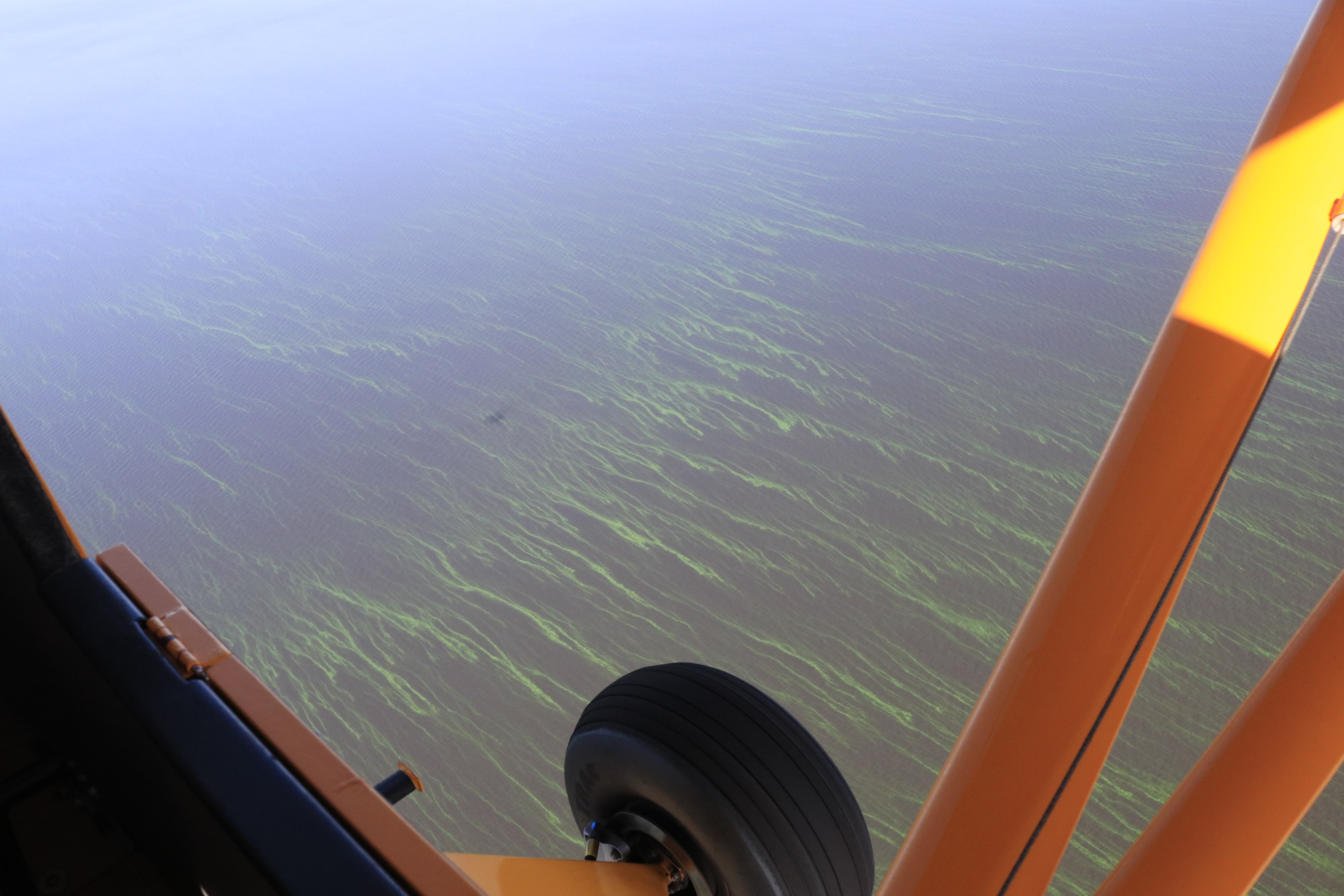




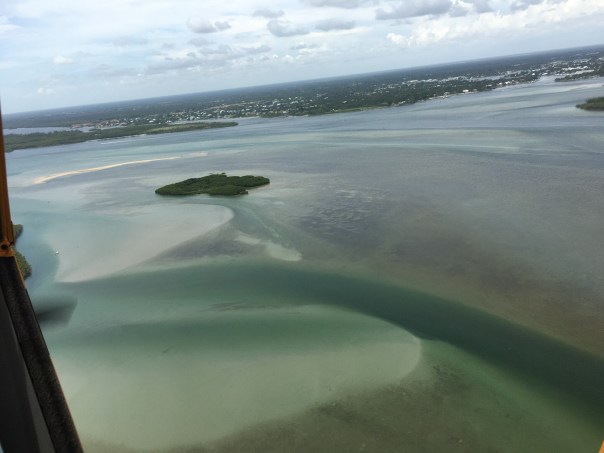

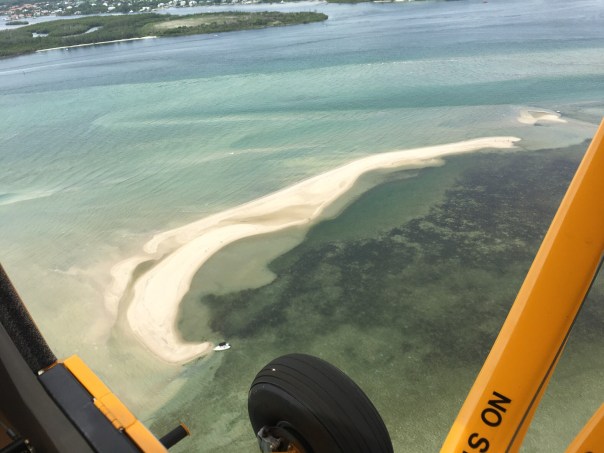


 Sugarcane and Indians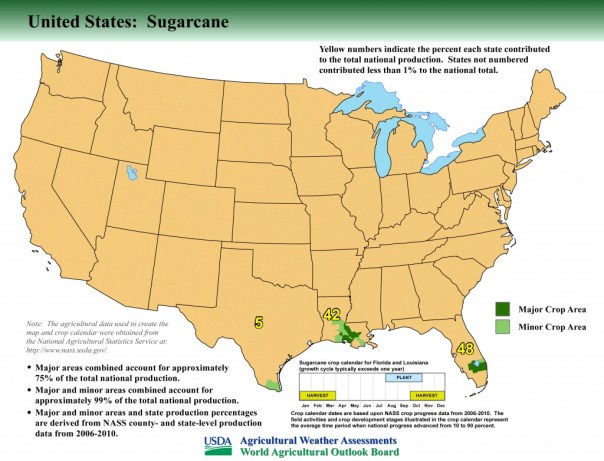


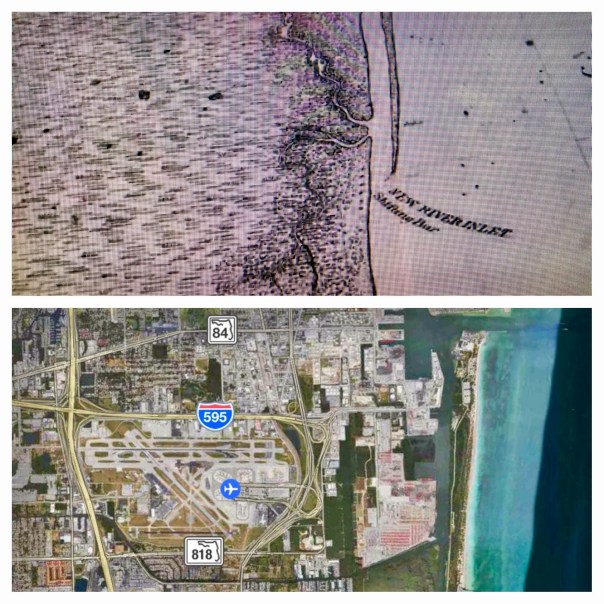


 Today I will continue my series “Who Owns the Land South of Lake Okeechobee? Mapping out the Future of Water.” Hurricane Matthew caused a slight interruption, but now we shall continue. 🙂

