Monthly Archives: June 2015

Blog Break, June Review 2015, St Lucie River/Indian River Lagoon

River, unlabeled. 2007.

Sometimes  you just need to take a break! I will be “blog-breaking” to spend time with my husband; I will return 7-15-15.

In review, before I stop blogging, thus far 2015 has not been a particularly rewarding year for river advocates— mostly because of  the state legislature’s tumultuous session, their interpretation of Amendment 1, and their refusal to consider the purchase of the US Sugar’s option lands in the Everglades Agricultural Area.

To top it off, the  ACOE began releasing from Lake Okeechobee into the St Lucie River very early this year, starting January 16th and continuing  until just recently–the end of May. There may be more coming this rainy season….

The ACOE and the SFWMD decided to “dump” because the lake was “too high” to be safe for the Herbert Hoover’s Dike and its surrounding farms and communities.  This is “understandable,” but at great expense to our SLR/IRL economy and ecosystem.

Ironically, ample water supply is now a concern for “users,” such as agriculture, with Lake Okeechobee down to 12.20 feet and rapidly evaporating….((http://w3.saj.usace.army.mil/h2o/currentLL.shtml))You may have heard that Miami is already in a drought…on top of this, the Caloosahatchee needs some lake water right now to keep its salinities from going too high but they are not getting it…

It always seems more likely that South Florida will  have a hurricane, and that Lake O could fill up quickly with 3-4 feet in one week, too much to dump fast,  so the agencies prefer the lake lower during summer’s rainy season… There is that chance though—that it won’t rain, and dry conditions will parch our state as occurred in 2006/2007.

DEP drought: (http://www.protectingourwater.org/transcripts/18/))

Wouldn’t that be something? After all that water being released?  South Florida going into a drought? The farm fields dying? The ecosystem and its animals in danger? And people not having enough water?

It  may seem an odd thought, but it is one that is not the “stuff of science fiction”— that one day,  in the future, after an extended drought or a climatic shift, people could be fighting over the billions of gallons of fresh water that is wasted to the Atlantic Ocean through the C-44 basin, the St Lucie River, and Caloosahatchee during storm events…

We need to prepare for this. We must not give up our advocacy. We must keep more of this precious water on the land and going south for the Everglades.

On a positive-personal note regarding the year thus far….

You may have noticed—-

I am enjoying collaborating with my family. To have my mother’s history and most recently my brother’s “flying time capsule maps” to share is very rewarding. I have linked some  of Todd time capsule flights below. They have been very popular!

My brother Todd and I on Ronnie Nelson's dock, Martin County, FL, IRL, ca 1974. (Thurlow Family Album)
My brother Todd and I on Ronnie Nelson’s dock, Martin County, FL, IRL, ca 1974. (Thurlow Family Album)

Todd is six years younger than me as you can see from the photo above. My sister, Jenny, is four years younger. Growing up, Todd and Jenny  were more together, and I was kind of “old.” I was out of Martin County High School where as they attended during the same time. Now, the years seems fewer in between…. 🙂

In closing, thank you very much for reading my blog; I wish you a good couple of weeks enjoying the Indian River Region, and I’ll see you soon!

River, unlabeled. 2007.
“Tranquility”…..Unlabeled photo, Thurlow Files, dated 2007.

Todd’s Videos:

1. The Inlets at Peck’s Lake and Jupiter Narrows. (https://www.youtube.com/watch?v=yO650JyADwQ)

2. Hal-pa-ti-okee Swamp: Port St Lucie and Western Martin County. (https://www.youtube.com/watch?v=f2f-e0ul1mY)
3. Bog and Ponds of Martin County, 1940s. (https://www.youtube.com/watch?v=VvH5H0TiG5c)
4. The Spoil Islands of the Indian River Lagoon, Martin County (https://www.youtube.com/watch?v=sODqzQ8EW9o)
5. Capt. Henry Sewall’s Dock, Sewall’s Point, Where Was it Located? (https://www.youtube.com/watch?v=OFkL9YgPSmI)

*6. Where did the South Fork of the St Lucie River and the St Lucie Canal Connect? EDD/ACOE 1915-1923 (https://www.youtube.com/watch?v=gYI34XZUNYs&feature=youtu.be)

Above: Google Earth/Historic Maps Overlay Flights shared on my blog, created by my brother Todd Thurlow, (http://thurlowpa.com) These flights using Topo and other historic maps combined with today’s Google Earth images flashing between “yesterday and today” give tremendous insight into the water and land changes due to drainage for agriculture and development that have occurred in our region. JTL


51 Years of Marvelous Memories Along the Indian River Lagoon

Sunset North River Shores, 6-27-15
Sunset, North River Shores, 6-27-15

In the opening chapter of Nathaniel Osborn’s soon to be published thesis, “Oranges and Inlets: An Environmental History of Florida’s Indian River Lagoon,” he quotes Herman Herold in 1884: “It is a wonderful river…immensely deep and very fine sweet water; the beauties of nature are here very manifest , in fact it is a wonderland…”

Eighth birthday party at Sandsprit Park, with S to R Brenda Bobinski, Barbie Bobinski, Linda Nelson and Dale "Chip" Hudson.
Eighth birthday party at Sandsprit Park, with L to R Brenda Bobinski, Amy Harmon, Barbie Bobinski, Linda Nelson and Dale “Chip” Hudson. (Photo Sandra Thurlow 1972)

In 1964, Stuart News editor, and iconic award-winning environmentalist, Ernest Lyons, wrote something similar, in his piece “Life is a Changing River.” 

“And what a marvelous river it was, with the pelicans diving into the mullet schools, bald eagles screaming as they robbed ospreys of their prey, a river teeming with interesting things to see and do, and such good things to eat…Pompano jumped into the boats. Tasty oysters were abundant–‘squirt clams put hair on your chest.’ How sad it is to see it change. But life, too, is a changing river. I suppose the river today is just as wonderful to those who are as young as I was in 1914.”

Lyons was born in 1905.

I was born in 1964.

The river, as life, is always changing and even though we are fighting for the river’s life and it is not well, it still provides wonder to all.

After graduating from University of Florida in 1986, I wanted to get as far away from “boring” Stuart as I could so I lived and worked in California, Germany, and Pensacola.  Nonetheless, I always considered the Indian River Lagoon Region “home,” and after growing-up and realizing Stuart was actually paradise, it was “to its shores” in 1997 that I returned. But it was not the same. Stuart had grown up too. Things change.

Today is my birthday. I am fifty-one!

It is interesting to be 51, only because when I was a kid, I thought someone who was 50 was “really old…” I had no idea that although “weathered,” and “dried-out, “by the storms and rainbows of life, being old is really quite fun and can actually be an advantage.

First of all, no one is telling you what to do, as much as when you were a kid;  and second of all, for me anyway, there is a much deeper appreciation of this life. This gift. This wonderland…

First Fish, Jacqui, IRL. (Photo Sandra Thurlow, ca .1968)
First Fish, a blowfish, Jacqui, IRL. (Photo Sandra Thurlow, ca .1968)

A quick run though of my early memories of the St Lucie River/Indian River Lagoon and why its memories are powerful for me, would include:

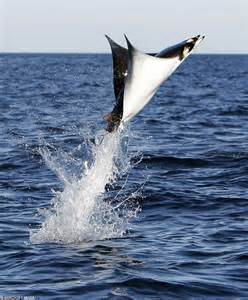
….every day at sunset, climbing the gigantic tree in my parent’s yard so I could see the river and the ocean and the sky; sneaking on my bike to the “black-road, “Riverside Drive,” in Stuart, so we kids could play in a fallen Australian Pine, pretending it was a ship and we were pirates; fishing under the bridges and then later making a pact with God that I would never do so again after the blow fish grunted so much I thought it was talking;  after school, visiting the shoreline of the river, never thinking of who owned the property because it was all wild, to find hermit crabs and horseshoe crabs and any number of small and amazing creatures; seining with my classmates at the Environmental Studies Center; long summer days with my best friends in high school, learning to slalom; spending the night on the spoil islands and talking until sunrise under a gigantic shining moon;  traveling from the river through the inlet into the dark blue ocean while accompanying my father fishing for sailfish, straddling front bars of the boat, to see an enormous  manta-ray jump so close that I could see its eye….

Manta Ray public photo
Jumping manta ray public photo

Today my Indian River Lagoon adventures are less so, but still remain wondrous. This past weekend Ed and I went out in the boat at sunset with my brothers’ family and my nieces. We took silhouette photos against the sky…One day my nieces will be old too.

For the young, for the old, for the future…

“What a marvelous river it is…..”

Sunset photo over the St Lucie River 6-27-15. (Photo Ed Lippisch)


Larger Image 1885 Wood Cut Map, St Lucie River, Homer Hine Stuart

Dear Reader,

In case you are interested to view, I realized my previous post sent out small versions of the 1885 wood cut map of the St Lucie River.  These images below are larger if you wish to click to view. Have a good weekend.—Jacqui

Rare wood cut map of St Lucie River, ca. 1885, by Homer Hines Stuart.  Image shows water depth in heart of St Lucie River near today's Roosevelt Bridge at 20 feet. (Courtesy of historian, Sandra Henderson Thurlow)
Rare wood cut map of St Lucie River, ca. 1885, by Homer Hine Stuart. Image shows water depth in heart of St Lucie River near today’s Roosevelt Bridge at 20 feet. (Courtesy of historian, Sandra Henderson Thurlow)
Homer Hines Stuart Jr., for whom Stuart, Florida is named. (Portrait courtesy of historian, Sandra Henderson Thurlow.)
Homer Hine Stuart Jr., for whom Stuart, Florida is named. (Portrait courtesy of historian, Sandra Henderson Thurlow.)


Homer Hine Stuart, Jr. for whom Stuart is named, had a little wood cut map that was about 4 by 2 1/2 inches and looked like one of those address stamps we use today made. Maps made from the wood cut were used to show his the location of his property and his bungalow “Gator’s Nest” to his family in New York and Michigan. This image was made from a photograph of the wood cut. It is printed is reverse so the writing, etc., isn’t backward. You can see that there was 20 feet of water depth between the peninsulas that would later be connected by bridges. The date of the map would be around 1885.” –Sandra Henderson Thurlow

___________________________________________________________

Previous post w/updated photos 6-26-15: (http://jacquithurlowlippisch.com/2015/06/26/1885-when-st-lucie-river-was-20-feet-deep-st-lucie-riverindian-river-lagoon/)

1885–When St Lucie River was 20 Feet Deep…St Lucie River/Indian River Lagoon

Rare wood cut map of St Lucie River, ca. 1885, by Homer Hines Stuart.  Image shows water depth in heart of St Lucie River near today's Roosevelt Bridge at 20 feet. (Courtesy of historian, Sandra Henderson Thurlow)
Rare wood cut map of St Lucie River, ca. 1885, by Homer Hine Stuart. Image shows water depth in heart of St Lucie River near today’s Roosevelt Bridge at 20 feet. (Courtesy of historian, Sandra Henderson Thurlow)
Homer Hines Stuart Jr., for whom Stuart, Florida is named. (Portrait courtesy of historian, Sandra Henderson Thurlow.)
Homer Hine Stuart Jr., for whom Stuart, Florida is named. (Portrait courtesy of historian, Sandra Henderson Thurlow.)

Some days I get really lucky because people send me cool stuff based on what I wrote the previous day in my blog. Yesterday this happened with both my mother, Sandra Thurlow, Dr Gary Gorfoth and a slew of other comments . I will be sharing some of my mother and Dr Goforth’s insights today.

Yesterday’s blog: (http://jacquithurlowlippisch.com/2015/06/25/sediment-loads-into-the-st-lucie-river-2015-dr-gary-goforth-slrirl/)

After reading my post on sediment loads in the St Lucie River/Indian River Lagoon and how they have lessened the natural depths of the river/s, my historian mother, sent me the awesome image of a historic wood cut at the top of this post created around 1885 by Homer Hine Stuart Jr., for whom Stuart, Florida is named.

This historic wood cut shows the depth of the St Lucie River at 20 feet in the area of what would become the span for the Roosevelt Bridge.  A contemporary navigation chart below, shows the depth of the water in this area at 11 feet. At least 9 feet of sediment and or —MUCK!

Contemporary St John's waterway navigation map, public files, shows the depth of the St Lucie River at the Roosevelt Bridge at 11 feet.
Contemporary St John’s waterway navigation map, public files, shows the depth of the St Lucie River at the Roosevelt Bridge at 11 feet.

“Jacqui, Your post about sediments made me think of this little map. Homer Hine Stuart, Jr. for whom Stuart is named, had a little wood cut map that was about 4 by 2 1/2 inches and looked like one of those address stamps we use today made. Maps made from the wood cut were used to show his the location of his property and his bungalow “Gator’s Nest” to his family in New York and Michigan. This image was made from a photograph of the wood cut. It is printed is reverse so the writing, etc., isn’t backward. You can see that there was 20 feet of water depth between the peninsulas that would later be connected by bridges. The date of the map would be around 1885.”  –Mom

Dr Goforth also wrote. He tells a sad story mentioning that Stuart News editor and famed environmentalist Ernie Lyons wrote prolifically about the great fishing in the St Lucie prior to the construction of the St Lucie Canal (C-44) in 1923.

“… the St. Lucie River and Estuary was known as the “Giant Tarpon Kingdom” before the Lake Okeechobee discharges began in 1923; after the Lake Okeechobee discharges began the muck from the Lake despoiled the clear waters and drove the tarpon offshore, and the area was recast as the “Sailfish Capital of the World” (Lyons 1975: The Last Cracker Barrel).

Thankfully, Dr Goforth gives an idea to fix and or improve the accumulation of muck sediments into the St Lucie River:

One effective means of reducing the sediment/much discharges from the Lake would be the construction of a sediment trap just upstream of the St. Lucie Locks and Spillway. This simple approach has worked well in other areas, most recently in West Palm Beach on the C-51 Canal just upstream of the Lake Worth Lagoon (see attached fact sheet). By deepening and widening the C-44 canal just upstream of the locks/spillway, a large portion of the sediment would settle out of the water in a relatively contained area before entering the River; with routine dredging, the material can be removed and spread over adjacent lands… —(perhaps using lands along the canal purchased by Martin County and SFWMD?). —-Dr Gary Goforth

Muck Removal using sediment trap, Lake Worth Lagoon, shared by Dr Gary Goforth.
Muck Removal using sediment trap, Lake Worth Lagoon, C-51, shared by Dr Gary Goforth.

Kudos to Dr Goforth’s ideas. Kudos to my mother’s history! Let’s get Governor Rick Scott to work and get to work ourselves too!  We can do it. Together, we can do anything. 🙂

___________________________

MUCK THEMED PHOTOS:

Muck coats the bottom of our beautiful river but determination coats our hearts. We and future generations will continue to fight to save our  St Lucie River/Indian River Lagoon!


Muck from St Lucie River, 2014.
Muck from St Lucie River, covering oysters, 2014.
Rob Moir teaches Hannah Lucas about muck at the River Kidz GET THE MUCK OUT event,  March 2014.
Jim Moir teaches Hannah Lucas about muck at the River Kidz GET THE MUCK OUT event, March 2014.
Muck Buster, River Kidz 2014.
Photo of Stuart News article where Kevin Powers of the SFWMD shows Gov. Rick Scott some muck that is located at the end of Power's dock in Stuart. 2014. (Photo Stuart News)
My close up photo of front page Stuart News article where Kevin Powers of the SFWMD shows Gov. Rick Scott a shovel full of muck from around Power’s dock in Stuart. 2014. (Photo Stuart News)
Mark Perry and I display our "muckstaches" for Florida Oceanographics fundraiser/awareness raiser, 2015.
Mark Perry and I display our “muckstaches” for Florida Oceanographics fundraiser/awareness raiser, 2015.
River Kidz GET THE MUCK OUT campaign and bumper sticker, 2014.

Sediment Loads Into the St Lucie River-2015, Dr Gary Goforth, SLR/IRL

St Lucie River substrate map, DEP, Chris Perry. (http://www.dep.state.fl.us/coastal/sites/northfork/resources/physical.htm)

Perhaps the greatest tragedy that is constantly playing out in our declining St Lucie River/Indian River Lagoon is the tremendous sediment infill covering its once white sands, seagrasses, and benthic communities.  This began heavily in the 1920s with the connection of the St Lucie Canal (C-44) connecting Lake Okeechobee to the South Fork of the St Lucie River, and then increased in the 1950s and beyond with the construction of canals C-23, C-24 and C-25.

It must also be noted that the St Lucie River/SIRL underwent great changes when the St Lucie Inlet was opened permanently by local pioneers at the encouragement of Capt Henry Sewall in 1892. (Historian, Sandra Henderson Thurlow) Prior to that time, the Southern Indian River Lagoon and St Lucie River had been “fresh” —-fresh and brackish waters and their communities of plants and animals “came and went” with nature’s opening and closing of the “Gilbert’s Bar Inlet” over thousands of years….

Since 1892 the St Lucie River has been a permanent brackish water “estuary…” and until the opening of the St Lucie Canal was teeming with fish and wildlife and considered the “most bio-diverse estuary in North America.” (Gilmore 1974)

Anyway, today we have a very special guest, and one of my favorite people in the world, Dr Gary Goforth, to share with us information on 2015 sediment statistics entering the St Lucie River from C-44, our most damaging canal. (DEP 2001:(http://www.dep.state.fl.us/southeast/ecosum/ecosums/C-44%20Canal%20.pdf)

Dr Goforth recently sent out an email,  and I ask him if I could share the information; he agreed. He states:

“The pollutant that has been consistently left out of discussions is the sediment load to the estuaries from Lake Okeechobee – over 2 million pounds to the St. Lucie River and Estuary in 2015 alone; almost 4 million pounds to the Caloosahatchee Estuary.” (Dr Gary Goforth)

Isn’t that awful? “We” are filling the river in….smothering it.

The slides Dr Goforth included are the following:

Flows and loads for the period January 1, 2015-May 31, 2015. (Dr Gary Goforth 2015)

Please click on image above to read the numbers. Mind boggling!

This second and complicated image below shows “flows” into the estuaries from Lake O into the St Lucie, Caloosahatchee, and to the Everglades Agricultural Area. Generally speaking, the Army Corp of Engineers in discussions with the South Florida Water Management District,  began releasing into the St Lucie River January 16, 2015 until late May/early June. About 3 weeks ago.

Flows between January 1 and May 31, 2015. All flows in acre feet and subject to revision. (Dr Gary Goforth,, 2015)

Recently our river waters have looked very beautiful and blue near Sewall’s Point and the Southern Indian River Lagoon and water quality reports have been more favorable.  Nonetheless the river, especially in the South Fork and wide St Lucie River, is absolutely impaired as there is not much flushing of these areas and the sediment infill is tremendous. The seagrasses around Sewall’s Point and Sailfish remain sparse and algae covered when viewed by airplane. Blue waters does not mean the estuary is not suffering!

Months ago I wrote a blog, that is linked below, focusing on south Sewall’s Point’s river bottom infill history,  and depths that  have gone from 19, 15, and 14 feet in 1906, to 4, 8, and 7 in 2014—and looking on the Stuart side, north of Hell’s Gate, the 1906 map shows 10, 8 and 12 feet and a 2014 NOAA map reads 2; 3; and 4 feet!

Insane….so many changes!

Our government has filled and dredged our precious river…elements of this inputting sediment become MUCK…..

I’ll end with this:

The River Kidz say it best, although my mother didn’t approve of the tone: 🙂

River Kidz "Get the Muck Out" campaign, 2014.
River Kidz “Get the Muck Out” campaign, 2014.

__________________________________________

For interest, I am going to include two more images Dr Goforth included in his email on sediment loading; please click on image to see details.

Thank you Dr Gary Goforth for sharing you expertise on the science of the St Lucie River/Indian River Lagoon, Lake Okeechobee and Everglades. Please check out Dr Goforth’s website here:((http://garygoforth.net))

Lake Releases to the South. (Dr Gary Goforth, 2015)
Lake Releases to STAs (Storm Water Treatment Areas) (Dr Gary Goforth, 2015)

___________________________________

FDEP North Fork Aquatic Preserve: (http://www.dep.state.fl.us/coastal/sites/northfork/resources/physical.htm)

Former Blog post about depths of St Lucie River, JTL: (http://jacquithurlowlippisch.com/2014/06/04/1906-2014-water-depth-changes-in-the-st-lucie-riverindian-river-lagoon/)

Blue vs. Brown–More Contrasting Photos, 2013/2015 St Lucie River/Indian River Lagoon

Atlantic shoreline just south of St Lucie Inlet contrasted 6-20-18 and 9-8-15. Dark waters reflect discharges from Lake Okeechobee and area canals  C-23; C-24, and C-44. (Photos Jacqui Thurlow-Lippisch and Ed Lippisch)
Atlantic shoreline just south of St Lucie Inlet along Jupiter Island contrasting 6-20-15 clear waters to of 9-8-13’s dark waters. Dark waters reflect discharges from Lake Okeechobee and area canals C-23; C-24, and C-44. Blue waters reflect “no rain” and no dumping for one month from the ACOE and SFWMD. (Photos Jacqui Thurlow-Lippisch and Ed Lippisch)

Monday’s blog contrasting the beautiful, blue-waters of the St Lucie River/Indian River Lagoon this summer in 2015,  to the silty, dark-brown waters of the “Lost Summer” of 2013 was well received,  so today will post some more photos of this “contrast.”

My husband, Ed, encouraged me to do more framed contrast photos; however, time does not permit so there is just one “framed” photo above and the rest will be separate photos. I will try to do more framed ones in the future.

Also, although Ed and I have taken thousands of photographs, they do not always “match up” in location so the visual perspectives are not “exact.” My goal while in the plane is simply to hold on to the camera, hoping it does not fall into the river. It is always very windy in the open Cub. Getting a good photo is just secondary! I mostly just use my iPhone.

Well, a picture speaks a thousand words….” so I’m not going to “say” anything else…All photos are contrasting June 20th 2015 with either August 11th or September 8th of 2013.

Thank God we having a beautiful summer!

Bo and Baron, our dogs, sitting by the Cub Legend, the plane used for most of the photographs. (JTL) In 2013 it was christened the "River Warrior" plane. :)
Bo and Baron, our dogs, sitting by the Cub Legend, the plane used for most of the photographs. (JTL) In 2013 it was christened the “River Warrior” plane. 🙂
St Lucie Inlet looking west towards Stuart, Sailfish Point barely visible on far right of photo. June 2015.
St Lucie Inlet looking west towards Stuart, Sailfish Point barely visible on far right of photo. Jupiter Narrows and “Hole in the Wall “on right. June 2015.
St Lucie Inlet September 2013 looking north east towards Sailfish Point.
St Lucie Inlet September 2013 looking north east towards Sailfish Point. Plume heading towards St Lucie Inlet.


Looking northerly towards Sewall's Point. Sailfish Flats between Sewall's Point and Sailfish Point not seen on far right. (june 2015.)
Looking northerly towards Sailfish Point and St Lucie Inlet. Sailfish Flats between Sewall’s Point and Sailfish Point are visible here. Sewall’s Point is to the right or west of this photograph. (June 2015.)
Looking north toward Sewall's Point on east/left. The Sailfish Flats are to the right/east as is Sailfish Point. (September 2013.)
Looking north toward Sewall’s Point on east/left. The Sailfish Flats are to the right/east as is Sailfish Point. (September 2013.)


Shoreline of Jupiter Island 2015.
Shoreline of Jupiter Island June 2015.
Jupiter Atlantic shoreline Sept 2013.
Jupiter Island ‘s Atlantic shoreline Sept 2013.


Sailfish Flats between Sailfish and Sewall's Point 2015.
Sailfish Flats between Sailfish and Sewall’s Point 2015.Seagrasses remain decimated and covered in algae.They come back very slowly.
Wideview of Sailfish Flats area between Sewall's (L) and Sailfish (R). Points. (Aug 2013)
Wideview of Sailfish Flats area between Sewall’s (L) and Sailfish (R). Points. (Aug 2013)


StLucie River, west side of Sewall's Point 2015. Point of Hell's Gate visible on to east/right. June 2015.
St Lucie River, west side of Sewall’s Point 2015. Point of Hell’s Gate visible on to east/right. June 2015.
St Lucie River, west side of Sewall's Point. August 2013.
St Lucie River, west side of Sewall’s Point looking towards Evan’s Crary Bride. Hell’s Gate is on east/right but not visible in this photograph.  August 2013.


The remainder below do not match at all, but provide contrast:

other
St Lucie Inlet June 2015.
other
St Lucie Inlet June 2015.
other
Hutchinson Island looking south to St Lucie Inlet, June 2015.
other
Blurry but St Lucie Inlet in sight with near shore reefs south of of inlet very visible. (June 2015) These reefs have been terribly damaged by the years of releases from Lake O and the area canals (silt and poor water quality) even though they are “protected” by the State and Federal Government.


other
Crossroads SLR/IRL to St Lucie Inlet (R) with Sewall’s Point on left.  Looking at flats area full of seagrass that bas been damaged again and again by releases. Once surely considered the most “bio diverse estuary” in the North America–1970s Grant Gilmore. Photo August 2013, it is surely not today.
other
Same as above but closer to Sailfish Point nearer St Lucie Inlet Sept 2013.
other
Crossroads Sept 2013.
other
Looking toward Palm City Bridge 2013. St Lucie River.
other
IRL side east of Sewall’s Point September 2013.
other
Inlet area looking at Sailfish Point and St Lucie Inlet 2013.
other
South Sewall’s Point’s waters at Crossroads of SLR/IRL near inlet,  2013.
2013.....
St Lucie Inlet 2013…..

Monday’s blog post from 6-22-15:(http://jacquithurlowlippisch.com/2015/06/22/paradise-and-hell-june-2015june-2013-st-lucie-riverindian-river-lagoon/)

“One Nation Under Mosquitos,” St Lucie River/Indian River Lagoon

Mosquito County was formed from St Johns County in 1824; this was the era of the Indian Wars. Florida became a state in 1845. (Florida Works Progress Administration, courtesy of historian, Sandra Henderson Thurlow)
Mosquito County early map.
Mosquito County ca. 1827. All maps here and below are from University of South Florida’s map website.
Mosquito County early map
Mosquito County early map. USF.
Mosquito County early map
Mosquito County early map. USF.

Since the Lost Summer of 2013 and the super bloom of 2011-2013, the counties from the south and to the north along the Indian River Lagoon have been “coming together.” The more unified we are, the better we can protect, improve, and negotiate with our legislature  for our waters.  The revamped National Estuary Program of the Indian River Lagoon, under the leadership of Martin County Commissioner Ed Fielding, is proof of this and a great hope for a better future. (http://itsyourlagoon.com)

Of course the irony of it all is that the counties along the Indian River were once “one,” under the flag of “Mosquito County…”

Misquito--Mosquito---Musquito----
–Mosquito—Musquito—-

Such a fitting name….Too bad they exterminated the name for tourism. I like it.

I remember mosquitoes well. As I have written about before, one of our great joys as kids growing up in Stuart in the 1960s and 70s was riding our bikes behind the mosquito spray truck as it drove by just about every evening…. 🙂

Mosquito truck Hillsborough County archives.

Mosquito County was formed in 1824 and compromised most of east Florida including Volusia, Brevard, Indian River, St Lucie, Martin,  Seminole, Osceola, Orange, Lake, and  Polk counties.

Apparently from 1500 until 1844 the east coast of Florida was known as “Los Musquitos…”

I think it is important to remember we all have been connected for a long, long, time and that we are still connected today through our waterways, the St Lucie, the Indian River Lagoon,  and really also the St Johns– if its headwaters had not been directed south through C-25…We must also recall that although during rainy times the native peoples and pioneers documented traveling through the St Johns into the Indian River —our waterways were never naturally connected to Lake Okeechobee…

Full counties evolution map
Full counties evolution map, florida Works Progress Administration, courtesy Sandra Henderson Thurlow.

______________________________________________________


USF Maps: (http://fcit.usf.edu/florida/maps/pages/4100/f4176/f4176.htm)

Mosquito County history: (https://en.wikipedia.org/wiki/Mosquito_County,_Florida)

Canals in Stuart, C-23, C-24, C-25 built in the 50s and 60s. C-44 connected to Lake Okeechobee constructed in the 1920s.
Canal C-25 at the top of this image is where the headwaters of the St John’s River– originally west of Vero and Sebastian– were redirected to go south through C-25 into the IRL and connecting canals that exit into the North Fork of the St Lucie River.

“Paradise and Hell,” June 2015/June 2013, St Lucie River/Indian River Lagoon

Contrast June 21, 2015 and June 28, 2013. St Lucie Inlet, Martin County, Fl. (Photos JTL and EL)

I hope you and your family had a happy Father’s Day. The water was beautiful this weekend,  so I thought today I would compare some aerial photos my husband Ed and I took this weekend to some we took in June of 2013 during the “Lost Summer.” No wonder we all fight for clean water and fewer discharges from Lake Okeechobee and area canals. What a difference!

Of course other than “history,” rain has a lot to do with discharges into the St Lucie River/Indian River Lagoon, and it has not been raining too much lately— thus the blue waters rather than the ugly dark brown plumes. It is important for all of us to understand why our paradise sometimes turns into a disgusting toxic mess so we can keep working for policy to change this problem.

The first and worst part of the problem lies in southern Martin County—the C-44 canal built by the Flood Control District of the era and later the Army Corp of Engineers to connect Lake Okeechobee to the South Fork of the St Lucie River. This canal was connected in 1923 for agriculture and transportation. So now, not only is there the agricultural lands’ runoff from the C-44 basin that pours into the river, but also the periodic often huge releases from Lake Okeechobee. In spite of claims that this lake water is “only 30%” of total discharge water coming into the estuary, when it comes it is tremendous, filthy, and always a killer.

I think a decent metaphor would be that one could drink alcohol all time (from the C-23, C-24, C-25) and have problems like an alcoholic but function, however, if one downed two bottles of gin in a short period of time, one would kill oneself. Lake Okeechobee and its periodic huge slugs are death each time for our St Lucie River/Indian River Lagoon.

Canals in Stuart, C-23, C-24, C-25 built in the 50s and 60s. C-44 connected to Lake Okeechobee constructed in the 1920s.
Canals in Stuart, C-23, C-24, C-25 built in the 40s, 50s and 60s. C-44 connected to Lake Okeechobee constructed in the 1920s.

Next we must recognize the other problem-part of our canal system in the northern region…

After a tremendous hurricane/storm and flooding (because we are a swamp….)  in 1947 the state of Florida and the federal government worked to appropriate monies for the Central and South Florida Flood Project  which created the plumbing system we know today for all South Florida.

The part “we got” was the building of canals C-25, C-24 and C-23. The state and federal government acted like this was “just for flooding” but it wasn’t. It was also to allow for more agriculture and development in the region by draining the lands. (Mostly citrus and development of Port St Lucie).  These canals were built and “improved” throughout the 50s and 60s and expanded the water being drained into the St Lucie River by about five times!

So now water from Okeechobee and St Lucie counties, and even water that had been flowing north into the St Johns River, through Indian River County and beyond— drains into the St Lucie River! (The headwaters of the St Johns River started flowing north in the marshes west of Sebastian and Vero—they have been directed to the SLR…)

Crazy isn’t it?

You know these “guys” —these politicians and business people, knew they were killing the river. They were just so driven by the pay-off of citrus/agriculture and cheap lands to sell….that they didn’t care…The river dies slowly so many of them did not see the “close to total death” —what we see today…but they knew what they were doing.

There were those who objected trying to protect the river’s  fishing industry and wildlife….But their voices were not enough to stop the train….sound familiar?

Drainage changes to the SLR.
Drainage changes to the SLR. Green is the original, natural, watershed,. Yellow and pink show the expanded drainage to the SLR/IRL. St Lucie River Initiative, Letter to Congress 1994.

The map above shows the “expanded watershed” in yellow and pink going into the St Lucie River. This is why I very much object also when I hear “how 70-80%” of the water polluting the St Lucie “is from our local watershed.”

Like we are supposed to feel responsible?  Most of it’s  not local!!!!! Plus it is the SFWMD’s job to oversee these canals. FIX THEM!

The moral of the story though is that the “local watershed” does not exist anymore….

“Wealth (agriculture and development) at the expense of the environment….” The story of our state.

Of course the grand irony is that we all came here for the “environment” ….the water, the fishing, the wildlife, the beauty…..

So here we are in Martin County living in a world where the pendulum swings between “paradise and hell.”

Paradise is not what it used to be, but it is still here. We saw some of it this past weekend…And we could bring back more if we really tried….If we want it, our job is to get more of the water coming into the St Lucie River/IRL back onto the land, going south, and returned or held north, and not draining or being released  into our watershed.

Sounds reasonable doesn’t it? Well, the problem is we don’t have 30 years….or 50 years….like “the plan” (CERP) calls for now….(http://www.evergladesrestoration.gov)

There is alway hope we could do it faster. We must make hope a reality….all of us.

As newspaper man and famed environmentalist Ernie Lyons said: “What men do, they can undo…..and the hope for our river is in the hundreds of men and women in our communities who are resolved to save the St Lucie…” (Ernest Lyons, Editor and reporter, Stuart News)

This weekend I think we were all inspired! 🙂

Comparison 2015 and 2013 Atlantic shoreline with nearshore reefs, Jupiter Island south of St Lucie Inlet. (JTL)

_____________________________

September 2013
September 2013–plume as it exits St Lucie Inlet.
Another aerial 2013- plume along Jupiter Island.
Another aerial from September 2013- plume along Jupiter Island that had exited the St Lucie Inlet.


Lake O Roundtable, Senator Marco Rubio, St Lucie River/Indian River Lagoon

King Aurthur is historically noted for creating the concept of a "round table."
King Arthur is historically noted for creating the concept of a “round table.”

Yesterday, at the Wolf Technology Center, on the campus of Indian River State College, Todd Reid, the Deputy Chief of Staff and State Director for the Office of Marco Rubio oversaw a “Lake Okeechobee Roundtable.” New US Army Corp of Engineers Lt Col. Jennifer Reynolds broke the ice with her introduction, noting she was curious as to whether there would truly be a “roundtable…” She smiled saying she was happy to see the “rectangle-roundtable…” Her comments were funny and refreshing. The point was everyone was sitting around the table—“together,” like in King Arthur’s days….

Agenda, L.O. Roundtable, Office Senator Marco Rubio, 2015
Agenda.
Agenda.

I want to thank Senator Rubio’s office and Senator Rubio himself for the meeting. Could the meeting have been politically motivated? I hope so! Political motivation in any form is the gas that drives the bus. I’ll take it and I’ll hitch a ride….

The meeting was a rare opportunity to sit face to face in a non-charged environment and to listen, to ask questions, to learn, and to get to know each other.

Other than the many Army Corp, South Florida Water Management, and Rubio official leaders that sat at the table, some regional names you might recognize who also were there are:  Comr. Ed Fielding, Kate Parmalee and Don Donaldson, Martin County; Richard Gilmore, Mayor, Sebastian; Dr Jacoby, St John’s River Water Management District; Nyla Pipes; Meagan Davis, HBOI; Mark Perry; Rae Ann Wessel, Caloosahatchee; Jason Bessey, SLC and myself. Sorry if I missed anyone. There were a few some empty chairs with name tags prepared for people who did not make it. Their loss. Of course Gayle Ryan of the River Warriors was in the audience as were others! 🙂 Thank you PUBLIC!

I have written many times, that “building relationships” is what is going to get us beyond the St Lucie/Indian River Lagoon nightmare we live in today. I appreciate the opportunity to build those relationships.

I did learn a lot.

The "Roundtable..."
The “Roundtable…” Photo Jax ACOE Twitter 6-18-15.

One thing I learned again is that the ACOE and SFWMD don’t know how to promote the good things they do. Perhaps this is because they are “government.”

For instance Jim Jeffords, Chief of the ACOE Operations Division noted very quietly that the ACOE under the LORS (Lake Okeechobee Regulation Schedule) this water year had only released 40% of the Lake O water that COULD HAVE gone to the Caloosahatchee River; and only 24% on the water that COULD HAVE gone to the St Lucie.  Holy Cow? Are you kidding me?

I don’t really get the complexities of the entire system, but basically LORS has huge ranges and it gives the ACOE flexibility so they use discretion in determining how much water is actually released rather than just opening the gates to match the number on the chart. So even though they released from Lake O into our SLR since January 16 until a few weeks ago–apparently it could have been worse. —Kind of like when you got  into trouble in my day as a kid and got sent to the office and the principal only spanks you three times when he or she could have spanked you fifteen times. You still walk away crying and humiliated, but it could have been worse….We never thank the ACOE for “not releasing even more,” a lot more, because basically we don’t know that they could….they don’t tell us..they don’t brag. I do; I guess that’s why I’m a “civilian….”

LORS schedule releases SLR 2014 and some of 2015.
LORS schedule releases SLR 2014 and some of 2015.(Photo ACOE Twitter)

And then Jeff Kivett, Divisions Director Operations, Engineering and Construction SFWMD, gave a really nice and erudite presentation with an awesome color copy packet and he just kind of goes right through what for me, if I were him, would have been the most important part: “the SFWMD has sent more than 500,000 acre feet of water south this dry season.” I get this all mixed up like “water year,” “annual year,” dry season, from Lake O, or from the sugar farmer in the EAA, —-in any case for me what’s important is they sent so much water south!

Dr Gary Goforth has written about this and if I remember correctly the most ever sent was in 1995 (like a million acre feet and it killed Biscayne Bay’s reefs) but after 2002 it really slowed to almost “nothing” due to the consent decree’s law suit on phosphorus numbers —but then after 2013’s toxic estuary disaster the SRWMD started sending more water south again. Because now that water is CLEAN due to STAs. (Storm Water Treatment Areas–they are still nervous to send “too much with too much phosphorus…”)

I know I am rambling, but two years ago I remember being happy water sent was over 250,000 acre feet and now the District has sent more than 500,000 acre feet almost two years in a row… This is awesome and to be commended. If I worked at the SFWMD  I would be jumping up and down screaming from the rooftops, but government people just kind of “mention it…..”

Anyway–Good job guys and gals. Good job!

Also, there was also a presentation on the slow but steady-going, expensive repair of the Herbert Hoover Dike by Ingrid Bon, and an update by Howard Gonzales on ecosystem restoration projects. Yes the ones whose names we know by heart that have been taking eight billion years to complete but are actually getting closer! There were also hopeful updates on CEPP (Central Everglades Planning Project) and Ten Mile Creek’s recovery…again very slow-moving like molasses, but moving…maybe….yes….no maybe….YES! How old am I now? Will the projects be done before I am dead? Not funny, but sometime you wonder.

In the end, it was a great meeting and I appreciate that I was allowed to sit “at the roundtable.” It was so good to see Greg Langowski who I have known through Rubio’s office since my early days in the Treasure Coast Council of Local Governments, as well as my dear friend mayor, Richard Gilmore of Sebastian! We are all getting older, but  wiser too, and if we stick together, we just might make a difference for the St Lucie River/Indian River Lagoon, and for the kids of the future that just want to fish, swim and boat in the river and just be a “kid.”

Thank you for the Roundtable Senator Rubio. I hope there will be more…

Great visual from Jeff Kivett's presentation on changes to the Everglades system.
Great visual from Jeff Kivett’s presentation on changes to the Everglades system.

Over-Drainage and Overlooking the Obvious, Florida Legislature 2015, SLR/IRL

Cartoon Everglades Drainage, 1916 "Back to Broward,"http://historymiamiarchives.org/online-exhibits/everglades/glades.htm. (Shared by Sandra Henderson Thurlow)
Cartoon Everglades Drainage, 1916 Swamp Land Act of 1850 transferred swamp federal lands to the states.(http://historymiamiarchives.org/online-exhibits/everglades/glades.htm.) (Shared by Sandra Henderson Thurlow)

The 1916 cartoon says it all, doesn’t it? “You can have all these lands, if you drain and develop them….”

How does the saying go? “Be careful of what you wish for…”

We sure got what we wanted and more. We’ve gotten so much we’ve killed it, or are in the process thereof….Uncle Sam gave us a gift in the Swamp Land Act of the late 1800s and we, the State of Florida, have killed it–the Swamp that is…and even with the “retched swamp mentality” of the 1800s, no one, not even Governor Napoleon Broward himself, envisioned real estate surrounded by putrid, polluted water…

This year our state legislature did not seem to recognize the sense of urgency in Florida regarding clean water and the health of the state’s natural resource’s as reflected in their decisions made, or not made, this 2015 legislative session. Amendment 1 was all but ignored. But from north Florida’s springs, to the estuaries of the St Lucie River/Indian River Lagoon and Caloosahtchee, to  Biscayne Bay the people of the state still recognize this urgency. And this urgency is not just answered by money. It can be answered by beginning to have real discussion state-wide on these issuers. Florida voters know our past and we know what we want for the future.

The will of the people will be done.

Repressed desires only get stronger….

We all know that there are many ways to help, and we must do all we can, but in the long run there is only one way to change the “big picture,” for South Florida.

There must be a  third outlet south of Lake Okeechobee as discussed since the earliest days of water management…we  must stop wasting 1.7 billion gallons of water to tide every day, stop creeping development into the remaining Everglades, and most important, the agriculture community in the EAA must actively become part of the land acquisition solution for reconnection of Lake Okeechobee to Everglades National Park.

Drainage canal being dredged Davie 11913.
Drainage canal being dredged Davie 1913.
Map showing Everglades National Park boundaries as well as Water Conservation Areas north of the park and other areas. (Map courtesy of Backroads Travels website, 2013.)
Map showing estuaries– now drainage ditches, Everglades National Park boundaries as well as Water Conservation Areas north of the park and other areas. (Map courtesy of Backroads Travels website, 2013.)
West of the red lines shows the edge of what was once the Everglades in South Florida. Development has crept and continues to creep over this edge. (Photo/map courtesy of Chappy Young,/GCY Surveyors, 2014.)
EAA below Lake Okeechobee. (Public map.)

This excerpt is from SOFIA, USGA web site. They are a scientific, arm’s length division of the Federal Government: (http://sofia.usgs.gov/publications/fs/61-99/)

“Drainage and development of south Florida has had major environmental consequences in the Everglades. Saltwater intrusion into freshwater aquifers has extended as far as 6 miles inland from the coast in some areas. The land surface has subsided as much as 6 feet in some agricultural areas because of lowered water tables, oxidation of drained peat, and subsequent peat fires.

Mercury contamination of fish has resulted in a ban on the consumption of fish from the central part of the Park, WCA-2, and WCA-3 and is implicated in the deaths of endangered Florida panthers. Populations of wading birds have decreased by almost 95 percent from 1870 to 1973. In high-nutrient areas, cattails are replacing native sawgrass.

Plant and animal communities in the Everglades have been altered by changes in timing and duration of inundation; invasion of exotic plants as a result of drainage and land clearing, nutrient, and (or) contaminant-enrichment of water that flows into Everglades from agricultural and urban areas; and loss of habitat…”

Dead panthers from eating fish full of mercury?

This is not what we will leave our children…is it?

Toxic Algae bloom washes up  along the shoreline, St Lucie River, Riverside Drive, Stuart, Florida. (Photo Jenny Flaugh, 7-13)
Toxic Algae bloom washes up along the shoreline, St Lucie River, Riverside Drive, Stuart, Florida. (Photo Jenny Flaugh, 7-13)
Sign with Seminole in canoe 1913, Tamiami Trail. (Public photo)
Original flow everglades. http://seawifs.gsfc.nasa.gov/jason/HTML/EXPEDITIONS_JASON_7_croc_model.html )
Original flow Everglades. http://seawifs.gsfc.nasa.gov/jason/HTML/EXPEDITIONS_JASON_7_croc_model.html
)
Drainage today via canals.
Sofia map 2015.
Sofia Everglades drainage map 2015.
Our flag.
Our flag.

(http://historymiamiarchives.org/online-exhibits/everglades/drainage.htm)

EPA 2011 Review: Source for 1.7 billion gallons of wasted water to tide:( http://www.epa.gov/gcertf/pdfs/1120amintersectionoffl.pdf)
Early AOCE documents referring to a third outlet south of the lake: http://jacquithurlowlippisch.com/2014/07/29/the-history-the-future-of-plan-6-and-sending-water-south-st-lucie-riverindian-river-lagoon/)

“Tough Love” and Impediments to Implementation of the IRL Basin Management Action Plans, SLR/IRL

Basin Management Action Plans, Florida. TCRPC doc. 2015.

You have probably heard it a hundred times: “BMAP, Basin Management Action Plan..” or “TMDLs….Total Maximum Daily Loads….”

That sounds kind of odd doesn’t it? Load of what?”

Phosphorus and nitrogen going into the water that is…

Florida Department of Environmental Protection:(http://www.dep.state.fl.us/central/Home/Watershed/BMAP.htm)

Anyway, today I will once again to try to boil-down some fancy government terms to help you understand what our state is doing to try to fix the “impaired waters of the state…” such as our St Lucie River and Indian River Lagoon. I will focus on a report about “what is impeding its progress.” This report will be discussed at the Treasure Coast Regional Planning Council on 6-19-15.

“Impediments to Implementation of the Indian River Lagoon Basin Management Action Plans” by the East Central Florida Regional Planning Council and the Treasure Coast Regional Planning Council was prepared with technical assistance from the Florida Department of Economic Opportunity, 5-27-15.

For a full copy of this report please contact Mr Michael Busha at mbusha@tcrpc.org

Here we go:

The Background section of the report  notes:” …In the past century the IRL has been affected by many activities including the creation of inlets, dredging of navigational channels, impoundment of mangroves for mosquito control, shoreline development, and alteration of the watershed basins draining into the lagoon. Today water quality the single most important issue impacting the lagoon. The decline in water quality is attributed to an increase in nutrient input, sedimentation, turbidity, atmospheric deposition, nutrient releases from legacy muck deposits, and changes in salinity due to freshwater discharges. The issue is complex because the impact comes from a variety of sources, including non point sources of stromwater entering the lagoon through major canals systems as well as through smaller creeks, tributaries, and individual outfall structures.”

State BMAP 2015. TCRPC

Here I must state something not noted in the report in case you don’t know:  Not until a water body is declared as “impaired” does it get the help of  the state creating a Basin Management Action Plan through the implementation of TMDLs—-or the determination of Total Maximum Daily Loads.

I wrote something in the past about  this and likened a “total maximum daily load”  to a “maximum daily allowance of cigarettes that one is allowed to smoke before one gets cancer…..a “total daily maximum daily load” of phosphorus and or nitrogen is what the government is talking about with the river. How much it can take before it gets sick/impaired.

Phosphorus and nitrogen come from different sources; I always note fertilizer as an example because it is written right there on the bag, and fertilizer from farming and people’s yards is a huge source of the LOAD of phosphorus and nitrogen going into our St Lucie River/Indian River Lagoon….

Right now all our water bodies get too much nutrient pollution (too many cigarettes) so now the government is figuring out how to cut back slowly over time….the problem is the river may die while we are “trying to kick the habit…”

Now, back to the official document: There are currently 20 adopted BMAPs in Florida. Portions of the IRL are addressed by four of the adopted BMAPs. They are North IRL; Banana River: Central IRL; St Lucie River and Estuary.

IRL BMAPs 2015.
IRL BMAPs 2015.

Each plan varies but has the same goal: to lessen nutrient pollution, to improve water quality, and whether the plan says it or not, to increase sea grasses….The plans outline specific project that are expected to provide load reductions of phosphorus and nitrogen. All plans are implemented in 5 year periods spread out over 15 years. Plans can be many things, turning dirt, holding water, implementing best management practices not to allow runoff….

Polluted runoff causes impairment…

The St Lucie River was determined as “impaired” in 2002. (Report at end of blog.)

The SLR/IRL BMAP was adopted in 2013. So to figure out how this plan will work….in 2018 the state will have a goal for load reduction; then again in 2023; and then again in 2028. Each time period the load numbers should be going down, and if they are not, cities, counties,  and other stakeholders, like agriculture, and other polluters, should be in trouble if there is not a reduction in loads. DEP oversees all of this.

Kind of confusing isn’t it? And I am not sure my dates are correct, but hopefully you get the idea….Perfect science? No. But at least there is a plan…I just wish they’d get us off the cigarettes faster. Like make us go “cold turkey.”

The report list the following impediments the BMAPs.

1. Inadequate Funding….

2. Nutrient Load from Muck not Addressed. (Muck holds nutrients so when it get stirred up from winds or storms it is “re-released…” (Second hand smoke….)

3. Nutrient Loads from ground water are not being addressed. (Groundwater comes up from the ground as tides rise and bring nutrients like from septic tanks into the river and lagoon—gross.)

4. No Incentive for Stormwater Management. I am not really sure about this one but obviously it has to do with incentives; seems like the government could help create incentives if we would reward clean water….(inventions, lessen people’s taxes if they achieve clean water “loads.”) Hey doesn’t the Dept of Economic Opportunity do stuff like this?

5. Incomplete water quality data. Collecting data is expensive. Maybe high school kids could get credit if they did it…..and let’s face it: WE KNOW the WATER’S DIRTY. Focus on the source and stop acting like we don’t know where all this nutrient pollution is coming from!

6. Inadequate Water Quality Monitoring. Same thing as above. Figure it out. Guess….

7.  Unequal treatment of public and private entities, agriculture, and water control. This is complicated, but basically in my opinion the Right to Farm Act puts less stringent standards on agriculture to prove they are lessening loads than on municipalities and counties. BMPs vs NPDS (Best Management Practices vs. National Pollutant Discharge Elimination System…)This is a huge problem. Ag has to enter the 21st century. All ag. Best Management Practices are “voluntary.” This is not enough!

8. Onerous conditions attached to BMAP projects

9. Inadequate technology to meet TMDL goals

10. BMAPS are based on flawed TMDLs

11. Trends in nutrient loading from atmosphere not being considered. (Phosphorus and nitrogen come in from rains and winds from as far away as the Europe, Africa and other nations polluting too…

12. Legacy Loading in Lake Okeechobee. THIS IS MY FAVORITE. How can surrounding governments and stakeholders be held responsible for lowering loads when periodic releases from Lake O through the C-44 canal pollute the water as fast as we can clean it up? For instance this year the ACOE and SFWMD have released  into the estuary since January 16th and just stopped three weeks ago…MAJOR SECOND HAND SMOKE!!!!!!

13. Lack of Operations Monitoring

14. Load allocation process is not consistent between BMAPs. This has to do with  undeveloped land being removed from the maps as nutrient reductions are not required on those lands…

There is a lot more to the report but that is a summary.

This whole process of BMAPS and TMDLs is confusing, but I wanted to at least give you an idea of the report. We must remember not to be too negative for the state workers implementing the BMAP.  Negativity will not inspire more work, it will inspire less. Also it is not their fault. Fault lies in leadership.

Rather that telling businesses, citizens, and most of all agriculture to QUIT SMOKING, leadership —-and this is going back many years and includes Democrats and Republicans—is  basically paying for our rehab over a period of 15 to 35 years.

Florida’s waters do not have time for rehab. They must be fixed today. Tough love is really the only answer.

_______________________

DEP Declaration of “Impairment” St Lucie River, 2002: (http://www.dep.state.fl.us/southeast/ecosum/ecosums/SLE_Impairment_Narrative_ver_3.7.pdf)

Slow Down For Sea Turtles, St Lucie River/Indian River Lagoon

Loggerhead hatchling heads to sea. (Photo NSW National Parks and Wildlife Service website.)

Miracles abound all around us, but sometimes they are hard to “see.” Life harden us, or keeps us so busy that sometimes we forget. One miracle I have been aware of most of my life is the journey of the sea turtles, especially the loggerheads, that hatch along our Atlantic shores here in our Indian River Lagoon region.

When I was a kid, during early summer my mother and father used to take my brother, sister,  and I on midnight turtle walks. This was Stuart in 1974. Not many people lived here. We kids would watch in complete amazement the gigantic mother turtles emerge from the sea to drop their eggs, like slimy ping-pong balls, into a deep hole meticulously dug while tears rolled down their faces.

Sea turtle laying eggs, public photo.

“She is crying,” my mother would say…

Knowing that mom had borne us, we kids wondered about all this, but were soon swept up again in the dropping, the slow plopping of those eggs. Maybe a hundred or so of them…Hours later it seemed the giant and mysterious turtle— that my dad said had been on the Earth when dinosaurs roamed—would make her way back to the ocean. The stars overhead, clear and shining, revealed life’s great mystery. The turtle gone, her tracks reflecting in the moonlight, our family felt bonded having witnessed this ancient ritual…

These memories have stayed with me….

Over the years, I volunteered as a turtle scout and  learned about the loggerhead’s maybe 8000 mile migration in the Atlantic Ocean and how they have magnetite in their brains and are capable of reading God’s compass….I learned about how after floating around and hiding in the seaweed for up to twelve years they eventually find their way  home to their birth beach, stay in area lagoons or “safe areas”, and not until maybe 30 years or so, if female, lay their own eggs…

Migration route loggerhead sea turtle.
Front page of Stuart News 6-15-15.In Defense of Turtles a release story.

Yesterday there was a photo on the front page of the Stuart News, “In Defense of Sea Turtles.” A wonderful article about Inwater Research Group’s releasing of the animals.

Ironically, the day before Ed and I had gone to Indian River Side Park to walk our dogs by the shoreline and found a dead juvenile loggerhead  that had been killed by a boat hit. I called the Florida Wildlife Commission and reported the animal. They were very helpful. I talked to a nice young man named “David” in Jacksonville. He said there were only six people in the entire state covering reported deaths like this juvenile sea turtle….pathetic…

Broken shell from boat hit.
Dead loggerhead with broken shell in IRL from boat hit.(JTL)

While waiting on hold, I couldn’t help but think about how this young sea turtle until now had beat all the odds. Only one in approximately 4000 make it maturity, after swimming around in those ocean currents for years, avoiding predators, and reading the magnet of  the Earth in a way we humans still have not completely figured out….how amazing that this turtle found its way home only to be stuck by a speeding boat……

Not an inspirational end to a miracle.

I share this story not be negative but in hope that boaters in the St Lucie River/Indian River Lagoon will keep an eye out and SLOW DOWN.

As Ed and I meandered home, I looked back and saw the turtle in the dark waves, as I was told to leave it there….I thought to myself, “a dead and broken sea turtle in the polluted and dying Indian River Lagoon—now that is a tragic metaphor for our times…..”

This is what we must live to change.

The loggerhead lies dead along the shoreline of the Indian River Lagoon. (Photo JTL 6-14-15)

Live Science,migration of the loggerhead sea turtle: (http://m.livescience.com/21080-loggerhead-turtle-migration.html)

Florida Wildlife Commission:(http://myfwc.com)

Inwater Research Group: (http://inwater.org)

Sea Turtles Space Coast IRL: http://www.seaturtlespacecoast.org/about-us/indian-river-lagoon/


The Tidal Waves of Lake Okeechobee, “Seiches,” St Lucie River/Indian River Lagoon

NASA aerial Lake Okeechobee, Florida, with text, JTL.

A tidal wave….always a scary thought, and usually associated with the ocean, however, tidal waves or “seiches,” can occur in enclosed bodies of water as well, such as a lake— like that of “big water,” or Lake Okeechobee.

As we have entered hurricane season and live in Florida, the most vulnerable state in the nation for strikes, it is important that all of us in the St Lucie River/Indian River Lagoon/Lake Okeechobee region know our evacuation plan should one be necessary….

(http://floridadisaster.org/PublicMapping/index.htm)

A while back, I wrote about my frightening experience with a storm in the proximity of Lake Okeechobee and my friend, Dr Gary Goforth, wrote me back. Today I will share his thoughts on the subject of “tidal waves” in Lake Okeechobee.

Since “we” first walled the lake for agriculture in the 1920s, “white man” has changed the dynamics of both water and of storms….Recently, the ACOE has spent over 65 million dollars to repair the aging dike. As you know, nature evolved so Lake Okeechobee’s overflow waters would slowly flow south to the Everglades. This is no more, and her overflow waters are directed with great destruction through the Northern Estuaries…

So now about seiches…..or tidal waves…..

EAA below Lake Okeechobee, public image.
EAA A.K.A. Everglades Agricultural Area, below Lake Okeechobee, public image.
S-308 as, the structure that allows water from Lake Okeechobee to enter the C-44 canal, SLR/IRL.
S-308 as, the structure that allows water from Lake Okeechobee to enter the C-44 canal, SLR/IRL.(JTL, 2015)
Lake Okeechobee is tremendous in size. One cannot see across to the other side. (Photo Jacqui Thurlow-Lippisch, S.Engebretsen pilot, 2014.)
Lake Okeechobee is tremendous in size, 730 square miles. It was once closer to 1000 aware miles before it was diked for agriculture use around and south of the lake. When looking across, one cannot see across to the other side. (Photo Jacqui Thurlow-Lippisch, S. Engebretsen pilot, 2014.)

History & Today/Herbert Hoover Dike: (http://www.saj.usace.army.mil/Missions/CivilWorks/LakeOkeechobee/HerbertHooverDike.aspx)

Tidal wave art public domain, altered JTL.


FROM DR GARY GOFORTH (http://garygoforth.net)

Jacqui–

Your comments on the “tidal waves” within the Lake inspired me to chart the fluctuations in water levels in the Lake resulting from the 2004 hurricanes Frances and Jeanne…

The attached images below show two charts and a reference map.

The first chart shows the fluctuation in Lake stage as Hurricane Frances slowly moved through the area and the 2nd is a similar chart for Hurricane Jeanne. An interesting feature is that as the storm approached the Lake, strong north winds blew the water to the southern rim against the HHDike (as reflected by the rising red line: water level along the south shore) and simultaneously moved water away from the northern sections of the Dike (as reflected by the descending blue line: water level along the north shore). This phenomenon contributed to the catastrophic flooding south of the Lake in the 1926 and 1928 storms as the muck dike failed. For Hurricane Frances, the water level along the south shore rose by more than 5 ft as the eye approached!

As the eye of the storms passed over the Lake, the wind quickly changed direction and the water that was piled up along the south shore moved to the north rim of the Dike (rising blue line). For Hurricane Frances, the water level along the north shore rose by 10 ft or more when the winds shifted! For Hurricane Jeanne, which was moving faster than Frances, the water level on the north shore rose by more than 4 ft per hour – I suspect it looked like a slow-moving tidal wave coming towards the Dike!

For both storms, the water levels overtopped the stage gauges at both stations – so the fluctuations were actually greater than depicted in the charts!

For more information, you can read up on Lake seiches  (http://en.wikipedia.org/wiki/Seiche) which are large waves sloshing back and forth in large bodies of water. 

—Gary, Dr Goforth 4/15


Chart Dr Gary Goforth, 2015.
Chart 1 Dr Gary Goforth, 2015.
Dr Gary Goforth chart,, 2015.
Dr 2 Gary Goforth chart, 2015.
Dr Gary Goforth 2015.
Dr Gary Goforth, 3. 2015.

Thank you Dr Goforth for an interesting lesson. Let’s all be safe and smart this hurricane season.

My niece Evie stands at the manicured edge of the east side of Lake Okeechobee at Port Mayaca. (Photo Jacqui Thurlow-Lippisch 2013)
My niece, Evie, stands at the edge of the east side of Lake Okeechobee at Port Mayaca. (Photo Jacqui Thurlow-Lippisch 2013)

“A Dangerous Game,” the SFWMD/Sugar Land Ads, Farm Bureau, SLR/IRL

Ad in Stuart News, 6-12-15.

If you are a regular reader of my blog, you may know that I prefer to write a “happy-Friday” St Lucie River/Indian River Lagoon post…Sometimes though, the news of the day is too pressing, and it is more important to respond to the “question of the day.”

So here we go…

Early this morning,  I get a call…

“Jacqui, did you sees the ad in the Stuart News? Who is “We”? Is the ad from the SFWMD?Did the South Florida Water Management District pay for this ad? That would be wrong!”

My husband had already placed  the paper by my bedside; the ad’s headline read: WE DON”T NEED SUGAR’S LAND FOR EVERGLADES….With a foggy head, I recalled that there was a full-page ad in yesterday’s paper from US Sugar:

Ad 6-10-15 Stuart News.
Ad 6-11-15 Stuart News.

Getting up, pouring a cup of coffee, and perusing the ad,  I noted the right bottom corner: “Brought to you by: Western Palm Beach County Farm Bureau.”

I am familiar with Farm Bureaus as my Grandfather Henderson, a soil scientist, UF teacher,  Gainesville IFAS-Extension employee, and leader of the 1952-1969 “Agronomy Project,” was an active member throughout his lifetime. There are farm bureaus throughout Florida; they are key in education, and supporting the rights of farmers. They are powerful, historical entities.

Of course, the Western Palm Beach County Farm Bureau is the largest and most powerful of all… So going to the internet on my phone, I noted who was listed on their board.

I didn’t know anybody except Ms, Judy Sanchez, from US Sugar Corporation, Clewiston. I have met Ms Sanchez. She is really nice and an excellent PR lady;  US Sugar is very lucky to have her. This is her job and she does it very well.  I would imagine the others listed are also “in the business” of the Everglades Agricultural Area south of Lake Okeechobee too…

Board of Directors WPBCFB 2015

So why is this ad in today’s paper with the headline WE DON’T NEED SUGAR’S LAND FOR EVERGLADES “dangerous?” Well, I think it is dangerous because to the public it could appear that the ad comes from the SFWMD as it uses information from an Op-Ed written by SFWMD Board Chair Dan O’keefe that ran in the Miami Herald but not here on the Treasure Coast. WE is next to Dan Okeefe’s head. Dan chairs the SFWMD Governing Board. The way the ad reads, it almost appears as if the ad is from the SFWMD itself. WE should be clearly referring to the West Palm Beach County Farm Bureau.

Thus mostly the reason for the early morning call….

In case you don’t know, the SFWMD is a “special taxing district.” If you look at your tax bill you will see we all pay taxes to the District. This money is not to be spent on “ads” but rather on their mission “to manage water and related resources for the benefit of the public: the key elements of the Mission are environmental protection and enhancement, water supply, flood protection and water quality protection.” (Data Directory 1999) Maybe their mission has altered since 1999 but I don’t have time to look for the 2015 version. This should be close enough…

Portion of my my and Ed's tax bill 2014 showing SFWMD assessments taken from our taxes.
Portion of my and Ed’s tax bill 2014 showing SFWMD assessments taken from our taxes: $150.73.

In information wars it is very important that players show no “questionable impropriety.” In my opinion, this ad does not achieve this goal.

Full ad 6-12-15
Full ad 6-12-15

WPB County Farm Bureau:(http://www.floridafarmbureau.org/county_farm_bureau/palm_beach_west)

SFWMD: (http://www.sfwmd.gov/portal/page/portal/sfwmdmain/home%20page)

Miami Herald June 6th, 2015 Op-Ed Dan O’Keefe, SFWMD: (http://www.miamiherald.com/opinion/op-ed/article23219004.html)

Why A 4-Year-Old Can Tell You That Our Fertilizer Ordinances are Working, SLR/IRL

"Be Floridian. Don't Fertilize." Photo adapted from Beauty of Nature photos sent to me by Anna Marie Wintercorn, 2015. (http://mp.weixin.qq.com/s?__biz=MjM5MjE0NTQ4Mw==&mid=200115697&idx=6&sn=74ffa17c3f3374553c6261be656fbb15&scene=1&from=groupmessage&isappinstalled=0#rd)
“Be Floridian. Don’t Fertilize.” Photo adapted from “Beauty of Nature” photos sent to me by Anna Marie Wintercorn, 2015.*

The “Be Floridian” program was born over a decade ago of the Tampa Bay area. This program has many elements, but most noteworthy is that “strict” fertilizer ordinances evolved collaboratively along the counties and cities of Florida’s “southerly” east coast.

Today, Tampa Bay has more seagrass than it did in the 1940s. This is in spite of the area’s high population. Certainly, they have different issues than we, and “no Lake O,” but the goal is clear: “if they did it there; we can do it here…improve our waters.”

On Florida’s east coast, in 2010,  the peninsular Town of Sewall’s Point, my community,  was the first to implement in a strong fertilizer ordnance. With the 2011-2013 melt down of the Indian River Lagoon due to super-algae blooms killing approximately 60% of the northern/central lagoon’s seagrasses, and the toxic “Lost Summer” of excessive dumping from Lake Okeechobee and area canals along the St Lucie River/Indian River Lagoon, communities all along the Indian River pushed their governments to implement strong fertilizer ordinances. —Making a statement that they were “fed-up” with dead waters, and were willing themselves to put “skin in the game.”

In case you don’t know, there are variations, but basically a “strong fertilizer ordinance” is one that does not allow fertilization with phosphorus and nitrogen during the summer rainy/hurricane season.

Recently there was an article in the “Stuart News” asking the question of whether or not these strong fertilizer ordinances are “working” along the IRL. The expert on hand replied it is “too soon to tell…”

I beg to differ, and here is why.

Of course they are working.

A four-year old can tell you they are  working.

Ad in Stuart News. Martin County has a strong fertilizer ordinance and is now promoting the BE FLORIDIAN program here in Martin County. Dianne Hughes and Deb Drum deserve applause for these great ads, 2015.

I use this analogy a lot when discussing Lake Okeechobee and the Everglades Agricultural Area’s 700,000 acres south of the lake blocking the natural flow of water from the northern estuaries to the Everglades.

In spite of the sugar and vegetable empires south of the lake trying to convince us that it is water from Orland and the Kissimmee River killing our St Lucie River/Indian River Lagoon, any four-year old studying the River Kidz program will point to the area directly south of the lake as biggest problem forcing the water up and out the estuaries rather than allowing it to flow south as nature intended…We need a third outlet south of the lake. There is too much water to hold it all north. End of story. I don’t need a study to tell me this. I know it. A four-year old knows it. You know it.

Back to fertilizer….last night it rained hard here in Sewall’s Point. My rain gauge says two inches. Seemed like more than that. If my yard had been fertilized of course that fertilizer would have gone into the gutter and down the drain and into the Indian River Lagoon. You can go out and watch this from my driveway.

It must be noted that until the ACOE and SFWMD (collaborating at the direction of our government) stop dumping from the lake and out over expanded canals, we will never know our “area’s” levels of phosphorus and nitrogen.

For example, the ACOE began releasing into our SLR/IRL this January and just stopped a few weeks ago, so if a scientist had done her or her study recently, they would be measuring nutrients that came into our river from “other places” too.

But we, here, are doing our part and can feel good about this…keeping our house in order will help push order in the houses of the state and federal governments that are presently quite un-orderly.

Enforcement? Let’s focus on education. As we can see. It’s working! Five years ago people weren’t even aware that fertilizer was an “issue.”

As a sidebar before I close, I recently had the pleasure of meeting Mr Woody Woodraska who headed the SFWMD in the 1980s before it was  under the anvil of the governor and the state legislature. The topic of visiting Cuba arose. My husband Ed and I will be visiting Cuba this fall with our church, St Mary’s.

Mr Woodraska said: “Oh, you are going to love it..”

In the course of telling his story visiting as a competitor in the Ernest Hemingway competition, he alluded to Cuba’s long repressed economy and how this kept fertilizers, via the agriculture industry, from ruining  Cuba’s waters, fish and wildlife. Thus overall, Cuba’s waters are healthy and beautiful today.

We here in Florida, on the other hand, have developed every piece of land right up to edge of every river, some with septic tanks, and torn out the native plants and replaced with plants that we must fertilize; agriculture is a corporate producer going through literately tons of fertilizer every day; canals not only to drain our land, but  we build houses along them; a turf grass industry flourishes in South Florida that sells 25% of all turf-grass in the WORLD; wonderful universities, like my alma mater and family connected University of Florida, do research and watch the industry’s back to “keeping our economy rolling!”

Yeah…rolling right over our fish, and our wildlife, and over ourselves as we see our own economy suffering from dirty waters.

Whew. I need a cup of coffee.

Sorry to be so opinionated, but I just can’t stand it. Fertilizer that is. In fact I have a file on my computer called DEATH BY FERTILIZER. Here are some pictures; thanks for reading my rant, have a good day, and I will not say “happy fertilizing!”   🙂

Grass going right over edge of canal....photo DEP.
Grass going right over edge of canal….photo DEP.
Ag runoff DEP photo.
Ag runoff from fields into canals DEP photo.
An ad running on the west coast of Florida in the area of Lee County, put together with the collaboration of interested parties and local governments, 2014. (Shared by former council lady Marsha Simmons, Bonita Springs.)
An ad from the west coast of Florida, 2014.
When it rains hard all runoff from yards goes into the SLR/IL taking fertilizer, pesticides and herbicides with it. This kills seagrasses and animal life. (JTL)
When it rains a lot all runoff from yards goes into the SLR/IL taking fertilizer, pesticides and herbicides with it. This kills seagrasses by supporting algae blooms Animal and fish suffer. (JTL)
Ad west coast near springs.
Ad on bus west coast or Gainesville.
River Kidz protest Florida legislature's trying to outlaw local governments from creating stricter fertilizer ordinances than the states. 2012. (Nic Mader)
River Kidz protest Florida legislature’s trying to outlaw local governments from creating stricter fertilizer ordinances than the states. 2012. (Nic Mader)


RK artwork  2011. Save the dolphins. Fertilizer is not good for their skin or for the fish they eat.
RK artwork 2011. Save the dolphins. Fertilizer is not good for their skin, or seagrasses needed by the fish they eat.

BE FLORIDIAN: (http://befloridian.org)

MARTIN COUNTY’S FERTILIZER ORD. (http://www.martin.fl.us/portal/page?_pageid=73,4448073&_dad=portal&_schema=PORTAL)

The National Research Council’s book “Clean Coastal Waters, Understanding and Reducing the Effects of Nutrient Pollution,” National Academy’s Press, 2000, is the best book I have read on this subject. It can be ordered on line.

*Photo of Flamingo, source: (http://mp.weixin.qq.com/s?__biz=MjM5MjE0NTQ4Mw==&mid=200115697&idx=6&sn=74ffa17c3f3374553c6261be656fbb15&scene=1&from=groupmessage&isappinstalled=0#rd)

Are We Really Living in the Everglades? St Lucie River/Indian River Lagoon

Everglades Drainage District Map of 1947Township 40 Range 39is within the District. That was just a section away from the Gomez Grant where the Ashley Gang  lived. Sandra Henderson Thurlow, historian.
“Everglades Drainage District Map, 1947, by Alfred Jackson and Kathyrn Hannah’s book “Lake Okeechobee” from the “Rivers of America” series. Note Township 40 Range 39 is within the District. That was just a section away from the Gomez Grant where the Ashley Gang lived”—-Sandra Henderson Thurlow, historian.
here is a map 1920 -- Source: Leslie's New World Atlas (New York, NY: Leslie-Judge Company, 1920) in Univ. of South Florida collection ---- which shows that there was more swamp land. alice Luckhardt, historian.
“1920s map — Source: Leslie’s New World Atlas (New York, NY: Leslie-Judge Company, 1920) in Univ. of South Florida collection —- which shows that there was more swamp land than census notes…” Alice Luckhardt, historian.
Historic map from 1948 book "Lake Okeechobee" written in 1948 by Alfred Jackson and Kathryn Hanna as part of the Rivers of America Series.
Historic map, ca. late 1800s, unknown source. Courtesy of Sandra H. Thurlow, historian.

Today our St Lucie River/Indian River Lagoon Region is referred to as the “Northern Everglades,” back then, it was all the “Everglades”….

Today’s historic photos were shared because of my last two days of blogging featuring my brother Todd’s flying video showing where the dreaded C-44 canal entered the South Fork of the St Lucie River in 1923 connected from Lake Okeechobee.

Alice Luckhardt, friend and local historian, has been trying to figure out where the Everglades actually “started” in Martin County as she is writing a history of Martin County’s infamous Ashley Gang. (They used to hide out in the Everglades.)  Alice’s Leslie’s New World Atlas 1920s map, the second from the top of this page,  kind of makes Martin County “look” pretty dry….as do the other two maps shared by my mother…

Viewed closely,  the old maps show different “Everglades” boarders as seen most clearly in the 1949 Everglades Drainage District map at the top of this page. This map comes from my mother’s files and she notes that it shows “Township 40, Range 39, in Martin “in” the Everglades….

So what determines “the Everglades?”

Of that I am not certain but in my mind it is a swamp. But swamps in Florida “come and go” with the rains. Also the Everglades has many different faces/landscapes that are part of a greater whole–different kinds of micro environments like pine forest, hardwood hammocks, mangroves forests, endless sawgrass prairies, tall ancient cypress forests, marshlands, wetlands, ponds, some higher ridges separating rivulets and standing water, little creeks that come and go, shallow clean fresh water flowing ever so slowly across white sugar sands…Aggg! Did I just say that! 🙂

So anyway, I then went to the US Government maps my brother showed me awhile back and here one can see the “little ponds “of the Everglades right there in Stuart, Jensen Beach, and of course in what is today’s Palm City. They were in today’s St Lucie County too. Wouldn’t this be the “everglades?”

In fact, when I was a kid, there was a large pond near our family home on East Ocean Boulevard across from today’s Fresh Market. Now it’s gone…and the road goes through…”They” moved it….

I think we have really moved just about “everything.” Nonetheless, that doesn’t mean we can’t put some of it back, or start draining and saving water in a new way. Studying old maps and aerials is a good place to start!

US Government 1940s aerials show little ponds all over Martin County. (UF)

*Thank you to historians Alice Luckhardt and Sandra Thurlow and Todd Thurlow for sharing their cool old maps!

Todd Thurlow’s flying history video showing the connection of the C-44 canal from Lake Okeechobee to the South Fork of the St Lucie River, ca. 1923: (https://www.youtube.com/watch?v=gYI34XZUNYs&feature=youtu.be)

SFWMD The Everglades: (http://www.sfwmd.gov/portal/page/portal/xweb%20protecting%20and%20restoring/americas%20everglades)

6-8-15 blog post that inspired maps shared today, C-44 original connection to South Fork- an amazing visual journey, Todd Thulow: (http://jacquithurlowlippisch.com/2015/06/08/journey-back-in-time-to-see-the-creation-of-c-44-the-greatest-negative-impact-to-the-st-lucie-riverindian-river-lagoon/)

6-9-15 blog post, Manatee Pocket route for C-44:(http://jacquithurlowlippisch.com/2015/06/09/the-most-logical-route-for-the-c-44-canal-port-salerno-st-lucie-riverindian-river-lagoon/)

How to read township and range in old plat maps: (http://www.jsu.edu/dept/geography/mhill/phygeogone/trprac.html)

“The Most Logical Route for the C-44 Canal,” Port Salerno… St Lucie River/Indian River Lagoon

This 1910 advertisement for St Lucie Inlet Farms shows and artist rendition of the proposed St Lucie Canal at the time going to the Manatee Pocket rather than the South Fork of the St Lucie River. (Courtesy of Sandra Henderson Thurlow historic archives.)
This 1914 advertisement for St Lucie Inlet Farms shows and artist rendition of the proposed St Lucie Canal at the time going to the Manatee Pocket rather than the South Fork of the St Lucie River. (Courtesy of Sandra Henderson Thurlow historic archives.)
Advertisement in booklet with photo. (Thurlow archives)
Port Salerno canal advertisement in booklet with photo. (Thurlow archives)

The saga continues!

In yesterday’s blog, I quoted a Department of Environmental Protection document stating  that the St Lucie Canal, now known as “C-44,” was originally proposed in the early 1900s to connect Lake Okeechobee to the Manatee Pocket in Port Salerno, rather than the South Fork of the St Lucie River…

So after reading my blog, my mother sends me this awesome historic real estate ad above. Can you believe it? I had heard the tales of “urban legend” for years, but now there is a visual of this historical record!

She wrote: “This was the centerfold for a booklet “Little Journeys to Salerno and the Famous St. Lucie Inlet Farms, 1914.”

Centerfold?

Funny.

I just blows my mind that those old timers were trying to turn Stuart into Miami. If the 1926  depression had not hit, they just may have been successful…

In any case there was a fight for the now dreaded C-44 canal between Stuart and Port Salerno. Stuart “won” to lose…

The historic ad above reads:

“The bird’s-eye view printed here shows the position of the tract as to transportation–the magnificent and picturesque water of the St Lucie River—the Indian River—the St Lucie Inlet where the United States Government has appropriated one-hundred thousand dollars toward the construction of a deep water harbor–the Atlantic Ocean–the automobile thoroughfare, which connects Jacksonville to Miami–and the location of the town of Port Salerno which is clearly destined to become the commercial city and the great shipping point  for the products of the winter gardens of the Everglades—the most logical route for the proposed state ship and drainage canal, which is to empty into the St Lucie Inlet and will deliver most of the products from the vast Everglades, for distribution and shipment, at tis point the proposed shore road and bridge connecting the mainland with Sewall’s Point and many other features which go to prove the enviable location of Port Salerno and the St Lucie lnlet Farms.”

Thanks mom, for another amazing piece of history!

Video showing where the C-44 did connect to the South Fork of the St Lucie River: video Todd Thurlow:

Link to video:(https://www.youtube.com/watch?v=gYI34XZUNYs&feature=youtu.be)

Link to yesterday’ blog: (http://jacquithurlowlippisch.com/2015/06/08/journey-back-in-time-to-see-the-creation-of-c-44-the-greatest-negative-impact-to-the-st-lucie-riverindian-river-lagoon/)

Journey Back in Time to See the Creation of C-44, the Greatest Negative Impact to the St Lucie River/Indian River Lagoon

Image created by Doc Snook, 2013
Image created of structure S-80 along C-44 canal. ACOE web cam and  Doc Snook, 2013.
Ca. 1920s, looking west one sees the straight C-44 canal then known as the St Lucie Canal, and its connection to the South Fork of the St Lucie River. (Aerial  Thurlow Archives)
Ca. 1920s, looking west one sees the straight C-44 canal then known as the St Lucie Canal, and its connection to the South Fork of the St Lucie River. (Aerial Thurlow Archives)
S-80, Connecting Lake Okeechobee to the St Lucie Canal or C-44
Looking west towards Lake Okeechobee above the C-44 canal over S-80 structure, St Lucie Locks and Dam,   connecting Lake Okeechobee to the South Fork of the St Lucie River. (Photo Jacqui Thurlow-Lippisch and Ed Lippisch, 2013.)

Link to video: Where “did” the St Lucie Canal connect with the South Fork of the St Lucie River?
(https://www.youtube.com/watch?v=gYI34XZUNYs&feature=youtu.be)

I share a video today that I believe to be my most “insightful” blog post since I began writing in 2013. The video above by my brother, Todd, who is an expert in historic map overlays merged with images from today’s Google Earth, communicates and educates in a manner no one map or document could do independently.

The video’s journey shows exactly where the C-44 canal was connected to the South Fork of the St Lucie River.  An historic Hanson Grant map reveals the “Halpatiokee River, meaning “alligator river;” with a basis in multiple Indian languages. Because the St Lucie Inlet was not opened, the forks and river were “fresh,” thus alligators lived there. Then flying over a 1910 plat map of St Lucie Inlet Farms,  you will see the South Fork of the St Lucie River mapped out. As the image changes over “time” you will see the construction of the C-44 canal, and how it was built right through the middle of South Fork’s north-western prong. In fact, those prongs today on the northerly side, are “gone” as sections 32 and 33 show. Those lands today are agriculture fields. As the journey continues, in the developed areas of St Lucie Farms you will see a very large lake “disappear” near section  25. I find all of this fascinating and kind of depressing… My brother said it best: “Wealth created at the expense of the environment…” Maybe we could create more wealth today going in the opposite direction?

The canal was built by the Everglades Flood Control District and later the Army Corp of Engineers, at the request of the state of Florida and Stuart Chamber of Commerce head Capt. Stanley Kitching and other “leaders.” (From conversation with historian Sandra Thurlow).

According to the Department of Environmental Protection’s Eco-Summary from 2000, the C-44 canal was begun in 1916 and completed in 1924. The document states:

“Next to the permanent opening of the St Lucie Inlet which changed the St Lucie River from a freshwater river to a brackish estuary, the construction of the C-44 has had the greatest impact on the St Lucie Estuary….Records show people have been complaining since the 1950s and there are numerous problem associated with the C-44 Canal…

UThe article discusses the prevalence of fish lesions due to too much fresh water, sediment smothering benthic communities, seagrass destruction, and the continued heavy nutrient and pesticide loading from agriculture and development in light of a tremendously enlarged basin coupled with massive periodic releases from Lake Okeechobee.   (http://www.dep.state.fl.us/southeast/ecosum/ecosums/C-44%20Canal%20.pdf)

The DEP  Eco Summary also states:  The canal..“was originally designed to enter Manatee Pocket instead of the South Fork of the St Lucie River.

Hmmm?

IInteresting isn’t it… to ponder what would have been different if the canal had gone through the Manatee Pocket instead? Certainly the St Lucie River would have been spared but the Pocket, near shore reefs, and inlet surrounding perhaps full of even more contaminated silt and high impact nutrients. Best of all the canal would have never been built but that reality we cannot change…or can we?

Most important today is to know where we have come from so we can redirect where we are. Please take a look at the very short video, put your thinking cap on, and let’s get the state, federal and local governments  delivering on what they have documented as problematic for Florida’s waters since the 1970s. Only the people will change this problem, not the government.

Left side of map shows C-44 canal's abrupt diversion north the a branch of the South Fork of the SLR. Original plans had the canal continuing its easterly  direction to connect with the Manatee Pocket. (DEP Eco Summary/Google Maps 2015.)
Left side of map shows C-44 canal’s abrupt diversion north towards a branch of the South Fork of the SLR. Original plans had the canal continuing its easterly direction to connect with the Manatee Pocket. (DEP Eco Summary/Google Maps 2015.)
Another aerial, ca 1920s, looking at the connection of C-44 and South Fork. (Thurlow Archives.)
Another aerial, ca 1920s, looking at the area of connection of C-44 and South Fork. (Thurlow Archives.)

Video creator: Todd Thurlow, P.A. (http://thurlowpa.com)

ACOE, Army Corp o fEngineers, Lake Okeechobee: (http://www.saj.usace.army.mil/Missions/CivilWorks/LakeOkeechobee/OkeechobeeWaterway(OWW).aspx)

A Lifetime of Loving Wildlife, “Shady Refuge,” St Lucie River/Indian River Lagoon

A baby rabbit in my mother's hands, Sewall's Point, 1974. (Thurlow Family Album)
A baby rabbit in my mother’s hands, Sewall’s Point, 1974. (Thurlow Family Album)

I grew up in both Stuart and Sewall’s Point, not on, but close to the St Lucie River/Indian River Lagoon.  My mother named our second home, “Shady Refuge,” because of the tremendous oak trees arching over the property. Many animals visited, and we welcomed them. Some even lived with our family for short periods of time. Early on, there was no Treasure Coast Wildlife Center like today, so we took animals that needed care to the vet or tried to help them ourselves. My mother was an expert at this. We were taught not to fear animals, even poisonous ones, but to respect them, and to learn from them. It was a great childhood; a great lesson for life.

The  photos I am sharing today were taken at my parent’s home in Indialucie over many years.

I still live in Sewall’s Point today, 30 years later. Of course with continued development of the Treasure Coast, population growth, and continued degradation of our waterways, wildlife is not as plentiful. But it is still here!  When I see an any animal, it is one of my greatest joys. Right now, a hawk is living in my and Ed’s yard. I always feel that  having one of God’s wild creatures visiting me is a gift.

Thank you mom and dad for keeping this family wildlife album and know that siblings, Jenny, Todd, and I, are “passing it on….”

Raccoon family in our driveway.
Sister, Jenny, with baby squirrel.
Mom with Bandit, who lived with us for a long time until released back into the wild.
A blue heron we took to the vet due to hook in its leg. It was returned to the wild.
A mole. Such soft fur! Returned to dirt.
A large native grasshopper who lived in our yard.
Me holding  large native Lubber grasshopper who lived in our yard.
Me holding rat snake that was returned to the bushes.
Foxes and raccoons that came to food put out. In the 70s we did not know how "bad" this is to do as the animals become dependent and may learn not to fear humans as they should. This practice was stopped but enjoyed while it lasted!
Foxes and raccoons that came to food put out and we took pictures.  In the 70s we did not know how “bad” this is to do as the animals become dependent on human food, and may learn not to fear humans as they should. This practice was stopped but we enjoyed while it lasted!
The Three Stooges.... :)
The Three Stooges…. 🙂
Ping and Pong who we raised after they fell out of a nest.
Ping and Pong, who we raised after they fell out of a nest.
Screech owl in our yard.
A bobcat, just walking by...
A bobcat, just walking by…
A lizard shedding its skin.
A Zebra butterfly and a butterfly plant planted to attract them.
A box turtle in the bird bath.


Secret Garden tour write up by my mother, in 2005.
“Secret Garden Tour” write-up by my mother, Sandra Thurlow, 2005.
Secret Garden Club page 2.
“Secret Garden Tour” page 2.

Treasure Coast Wildlife Center:(http://tcwild.org)

Florida Wildlife Commission: (http://myfwc.com)

Cane Slough? Maidencane not Sugarcane! St Lucie River/Indian River Lagoon

The J.J. Pichford Family camping at Cane Slough ca. 1918. (Archives, historian, Sandra Thurlow.) photo copy courtesy of Sandra Henderson Thurlow.
The J.J. Pichford Family camping at Cane Slough ca. 1918. (Archives, historian, Sandra Thurlow.)
1909-11 ACOE Drainage map Kissimmee and Caloosahatchee Rivers. (Courtesy  historian Sandra Henderson Thurlow.)
1909-11 ACOE Drainage map Kissimmee and Caloosahatchee Rivers. (Courtesy of Stephen Dutcher and historian Sandra Henderson Thurlow.)
Google Map image includes much of what was Cane Slough in the historic map.
Google Map image includes much of what was “Cane Slough” in the historic map.

In these parts” it’s very important to know the definition of “cane!”

Yesterday’s blog referred to “Cane Slough”on the historic 1909 map by the Army Corp of Engineers.  I made a joke about “cane” not meaning “sugarcane” as one may first think when hearing the word “cane” today. After publishing the post, I learned even more about “cane” from a long time family friend and wanted to share this with you today.

Fred Taylor informed me that “cane” is referring to “maidencane,” and that there are still places where  maidencane grows today, it is great for wildlife and also the cows eat it. I think I had thought that MAIDENCANE was a hard-rock band…According to the Florida Wildlife Commission:

Maidencane: This vaulable and common native can form large stands in the water or even on dry banks. It may be confused with torpedo grass, para grass, cupscale grass or blue maidencane. It provides food, protection and nesting materials for wildlife.

Maidencane is a grass. rhizomes extensive; stems to 6 ft. long, narrow, leaning or erect; leaf blades flat or folded, wide, to 1 in. wide, to 12 in. long, tips pointed, usually smooth; sheaths loose, hairless to hairy; inflorescence erect, narrow, spike-like, closed, 4-12 in. long, ascending branches pressed to main axis; spikelets stalked, flowers to 1/8 in. long, green, pressed against branches. ( FWC:http://plants.ifas.ufl.edu/node/306)

Who is the woman with the rifle in the classic historic photo above? She is Mrs J.J. Pichford.

Mrs J. J. Pichford has just shot a wild turkey for dinner. She is camping at “Cane Slough” around 1918. Her young son nearby, they stand in what is a now developed portion of our St Lucie/Martin County region.

On the back of the photo,  my mother wrote: Wagon Wheel Hammock–Would travel by wagon through White City to the back country where there were no roads. Young Robert would always fear his family would get lost in the wilderness…

Well that wilderness is gone today, and my husband Ed is lucky if I’ve had time to stop by Publix! Times have changed as has our treasured St Lucie River/Indian River Lagoon Region, but apparently there is still some maidencane left if you know where to look. 🙂

Maidencane, public photo.
Maidencane public photo.
The J.J. Pichford Family camping at Cane Slough ca. 1918. (Archives of historian, Sandra Thurlow.)
The J.J. Pichford Family camping at Cane Slough ca. 1918.

Original blog post mentioning Cane Slough: (http://jacquithurlowlippisch.com/2015/06/03/1909-acoe-drainage-map-st-lucie-riverindian-river-lagoon/)

Full map...
Full map…

1909 ACOE Drainage Map, St Lucie River/Indian River Lagoon

1909-11 ACOE Drainage map Kissimmee and Caloosahatchee Rivers. (Courtesy  historian Sandra Henderson Thurlow.)
1909-11  ACOE Drainage map Kissimmee, Caloosahatchee Rivers and Lake Okeechobee. (Courtesy historian Sandra Henderson Thurlow.)
Full map...
Full map…

It seems like every time I visit my parents, my mother has another cool map for me to look at. Recently she shared this map, a 1909-11 “Drainage Map of the Kissimmee and Calosahatachee Rivers and Lake Okeechobee, Florida.” The map was prepared under the direction of Captain J.R. Slattery, Corps of Engineers, U.S. Army. You can see at the bottom right of the map the document is listed as “House Doc. No. 137; 63rd Congress, 1st Session”.

To me what is interesting about the map other than the fact that the ACOE and our government were already planning and draining South Florida so long ago is the section to the east  of Lake Okeechobee going towards the St Lucie River/Indian River Lagoon. It shows a “slough, “a pine forest, a prairie, topography, the Allapattah Flats, and other interesting features no longer around today… I think part of the “swamp” became Port St Lucie and parts of western Martin County…it show the elevations obviously taken for engineering future drainage, and it shows a “cane slough,” very close to the South Fork of the St Lucie River. How ironic with all the sugar cane around here today!

“Cane” according to my mother, meant tall/grassy swamp….not sugar cane. There is actually a road in Port St Lucie named “Cane Sough” that looks more like a concrete interchange than a swampy, grassy area. The cars roar by, and it seems like its been this way “forever”…it has not….

Also interesting on the map are the lake levels noted in Lake Okeechobee: 20.6 for “ordinary lake water” and 24.4 for “extreme high water,” as measured from the Atlantic Ocean. Today we measure from NGVD which is changing or changed  to NAVD which is an entirely different story. Nonetheless, today the ACOE and SFWMD “keep”Lake O ideally between 12.5 and 15.5 feet so the man-made, ACOE-dike does not break and flood all of the agriculture and development south and around the lake.

What does the Bible say? “The wise man built his house upon a rock?”  Well, we built ours upon a swamp!

Lake Levels
Lake Levels
Right corner of map.

_________________________

Thank you to family friend, Stephen Dutcher, who shared this map with my mother.

The St Lucie Canal, or C-44, was built beginning in 1915 and connected to St Lucie River in 1923.

The C-23, C-24 and C-25 canals were built in the late 1940s through the 50s as part of the Central and South Florida Flood Project. Google each canal along with DEP for a good history and explantion.

PSL tour of remaining cane slough: (http://www.cityofpsl.com/parks-recreation/parks/mariposa-cane-slough-preserve.html)

Note “Okeechobee is spelled with one “e” here…

Time Capsule Flight to the Headwaters of the South Fork, 1940s to Today, St Lucie River/Indian River Lagoon


Prong area of South Fork, St Lucie River also showing C-44 canal's connection. (1940 US Government aerials shared by Todd Thurlow.)
Historic map with beginnings of Google overlay showing pronged area of South Fork, St Lucie River, C-44 canal’s connection, and the many ponds that once spotted the landscape that are now filled with agriculture and development. (1940 US Government aerials shared by Todd Thurlow.)
C-44 canal 1940 map with beginnings of Google overlay. (Todd Thurlow)
C-44 canal 1940 map with beginnings of Google overlay emerging. (Todd Thurlow)

Link to video: (https://www.youtube.com/watch?v=tuYkQ26OZvg&feature=youtu.be)

0:34 – Roosevelt Bridge
0:39 – Note the Old 1934 two-lane drawbridge in use. The current drawbridge was built in 1964
1:05 – Palm City Bridge
1:22 – Indian Street Bridge
1:27 – Note the increase in width of the river — in some places from approx 225 feet to 460+ feet.
3:24 – Halpatiokee Park
3:24 – Note the old Gaines Highway “Humpback” Bridge (SR-76) in use in 1940.
3:42 – Okeechobee Waterway (C-44)
4:00 – St. Lucie Lock and Dam (—timetable from Todd Thurlow)


I continue to take great pleasure in featuring the “time-capsule flight” historic map and Google Earth work of my brother, Todd Thurlow.(http://thurlowpa.com)

Today’s short video focuses on our beloved South Fork area of the St Lucie River. This video visually juxtaposes 1940s U.S. Government maps to Google Earth images of today. The video begins over an undeveloped Horseshoe Point, Sewall’s Point, and St Lucie River proper and then travels in a southern direction to the wide fork of the St Lucie River and deep along its wild, winding, and African-looking curves. One sees the old Palm City and new Veteran’s Memorial bridges come and go, and notices the  build up over time of sand in the fork (maybe some from dredging and some from sediment build-up from Lake Okeechobee releases.) This serpentine and beautiful section of the South Fork is southerly of Highway 76 that runs out to Lake Okeechobee alone the C-44 canal.  Today’s I-95 exchange is also visible.

Broad overlay of maps South Fork. (Todd Thurlow)

And the little ponds! My favorite! Just everywhere!This is most incredible to me as today they are “gone.” These hundreds, if not thousands of little ponds, once slowly increased and decreased in depth and size based on rainfall, overflowing at times, into the winding South Fork. One can still see the lush vegetation surrounding some of these areas.  Can you imaging the wildlife that used to be in our area? I so would have loved to have seen it but this trip is better than nothing! 

As the flight continues, “today’s”  development is neatly  stacked right up to the winding edge of the fork on the south side in particular…makes me think of septic tanks???

I have to say it nice that there is some land around the areas of the fork and I am sure local environmentalist have fought to keep this over the years. Nonetheless, if we had it to do over again, I think we would decide to leave a much wider birth around these important watersheds.

In the final minutes of the video we travel over the dreaded C-44 canal built in the 1920s, known in  its early years as  the “St Lucie Canal.”  This canal of course, connects Lake Okeechobee to a section of a second prong (fork) in the winding South Fork. The canal itself is wider and apparently the “connection is just “above” today’s Four Rivers which lies beyond the I-95 bridge and exchange and All American Marina.

Zooming in and out in time and place,  one can see the cleared lands around St Lucie Locks and Dam and white sand piled high from dredging on the north side of the canal….The picture fades in and out as we view the old locks structure compared to its “new and improved” version today….

I just love this stuff. It makes it all so easy to “see.”

The environmental destruction that is…I guess for others it is the sight of money and making a swamp “useful.” How ever you view it, the journey is an education.

Thank you to Todd for opening my eyes and for allowing me to travel in time and “place.”

C-44 canal Google Earth with St Lucie Locks and Dam. (Todd Thurlow Google Earth)
1940 US Gov't map showing C-44 canal cut form Todd Thurlow's video.)
1940 US Gov’t map showing C-44 canal cut from Todd Thurlow’s video. Notice agriculture fields on top of what was a stream.

_______________________________

To see more of Todd’s work on my blog, search his name on my blog’s front page, go to my blog’s “About Jacqui Thurlow-Lippisch” page or just google Todd Thurlow bluewatertt3 on You Tube.

Trying to Understand the Structure of the SFWMD within Government, St Lucie River/Indian River Lagoon

Florida Statutes books on shelf. Public photo.

If there is one thing I have learned in my seven-year stint in local government, it is that for the public, the structure of government and how it works is unclear. In my opinion, this happens due to many reasons, but first and foremost is because government as a whole is terrible at being open and explaining itself, perhaps preferring to function behind a shroud of confusion. Also, governments’ sense of responsibility to communicate with the public is often nonexistent or skewed at best… plus communicating is expensive…This situation is compounded by the fact that every year there are new laws, and every few years new elected officials coming in….so the public is constantly having to “catch up.”

To make a point, let me give a simple example from the Town of Sewall’s Point, where I live and am a town commissioner. Prior to 2006 the town did not have a full-time town manager. In 2006 the town charter was amended by the commission creating a manager/commission form of government as opposed to commissioners being in charge of different departments. I was elected in 2008. For years, many citizens did not know this change had occurred, and their expectations were functioning off the old system and their expectations were not met. They came into the commission meetings very upset. The town did not “advertise” the charter changes. I was too new to really understand what was going on….it took me a year or so to figure it out, and the public—

People are too busy trying to live their lives, raise their children, and “put bread on the table,” to follow every move of government be it local, state or federal. Add to this that government itself is a terrible communicator, and what happens? The mechanisms are not in place for government to work….This is how I see it anyway. The answer? Better communication and learning to understand how things work.

A few months ago when the South Florida Water Management District was ignoring a desperate and pleading public that had come before them begging for the purchase of the US Sugar Option Lands through Amendment 1 monies, to help save the St Lucie River/Indian River Lagoon and Calooshatchee, I drove to West Palm Beach and met with high level officials. They were very nice but it was a frustrating meeting. Basically I asked them, “What are you doing?” “Why are you acting like this?”

The answer?

“Commissioner, you know the power isn’t in our hands anymore anyway…”
“What do you mean?” I inquired.

A conversation around the table ensured:

SFWMD: “Well after the debacle that occurred 2008-2010 with then Governor Charlie Christ, the recession, and the attempted buyout of all of US Sugar’s lands, basically a water district was trying to purchase a corporation…..the Florida Legislature got fed up.  So later,  in section 373.556 of Florida Statutes, the Florida Legislature made sure the District would never be in a position to do that again….Significant legislative changes have occurred related to water management budgeting with substantial ramification for Water Management District land transactions. In 2013, Senate Bill 1986 provided that certain District land transaction should be subject to the scrutiny of the Legislative Budget Commission. As this bill renewed the authority of the Governor to approve or disapprove the SFWMD budget, as with all water management budgets of the state, we can no longer do things we have done in the past like oversee giant land purchases using the monies from our ad-valorem taxes…There is a lot more to it but that’s the main difference now. You are talking to the wrong people….”

I stood there just staring…..”I didn’t know this gentlemen, so how do you expect the public to know this ? Are you telling me, the SFWMD has no power to purchase those Sugar Lands?”

“I am telling you the legislature is in charge of the budget and we don’t have enough money to buy the lands, and couldn’t without their approval….”

“So why don’t you explain that to the public?” I asked.

Stares….

Long awkward silence….

The reply was more or less: “It’s best not to get involved in such a discussion…..”

I lectured them on the importance of communication and education and said they certainly still have influence even if they say they “do not” …..but this did go over particularly well… the meeting ended. I shook their hands. I felt like an idiot. I drove home.

Since that time I have been trying to learn more…..So I read about the history of the Water Management Districts in Florida.

Florida's five water managements districts map DEP.
Florida’s five water managements districts map DEP.

To me it seems that originally when the water management districts were created in the 1970s they were allowed to levy taxes from the public in order to be an independent entity of water knowledgeable citizens  advising the governor as to how best manage water resources.  Also, the Dept of Environmental Protection was just evolving at this time so when the water districts were formed they did not work “under” or “beside” the DEP like today.

Over time, the laws have changed and our water management districts  have become an arm of the governor and his or her people in the state legislature. The SFWMD is and has been losing its power. Especially since 2013. This  loss of influence has politicized the structure of Florida’s water management districts to a level that “the people” no longer have a voice locally with their districts, and they don’t know they are now expected to go to their state legislature;  and even if they did, their local delegation is one in hundreds in that structure  that would need to be convinced to change water policy (for land purchase south of Lake Okeechobee for the health of the estuaries, for instance.)

I have learned too through this journey that really today about ten people run our state: Right now it is our governor, Rick Scott: cabinet members, Adam Putnam, Dept of Agriculture; Pam Bondi, Attorney General; Jeff Atwater, Chief Financial Officer; “leadership,” Speaker of the House: Steve Crisafulli; President of the Senate, Andy Gardiner; and the committee heads of the senate and the house which are only a few “tapped” people. (People who have agreed to conform or are smart enough to walk the razors’ edge.)”Leadership” keeps all elected officials  in line by allowing them, or not allowing them, to be on, or to chair, certain committees, or by allowing, or not allowing their bills “to be heard”… also by discouraging new candidates from running for office if this is against “leaderships’ master-plan.” This behavior is worse in the republican party than the democratic party, but they are all encouraging conformity rather than leadership.

So how can we best communicate with our government?

Hmmmm?

Let’s keep educating ourselves,  and can anyone say “revolution?”

Seal of Florida
Seal of Florida


2013 DEP letter explaining changes to SFWMD structure: (http://www.dep.state.fl.us/secretary/watman/files/017_Land_Acquisition_Revised_Guidance_032713.pdf)

2011 DEP letter leading up to changes in 2013 letter above:(http://www.dep.state.fl.us/secretary/watman/files/004_land_acquistion_042511.pdf)

DEP Florida’s Water Management Districts:(http://www.dep.state.fl.us/secretary/watman/)

SFWMD, Florida’s oldest water management district: (http://en.wikipedia.org/wiki/South_Florida_Water_Management_District)

Florida Statures Section 373 (http://www.leg.state.fl.us/STATUTES/index.cfm?App_mode=Display_Statute&URL=0300-0399/0373/0373ContentsIndex.html&StatuteYear=2014&Title=%2D%3E2014%2D%3EChapter%20373)