Tag Archives: Lake Okeechobee

Is Freedom of Speech of Florida’s State Agencies in Chains? SLR/IRL


You work  for the State of Florida? That's great! "Smile and don't say a word..."
You work for the State of Florida? That’s great! “Smile and don’t say a word…”

The Department of Environmental Protection, the South Florida Water Management District, Departments of Health,—less so, the Florida Fish and Wildlife Commission….Afraid to speak?

Yes, and to a degree, it has probably always “been this way,” but right now, based on what I’m learning, I believe, it’s the worst it’s ever been.

My feeling now is that many wonderful employees who work for our Florida state agencies, —many historically the “best in the world,” have “gone mum” feeling that in order to survive, or to fit in, to keep their jobs, or positions, they have to remain “quiet and happy.”

The recent climate change debacle in the national and state media is just the tip of the iceberg.

Iceberg image, public  photo.
Iceberg image, public photo.

All things start with leadership–with a tone that is set from “above–” This is true whether it be a family or a state agency. In Florida all state agencies are directly answering  to the governor, Governor Rick Scott.

I met Rick Scott face to face in 2014. I have to say I liked him. I liked him for coming to Stuart to see our toxic, polluted St Lucie River/Indian River Lagoon. I liked him for sitting on the couch with me at Kevin Power’s house, of the SFWMD Governing Board. I liked that he used a Sharpie blue pen to take notes on a yellow legal pad, and I have taken to signing many documents with a Sharpie as well. (It makes your name stand out…) I do appreciate the great effort that has been made to connect with local leaders and the monies towards area canal runoff for the C-44 STA/Reservoir… but I would be remiss if I did not say that “something is wrong.” Something is terribly wrong when people say they feel stifled, when people feel hand-cuffed, when people feel threatened.

This is as un-American as communism or socialism.

American flag.
American flag.

The red on our flag stands for the blood that was shed to extract tyranny. There must be a moral code to allow people to speak, to allow the agencies to advise. It is well-known that  the golden area of conservation in the state of Florida occurred under both democrats and republicans in the 1970s and 80s when governors allowed talented, educated scientists and specialists to ADVISE and speak. Ofcouse there were “politics” but there was most definitely more freedom than today.

For example, two weeks ago, after 80 people signed up to speak on behalf of getting on the agenda the possibility to buy US option land south of Lake Okeechobee, the Governing Board of the South Florida Water Management District did not say one word. Not the scientists. Not the board. Not leadership.

Another state agency, the Department of Environmental Protection, you would think would be documenting the destruction of our St Lucie River by Lake Okeechobee, was so “gutted” in 2010, that basically their reef protection programs are now funded and run by a federal agency, NOAA. It’s hard for DEP to say a word I am learning because basically no one is around….and yeah, isn’t it the SFWMD that’s been given the job to document the dying seagrasses anyway?  No report lately? I wonder why….

Supposedly,  if were not for NOAA, the state of Florida probably would not have a Department of Environmental Protection. —-YES. The 2008 Financial Crisis ….I get it. I lived it as a small town commissioner in south Florida. It was scary, but we did not fall over the edge of the cliff, almost, but we didn’t. Money is slowly coming back into the system. But many agency scientists and leaders are still “scared” as under the Scott administration they watched their friends get fired and years of work and institutionalized knowledge get wiped off the map like toy soldiers swiped off a dining-room table. Could it happen again? Absolutely.  A precedent was set….OFF WITH THEIR HEADS!

It is time for the governor’s office and those of traditional power and influence, who are running the show behind the curtain, the agriculture community and some water utilities,  to look at our flag, and to remember that we are American, and that we are a state tied to the values of our forefathers, and that no government shall abridge the freedom of speech. That tyranny is repugnant….

Whether the chains are seen or unseen, they are chains…

You work  for the State of Florida? That's great! "Smile and don't say a word..."
“Smile, don’t enforce protections, and don’t say a word…”

It is also time for state employees to recall that in 1992 Public Employees for Environmental Responsibility, (PEER), was formed. PEER is a non-profit service organization with the goal to protect  local, state, and federal government employees “committed to upholding the public trust through responsible management of the nation’s environmental and natural resources.”

PEER objectives include:
-Organizing a support base of employees from public sector resource management agencies, retired public employees, and private citizens.

-Monitoring local, state, and national resource-management agencies in an effort to defend the environment for the public interest.

-Informing the federal and state administrations, politicians, media, and the public about crucial environmental issues.

-Defending public sector “whistle-blowers,” and striving to strengthen their legal rights in regards to environmental issues.

-Providing free legal assistance to “whistle-blowers” and others when necessary.

(http://www.peer.org/about-us/peer-field-offices/florida.html)

(http://www.sourcewatch.org/index.php?title=Public_Employees_for_Environmental_Responsibility)

Sounds like a good idea, but then maybe state employees would get fired for joining PEER, or are blackballed if they already have joined?…

WE MUST BREAK FREE!

Smile!
Smile!

________________________________________

I read about PEER in the book Conservation in Florida, It’s History and Heroes, by Gary L White.


President Obama in Palm City Again? A “Temporary Flight Restriction” This Weekend,” St Lucie River/Indian River Lagoon

Associated Press photo 2013, President Obama visiting "Palm City, Florida."(Words written by JTL)
Associated Press photo 2013, President Obama visiting “Palm City, Florida.”(Words “GOLF OR THE SLR/IRL written by JTL.)
TRF ALERT for Palm City March 28-29. (Source AOPA, 3-24-15, Ed Lippisch.)

The past few days I have overheard my husband and his friends’ grumblings about “how their weekend was “wrecked,” and how “now they are going to have to drive to Vero, and can’t fly….” Finally, I  asked: “what’s going on?”

So my husband, Ed, gave me the public documents…

Apparently, this Saturday and Sunday, March 28-29, 2015, a “Temporary Flight Restriction” (TFR) will be in place over Palm City for security measures as a ” VIP” will be visiting Palm City.

“The FAA has issued a flight advisory to alert pilots of an upcoming presidential temporary flight restriction (TFR) over the Palm City, Florida, area on March 28 and 29,” the Aircraft Owner and Pilot Association (AOPA) advisory reads.

Basically, a TFR is two circles in the air, as shown above, an “airspace,” that under Title 49 of the United States Code, the US Government may pursue criminal charges if a pilot is illegally in that space, and in fact, the US Government may use deadly force against airborne aircraft, if that aircraft poses a threat….yes, like an F-16 can shoot you down…

Hmmmm…

Thus—“I think we’ll dive…..”

F-16s aside, how quaint, that possibly the President of the United States will once again be in our parts during releases from Lake Okeechobee into the St Lucie River/Indian River Lagoon.

Lake Okeechobee discharges were happening when he visited in 2013 as well. But that year it was even worse as the river was toxic and signs were posted from the Martin County Health Department stating DO NOT TOUCH THE WATER.

Ironically, the C-23 canal, another polluting canal like the C-44 that is not attached to Lake Okeechobee,  boarders The Floridian, were I’d imagine President Obama may be playing golf….? And although the C-23 is not connected to Lake Okeechobee, its polluted agricultural and urban runoff  is killing our St Lucie River/Indian River Lagoon as well.

C-23 which boarders St Lucie and Martin County funs right next to the Floridian Golf Course---it is not attached to Lake Okeechobee. (Map SLRI)
C-23 which boarders St Lucie and Martin County runs very close to the Floridian Golf Course- (Map SLRI)

Now that I’m thinking about it, maybe President Obama is going to play golf with Congressman Murphy? Soon to be US Senator Murphy….Maybe they can discuss the purchase of US Sugar option lands south of the lake to store, clean and convey water south to dying Everglades National Park? Maybe they can discuss the EPA and FDEP and their responsibility in documenting  the destruction of our river and reef aquatic preserves? Or maybe even trying to “protect” them? What a thought.

Maybe they can talk about how “IT IS HAPPENING AGAIN: ” (https://vimeo.com/119495955)

One way or another, I am sure, our St Lucie/Indian River Lagoon issues will “make it to the top.”

___________________________________________________________

AOPA FLIGHT ADVISORY:

Pilots should take note of an upcoming TFR over Palm City, Florida, March 28 and 29. Click to see the full alert. (http://www.aopa.org/News-and-Video/All-News/2015/March/20/Pilots-should-note-upcoming-TFR-over-Florida)

The FAA has issued a flight advisory to alert pilots of an upcoming presidential temporary flight restriction over the Palm City, Florida, area on March 28 and 29. The FAA started reaching out to pilots in the area March 20 in an effort to decrease the number of TFR violations that typically occur in the state with such a high density of flight activity.

As of publication, a notam had not yet been released detailing the specifics of the upcoming Palm City TFR, but it will have the usual 30-nautical-mile-radius outer ring and inner 10-nm-radius general aviation no-fly zone, and it will extend from the surface up to but not including 18,000 feet. Gateway procedures for aircraft that need to operate at Witham Airport (KSUA) are detailed in the flight advisory. Melbourne International Airport (KMLB) and West Palm Beach Airport (KPBI) have been designated as TSA “security screening sites” for aircraft that need to fly into Witham during the TFR’s effective times, according to the flight advisory.


TFR 1.
TFR 1.
TFR 2.
TFR 2.
TFR 3.
TFR 3.


The C-23 is one of the filthiest canals. When bacteria levels were measured at this spot they were almost always high. Since 2013, the MCHD measures at the Sandbar. (Photo 2-14, JTL.)
Water outside C-23 canal 2/15, JTL)
Photo of plume from Lake O and area canals in 2013, Jupiter Island. Our present pulling system constraints unless changed will promote this indefinitely. (JTL)
Photo of plume from Lake O and area canals in 2013, Jupiter Island. Our present polluting “system constraints” unless changed will promote this indefinitely. These constraints must be “solved.” (JTL)


If “Off With Their Heads” is Not an Option, What is? Documenting the Destructive Discharges 2015, SLR/IRL

Reenactment of canon fire at the Castillo, St Augustine, 2015. (Photo Ed Lippisch)
Flying north at convergence  of SLR/IRL at St Lucie Inlet.  (Photo Jacqui Thurlow-Lippisch, 3-18-15.)
Flying north at convergence of SLR/IRL at St Lucie Inlet. Brown polluted-sediment water of Lake Okeechobee fills the estuary turning a usually blue/green area dark brown. (Photo Jacqui Thurlow-Lippisch, 3-18-15.)
Standing at the St Augustine Bride over the Matnazas River. (Photo Ed Lippisch 2015)
Standing at the St Augustine Bridge over the Matnazas River. (Photo Ed Lippisch 2015)

My photos of dark waters of the St Lucie River/Indian River Lagoon were taken on Wednesday, 3-18-15 as my husband, Ed, flew us to St Augustine for a Thurlow Family trip my mother organized, in “America’s oldest city.”

Seeing the destructive view of the discharges on our way north was not a good visual, but before we’d left St Augustine, I had learned that their river, very much like the Indian River Lagoon, is named “The Matanzas” meaning “River of Slaughter” in memory of Spain’s Don Pedro Menendez ‘ and his men’s decapitation of the shipwrecked colony of French Huguenots  in 1565. During the massacre, the river “ran with blood…” (http://en.wikipedia.org/wiki/Matanzas_River)

Today our river runs with death as well, albeit a different kind…but we do not live in an age where if you are trying to displace someone, or don’t support their belief system, you chop their heads off….So what then can we do other than try to entice our dear government, to purchase land south of Lake Okeechobee to store, clean and convey water south the Everglades?

We can ask them to “document” what is happening….That sounds reasonable.

I have been reading the book: “Conservation in Florida, It’s History and Heros” by Gary L. White. Originally “the Department of Natural Resources,” the precursor to today’s  Department of Environmental Protection, did what it could to protect resources rather just be in charge of permits to destroy such.

I think until the Department of Environmental Protection removes the word “protection” from its name, it still has an obligation to “protect” which also means to “document.”

Seagrasses—fish species—-coral reefs and fish species–oysters—-marine mammals—birds—-aquatic plants——–all that is being lost….

It’s pathetic that the agency is not doing this already. Documenting loss forces state and federal agencies to “do something.” Otherwise, the destruction just continues and everyone “forgets” life was ever there. We owe this to future generations if nothing else.

If you agree, would you please contact the “Department’s” new Secretary, who is a cabinet member of Governor Scott. Please ask him if the agency could document what is happening here is the St Lucie River/Indian River Lagoon or maybe “protect” it in some way since that word it is still in their name….

Jonathan P.  Steverson DEP Secretary: 850-245-2011. Mr Tom Frick is in charge of Environmental Restoration for our part of the state; his number 850-245-7518. (http://www.dep.state.fl.us

You can reference what Florida Oceanographic states on its website: (http://www.floridaocean.org)

In the St Lucie/Indian River Lagoon area, several “protected areas” are now bing impacted, including two “state aquatic preserves:”

“1. The Indian River Lagoon National Estuary,” running from south of Ft Pierce to Jupiter Inlet that is a National Oceanic and Atmospheric Administration (NOAA,) as well as an Environmental Protection Agency, (EPA,) “Essential Fish Habitat for Seagrass.” 2. Another area being impacted by the Lake Okeechobee discharges is the “St Lucie Inlet State Preserve Reefs, and Nearshore Reefs” nominated by NOAA for “National Marine Sanctuary Designation.” 

The SLR/SIRL estuary,coastal-ecosystem and habitat has been documented by Dr Grant Gilmore, formerly of Harbor Branch, and others to be “the most bio diverse estuary in North America with habitat for more than 4,000 species of plants and animals, including 36 endangered and threatened species.”

–Where is the protection for these areas? Where are the agencies that are charged with enforcing these protections? 

2.
2. IRL and SLR converge at Crossroads by St Lucie Inlet then IRL runs north between starting at Sailfish Point and Sewall’s Point. This area has been documented as the most bio diverse marine environment in North America.
3.
3. Sailfish Point
4.
4. Sailfish Flats
5.
5. Sailfish Flats
6. Jensen Beach Bridge


My nieces look over the Matanzas River from the Lighthouse in St (Photo Jenny Flaugh 2015) .
My nieces look over the Matanzas River from the Lighthouse in St Augustine. (Photo Jenny Flaugh 2015) .


“Blog Break” through 3-23-15: INDIAN RIVER LAGOON, Jacqui Thurlow-Lippisch

Lion guarding the bridge of St Augustine... (Photo Jacqui Thurlow-Lippisch)
Lion guarding the bridge at St Augustine… (Photo Jacqui Thurlow-Lippisch)

Changing times…

Saber-toothed cat skeletons have been found near Ft Meyers, across the state, and in Clewiston, just south of present day Lake Okeechobee. I would imagine a few of these giant canines made it over here to the ancient Indian River Lagoon Region…Wouldn’t you?

Have a good week; keep up the good fight! I’ll be back soon.

_______________________________

Clewiston Museum: (http://www.clewistonmuseum.org/links/exhibits.html)

Ancient lions once lived on all “continents” or lands of the Earth: About/Education: (http://dinosaurs.about.com/od/mesozoicmammals/p/American-Lion-Panthera-Leo-Atrox.htm)

Writing History-Changing History: “Resolving System Constraints: An Action Plan,” by Dr Gary Goforth, SL/IRL

Dr Gary Goforth speaking before the SFWMD Governing Board, 3-12-15. (Photo Jacqui Thurlow-Lippisch.)
Dr Gary Goforth speaks before the SFWMD Governing Board 3-12-15. (Photo Jacqui Thurlow-Lippisch.)


Words and images are powerful tools in our quest to save the St Lucie River/Indian River Lagoon. It is critical that we are part of “writing history,” and not “allowing it to be written for us.”

Even though things get discouraging sometimes and we may feel like we are “getting nowhere,” believe me, in time, we will see that our work has not been in vain. A better river history is being made right now. You are part of that history.

Today I will share the document of Dr Gary Goforth, (http://garygoforth.netResolving System Constraints: An Action Plan,” that is really “making history.”

It was passed out March 12, 2015 at the South Florida Water Management District’s (SFWMD) Governing Board Meeting where eighty members of the public signed up to speak on behalf of supporting the purchase of US Sugar option lands in the Everglades Agricultural Area (EAA) in order to create a reservoir to store, clean and convey significant amounts of water south to the Everglades, thus sparing the estuaries from the redirected waters of Lake Okeechobee that are killing our rivers on top of the already destructive discharges from area canals. 

This document will be an important part of that day’s “official record”…

Please read and store this document in your reference folder. You can click on the images to enlarge them.

Thank you Dr Goforth, River Warriors, Mark Perry, Maggy Hurchalla, Indian Riverkeeper, Marty Baum, Martin County’s Deborah Drum, Commissioner Ed Fielding, Ray Judah, Rae Anne Wetzel, the Sierra Club, the Everglades Coalition, The Stuart News, the state press, and all others, especially the “varied general public”—who continually speak in support of  the St Lucie, Indian, and Caloosahatchee rivers. Thank you to those who everyday are part of this ongoing cause. 

Thank you to the SFWMD for hearing our voices and reading our words, even when you are silent….

Thank you to Dr Goforth for writing our goals down scientifically for the District to read, reference, and remember, as all of us build a new history we know is coming…

Page 1.
Page 1.(SFWMD, 2012 option lands and EAA map adapted by Dr Goforth, 2015.)
2.
2. (Image, cover of constraints document prepared by Jeff Kivitt, SFWMD, 2015.)
3.
3.
4.
4.
5.
5.
6.
6.
7.
7.
8.
8.
Dr Gary Goforth speaking before the SFWMD Governing Board, 3-12-15. (Photo Jacqui Thurlow-Lippisch.)

Dr Goforth’s work can be referenced below:  (http://garygoforth.net/Other%20projects.htm) (http://garygoforth.net)

Jeff Kivett, SFWMD, Division Director, Operations, Engineering, and Construction Division, “Types of Constraints Present in the Existing System, including those that may affect operation of the Central and Southern Flood Control Project:”  (http://www.sfwmd.gov/portal/page/portal/xrepository/sfwmd_repository_pdf/gb_pres_system_constraints_2015_0312.pdf)

Documenting the Destructive Discharges, SLR/IRL 3-15-15

Flight over Crossroads at confluence of St Lucie River/Indian River Lagoon with St Lucie Inlet in distance to the right of Sailfish Point. This area has been documented as the central point of the highest fish bio-diversity in North America by Dr Grant Gilmore. (Photo Ed Lippisch and Jacqui Thurlow-Lippisch 3-15-15.)
Flight over the “Crossroads” at confluence of St Lucie River/Indian River Lagoon south and east of Sewall’s Point. 700 acres of seagrass between Sewall’s Point and Sailfish Point has been documented as containing the highest fish bio-diversity in North America by Dr Grant Gilmore. The releases destroy this biodiversity and kill seagrasses.  (Photo Ed Lippisch and Jacqui Thurlow-Lippisch 3-15-15.)
Very Southern Tip of Sewall's Point 3-15-15. (Photo JTL)
A dark southern tip of Sewall’s Point looking towards St Lucie Inlet, 3-15-15. (Photo JTL)


Flying over South Sewall's Point the discharges are seen in their full entirety. Water usually bluish in color is dark brown. (3-15-15)
Flying over south Sewall’s Point, SLR west, IRL east, —looking north the discharges are seen in their full entirety. Water usually bluish in color is dark brown. (3-15-15)


Ed  in front of me.
Ed in front of me in Cub with Hutchinson Island in foreground. “Thank you Ed, for helping document the discharges.”

Yesterday, around noon, hours into an outgoing tide, once again, my husband Ed and I flew over the rivers to document the polluted discharges from Lake Okeechobee and the area canals pouring into the St Lucie River/Indian River Lagoon.

Today I am going to incorporate the “latest” information I have received:

1. The photos from 3-15-15 throughout this blog.

2. The ACOE press release is from 3-12-15:

ACOE Press Release,  3-12-15.
Classification: UNCLASSIFIED
Caveats: NONE
All,
Corps has decided next pulse release will be the same as last week–2,500
cfs west and 950 cfs east averaged over seven days. More information is
attached.
Please contact me if you have questions. Thanks for your help.
JHC
John H Campbell
Public Affairs Specialist
Jacksonville District, US Army Corps of Engineers
Jacksonville, FL
Office: 904-232-1004
Mobile: 904-614-9134
Join our online communities: http://about.me/usacejax/
Classification: UNCLASSIFIED
Caveats: NONE

3. Florida Oceanographic’s  water quality chart, 3-12-15.

Water Quality chart 3-12-15. (Florida Oceanographic)
Water Quality chart 3-12-15. (Florida Oceanographic )

4. The SFWMD’s “water input” chart, 3-3/3-9-15.)

3-3-15 through 3-9-15.

As you can see above, last week with Lake Okeechobee around 14.7 feet, the Army Crop of Engineers, (ACOE) with the input of the South Florida Water Management District (SFWMD) and stakeholder from 16 counties: “decided next pulse release will be the same as last week–2,500 cfs west to the Calooshatchee and 950 cfs east to the St Lucie/SIRL averaged over seven days…(If this is confusing, a useful way to convert is to know that every 1,000 cfs is equivalent to 650 million gallons per day!)

Lake O level ACOE: (http://w3.saj.usace.army.mil/h2o/currentLL.shtml)

Today the Lake Okeechobee  is reading 14.56 feet. It is going down thankfully and the goal would be 13 feet if the ACOE and SFWMD were allowed to say it…. 

These releases could not come at a worse time, as we are already inundated by area canals and it is the beginning of spawning season, oyster spating season, and the warm weather drawing the public to area waters, like the Sandbar in the photos below.  This year, the ACOE has been dumping since January 16th, very early in the year,  foreshadowing another  possible toxic summer.

In response to these releases, last Thursday, many  of the “River Movement” including the River Warriors, continued their fight for clean water at the SFWMD as hundreds pleaded for US Sugar option lands to be purchase south of Lake Okeechobee in order to, over time, create a reservoir to store, clean and convey water “south” to the water starved Everglades.

The people realize the amounts of water coming into Lake Okeechobee from the Kissimmee River are so tremendous there is no other way to offset the destruction of the estuaries except with a third outlet south of the lake. Activists have been pushing for the this for decades but since the toxic summer of 2013, known as the “Lost Summer” a tipping point has been reached.

The goal is to save the St Lucie/S. Indian River Lagoon, the Caloosahatchee, and the Florida Everglades! Call to action video here: (https://vimeo.com/119495955)

The Crossroads off of Sewall's Point. (Photo 3-15-15, JTL)
The Crossroads off of Sewall’s Point looking towards the Jupiter Narrows and the SL Inlet. (Photo 3-15-15, JTL)
Murky greenish water could be seen in the area of the Sandbar and some remaining sickly looking seagrass beds were visible. (Photo JTL.)
Looking towards Stuart and S. Sewall’s Point, murky greenish water could be seen in the area of the Sandbar and some remaining sickly looking seagrass beds were visible. (Photo JTL.)
Off Sewall's Point.
IRL and SLR waters between S. Sewall’s Point, Sailfish Point looking at the “Sandbar.” (Photo 3-15-15, JTL.)
St Lucie Inlet, 3-15-15. (Photo JTL)
St Lucie Inlet. Plume going over “protected” near shore reefs.” 3-15-15. (Photo JTL)
Plume exiting St Lucie Inlet over near shore reefs just over a mile offshore. (Photo 3-15-15,  JTL)
Plume exiting St Lucie Inlet over near shore reefs just over a mile offshore. (Photo 3-15-15, JTL)
Plume dispersing in ocean. (3-15-15, photo JTL)
St Lucie Inlet near Sailfish Point 3-15-15. (Photo JTL)
Plume at St Lucie Inlet near Sailfish Point (foreground) and Jupiter Island in distance,  3-15-15. (Photo JTL)


“Playing Dead” Like an Opossum–SFWMD, St Lucie River/Indian River Lagoon

Opossum plays dead to ward off attackers. As soon as attackers leave the area, the opossum will walk safely away. (Public photo)
Opossum plays dead to ward off attackers. This is where the expression “to play opossum” comes from. As soon as attackers leave the area, the opossum will walk safely away. Most animals will not pursue carrion. This seemed to be the strategy of the SFWMD Governing Board at yesterday’s meeting in West Palm Beach. (Public photo.)
2015 board of the SFWMD. The board did not respond to the public's request for the purchase of US Sugar option lands south of Lake Okeechobee. (Photo JTL, 3-12-15.)
2015 board of the SFWMD. The board did not respond to the public’s request for the purchase of US Sugar option lands south of Lake Okeechobee. (Photo JTL, 3-12-15.)
Governing Board, SFWMD, 2015.

There are really just a couple of things you can do when you are “attacked” or “think you are  being attacked.” You can fight back, or you can “play opossum–play dead.”

Sometimes, the game is over faster if you “play opossum,” and simply don’t respond.

This happens in my yard a lot with my dogs and opossums here in the Town of Sewall’s Point, and it in my opinion, it happened yesterday at the South Florida Water Management District’s Governing Board Meeting in West Palm Beach.

Opossum in a tree in my mother's yard. (Photo Sandy Thurlow.)
Opossum in a tree in my parents’ yard. (Photo Sandy Thurlow.)
Opossum pretending it is dead in our ferns. (Photo JTL, 2011.)
Opossum feigning death...(Public photo)
Opossum feigning death…(Public photo)

Although the front page of the SFWMD’s agenda read:

“The Governing Board may take official action at the is meeting on any item appearing on the agenda and on any item that is added to this agenda as a result of a change to the agenda approved by the presiding officer of the meeting pursuant to Section 120.525, Florida Statutes.”

—no action, not even a comment in response to the 80 public speakers was given at the end of “public comment.” The board remained quiet and simply “moved on…”.

Yes, approximately one hundred members of the public: housewives, grandmothers, activists, veterans, a River Kid, scientists, “River Warriors,” government employees, and politicians from many different counties, (but mostly from Martin and St Lucie Counties), made the long drive to come before the District, a board appointed by our governor…to speak, to exercise their right to speak, and to plead for the life of the St Lucie River/Indian River Lagoon and Calooshatchee by asking the board to exercise the right to purchase US Sugar option lands south of Lake Okeechobee, or at least to “allow discussion of this item on the agenda.”

This was not achieved….

Thankfully though, Board Chairman, Dan O’Keefe, did allow the public to speak, however, they were told if they clapped, or were disruptive they would be “removed by a deputy….” The public, for the most part, followed the rules, and was “allowed to” raise their hands to show support for each other….Mr O’Keefe empathetically noting hands raised….

It was excruciating…

As a public official myself, who has led and sat through many meetings with an angry public, my eyes actually teared up at one point. Watching the American process in action as the foot of authority stood on their neck…

The underdog in this scenario is certainly “Team David,” of the Indian River Lagoon whose river, the St Lucie, flows with the gushing putrid water of altered area canals and the redirected waters of Lake Okeechobee….

Perhaps the board felt the people weren’t “thankful enough” for all that has been done recently…

It is hard to be thankful when you’re dying….C-44 Reservoir monies and Senator Joe Negron’s Senate Hearing on the Indian River Lagoon and Lake Okeechobee Basin, yes, these state “wins” have been bonanzas of cash in one small area, our county…

We are thankful…

….unfortunately, so much water comes into the SLR/IRL system, the public is educated and knows that more land for storage is needed for all that water or “death is immanent.”

Yesterday, the river movement of the St Lucie River/Indian River Lagoon chose not to play opossum, giving it their best fight…the government on the other hand, simply rolled over….

Even baby opossums "play opossum," it is genetically wired...(Public photo/real experience.)
Even baby opossums “play opossum,” it is genetically wired…(Public photo/real experience.)
In front of the SFWMD 3-12-15. (Photo JTL.)
SFWMD 3-12-15. (Photo JTL.)
Skeleton mermaid of the  SLR/IRL, Linda Curtis. (Photo 3-12-15.)
Skeleton mermaid of the SLR/IRL, Linda Curtiss. (Photo 3-12-15.)
80 members of the public signed up to speak before the governing board. (Photo 3-12-15.)
People held signs before the SFWMD. (3-12-15, JTL)
People held homemade signs before the SFWMD. (3-12-15, JTL)
Hannah, a River Kid, from St Lucie County, read her "speech" to the Governing Board." She did receive positive reinforcement for her efforts from board Chair, Dan O'keefe. (Photo JTL)
Hannah, a River Kid, from St Lucie County, read her “speech” to the Governing Board.” She did receive positive reinforcement for her efforts from board Chair, Dan O’keefe. (Photo JTL)
Hannah's speech.
Hannah’s speech.
Sign
Sign: BUY THE LAND.
Sign
Sign, WATER IS LIFE.

BBC Special on how animals “play dead” to survive:(http://www.bbc.co.uk/programmes/p00z2mcb

Governor appointed, Governing Board SFWMD: (http://www.sfwmd.gov/portal/page/portal/xweb%20about%20us/governing%20board)

SFWMD: (http://www.sfwmd.gov/portal/page/portal/sfwmdmain/home%20page)

Go here to watch the video of the SFWMD Governing Board meeting; it should be posted within 48 hours of 3-12-15: (http://www.sfwmd.gov/portal/page/portal/xweb%20about%20us/gb%20application)

“X Marks the Spot,” The Connection Point of the C-44 Canal/South Fork of the St Lucie River

Aerial of C-44 and its connection to the South Fork of the St Lucie River, in today's Martin County. ca. 1920s.  (Courtesy of Thurlow Archives.)
Aerial of C-44 canal looking towards its connection to the South Fork of the St Lucie River, in today’s Martin County. ca. 1920s. (Courtesy of Thurlow Archives.)

Over time, some of the most obvious things become forgotten…such was it for me with the original connection point of the C-44, or “St Lucie Canal,” and the South Fork of the St Lucie River.

I have actually written about this before, but I came across the survey maps that really proves the point so I will share today….

Florida’s early flood districts and soon after, the Army Corp of Engineers, ACOE, were tasks by the state of Florida and the people to build the St Lucie Canal which came to be known as the C-44 canal.  Today, this canal, that connects lake Okeechobee to the St Lucie River is one of, if not the greatest overall contributor, to the death of the St Lucie River that at its “end” blends together with  the southern Indian River Lagoon. (See DEP link at end of this blog.)

Another aerial, ca 1920s, looking at the connection of C-44 and South Fork. (Thurlow Archives.)
Aerial  Thurlow Archives.
Aerial looking west along St Lucie Canal/C-44 and south fork of St Lucie River at “connection.” Thurlow Archives

After coming across some of my old, filed information lately, I stumbled upon this question of location that I was particularly interested in about five years ago. With the help of Sandra Thurlow, my mother, a historian, and famed surveyor  founder–GCY, Chappy Young, “X-marks the spot” was finally really identified.

Mr Young’s survey map below shows the location. The easiest way for me to “see” it, is to note the almost figure 8 shape in the South Fork at the bottom of this survey sheet which is the same one in the photo above. So the location is northeast of this area close to where Four Rivers subdivision is located today.

I think it would be a good idea if the county put a sign up. Don’t you?

What is really weird to me is how “perfectly” the canal blends into the beautiful swerving South Fork. As so many things in life, It is not easy to see where one stops and the other starts….

Mr Young's survey map shows the location where the canal intersected the south fork of the St Lucie River. (Chappy Young,GCY.)
Mr Young’s survey map shows the location where the canal intersected the south fork of the St Lucie River. (Chappy Young,GCY.)
This Google map shows location with the purple pin.
Very close up.
Very close up.
Another map from Mr Young identifying location.
Wider view to see location on Google maps.
Another...
Another…

History of the C-44 canal DEP: (http://www.dep.state.fl.us/southeast/ecosum/ecosums/C-44%20Canal%20.pdf) 

Documenting the Destructive Discharges, Speak Out! 3-9-15, SLR/IRL

Confluence of St Lucie River/Indian River Lagoon between Sewall's Point and Sailfish Point, Hutchinson Island, 3-8-15 showing releases from Lake Okeechobee and area canals. (Photo Ed Lippisch)
Confluence of St Lucie River/Indian River Lagoon between Sewall’s Point and Sailfish Point, Hutchinson Island, “The Crossroads,” 3-8-15 showing releases from Lake Okeechobee and area canals. (Photo Ed Lippisch)

Usually, my husband, Ed, does not like it when I ask him to “do things”…like take out the trash or blow leaves off the driveway. But he always likes it if I ask him to go up in the plane. He did so yesterday, and was able to visually document the polluted discharges pouring into our St Lucie River/Indian River Lagoon.

Yes, once again.

The Army Corp of Engineers (ACOE), and the South Florida Water Management District (SFWMD) agreed to have the Army Corp start releases this year on January 16, 2015 at 200 cubic feet per second (cfs) through S-308 into the C-44 canal which is attached to the South Fork of the St Lucie River, and then in turn is connected to the Indian River Lagoon “my town,” Sewall’s Point.

Exhausting isn’t it?

The ACOE is now discharging at a rate of “950 cfs.” This rate goes up and down. It is going up because Lake Okeechobee is not going down…

SLR basins. SFMWD, 2015.
This SFWMD basin map also shows S-308 at Lake O, the C-44 canal, S-80 at St Lucie Locks and Dam, SLR/IRL.

Today I will share Ed’s photos and show how to “see” how much the ACOE is releasing at S-308. (Structure 308) which is located at Port Mayaca, in Indiantown, Martin County.

Ofcouse, there are discharges from area canals C-44, C-23, C-24 and C-25 as well, but today for simplicity’s  sake, I will focus on the lake discharges today, which in my opinion, are the worst of all anyway—because they are not at all “ours.”

So—–

You can search “Jacksonville, ACOE” or just go to this link: (http://w3.saj.usace.army.mil/h2o/reports.htm). You can then very quickly check two things: Lake Okeechobee’s level and how much the ACOE is dumping at S-308 from the lake.

To do so, after accessing the site, go to “Current Lake Okeechobee Water Level” at the top left:  Always one day behind or so, the latest date reported is 3-7-15– Lake O is at 14.71 feet. Then go back to the main page to the last link: “Port Mayaca Lock, S-308 Spillway.” View by date; the last date shows 873 cubic feet per second (cfs)  being discharged. 

Front page of ACOE Lake O website, 2015.
3-9-15 Lake O level   14.71 feet NVGD. (A certain amt of feet above sea level>)
3-9-15 Lake O level 14.71 feet. NVGD.
S-308 report shows 8 cfs on 3-8-15 going into C-44 or SLR.
S-308 report shows 873 cfs on 3-7-15 going into C-44 or SLR.


Here are some more photos Ed took yesterday, 3-8-15, of the SLR/IRL.

East side of Sewall's Point, 3-8-15 showing St Lucie River.  (Ed Lippisch)
West side of Sewall’s Point, 3-8-15 showing St Lucie River. (Ed Lippisch)
West side of SEwall's Point, 3-8-25. (Ed Lippisch)
East side of Sewall’s Point, 3-8-25 showing Indian River Lagoon. (Ed Lippisch)
Southern tip of of Sewall's Point at Crossroads. (3-8-15.) (Ed Lippisch)
Southern tip of of Sewall’s Point showing SLR in foreground and IRL in background. 3-8-15. (Ed Lippisch)
Known as the "Crossroads" this area off of Sewall's Point is the confluence of the SLR/IRL. The St Lucie Inlet is just off of the the tip of S.Hutchinson Island and is known as Sailfish Point. 3-58-15. (Photo Ed Lippisch)
Known as the “Crossroads” this area off of S. Sewall’s Point is the confluence of the SLR/IRL. The St Lucie Inlet is just off of the tip of S.Hutchinson Island and is known as Sailfish Point and is blocked in the far upper right of this photo. 3-8-15. (Photo Ed Lippisch)
Confluence of St Lucie River/Indian River Lagoon between Sewall's Point and Sailfish Point, Hutchinson Island, 3-8-15 showing releases from Lake Okeechobee and area canals. (Photo Ed Lippisch)
St Lucie River/Indian River Lagoon near Sewall’s Point and Sailfish Point, Hutchinson Island. “Crossroads.” (Photo Ed Lippisch)
inlet
SL Inlet in distance, 3-8-15.  (EL)
3-8-15. IRL. (EL)
3-8-15. IRL. East of Sewall’s Point. (EL)

When Ed got home, he said I was lucky I did not go up with him as it was windy which means bumpy…He also said the plume looked different from what we have seen before. It looked “chalky” as is seen in these two photographs below and extended about two miles off shore and further south of the St Lucie Inlet.

I am no scientist, but I would imagine this is silt/suspended solids in the water as everything is “stirred up” from the wind. Suspended solids falling on and smothering our reefs….

Plume off St Lucie Inlet, 3-8-15. (EL)
Plume another view 3-8-15, 3-8-15.
Plume another view 3-8-15. (EL)
Map showing reefs in Marin and Palm Beach counties. The reef in MC is directly impacted by the discharges from Lake O. (map courtesy of state.)


In closing, I must thank my husband for the photos, and I must point something out.

This area around Sewall’s Point and Sailfish Point, this “confluence” of the St Lucie River/Indian River Lagoon, in the not too distant past, has been documented as the most bio-diverse estuary in North America  (Dr. R. Grant Gilmore, senior scientist with Estuarine, Coastal and Ocean Science, Inc., (ECOS)(http://www.floridaoceanscouncil.org/members/bios/gilmore.htm).) 

The map below allows us to see where these precious seagrass beds are/were located. The map above shows where our “protected” near shore reefs are located just outside the St Lucie Inlet where the discharges go out to sea. These reefs are the northern most “tropical reefs” on the east coast of Florida…

SFWMD seagrass map, 2015.

I think it is a truly a sin that the ACOE and SFWMD year after year discharge onto these productive sea grass beds and near shore reef habitats that are the breeding grounds for thousands of fish and sea creatures. Its loss is felt all the way up the food chain, including “us.”

Where is the Department of Environmental Protection? Where is the Florida Wildlife Commission? Where is NOAA?

Not to mention, last year a designation of  “Critical Wildlife Area,” —the first in 20 years for Florida—for 30 plus species of nesting and resting  protected birds, was established on “Bird Island,” located  just 400 feet off south Sewall’s Point….”Now” is right before nesting season’s height. Where will the birds find food when the seagrass beds are covered in silt and the water is so dark they can’t really see? Chances are these releases will continue.

Don’t our state agencies have a duty to protect? Don’t they have a voice or has it been muffled? Not a word? Not a peep. Where is our governor? Isn’t this money? Isn’t the productivity our of waterways linked to our businesses? Our real estate values? Where is our local delegation? Have we all become numb to this destruction? Beaten down and manipulated so long we that have no reaction?

It breaks my heart.

Our state and federal government entities responsible for “protection” especially should hang their heads in shame.

If nothing else “speak out” about how bad it is. Recognize the loss. Address the “constraints,” killing this ecosystem and local economy. Take leadership!

Be true to our heritage. We are the United States of America. Be brave. Speak out!

_________________________________________________

Florida Dept. of Environmental Protection: (http://www.dep.state.fl.us) 

Florida Wildlife Commission: (http://myfwc.com)

NOAA/National Oceanic and Atmospheric Administration: (http://coralreef.noaa.gov)   (http://www.nmfs.noaa.gov/pr/species/mammals/)

An Update for 3-6-15, St Lucie River/Indian River Lagoon

River Kidz drawing 2012.
River Kidz drawing 2012. “Save Our Rivers!”

If you read my blog, you know that I prefer to do a “feel good” piece on Friday as we all go into the weekend. Sometimes this is difficult when it comes to the St Lucie River/Indian River Lagoon.

I have been asked to provide a “simple update” as so much information has occurred lately, plus the Army Corp of Engineers (ACOE), and South Florida Water Management District (SFWMD) have begun releasing more polluted water from Lake Okeechobee (via the Kissimmee River area), and our area canals, C-23, C-24, C-25 and C-44— due to high rainfall.

As you know, the ACOE began releasing in mid January as the lake is “high.”  Going into summer the lake should be able to “hold” three to four feet of rain from a hurricane without breaking the dike which in spite of $650 million in repair is still rated as one of the most dangerous in the nation.

So although for one week the ACOE stopped releasing, they have started up again this week at a higher level going from about 200 to 950 cubic feet per second (cfs). (For perspective during the highest discharged in 2013 the releases where around 5000-7000 cfs.)

Releases to SLR/IRL, 3-3-15, SFWMD.

You can see from the above chart, that after the rain last weekend, (that in some areas of Martin County, such as Palm City, was 11 inches) there was a spike. The blue is Lake Okeechobee discharges, and the other colors correspond to area canals and basins.

SLR basins. SFMWD, 2015.

Pretty much “what happens”, every week or so is that there is a stakeholder call and then the ACOE and SFWMD have to come up with a “weekly” decision on how to manage Lake Okeechobee. Not fun.

After they compare notes and get input from state holders, a press release is sent out. This week, it read like this:

PRESS RELEASE ACOE 3-5-15
DISCHARGE INCREASES FROM LAKE O.
Classification: UNCLASSIFIED
Caveats: NONE
All,
Corps of Engineers will increase flows on FRI to 2,500 cfs west and 950 cfs
east. More information is attached.
Please contact me if you have questions.
JHC
John H Campbell
Public Affairs Specialist
Jacksonville District, US Army Corps of Engineers
Jacksonville, FL
Office: 904-232-1004
Mobile: 904-614-9134
Join our online communities: http://about.me/usacejax/
Classification: UNCLASSIFIED
Caveats: NONE

The ACOE has to share the bad news as they “control” S-77 and S-308, the giant gates that allow the water to come gushing in to the estuaries St Lucie and Caloosahatee, but really, the decision is made together with the SFWMD, and stakeholders like counties, and state agencies trying to deal with all this exhausting, constant “up and down.”

Pulse release schedule, ACOE, 3-6-15.

Another thing the agencies try to do to “help” is send the water in “pulse releases” instead of in one tremendous “flush.” To understand why this is a good idea, you can see the cartoon  below that was very popular during the 2013 “Lost Summer…”

Cartoon on the giant "flush," 2013.
Cartoon of the giant “flush,” 2013.
MCHD 3-5-15. Bacteria chart. Under "35" is good.
MCHD 3-5-15, Bacteria chart. Under “35” is good.

Another report that came out yesterday from the Martin County Health Department shows the enterococcus bacteria levels found in the St Lucie River at certain check points. Most are” high” again. This corresponds with the high “discharges” from our area canals and from Lake Okeechobee and is believed to be in many cases connected to non-functioning septic tanks–Nonetheless, many pollutants “rise” and “flow” during these high water times causing our bacteria levels to spike…Martin County is working very hard to pin down this issue.

Just to give perspective, during part of the 2013 “Lost Summer,” the chart above was ALL RED, not only at the Roosevelt Bridge, Sandsprit Park, and Leighton Park, but even at the Sandbar which is practically sitting inside the St Lucie Inlet, an area one would expect to be “flushed” with clean sea water at all times….

Sending water south, almost 500,000 Acre Feet has been sent....
Sending water south, almost 500,000 Acre Feet has been sent this water year, starting May 1st, 2014.

In spite of all this “bad news” the SFWMD has been trying to alleviate our problems as one can see from the chart above, they have sent almost 500,000 acre feet (500,000 acres with one foot of water on top) of water “south” from Lake Okeechobee and the Everglades Agricultural Area (EAA.) This is truly historic and to be commended. The SFWMD  heard our call SEND THE WATER SOUTH. Thank you!

Unfortunately this is not enough….

It is clear, everyone is “trying” and even Mr Jeffrey Kivett, Operations, Engineering and Construction Division Director, South Florida Water Management District,  did a good job of simplifying the “constraints” so we can all “understand.” (http://www.sfwmd.gov/portal/page/portal/xrepository/sfwmd_repository_pdf/wrac_pres_system_constraints_2015_0205.pdf)

Also this week, thanks to Senator Negron’s IRL Hearing, the University of Florida’s: “Options to Reduce High Volume Freshwater Flows to the St. Lucie and Caloosahatchee Estuaries and Move More Water from Lake Okeechobee to the Southern Everglades” went public discussing constraints and providing  quite a few good ideas of how to “overcome them.”

UF REPORT: (http://www.flsenate.gov/UserContent/Topics/WLC/UF-WaterInstituteFinalReportMarch2015.pdf)

Slide 1 of the SFWMD power point presentation "Constraints to Sending Water South, 2015.)
Slide 1 of the SFWMD power point presentation “Constraints to Sending Water South, 2015.)

In summary, I am sorry to say, right now, everything is pointing towards another “lost summer.”

Worst of all is that many fish and oysters begin spawning in March, so their “babies” will get swooped out to sea, lowering the productivity of our estuary by millions of dollars really….and it is almost “Spring”here in Florida—- were we humans, and especially kids,  like to play and use the water too. Not mention our real estate values…

“Groundhog Day?” Have you seen the movie?

Watch this very powerful video if you have time, and be ready to defend our St Lucie River/Indian River Lagoon once again— this time asking  for the EAA option lands owned by Us  Sugar Corporation to be bought south of Lake Okeechobee by our state.  As we can all see, it is very sad, and rather embarrassing to admit, but we have become the “toilet” of the great state of Florida. We pay too many taxes to allow this.

Call to action, Everglades Foundation: (https://vimeo.com/119495955)


Riding the UF Water Study -Buy the Land! Send it South! Fix it All! SLR/IRL

Me sitting atop a gator statue while visiting Miccosoukee Tribe of Indians, Florida. (Photo Ed Lippisch, 2014.)
Me “for a ride” atop a gator statue while visiting the Miccosoukee Tribe of Indians, Florida. (Photo Ed Lippisch, 2014.)
Cover of UF LakeO Study, 2015.

Kudos to the University of Florida! “Go Gators!”

UF/Senate Water Study 2015

Under tremendous political pressure, and intense time limitations, the Water Institute of the University of Florida (http://waterinstitute.ufl.eduhas created a professional, “arm’s-length” document, reporting on “Options to Reduce High Volume Freshwater Flows to the St. Lucie and Caloosahatchee Estuaries and Move More Water from Lake Okeechobee to the Southern Everglades.”

(http://www.flsenate.gov/UserContent/Topics/WLC/UF-WaterInstituteFinalReportMarch2015.pdf)

Kudos to Senator Joe Negron and the Senate Committee who put forth the $250,000 for this study after the “Lost Summer” of 2013!  Write him, thank him and ask him to support the EAA option land purchase! (http://www.flsenate.gov/Senators/s32)

Kudos to the people who demanded something be done to save the St Lucie River/Indian River Lagoon that suffers from terrible “local runoff” and then is periodically murdered by the tremendous releases from Lake Okeechobee that are a tipping point, causing the river to go into a toxic state as we saw in 1998, 2004-5, and most recently in 2013!

The UF Water Institute’s report came out yesterday. The study clearly states, as pointed out to me by Dr Gary Goforth, (http://garygoforth.netwho is reviewing the document:

” Achieving substantial reduction in lake-triggered discharges to the
estuaries and substantial improvement toward the dry season Everglades
demand target will require additional land between the lake and the EAA,
e.g., the current U.S. Sugar land purchase option, lands from other willing
sellers, and/or use of existing state-owned land (e.g., Holey Land and
Rotenberger Wildlife Management Areas (WMAs)).”

Friend, environmental icon, and 20 year county commissioner, Maggy Hurchalla, pointed out this section as we tried to review the 143 page document in quick time:

p102: “Currently, the state of Florida has an option to purchase approximately 46,000 acres in the EAA(Figure V-8). The option is set to expire in October 2015. Thus, the state has a limited window of opportunity to purchase this land at market prices. Given the limited opportunity and the uncertainty of any future similar opportunities to purchase large acreages of lands in the EAA,the state should consider this time-limited option. The particular 46,000 acres at issue may be useful for additional storage and treatment or may serve as lands that the state could trade with other agricultural interests in the area if land in different locations are needed.”

Alligator resting but always alert....(Public photo.)
Alligator sunning himself and resting, but always alert….(Public photo.)
Waters from Lake Okeechobee are the tipping point of destruction  for our SLR/IRL. (St Lucie Lock and Dam, Photo JTL 2013)
Waters from Lake Okeechobee are the tipping point of destruction for our SLR/IRL. (St Lucie Lock and Dam, Photo JTL 2013)

Eco Voice, an electronic newsletter that allows everyone’s views to be heard chose this section to share this morning: (http://campaign.r20.constantcontact.com/render?ca=694ba105-f777-4392-a051-d84242c1dfb3&c=443d07a0-510a-11e3-aa9c-d4ae52724810&ch=45081fd0-510a-11e3-aaf1-d4ae52724810)

…. the Technical Review Team concludes that relief to the estuaries and the ability to move more water south of Lake Okeechobee can be accomplished using existing technology. The solution is enormous increases in storage and treatment of water both north and south of the lake. Existing and currently authorized storage and treatment projects are insufficient to achieve these goals. The path forward requires significant long-term investment in the infrastructure of the South Florida hydrologic system. Options to Reduce High Volume Freshwater Flows to the Estuaries and Move More Water South from Lake Okeechobee to the Southern Everglades To reduce damage to the St. Lucie and Caloosahatchee estuaries freshwater inflow and nutrient loads from both Lake Okeechobee and the local basins must be reduced. On average, 70-80% of the freshwater discharge and 65-80% of the nutrient load to the St. Lucie and Caloosahatchee estuaries originates in the local basins, with the remaining balance contributed from Lake Okeechobee. Previous CERP, NEEPP and ROG planning exercises have all identified that providing large volumes of regional storage is essential to reduce freshwater discharges to the estuaries. The most recent estimates of required storage include:  400,000 acre-feet of water storage within the Caloosahatchee River watershed,  200,000 acre-feet of water storage within the St. Lucie River watershed, and  approximately 1,000,000 acre-ft of water storage distributed north and south of Lake Okeechobee. …..

Drainage changes to the SLR.
Drainage changes to the SLR. Green is historic natural basin and yellow and pink shows what has been added since the building of area canals and connection to Lake Okeechobee. (Citizen’s Report to Congress 1995.)

Many opinions will evolve out of this UF document. Fingers will be pointed….

Nonetheless, if  we are adaptable, determined, and consistent, like a gator in the swamp, we will be able to “ride” this UF study to achieve the purchase of option lands in the Everglades Agricultural Area (EAA).

We must also “ride” the UF report for funding projects to clean up and divert area runoff from area canals C-23, C-24, C-25, and C-44 that are also an ongoing man-made pollution disaster to the St Lucie River/Indian River Lagoon. Together, Lake O and our area canals are killing our rivers and  Lake O is always the “tipping point…”

Option Lands Map SFWMD River of Grass, Option 1 is 46,800 acres and shown in brown. (SFWMD map, 2010)
Option Lands Map SFWMD River of Grass, Option 1 is 46,800 acres and shown in brown. (SFWMD map, 2010.)

Keep your eye on the prize, don’t take “no” for an answer…

Buy the Land! Send it South! Fix it All! 

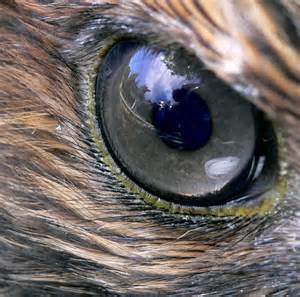
Alligator eye, public photo.


____________________________________________________

The UF Water Institute report on options for moving water south is now available:
(http://www.flsenate.gov/UserContent/Topics/WLC/UF-WaterInstituteFinalReportMarch2015.pdf)

Options to Reduce High Volume Freshwater Flows to the St. Lucie and Caloosahatchee Estuaries and Move More Water from Lake Okeechobee to the Southern Everglades

An Independent Technical Review by the University of Florida Water Institute

Go Gators! Thank you to Dr Wendy Graham and the scientists of the UF Water Study, 2015.

____________________

*This Everglades Trust website allows you to find and contact your elected officials and write them about purchasing option lands in the EAA and saving the everglades; see here for information: (http://www.evergladestrust.org)

“How to Speak About Overcoming Constraints,” SFWMD, St Lucie River/Indian River Lagoon

Possibilities Rather Than Constraints…

Jeff Kivett attended Colorado State University ; worked for 7 years in "water starved" Los Angeles; and now lives with his family  in Martin County, working in a leadership capacity for the SFWMD.(Photo SFWMD public files.)
Jeff Kivett attended Colorado State University; worked for 7 years in “water starved” Los Angeles; and now lives with his family in Martin County, working in a leadership capacity for the SFWMD. (Photo SFWMD public files.)
Slide 1 of the SFWMD power point presentation "Constraints to Sending Water South, 2015.)
Slide 1 of the SFWMD power point presentation by Jeff Kivett, P.E. SFWMD,  “Constraints to Sending Water South, 2015”.)

Regarding the outdated and failing water system of South Florida—of course there are “constraints.”

Everything in our material world is a “constraint,” but because we are human beings, creative and determined, we can “overcome” our constraints. ——but in order to do so, one must understand the “constraints” in the first place. Therefore, thank you to Jeff Kivett, P.E. Operations, Engineering and Construction Division Director, South Florida Water Management District, who created a recent power point on the subject. (http://www.sfwmd.gov/portal/page/portal/xrepository/sfwmd_repository_pdf/wrac_pres_system_constraints_2015_0205.pdf)

(http://www.sfwmd.gov/portal/page/portal/xrepository/sfwmd_repository_pdf/kivett_bio.pdf)


Slide 1 of the SFWMD power point presentation "Constraints to Sending Water South, 2015.)
Slide 1 Close up.

Recently US Sugar Corporation, and even some members from the Governing Board of the SFWMD itself , (http://www.sfwmd.gov/portal/page/portal/xweb%20about%20us/governing%20board “hijacked” Mr Kivett’s document, to make it seem like it proves everything is “in stone,” justifies the atrocities of the plumbing system, and makes the idea of buying land south of Lake Okeechobee null and void….Nothing, could be further than the truth….and was not the intension of Mr Kivett’s document.

(http://www.sfwmd.gov/portal/page/portal/sfwmdmain/home%20page)

The way I see it, and after talking to Mr Kivett myself, he has given us a map “of flight.” A map for us to learn and understand how to overcome our present limitations. I am grateful to him for the map, and I will use it not to keep things the same, but to promote change. 

________________________

Today I am going to share a document written by my friend Dr Gary Goforth. Dr Goforth (http://garygoforth.netand I took Mr Kivett’s document and wrote about each “constraint” in such a way as to understand how to overcome it.

Please read, learn and speak out about it —- thank you for working to be part the solution and inspiration to “overcome,” the failures of the present South Florida system so that in the future it does not only provide flood control, but also provides even more clean, fresh water to the Everglades, and to South Florida, and  no longer kills two of the most productive and economically important estuaries in North America, the St Lucie/Southern Indian River Lagoon and the Caloosahatchee.

St Lucie Inlet area near Sailfish Point, 2013, JTL)
St Lucie Inlet area near Sailfish Point, once the most bio-diverse fishing and breeding grounds in North America- Grant Gilmore. (Photo 2013, JTL)
Photo of plume from Lake O and area canals in 2013, Jupiter Island. Our present pulling system constraints unless changed will promote this indefinitely. (JTL)
Photo of plume exiting SLR/IRL at St Lucie Inlet–dark water is mostly from Lake O  and is flowing over protected near shore reefs towards Jupiter Island, affecting some of  the most expensive real estate in the country. S. Florida’s present pluming system “constraints,” unless changed,  will promote this destruction indefinitely. (JTL)
The waters of the St Lucie fill with algae, sometimes toxic, during heavy release from Lake O. (Photo Jenny Flaugh 2013.)
Toxic algae, photo by Mary Radabaugh of St Lucie Marina.)


Please use the map to refer to the numbers from top to bottom.

Slide 1 of the SFWMD power point presentation "Constraints to Sending Water South, 2015.)
Jeff Kivett’s slide summarizing present “constraints.” Most can be overcome.


______________________________________________________

Identifying and understanding system constraints is a fundamental step in identifying long-term solutions to minimizing destructive Lake releases to the estuaries.   Many constraints represent short-term, i.e., daily or weekly, restrictions, and are not absolute limitations to achieving long-term goals.   With proper planning, interim goals can be achieved in light of these short-term restrictions. Compiling the system constraints is particularly important to identifying long-term solutions for sending additional Lake water to the Everglades and minimizing destructive releases to the estuaries. A properly constructed “System Constraints” document provides fundamental engineering justification for the State to purchase available lands within the EAA in order to add to the storage and treatment necessary to achieve this long-term goal.


  1. Herbert Hoover Dike around Lake Okeechobee is a “dynamic constraint” since its importance in decision making is related to the time of year, the water level in Lake Okeechobee, and its structural integrity. At low water levels, the dike is not necessarily a constraint. Parts of the dike were constructed in the 1930s, and concerns over its structural integrity led to lowering the overall regulation schedule to the current interim operating schedule (LORS2008). It will be possible to hold more water in the lake, thus reduce the destructive discharges to the estuaries, as the U.S. Army Corps of Engineers continues the rehabilitation. The Corps has already spent $650 million in rehabilitation and they should speed this process up as fast as possible.


  1. Lake Okeechobee Regulation Schedule or LORS provides guidance on how much Lake water goes south and how much goes to the estuaries. The flexibility provided to the District and Corps to make lake operations decreases as lake water levels drop too low or rise too high, and as such, is also a “dynamic constraint.” LORS takes into consideration many factors, including the integrity of the Herbert Hoover Dike, the ecology of the lake ecosystem, and water supply needs of adjacent landowners. The current LORS (“LORS2008”) was developed in 2008 as an interim schedule in response to concerns about dike safety, and it is possible for it to be “reworked.” In light of the $650 million in rehabilitation work on the dike, the SFWMD could press for the Corps to revise LORS to provide greater storage in the Lake and reduce the destructive discharges to the estuaries. Senator Negron, Congressman Murphy and US Senator Rubio also have been breeching this subject. The Corps says that LORS will probably not be reworked until HHD is “fixed.” Another good reason to speed that up.


  1. Structure Capacity: “Structure capacity” refers to the amount of water that can be sent south during a relatively short timeframe (e.g., a day or a week) through the spillways and culverts located around Lake Okeechobee. The total structure capacity varies depending on Lake level and EAA canal level, allowing for different amounts of water to be sent south during different times of the year.  Water control plans for regions like the EAA are developed to achieve long-term goals in recognition of short-term structure capacities. FYI: It is best to send water south all year round, especially in the dry season when the stormwater treatment areas (STAs) and Everglades need water at the same time the Lake water levels need to drop for the health of the Lake ecology and in anticipation of the upcoming wet season.  Alternatives for minimizing estuary discharges that send additional Lake water south recognize this constraint, and include increased numbers and capacity of the structures along Lake Okeechobee.


  1. Canal conveyance capacity refers to the rate at which water can flow through a canal. During storm events, the EAA canals are used primarily to provide flood protection, however, these canals are not needed for flood protection every day of the year, and their capacity can then be used to deliver Lake water to the south. For this reason, canal conveyance capacity is not a fixed constraint in the context of making year-round deliveries of Lake water to the south. The canals could be enlarged to allow more water to go south. In addition, canal conveyance capacity could be increased as part of a flow-way/reservoir system constructed in the EAA on purchased option lands. This should be a goal with the new Amendment 1 funding.


  1. Species Protection. As water levels drop within the STAs during the dry season, migratory ground nesting birds (e.g., black necked stilts) and protected species (e.g., snail kites) find it conducive to build their nests. Once they nest in an STA, restrictions to protect the nests are put into place which severely limit the amount of water that can be sent through the STA. To discourage this nesting, the STAs’ Avian Protection Plan encourages a minimum depth of 6 inches. Achieving this operational guidance is a secondary benefit of treating Lake water in the STAs during the dry season. As an example, the only STA-5/6 with nesting snail kites at this time is STA-5/6 – coincidently the only STA that has not received Lake water.


  1. STA Treatment Capability. Overloading the treatment areas with nutrients from the EAA and Lake Okeechobee can adversely affect the ability of the STAs to optimally reduce phosphorus levels. However, as Lake water was delivered throughout the year at a relatively low rate, treatment performance has not diminished. In fact, STA performance has improved concurrent with the sustained delivery of historic large volumes of Lake releases to the south in a year-round operation. Over the last year, the outflow phosphorus concentration from STA-1E, STA-1W, STA-2 and STA-3/4 improved by 4 parts per billion (ppb), decreasing from 21 ppb to 17 ppb. The only STA that has not exhibited a performance improvement was STA-5/6 which did not receive any Lake water. In addition, District scientists indicate there have been no adverse impacts on the treatment vegetation due to Lake water.


  1. Pump Capacity: With the construction of the STAs, there is now more capacity to remove EAA floodwaters than ever before. This extra pumping capacity has also been used in the last year to significantly increase the delivery of Lake water to the Everglades. Many of the STA pumps are quite large and are not run 24/7. If smaller pumps can be built, additional Lake water could to be sent south “all day and night.”  Amendment 1 funding could be used to construct additional pumps, purchase lands and build additional STAs or other features.


  1. STA 5/6 Connectivity: There are 5 STAs, and STA-5/6, located in Hendry County, is the only STA that has not received Lake water in several years. This STA has the poorest performance of the STAs and is currently the only STA with nesting Snail Kites, which places strict limits on allowable water depths within the STA. While a physical connection exists between the Lake and the STA, the associated operations are complicated. Improving the connection to the Lake should be a priority so even more Lake water can be sent south while providing hydrologic benefits to the STA.  Portions of STA-5/6 can be sent directly to the northwest portion of WCA-3A, an area that needs Lake water to keep from drying out, without passing through the EAA canals.


  1. Wildlife Management Areas: Over 60,000 acres of public lands lie between the EAA and the lake, and water levels are managed to improve remnant Everglades habitat and are very important to wildlife. These areas are not being used to store and treat additional Lake water, and could be used to do so during the temporary periods of emergency releases from the Lake. The current operating schedule attempts to maintain water depths between 0 and 1 foot deep, which also provides suitable habitat for game hunting. The hunting community is our friend and we need to ask them for help during these temporary periods of emergency Lake releases.


  1. Water Level Limitation (Tree Islands & Wildlife): These areas, too, are very sensitive as the tree islands are sacred to our state’s native peoples/they are protected. The animals get on them when water is high to stay safe. It is only possible to send more water around them if it does not hurt the integrity of the tree islands. We should maintain good relationships with our native American friends; they have huge water problems too. Delivering treated Lake water to the WCAs throughout the year (not just during the wet season) and increasing out flows from the WCAs along the Tamiami Trail will help protect the remaining tree islands.


  1. LEC (Lower East Coast Canal Conveyance): These are canals that move local floodwaters and Lake O water east to replenish drinking water wellfields and send excess water into the Atlantic. They could be enlarged to increase their conveyance, although it would be better not to waste this water to the ocean, and instead, keep it within the south Florida system. As sea levels rise, additional Lake water will be needed to stave off saltwater intrusion in the coastal wellfields.


  1. Levee Safety: This earthen levee was built along the eastern boundary of the water conservation areas (WCAs) and keeps water from going into developed areas along the east coast. The safety of these levees places a constraint on the water depths within the WCAs. Water depths within the WCAs are a function of rainfall, evaporation, seepage and the movement of water into and out of the WCAs. Delivering treated Lake water to the WCAs throughout the year (not just during the wet season) and increasing out flows from the WCAs along the Tamiami Trail will help maintain safe water levels.


  1. Flow Limitation: The Tamiami Trail blocks the flow of water south into the Everglades National Park; more openings are being installed to increase this flow, and more could be put in for the future. Stringent limits of phosphorus are in place along the Tamiami Trail, and the State and Federal governments are currently discussing potential appropriate revisions. For the most recent year, the geometric mean of phosphorus was 5.6 ppb – well below the 10 ppb criterion.


  1. Flood Risk (G3273, South Dade Conveyance System): This area is around the city of Homestead, adjacent to the Everglades National Park.  Right now they are having serious high-groundwater issues, stemming from the desire to hold higher water levels in Park. This is being studied and groundwater levels may be exacerbated with sea level rise. Potential solutions include construction of a cut-off wall to minimize seepage from the Park.


*The bottom line is that resolving “constraints” is only limited by our will and imagination and they should not be presented as “unchangeable.”


Understanding Why Sometimes Some Things Don’t Make Sense, St Lucie River/Indian River Lagoon

Waters in St Lucie River on west side of Sewall's Point, (Photo Ed Lippisch)
Lake O water and some area canal water flowing through SLR after ACOE opened  S-308 on 1-16-15. (Waters in St Lucie River east of Roosevelt Bridge) Photo taken  1-25-15 by  Ed Lippisch)

One thing to remember is that the St Lucie River and many parts of the Indian River Lagoon are “impaired,” as determined by the state of Florida at least by 2002 and 2008:

SLR impairment: (http://www.dep.state.fl.us/southeast/ecosum/ecosums/SLE_Impairment_Narrative_ver_3.7.pdf)

IRL impairment: (http://waterwebprod.dep.state.fl.us/basin411/indianriver/assessment/G5AS-IRL_Low-Res-Merge.pdf)

This basically means any number of things, but mostly, that there is too much “nutrient” (phosphorus and nitrogen) in the water. This comes from many sources and all of the sources should be addressed. These nutrients encourage algae blooms, sometimes toxic,  destroying seagrasses, water clarity, and other “life.”

So no matter how “good” today’s water quality reports may be, or how good the water looks, or whether the Martin County Health Department reports “acceptable” levels of bacteria in the water, the waters of our area are “impaired.” This is especially true, “under the water” where one really can’t see unless you dive in with a mask and flippers.

The state saw this “impairment” status coming for decades due mostly to Florida’s  development boom and the gigantic and historic role of agriculture, but…..

Yes, the key word is “but,” it happened any way…


More recently, on January 16th of 2015, the Army Corp of Engineers (ACOE) started dumping from Lake Okeechobee into the SLR/IRL again. This is early in the year to start dumping and historically this foreshadows a bad summer—-BUT Lake O. was high and the ACOE and South Florida Water Management District (SFWMD) like to have 3 to 4 feet of “freeboard” in the lake so if a hurricane comes in summer and the diked lake fills with  3-4 feet of water, the Herbert Hoover Dike doesn’t break. They don’t like the lake to be over 15.5 feet or so.  It is “best” if the lake is around 12 feet by summer–BUT they will never tell you that——something to do with “water supply…”

Chart  releases 2-15-14 by the SFWMD showing releases from Lake O since January into SLR/IRL.
Chart releases 2-24-14 by the SFWMD showing releases from Lake O since January into SLR/IRL.

The above chart provided by the SFWMD shows all releases since January into the SLR/IRL. Blue is Lake O. The ACOE stopped for one week starting  February 17th so Martin County could complete a bacteria study.

During this time I went up in the plane with my husband; the water looked great in the Crossroads by Sewall’s Point and the St Lucie Inlet as it was an incoming tide and releases had been halted.

One might think: “Oh the water is healthy again!”

Remember, it is not.

SLR/ILR Crossroads 2-22-15. (Photo JTL)
SLR/IRL convergence waters between Sewall's Point and Sailfish Point 2-22-15. (JTL)
SLR/IRL convergence waters between Sewall’s Point and Sailfish Point 2-22-15. (JTL)

Another factor in all of this is—— if you look at the SLR/IRL reports from Florida Oceanographic (http://www.floridaocean.orgover the entire time of the recent releases,  measuring salinity; visibility; and dissolved oxygen, the reports are quite good. And they are good, but this does not remove the “impaired status” of the river. 

I apologize they are out-of-order below, but I could not achieve better with out great time and effort.

You can click on the images to enlarge the reports. These charts basically show a consistent grading of  “B to A”  water quality in the SLR/IRL since January 8, 2015—- other than the South Fork which of course is where the water from Lake Okeechobee is coming into the St Lucie River through C-44!

Anyway, to repeat again, one must remember that at all times and in all places right now no matter how pretty or how good a chart looks,  our St Lucie River and parts of the Indian River are “impaired.”

We must work to improve the status of our rivers by lessening  area freshwater canal runoff; our own “personal pollution” though fertilizer, septic and other stuff we put on our yards and down the sink; from roads/cars–Florida Department of Transportation (FDOT) canals are everywhere and have no “cleaning;”  and most of all, we must work to one day redirect as much water away from Lake Okeechobee as possible.

The purchase of land in the Everglades Agricultural Area south of the lake is about the only place this can be achieved.

It is all so confusing sometimes, BUT one thing is for sure, the more we learn, the more we can help and inspire others to clean up our rivers!


FOS
FOS 1. 1-8-15
2.
2.

photo 1 photo 2 photo 5 photo 3

FOS charts out of order showing water quality.


A Simpler Time and Place? Hutchinson Island, SLR/Indian River Lagoon

1949 aerial photo of the Peter Klive house on Hutchison Island. Near this area became "Bathtub Tub Beach" and the exclusive development of Sailfish Point. (Photo Thurlow Archives/Ruhnke Collection.)
1949 aerial photo. Atlantic on left, Indian River Lagoon on right. Photo shows the “Peter Clive House” on Hutchison Island. Just south of this area became “Bathtub Reef Beach” through the Save Our Beaches Campaign of MC. The land furthest south became the exclusive development of Sailfish Point. (Photo Thurlow Archives/Ruhnke Collection.)

I always enjoy looking at old photographs, and fortunately my mother and father have acquired hundreds through their history work. Many of them spawn memories of what for me was a “simpler time and place” in Martin County history—as I was a child.

My mother probably took me to the “Bathtub Beach,” with family and friends, for the  very first time, when I was an infant, but in my first memories of the place I was probably four or five years old.

Somewhere down from Bathtub Beach ca 1969- Lynda Nelson, Cindy Luce, and me. (Photo Thurlow Family Album)

I can remember my mother parking along the road and all of us walking– carrying all of our towels, buckets, and nets to catch tropical fish in the reef (to be returned) and my looking down and seeing bright, yellow beach-sunflowers— the sand was SO hot, you wouldn’t believe it, and there were stickers. Hundreds of stickers that stuck in your feet and you had to stop and pull them out as the sun beat down on you like a flashlight.

I remember, it became a game with me to see if I could walk in the burning sand from the road, along the path, to the beach without any shoes. I remember jumping in the cool water and swimming  to the reef and sticking my homemade net into a hole to catch a little fish and a moray eel came right out and put its scary face up to my mask!

I remember the simplicity of these times, and the beauty of this place that is no longer wild like it was then, but is still equally remarkable.

This photo is labeled as "bathtub washout" no year but from the same era as above photo  ca 1950. (Thurlow Archives)
This photo is labeled as “bathtub washout” no year but from the same era as above photo ca 1950. (Thurlow Archives)

The photo above shows Seminole Shores, that became “Sailfish Point” and a formalized  county beach–“Bathtub Reef Beach.” Even at the time of this photograph there were “issues:” the photo is labeled “Washout.”  As we all know, today, this area is still eroding away and the county must spend substantial amounts of monies  in partnerships with the state of Florida to “re-nourish” this area. See chart below for all Martin County, provided for me by Martin County.

Beach Re-nourishment Costs.
Beach Re-nourishment Costs Ten Year History, 2015.

When I really think about it, every era of history has its difficulties. It is never simple.

The aerial photos I am sharing today were taken not long after the atrocities of World War II. I was born in the social and political unrest of the 1960s…Today has its own set of problems whether it be the possibility of terrorists training in Treasure Coast airports; our eroding beaches; the “tipping point” that has occurred with releases from Lake Okeechobee and the area canals into our St Lucie River/Indian River Lagoon; our struggles with the US Sugar option land purchase; or the next population explosion that our state is counting on….

Nonetheless, it is rather amusing to me, that after all these years, some things remain the same: it is still beautiful here;  I still love the fish; and somehow sometimes I still feel like I am running on the hot sands to see how long I can stand it, having to stop to pull out those irritating stickers; and every once in a while, I stick my net into a hole, and out pops a moray eel…. 🙂

__________________________________________________________

Martin County Beaches: (http://www.martin.fl.us/portal/page?_pageid=354%2C1238847&_dad=portal&_schema=PORTAL)

TreasureCoast.com news piece HISTORY/SAVE OUR BEACHES, JTL: (http://www.treasurecoast.com/index.cfm/on-the-water/fishing-news/e2809csave-our-beaches-campaign-e2809cinstilled-activism-1974-2014-indian-river-lagoon/)

Helping the SFWMD Catch a Fish–Solidarity, St Lucie River/Indian River Lagoon

Kevin Powers, SFWMD Vice Chair; Janeen Mason, Solidarity Arts, Marsha Powers, MC School Board. (Photos Jacqui Thurlow-Lippisch, 2-12-15.)
Colorful and skeleton “Solidarity Fish”….Kevin Powers, vice-chair SFWMD; Janeen Mason, Solidarity Arts; Marsha Powers, Marin County School Board. (Photo, Jacqui Thurlow-Lippisch, 2-21-15.)
Close up of solidarity fish on Florida's Capitol steps, Clean Water/Amd. 1 Rally 2-17-15.) (JTL)
Close up of solidarity fish on Florida’s Capitol steps, Clean Water/Amd. 1 Rally 2-17-15,  photo JTL.)

Recently, Kevin Powers, vice-chair of the Governing Board of the South Florida Water Management District, called me asking about the “solidarity fish,” so I went even a little further and arranged for a meeting with Kevin, his wife, (Martin County School Board Member), Marsha Powers, and artist/writer extraordinaire, —Janeen Mason.

(http://www.sfwmd.gov/portal/page/portal/xrepository/sfwmd_repository_pdf/powers_bio.pdf),

(http://www.solidarityarts.com)

Sometimes in my world, it is best not to ask questions. It is best just to “do.” Knowing this timing and following my intuition is an important part of my mission in trying to save the St Lucie River/Indian River Lagoon…

Janeen Mason was a sport, and we met with my giving her little notice— she brought some of her beautiful, colorful, skeleton fish that have come to symbolize the river movement along the Indian River Lagoon. In fact, her idea is spreading across the state as she is called by others seeking advice on how to start such a “school,” (http://www.solidarityarts.com) as so many others across Florida have water issues too.


Janeen Mason with her fish for Kevin Powers, SFWMD. (Photo JTL.)

When Janeen met the Powers at their home, it was a wonderful thing for me, as I was able to learn her story which I had never really heard. (http://www.janeenmason.com)

Janeen told of being a young person, seeing the tropical fish in the Florida Keys for the very first time, and the powerful impression they made upon her young mind. She has carried this image with her through out her life, and most recently transposed it into the river  movement in response to our “Lost Summer” of 2013 when the South Florida Water Management District (SFWMD) and Army Corp of Engineers (ACOE) dumped polluted Lake Okeechobee water for five months (on top of area canal runoff) into the St Lucie River, causing horrific, toxic conditions in our and the Calooshatchee estuary.

Since this era, the solidarity fish have been associated with the St Lucie River/Indian River Lagoon “river movement,” the River Warriors, and many others. Even Martin County used the symbol to decorate their holiday tree. There are bumper stickers and T-shirts you will see just about everywhere displaying the fish, colorful on one side, and a skeleton on the other….

These fish, you see in the photos on the Capitol steps, have been hand painted by hundreds of children and concerned adults;  displayed at the Elliott Museum; on the River Warriors’ Christmas/Holiday float in the City of Stuart parade; and even last year Washington DC!

Solidarity Christmas Tree in Washington DC, 2014. (Photo borrowed from Facebook.)

The fish are art in its purest form: “transformative and inspirational…”

So when Kevin Powers asked about the fish, I asked no questions. I saw an opportunity to help the District “catch a fish,” our fish, the solidity fish of the St Lucie River/Indian River Lagoon.

I believe, soon they will be swimming their way into some very powerful waters….. 🙂

Maggie Hurchalla with fish on pole juxtaposed to colorful and skeleton fish on steps of Capitol. All fish are individually hand painted by children, adults and artists Janeen Mason. (Photo 2-17-15, JTL)
Famed environmentalist and former Martin County Commissioner, Maggie Hurchalla, with holds fish on pole juxtaposed to colorful and skeleton fish on steps of Capitol. All fish are individually hand painted by children, adults and artists Janeen Mason. (Photo 2-17-15, Clean Water/Amd 1 Rally, JTL)
River Kidz
River Kidz surrounded by solidarity fish on steps of Florida’s Capitol. Quite a sight! (Photo 2-17-15,  JTL)
All colorful fish.....(Photo JTL.)
All colorful fish…..(Photo JTL.)

__________________________

South Florida Water Management District: (http://www.sfwmd.gov/portal/page/portal/sfwmdmain/home%20page)

“War–” US Sugar and The Everglades Trust, SLR/IRL


File photo, WWII bomber. (Public photo.)
File photo, WWII bomber, “flying over fields”. (Public photo.)

I must begin by saying  that my recent blogging has been somewhat “uncomfortable” for me, as I was raised to act like a “lady,” and recently I feel more like a fighter pilot.

Politics sometimes makes “being a lady” a difficult goal, so I do apologize to anyone, such as my mother, who may be offended by my relentless “fighting” blog posts recently regarding the importance of  state purchase of the 46,800 acres of option lands for sale by US Sugar Corporation.

As a warning, mom and others, today’s blog post will be more of the same, as a “type of war” has started.

—-A war of information. A war to influence our governor and legislature….a war over how to use Florida’s Amendment 1 monies….a war to save the St Lucie River/Indian River Lagoon, Caloosahatchee, Everglades, and drinking water for South Florida, or just to keep the “status-quo…”

In order to explain this, I will share what has happened over the past few days…

Option Lands Map SFWMD River of Grass, Option 1 is 46,800 acres and shown in brown. (SFWMD map, 2010)
Option Lands Map SFWMD River of Grass, Option 1 is 46,800 acres and shown in brown. US Sugar and the state are resisting the purchase of  these lands with Amd. 1 monies…(SFWMD map, 2010.)

On Wednesday, February 18th, Eric Draper, the Executive Director of Florida Audubon, (http://fl.audubon.orgwas quoted in a “Sunshine State News” piece as saying (regarding the flow way south) “—it will never happen, it’s pie in the sky…”

Knowing Mr Draper and knowing that words in news articles often are twisted for effect, I wrote Audubon immediately asking about the situation.  Mr Draper replied with an apologetic email and a letter he had written that day to Governor Scott in support of purchasing the option lands. See below:

Eric Draper, Executive Director of Florida Audubon. (http://articles.sun-sentinel.com/2013-06-26/news/sfl-about-eric-draper-south-florida-100_1_land-conservation-florida-house-florida-legislature)

Dear Ed and Jacqui, (Commissioner, Ed Fielding not my husband Ed!) 🙂

In my effort to promote the idea of an EAA reservoir and distinguish that from the hard to explain Plan Six I unwittingly played into a storyline not my own. I found the story confusing and somewhat unrelated to what I was trying to say. Nevertheless, I am sure that folks are disappointed to hear me discount the flow way and that was not my word or intent. As an 30 year advocate for the Everglades and Lake Okeechobee I feel strongly about moving water south. Audubon will continue to work on getting the US Sugar land purchased for the purpose of establishing a CERP reservoir.

I apologize to both of you and to all the supporters of the idea of Plan Six and a flow way.

Eric Draper
Executive Director

Audubon FLORIDA

Email from Eric Draper regarding article and quote. (2-18-15)


Eric Draper, Florida Audubon's,  letter to Governor Scott. (2-18-15)
Eric Draper, Florida Audubon’s, letter to Governor Scott. (2-18-15.)

I believe Mr Draper did not mean for his words as they were reported. Speaking with the media is sometimes tricky business and anyone who speaks to them long enough will feel that he or she has been “misquoted.”  Mr Draper’s  work is one of the main reasons Amendment 1 passed in the first place, and you can see by his letter above to Governor Scott he supports buying the option lands.

OK, one bomb down…Two to go….

So then on Saturday, Feb 21st, I get an email from my Florida League of Cities colleague,  Teresa Heitman,  who is a councilwoman for the City of Naples. She simply forwarded me an email she had received from US Sugar Corporation. You can click on the image below to read it, but basically it says: “Send the Water South?” “Not so fast”…and gives three articles supporting why the option lands should not be purchased,  why the “enviros”are nuts, and  one of the articles quoted is the one quoting  Eric Draper that I mentioned above!

As an aside, and as an elected official myself, I must say that I find it in poor taste that this email was sent from US Sugar Corporation directly to an elected official. Maybe Council- woman Heitman is on a “mailing list” for US Sugar, but this seems doubtful to me.

How many other elected officials were sent this email and why is US Sugar sending it out?

On the other hand, it kind of made me feel good when I saw it–like they were threatened by the grassroots river movement here along the St Lucie  River/Indian River Lagoon and the Everglades in general. Kind of ironic to think that US Sugar would need to influence elected officials with direct emails; seems like they already do that with everything else they do like spending millions of dollars on lobbying politicians…….sending this “tiny” email makes them look kind of desperate….

—obviously we have more influence than we realize….

Hmmm?

Also, the thought of a “David and Goliath” fight  is very appealing to me, as in that story, as we all know, David wins…

US Sugar email 2-21-15.
US Sugar email forwarded to me 2-22-15.
US Sugar Corperation
US Sugar Corporation heading on email.

Below is part of the email from US Sugar, just so you can see it. I also made sure the hyperlinks worked in case you want to read the “email bombs” being sent out.

Buy the land? Send the water south? Not so fast…

Dear Teresa,

In case you missed it, please find below highlights from a few recent articles discussing the constraints, risks and concerns with purchasing the U.S. Sugar land option to create a flow-way to send water south to the Everglades:

You can access the articles in their entirety by clicking on the hyperlinked titles.
1. Officials to enviros: Buying land, moving lake water south has risks

By: Christine Stapleton, Palm Beach Post
February 12, 2015

South Florida Water Management District officials made no commitments to several dozen environmental activists who begged them Thursday to buy land south of Lake Okeechobee for Everglades restoration, and for the first time they laid out the hurdles and risks they face in making such a buy. (http://www.mypalmbeachpost.com/news/news/state-regional-govt-politics/frustrated-enviros-buy-land-to-clean-everglades-be/nj82R/)

2. Speaker Crisafulli: Don’t buy land south of Lake O

By: Christine Stapleton, Palm Beach Post
February 18, 2015

House Speaker Steve Crisafulli, R-Merritt Island, says he opposes the controversial land deal that would enable the South Florida Water Management District to purchase 46,800 acres of land south of the lake at fair market value. (http://postonpolitics.blog.palmbeachpost.com/2015/02/18/speaker-crisafulli-dont-buy-land-south-of-lake-o/)

3. Eric Draper: Lake Okeechobee to Everglades Flowway ‘Will Never Happen’
By: Nancy Smith, Sunshine State News
February 18, 2015

Sending water south from Lake Okeechobee to meander naturally through the Everglades — the “flowway” endorsed by the Everglades Foundation as the only way — “will never happen, it’s pie in the sky,” admitted one of Florida’s leading voices on environmental policy. (http://www.sunshinestatenews.com/story/environmentalist-lake-okeechobee-everglades-flowway-will-never-happen)

——–From an email from US Sugar Corporation sent out 2-22-15.


Two bombs down, one more to go! 


OK, so tonight, Sunday, February 22nd, a friend contacted me asking: “Jacqui, did you see the commercial? The “buy the land” commercial!” I said I had not, and read the link he sent.

Commercial for Saving Florida's Waters, purchase the US Sugar option lands. (2-22-15.)
Commercial for Saving Florida’s Waters, purchase the US Sugar option lands. (2-22-15.)

See commercial here: (https://www.youtube.com/watch?v=t8HmRTY2OI0)

Wow. What a commercial! A very big bomb!

The  60-second TV spot starts airing  2-22-15 and  sponsored by the  Everglades Trust (http://www.evergladestrust.org) is running on cable and broadcast stations in Tampa Bay, Orlando, Fort Myers, West Palm Beach and Tallahassee.

The scrip reads: 

“Decades of uncontrolled pollution in the Everglades and Lake Okeechobee is endangering our health, killing our wildlife and threatening our drinking water.

Four years ago, the sugar industry signed a binding written contract to sell us land to clean up their pollution, and for a reservoir to protect our water.

It’s been called the most critical piece of land ever for Everglades restoration. Last November, 75% of Floridians voted YES to Amendment 1, making vital land purchases for the Everglades a part of the Florida Constitution.

Now, it’s up to the Governor to back it and the Legislature to fund it.

Call the Governor, call your legislator, and tell them to buy the land. Build the reservoir. And save Florida’s drinking water. Now, while there’s still time.

Sign the petition here SAVING FLORIDA WATER: (http://savingflwater.com)

Article Tampa Bay Blog: (http://www.tampabay.com/blogs/the-buzz-florida-politics/a-new-tv-campaign-presses-for-purchase-of-us-sugar-land/2218650)

So I think that this is a war of sorts. Between US Sugar and the Everglades Trust. For most readers of my blog interested in saving the St Lucie River/Indian River Lagoon, our ideology is that of the Everglades Trust….

In closing, when you have some extra time, please write to Governor Scott below, and sign the petition above, asking to support the purchase of option lands. And feel good about the influence you are already having in the war to save the Indian River Lagoon!

Write Governor Scott here: (http://www.flgov.com/contact-governor/)

Colorized version of file photo, bomber WWII. (Public .)
Colorized version of file photo, bomber over farm lands, WWII. (Public .)


Breaking Down the Wall, St Lucie River/Indian River Lagoon

Me standing in front of the Berlin Wall and "Noman's Land" 1990. Berlin Germany. (Photo by Christian Koch.)
Me standing in front of the Berlin Wall and “No-man’s Land” 1990. Berlin Germany. Alexander Platz in the distance. (Photo by Christian Koch.)
The Berlin Wall came down on November 10th, 1989.
The Berlin Wall came down on November 10th, 1989. Many believed this wall would never come down….

Yesterday,  I referred to our plight of trying to influence our state legislature and governor to purchase option lands in the Everglades Agricultural Area (EAA)– in order to save the St Lucie River/Indian River Lagoon, as “breaking down a wall…”

To quote:

—–all this pushing IS having effect. I also know it may push the “powers that be” faster into what-ever-it-is that breaks this wall of historical government/agriculture “self-interest,” because water and the flood gates of the people will in time bring this wall down.”

This got me thinking about another wall I have seen come down in my lifetime, and why I remain optimistic in about our journey. If you were alive 1989, you “saw” the Berlin Wall come down in Germany. Many believed this wall of communism would “never come down,” but it did. I was in Germany just months after the wall actually broke open on November 10, 1989 and lived there teaching for two years.  I think this is one reason I believe we can achieve our goals. Stranger things have happened…

I think President Reagan’s said it best in his speech. His words remain an inspiration to us today.

“THIS WALL WILL FALL. BELIEFS BECOME REALITY.”

YES…THIS WALL WILL FALL. FOR IT CANNOT WITHSTAND FAITH. IT CANNOT WITHSTAND TRUTH. THE WALL CANNOT WITHSTAND FREEDOM.——Ronald Reagan, 1987

Caption words of Ronal Reagan, 1990.
Words of Ronal Reagan from his historic speech.

The EAA is a wall of sorts. A symbolic wall. It is time to break down this wall. I have faith we will do just that…..and really, we already are!

Berlin Wall, as it looked in Germany prior to 1990.(Public image)
This satellite photo shows water on lands in 2005. One can see the lands in the EAA are devoid of water. This water has been pumped off the lands into the Water Conservation Areas, sometimes back pumped into the lake, and also stored in other canals. (Captiva Conservation 2005.)
This image shows a figuarative “wall” surrounding the EAA. (Captiva Conservation 2005.)
South Florida's southern Everglades, 1950 vs. 2003. (Map courtesy of SFWMD.)
South Florida’s southern Everglades, 1950 vs. 2003. A wall has been created separating Lake Okeechobee from the Everglades at the expense of the estuaries.(Map courtesy of SFWMD.)
Berlin Wall1990. (Photo public domain.)
Berlin Wall 1990. (Photo public domain.)
Maggy Hurchalla...
Maggy Hurchalla…and other River Warriors on the steps of the state capitol trying to break down a wall.  (Photo JTL, 2-18-15.)
Berlin Wall, 1990. (JTL)
Bernauer Strausee, Berlin Wall in background. (JTL 1990.)
Bernauer Strausse, Berlin Wall in background. (JTL 1990.)
Wall with "East Germany" feet away...(JTL 1990.)
Wall with “East Germany” feet away…(JTL 1990.)
In front of the wall....1990. (Photo Christina Koch.)
In front of the wall….1990. (Photo Christinan Koch.)
Crane taking down the Berlin Wall near 1990. (Public photo)
Crane taking down the Berlin Wall near Brandenburg Gate 1990. (Public photo.)
Wall surrounding stadium. stadium. (JTL )
Wall surrounding stadium. (JTL )


Tallahassee or Bust! River Kidz and the Clean Water Rally, SLR/IRL

River Kidz
River Kidz, “Tallahassee or bust! 2-18-15 (photo by Betsy Siegel.) (Olivia Siegel, Kiele and Naia Mader.)
Save our River!
Save our River!
Tallahassee or Bust!

It’s been a long time since I was in a car full of kids for eight hours!

Three members of the River Kidz, River Mom, Nic Mader, and I took off from Martin County yesterday to make certain these kids had a voice—and an experience of a lifetime.

Today starting a 11:30 the steps of the Florida capitol will be filled with hundreds of people from across our state for Florida’s Clean Water and  Amendment 1 Rally.  Multiple organization will take part with the Sierra Club leading the way. Founding member, John Muir, must be smiling in his California grave, at the thought of Americans continuing to fight for the beauty and wonder of nature and it’s most precious resource, clean water!

(http://action.sierraclub.org/site/MessageViewer?em_id=354298.0&dlv_id=311281)

The ride was fun and the Kidz reviewed their new workbooks to share with the Senate Natural Resources Committee.  We created videos off our iPhones and posted them to the River Kidz Facebook Page.

(https://www.facebook.com/pages/River-Kidz/237123116309196)

It was awesome. The kids truly get it and are fulfilling their created mission statement: “to speak out, get involved and raise awareness, because we believe kids should have a voice in the future of our rivers.”

We talked about the state of our St Lucie River/Indian River Lagoon;  Amendment 1 and how it works; we talked about the goal for a land purchase in the Everglades Agricultural Area; we talked about the power and history of the sugar industry and then we stopped at Diary Queen and got a “blizzard!” I had an lemon-lime slush….

Blizzard anyone?
Blizzard anyone?

Caught in traffic for a solid two and a half hours outside of Gainesville, Naia, Kiele, and Olivia made the best of it while Nic and I wondered if we were going to run out gas!

Arriving at our hotel room at 8:00 PM, after showing the girls the Capitol and the campus of FSU, (Nic and I are both Gators!) we had dinner at Ruby Tuesdays. I told Nic we had to go somewhere where I could get a beer!

Nic and I were exhausted. The kids ate by themselves in a separate booth. I looked at Nic saying: Nic, you are a really good mom. She is. She was incredible yesterday pulling snacks out of secret compartments and having the patience of a saint……She smiled. ” Jacqui, they’ll remember this this rest of their lives and most important, it will help save our river….”

Teaching in the car.....
Teaching in the car…..

River Kidz is a division of the Rivers Coalition: (http://riverscoalition.org)

Dr Van Lent–Why an EAA Reservoir Will Help to Save the St Lucie River/Indian River Lagoon

Slide 1. (Dr Thomas Van Lent, Everglades Foundation, 2015)
Slide 1. Everglades Foundation, 2015.)

Today, I am going to try to simplify and share the idea of an “EAA reservoir.” You probably have been hearing a lot about this, but you may not know how it fits into a an option lands purchase and the “sending more water south” concept that will help save the St Lucie River/Indian River Lagoon, and the Everglades.

This is not fully understood by me either, so I contacted Dr Thomas Van Lent of the Everglades Foundation; he sent me some information that today will share with you.

For me all of this is part of a “flow way concept,” though some may disagree.

Dr Tom Van Lent, Everglades Foundation. (Photo 2015.)
Dr Tom Van Lent, Everglades Foundation, (EF). (Photo 2015.)

(http://www.evergladesfoundation.org/about/staff/)

First things first.

LAND PURCHASE: In order to do anything that will actually take a significant amount of water off of Lake Okeechobee, so the ACOE doesn’t have to discharge to the SLR/IRL and Caloosahatchee, there needs to be land to “store, clean and convey that water south.”

Because over the past 95 years, the EAA took up all the southerly land to create their Everglades Agricultural Area, 700,000 acres of land south of Lake Okeechobee, we are “forced” to purchase lands in the EAA to move any water south. Thankfully, land is for sale; although US Sugar rather not sell it.  (Long drama….let’s just leave it at that–the land is for sale; I believe the state should buy it with Amendment 1 monies and /or “bond it.”) This Option 1, the brown lands below, runs out in October of 2015.

Option Lands Map SFWMD River of Grass, Option 1 is 46,800 acres and shown in brown. (SFWMD map, 2010)

So after getting the land purchase necessity out-of-the-way, let’s look at Dr Van Lent’s write-up and slides:

Jacqui, I’ve attached a graphic that I hope will help explain.

I think everyone can agree that the best solution to the estuaries’ problems is to send more water south. But the major limitation to doing that today is (1) the water is polluted and would irreparably damage the Everglades and (2) the dams in the Everglades prevent you from getting the water out, so adding more water would drown tree islands and other habitats. So, the bottleneck to flow is actually further south, in the Everglades, and not in the EAA.

The solution is to clean the water and then remove the dams. But if you just pull out the dams so water flows when it’s wet, then the Everglades will dry up and burn when it’s dry. So an essential step to pulling out the dams is to add water supply reservoir so that you can keep the Everglades wet during droughts.

The Central Everglades Plan started to open up the dams in the Everglades, but was limited because it did not build any storage. With storage, you can open up the Everglades even more, sending more water south.—–Dr Van Lent

—-I have to say I don’t know much about the dams in the Everglades, but that’s OK, let’s move on….


Slide 1. EF.
Slide 1. (EF, 2015.)

(Refer to above slide.) Discharges to the Everglades are limited because the STA’s (Storm Water Treatment Areas) (1.) are too small and cannot clean enough water. Also, dams in the Everglades (2) limit the flow through the Everglades. This leaves the St Lucie/S IRL and Caloosahatchee (3) as the primary outlets for Lake Okeechobee.

Slide 2. (EF, 2015)
Slide 2. (EF, 2015.)

(Refer to above slide.) The “*Restoration Strategies” expansions to STAs (1) and water quality features in *CEPP (2) expanded the ability to treat Lake water going to the Everglades. Moreover, CEPP and Tamiami Trail (3) bridging opened up the Everglades to take more flow, improving conditions in the national park and Florida Bay. The means that significantly less water could be discharged to the St Lucie and Caloosahatchee estuaries (4). The EAA Reservoir (5) supplies water during dry periods so the Everglades remains set seven when the dams are removed. That is why a reservoir is critical to sending water south; it allows the dams in the Everglades to be breached.

Thank you Dr Van Lent!

__________________________________________

In case you are wondering, I have added the following below, to explain Dr Van Lent’s slide explanation.

*Restoration Strategies is basically making the STAs larger due to a long going law suit of the federal government against Florida that was finalized in the past few years under Gov, Scott. The lawsuit occurred because of the dirty water from Lake O polluting the Everglades: This IS happening and the state has to pay for it, 880 million.(http://www.sfwmd.gov/portal/page/portal/xrepository/sfwmd_repository_pdf/rs_waterquality_plan_042712_final.pdf)

*CEPP the Central Everglades Planning Project of part of CERP (the Central Everglades Restoration Project.)(http://www.saj.usace.army.mil/Portals/44/docs/FactSheets/CEPP_FS_September2013_508.pdfThis is a project that was “fast tracked,” by the ACOE and SFWMD. Congressman Patrick Murphy helped a lot with this. It was not taken on as part of WRDA the Water Resources Development Act that funds projects so it is still on the burner really and will have to be approved the next time a WRDA bill is passed by the US Congress. So right now it is NOT happening but hopefully will in the future…

___________________________________________________

Whew!

In closing, I hope these slides, and the explanation from Dr Van Lent helped you in your journey of understand all this. I believe all these things are part of a greater whole. I am very appreciative to Dr Van Lent for sending the slides. What an honor to correspond with him.

When one looks at such, one certainly realizes we are planning for a far off future…and nothing is guaranteed. This can be discouraging, but don’t let it be!

It is our responsibility to the children of the future.

Please write a short email to the Florida Senate in support of purchasing Option Lands this 2015 Legislative Session: (http://www.flsenate.gov/media/topics/wlc) Thank you!

____________________________________________

Everglades Foundation: (http://www.evergladesfoundation.org)

Cultural Shift, Yet SFWMD/WRAC Still Focusing on “Constraints” not “Possibilities?” SLR/IRL

Burning sugarcane fields in the EAA. (Photo Jacqui Thurlow-Lippisch, 2012.)
Burning sugarcane fields in the Everglades Agricultural Area near Palm Beach County. This area south of Lake O used to be the Everglades and today is the EAA. This area is a constraint to moving water south. (Photo Jacqui Thurlow-Lippisch, 2014.)

The St Lucie and the Caloosahatechee estuaries are part of the Everglades as was the Everglades Agricultural Area….

A sugar refinery in the Everglades Agricultural Area. (Public photo.)
A sugar refinery in the Everglades Agricultural Area, (EAA). Refineries are a constraint to moving water south. (Public photo.)
Black Gold, the muck soils south of Lake Okeechobee. (Photo JTL, 2014.)
Black Gold; the muck soils south of Lake Okeechobee that make the sugar industry wealthy. These soils are a constraint to moving water south. (Photo JTL, 2014.)
Sugar fields burning near Clewiston. (Photo JTL, 2014.)
Refinery near Clewiston– a historical town built of the sugar industry located south of Lake Okeechobee. This city and others  are a constraint to moving water south but could benefit from ecotourism economy along with agricultulre. (Photo JTL, 2014.)


Gail M. Hollender, begins her book, “Raising Cane in the ‘Glades, The Global Sugar Trade and the Transformation of Florida,” by stating in Chapter 1:

“…at a point in time usually unspecified, the Everglades made the transition from “worthless swamp” to “cherished wetland.”

Nothing has affected to flow of water south to the Everglades more than the creation of the EAA south of Lake O. (Map Everglades Foundation.)
Nothing has affected to flow of water south to the Everglades more than the creation of the EAA south of Lake O. The EAA is a constraint. (Map SFWMD.)
This satellite photo shows water on lands in 2005. One can see the lands in the EAA are devoid of water. This water has been pumped off the lands into the Water Conservation Areas, sometimes back pumped into the lake, and also stored in other canals. (Captiva Conservation 2005.)
This satellite photo shows water on lands in 2005. One can see the lands in the EAA are devoid of water. This water has been pumped off the lands into the Water Conservation Areas, sometimes back pumped into the lake, and also stored in other canals. Nonetheless, there are ways to move more water south through these canals and by creating a reservoir to store, clean and convey water south (Captiva Conservation 2005.)
Option Lands Map SFWMD River of Grass, Option 1 is 46,800 acres and shown in brown. (SFWMD map, 2010)
Option Lands Map SFWMD River of Grass, Option 1 is 46,800 acres and shown in brown. Option lands could be purchased to help move water south of the lake to the Everglades. (SFWMD map, 2010)

In the 1970s there was a “cultural shift” regarding the importance of “environmental protection.” America recognized the destruction it has promoted in building the country, especially in terms of agriculture and development.

“Cultural shifts” are powerful, and drive the evolution of our world. I believe the “Everglades shift” will eventually drive the restoration of the Everglades as well as the St Lucie  River/Indian River Lagoon. It is what the people want…often the broad knowledge of history becomes an enemy to itself. So is it with sugar and the Everglades Agricultural Area. Just look at the photos above.

Nonetheless, sometime the “powers that be,” and their most important stake holders prefer to concentrate on why history should remain as it is, and has been, even if destructive,  focusing on “constraints” rather than “possibilities” of the system.

This happened this past Thursday.

I was unable to attend the South Florida Water Management District’s (SFWMD) Water Resources Advisory Commission, (WRAC), (http://www.sfwmd.gov/portal/page/portal/xweb%20about%20us/wracbecause I had a board commitment to attend FAU/Harbor Branch’s Indian River Lagoon Symposium.

I was somewhat  taken aback when I returned from a long day at the symposium, looked at my computer, and saw an email from the SFWMD addressed to me, and all members of the WRAC entitled:

“System Constraints Follow-up Details – January and February WRAC”–“…a follow-up to your request to provide specific details associated with the constraints to moving water south through the system– with a professionally created 19 slide power point presentation.

“My request?”

NOT.

Slide 1 of the SFWMD power point presentation "Constraints to Sending Water South, 2015.)
Slide 1 of the SFWMD power point presentation “Constraints to Sending Water South,” 2015.

Let me explain..

At the January WRAC meeting, (http://www.sfwmd.gov/portal/page/portal/xweb%20about%20us/gb%20application)  I sat in as an alternate for Mr Joe Capra, and in the course of that meeting, a few members of the agriculture industry, as well as a couple of others who often support the agriculture industry, I will not state names but they are important, big players. I like and respect these people, but still— I must call them on this.

They asked the SFWMD to create a presentation showing  the “constraints” for sending water south so that people would understand (why it can’t be done…) In other words, why those people along the estuaries should “shut-up.” Why we should preserve a destructive history.

I got my nerve up saying: “Where I come from, we don’t want to talk about constraints; we want to talk about possibilities; we want to talk about change….” implying the District should  “show that too.”

Upon seeing the email, I realized the SFWMD did not honor my request, but did show the “constraints” asked to be shown by the agriculture industry. Oh well…usually when government  suppresses people, their motivation actually increases.

So is it with me, and I imagine it is so with you…

Dear, SFWMD district, please remember: your core mission is to “manage and protect the water resources of the region by balancing and improving water quality, flood control, natural systems, and water supply.” I don’t see anywhere in here where it says we must keep things the same and focus on constraints.

Let’s build a new future! Thank you!

SFWMD: (http://www.sfwmd.gov/portal/page/portal/xweb%20about%20us/history1)(http://www.sfwmd.gov/portal/page/portal/sfwmdmain/home%20page)

Sugar Cane historic postcard, ca. 1906. (Thurlow Collection.)
Sugar Cane historic postcard, ca. 1906 glorifying and “romanticizing”the sugar industry. (Thurlow Collection.)
Cartoon Sugar/IRL, 2014. (Public)
Cartoon postcard showing a modern-day perspective–the cultural shift apparent–mocking the sugar industry and its effects on environmental protection of the SLR/IRL/Everglades. (Public, D. Goldstein, 2014.)

INSPIRATIONAL QUOTE:

“It is time we stopped viewing our environment through prisms of profit, politics, geography, or local and personal pride. It is time for us to work together—to accept the truth about our problems in south Florida, and to set about solving them. It is time for us to do all of these things—because you know as well as I that the alternative will be disastrous to our economy as well as to our environment.”

——Florida Gov. Rubin Askew, (served 1971-1979) Rubin included, by law, the mission of Florida’s water districts to envelop “environmental protection.”


Mark Perry “Loves His Lagoon,” FAU/Harbor Branch Honors His Life and Work, SLR/IRL

Mark Perry with his father Clifton Perry (right) and another Gentleman, (left), (Year unmarked, Tides of Time, Celebrating the 50th Anniversary of the Florida Oceanographic Society, 1964-2014-puiblication, FOS.)
Mark Perry (middle) with his father, Clifton Perry, (right) and another Gentleman, (left). Clifton Perry was on the original board with James H. Rand, for FOS that Mark took over and has led to greatness. (Photo from “Tides of Time,” Celebrating the 50th Anniversary of the Florida Oceanographic Society, 1964-2014, publication, FOS.)
Brothers, Chris and Mark Perry sit on the bench along Hutchinson Island that is  in honor of their father, Clifton Perry. (Photo Sandra Thurlow, ca. 2000.)
Brothers, Chris and Mark Perry sit on the bench along Hutchinson Island that is in honor of their father, Clifton Perry. (Photo Sandra Thurlow, ca. 2000.)
1970 Martin County High School, funeral for the SLR/IRL. Mark was one of the students who participated in this Earth Day event. (Thurlow Archives)
1970 Martin County High School, funeral for the SLR/IRL. Mark was one of the students who participated in this iconic Earth Day event. This event had a huge impact on me as a kid…(Thurlow Archives.)
Budding Florida Oceanographic Society, ca. 1970s (Tides of Time, FOS.)
A budding Florida Oceanographic Society, ca. 1970s (Tides of Time, FOS.)
A young Mark Perry, ca. 1980s. (Tides of Time, FOS.)
A young Mark Perry, ca. 1970s/1980s. (Tides of Time, FOS.)
Photo by Thomas Winter of Mark Perry from Tom's blog about Lake O. releases 2012: (http://thomaswinter.com/blog/?p=432)
Mark Perry today, always teaching, always leading. Photo by photographer, Thomas Winter from Tom’s blog about Lake O. releases 2012: (http://thomaswinter.com/blog/?p=432)

One of the great things about living in the town you grew up in is watching people you know “grow-up,” and be recognized for their contributions to the Treasure Coast community.

One of these people, for me, is Mark Perry, who I have known since my earliest memories. Today, Mark is the Executive Director for Florida Oceanographic Society, (http://www.floridaocean.org), the epicenter in Martin County for education, protection, and advocacy for the St Lucie River/Indian River Lagoon. He has been leading the organization for 35 years…

Mark is older than me. I was born in 1964, and I believe Mark is about ten years my senior. When you’re a kid, that’s “a lot.” But it’s just enough to for constant admiration “from younger to older.” I have been admiring Mark Perry my entire life…

Mark, his brother Chris, and his parents Clifton and Mimi Perry attended St Mary’s Church as my family did and does today. I first met Mark at St Mary’s…I was probably 3 or 4 years old.

Me as a kid with my cat Misty, ca. 1968,. (Photo from Thurlow Family album.)
Me as a kid, with my cat, Misty, ca. 1968,. This is about how old I was when I met Mark Perry… 🙂 (Photo from Thurlow Family album.)

As I grew up, I remember my parents talking about the “older kids” in the youth group getting to go on a canoe trip down the Peace River, chaperones, sleeping bags, marshmallows, etc….It was the 1970s….I wanted so badly to be older and get to do the “cool” things the older kids did, but I was just a “kid,” and had to stay home…

Over the years, my parents kept me abreast of the Perry family and what was always most interesting to me was Mark’s journey with Florida Oceanographic, an organization his father helped found in 1964 that was originally located  in my childhood neighborhood of St Lucie Estates, along Kruegar Creek, in Stuart. I often visited there on my bicycle.

Early FOS, Kreugar Creek, ca. 1970s. (Tides of Time)
Early FOS, Kruegar Creek, ca. 1970s. (Tides of Time)

Over the years I grew up, moved away,  attended University of Florida, lived and worked in California, Germany, and Pensacola, and when I came home in 1997 to Stuart, to continue my teaching career, Florida Oceanographic had expanded from that neat place I saw on my bicycle to become the showcase institution it is today–-An organization that symbolizes the love and fight for the St Lucie River/Indian River Lagoon-and the life of Mark Perry.

Mark Perry today, FOS.
Mark Perry today, photo, FOS, 2015.)

Tonight at FAU/Harbor Branchs’, “Love Your Lagoon” gala, (http://www.indianriverlagoon.org/Love-Your-Lagoon-Dinner-.htmlMark Perry will be honored for his St Lucie River/Indian River Lagoon work. It is the foundations’ fourth annual, and those who preceded Mark in being honored are: 2012, Nathaniel Reed; 2013, Bud Adams; 2014, Alma Lee Loy.

Mark follows in big footsteps, and he has filled them, “completely.” Thank you Mark Perry for a lifetime of admiration, respect, and guidance in our love and fight to save the St Lucie River/Indian River Lagoon!

LYL honoring Mark Perry
LYL 2015, honoring Mark Perry, invitation.
FAU Harbor Branch, Love Your Lagoon, 2015 honing Mark Perry.
FAU Harbor Branch, Love Your Lagoon, 2015 honing Mark Perry.(STD Cover)
Mark and hi swift Nancy at FOS 50th anniversary. (Photo from event.)
Mark and his wife, Nancy at FOS’ 50th anniversary. (Photo from event.)
LYL 20014. With Mark Perry and others. (Photo HBOI, Brian S.)
LYL 20014. With Mark Perry and others. (L to R to L: Comr. Doug Smith, Mark Perry, Joe Duke, JTL, Sen. Joe Negron, Sherri Plymale.) (Photo HBOIF, Brian S.)

(These are excellent resources):

View Mark Perry’s FOS Presentation Library power point’s on the SLR/IRL here: (http://www.floridaocean.org/p/177/presentation-library#.VNTBDFriuR8)

Palm Beach Post article: (http://www.palmbeachpost.com/news/news/local/florida-oceanographic-society-head-marks-35-years-/nWnzC/)


Keeping America Beautiful, Keeping Martin Beautiful–River Kidz Member, Veronica Dalton, SLR/IRL

River Kidz member, Veronica Dalton, speaks, protest for SLR/IRL, St Lucie Locks, and Dam, 2013. At this event she spoke before more than 5000 people. (Photo Sevin Bullwinkle)
River Kidz member, Veronica Dalton, 10, speaks at the protest for SLR/IRL, St Lucie Locks, and Dam, 2013. At this event she spoke before more than 5000 people. She wrote her own speech with no help from any adult. (Photo Sevin Bullwinkle.)

“Keep Martin Beautiful,” will be recognizing environmental “heroes” tonight, and one of them is longtime River Kidz member, Veronica Dalton. Veronica was nominated and is therefore being recognized at the “Environmental Stewardship Awards” for her public speaking work on behalf of the St Lucie River/Indian River Lagoon.

You may or may not know, that “Keep Martin Beautiful” is affiliated with “Keep America Beautiful.”

Keep America Beautiful was founded in 1969, inspiring such things as the famous “crying Indian commercial,” and Earth Day. Keep Martin Beautiful was founded in Martin County in 1994. (http://www.keepmartinbeautiful.org/history.html)


Veronica Dalton with Leon Abood, Chair, Rivers Coalition, 2013. (Photo Sevin Bullwinkle.)
it is estimated that over 5000 people were there at the locks that day. (Sevin Bullwinkle.)

Veronica’s journey for beauty and the river started in 2011/2012 when she was 9/10, with the founding of River Kidz. She was always a leader and the organization gave her an opportunity to showcase her speaking and writing skills. She enjoys writing and speaking about something she cares about: the river.

Even before the “lost summer” of 2013,  at a River Kidz and Martin County welcoming of state paddle boarder icon, Justin Riney, under the bridge in Sewall’ Point, little Veronica politely pushed her way up to the front of the group, looked up at me and the other River Momz asking: “May I speak? I wrote something and I have it with me….”

Before Senator, Joe Negron's Senate Committee on the Indian River Lagoon and Lake Okeechobee Basin, 2013. (Photo JTL)
Before Senator, Joe Negron’s Senate Committee on the Indian River Lagoon and Lake Okeechobee Basin, 2013. (Photo JTL)

I knew at this moment, Veronica had a future and would utilize the River Kidz’ mission: “to speak out, get involved, and raise awareness, because we believe kids should have a voice in the future of our rivers.”

Her speech was heartfelt. And the crowd responded with cheers and a standing ovation. Justin smiled his handsome smile and never forgot the kids!

Shortly thereafter, with her parents, Tammy and John Dalton, Veronica sat in through Senator Joe Negron’s Senate Hearing on the Indian River Lagoon and Lake Okeechobee Basin, taking her turn to speak, showing the committee pictures she took of fighting conchs that had died at the sandbar due to the polluted freshwater releases from Lake Okeechobee as well as C-24, C-23, C-25  and C-44. I’ll never forget the secret service type gentleman at the podium holding up Veronica’s sign for the Senate Committee to see!

Dead conchs. (Photo Veronica Dalton, 2013.)
Dear Fighting Conchs, 2013.(Photo Veronica Dalton.)
Dead Fighting Conchs, 2013.(Photo Veronica Dalton.)
Clean Water Rally, 2014. (Photo
Clean Water Rally, 2014.

I believe Veronica’s words had a tremendous effect on the Senate Committee and many of the “out  of town” Senators expressed that they were amazed by our active and eloquent youth. I smiled saying, “Welcome to Martin County.”

Veronica has spoken most recently at the Clean Water Rally in 2014 at Phipps Park, and this year in 2015, has already shown me some of her speeches she wrote at Anderson Middle School, in Stuart. She is regular speaker and writer of St Lucie/Indian River Lagoon issues at her school. She is now 12 years old.

The legacy of environmental stewardship continues; let’s all give Veronica a big hand for keeping Martin beautiful and for keeping America beautiful…

And watch out America, here these kids come!

________________________________________________________

Keep America Beautiful/history: (http://en.wikipedia.org/wiki/Keep_America_Beautiful)

Keep Martin Beautiful:(http://www.keepmartinbeautiful.org)(http://www.keepmartinbeautiful.org/history.html)

River Kidz is a division of the Rivers Coalition. Go to (http://riverscoalition.org), and then River Kidz  tab for details.

The Future of Oranges, Sugarcane, and Drainage Gates, National Geographic, SLR/IRL

National Geographic magazine's February 2015 issue article "Treading Water," discusses among other things, the loss/threat to sugarcane south of Lake Okeechobee. (NG, photo of page 119.)
National Geographic’s February 2015 issue has an article entitled “Treading Water,” which discusses among other things, sea level rise and the future loss/threat to sugarcane and oranges south and around Lake Okeechobee in Florida. (NG, photo of page 119.)

My husband Ed was out of town on Friday, so I thought I would get some reading done on something other than the St Lucie River/Indian River Lagoon. That evening, with the dogs at my feet, I began reading the February issue of National Geographic magazine, a publication my parents filled our family home with, and I have kept subscribing to as a window to the outside wonders of our world.

After reading articles on the terrible trauma of “blast force” to US soldiers that served in Iraq and Afghanistan; Hawaiian identity and the sea; and the amazing microscopic revelations of mites; —–at the very end of the magazine, there was an article entitled: TREADING WATER about climate change, seal level rise, and South Florida.

The article focused quite a bit  on a Dutch company that sees “profit rather than loss” in floating houses in trendy Miami, but also mentioned a few things that had little silver lining such as an insert on page 112, entitled, “Home on the Water.” This insert briefly noted the 2,100 miles of canals, (that we are all so familiar with), that have been built over the past century to drain the Everglades and empty the state’s water mostly into the Atlantic Ocean. (FOS, 1.7 billion gallon a day on average….)

According to the article, if there is two feet of sea level rise, conservatively predicted by 2060, the gates  draining the lands around lake Okeechobee and the Everglades,  “will no longer work…”

I’ll be 95 in 2060….hope I can get out of the nursing home to see….

National Geographic page 112. "Given two feet of sea level rise, more than 80 % of the gates will no longer work."
National Geographic page 112. “Given two feet of sea level rise, more than 80 % of the gates will no longer work.”

The article also notes “two key” very threatened and very profitable agricultural industries: sugarcane and oranges.

National Geographic magazine's February 2015 issue article "Treading Water," discusses among other things, the loss/threat to sugarcane south of Lake Okeechobee. (NG, photo of page 119.)
National Geographic magazine’s February 2015 issue article “Treading Water,” shows locations of sugarcane in the Everglades Agricultural Area, and orange groves both north and south Lake Okeechobee.  (NG, photo of page 119.)

Food for thought….

Sea level rise is a factor I deal with as a commissioner in the Town of Sewall’s Point and have been exposed to through the Florida League of Cities. The sea has risen before and it is rising again. Too bad humanity is speeding things up, but we are…

After listening to many state agencies and scientists speak on the issue, I  personally do not believe Florida will be abandoned or”sink.” I think it will rise in new form, adapting to change as humanity has done for thousands if not millions of years.

Nonetheless,  if I owned sugar groves in the Everglades Agriculture Area, I’d have an exit strategy; if I worked for the Army Corp of Engineers, or South Florida Water Management District, I would reexamine the plumbing; and if I were Florida’s governor, or legislature, I would be talking to scientists about the advantage of fresh water on the land south of lake, pushing back salt water coming up from below and providing drinking water in the future to all those people living on floating houses in Miami…

So much for reading about the “rest of the world”…our St Lucie River/Indian River Lagoon/ Everglades issues are inescapable!

________________________________________________

National Geographic Magazine: (http://www.nationalgeographic.com)

FOS: (http://www.floridaocean.org)

Town of Sewall’s Point: (http://sewallspoint.org )—FEMA houses being lifted, flood map changes are just a few of the things the town is dealing with in regard to sea level rise.

Sunrise, Sunset–St Lucie River/Indian River Lagoon

Sunrise along the Indian River Lagoon, by John Whiticar, 2015.
Sunrise along the Indian River Lagoon. Photograph by John Whiticar, 2015.

“Sunrise, sunset, sunrise, sunset,
Swiftly fly the years,
One season following another,
Laden with happiness and tears…”

1st verse, of song from musical “Fiddler on the Roof,” 1964


The beautiful sunset and sunrise photos of our area’s photographers invoke a deep appreciation of our St Lucie River/Indian River Lagoon, as well as the struggles and successes of our lives.

Sunsets and sunrises seems intrinsically linked to inspiration and reflection in all of us.

Thankfully, here in the Indian River Lagoon region, we can still see our sunrises and sunsets, although the health of our river, and thus our ability to enjoy the river, is  “impaired.”  This was scientifically determined by the Florida Department of Environmental Protection (FDEP) in 2000. (http://www.dep.state.fl.us/southeast/ecosum/ecosums/SLE_Impairment_Narrative_ver_3.7.pdf)

In Beijing, China, last year, the government erected a televised screen showing sunsets, as the people could not see their sunsets any longer— due to the tremendous smog in their city. What a price to pay for economic “success.”

China starts "televising" the sunrise in Beijing, 2014. (Source earth journal.com.)
China starts “televising” the sunset in Beijing, as the city is continually blanketed in smog,  2014. (Source earthfirstjournal.org.)

Oddly enough, on some level, we have experienced the same thing. On a level of world comparison, we have a “thriving economy;” however, somehow, over the past 100 years, we have “lost our river.” Yet in most of the adds one sees, the river still looks beautiful and healthy.

Right now, the Army Corp of Engineers (ACOE) is discharging water from Lake Okeechobee, while  the South Florida Water Management District canals C-44, C-24, C-23, and C-25 are also dumping polluted water into our estuary. All of this extra water has been “engineered” to come here so agriculture and development can thrive. Us included…

Sunset, St Lucie River, 2014. Todd Thurlow.

So, right now there is “no other way,” and the ACOE and South Florida Water Management District are locked in a cycle of struggle to send more water south when the entire southern area south of Lake Okeechobee is blocked by the Everglades Agricultural Area— other than a few canals, to “send water south.” Plus the water is too dirty for the Everglades—but not for the St Lucie River/Indian River Lagoon that is already “impaired.”

The “mighty” Kissimmee too has been “engineered for the success of farming and ranches and development in its  former watershed. It is being partially restored by the SFWMD;  this is wonderful, a testament of the ability of the system to recover if given a chance….

And after all, it’s not so bad here right? We can still see the sun…..AGGGGG!

Let’s continue to turn this ship; let’s continue to fix our own yards, towns, cities, and counties;  let’s keep pushing the State for a reservoir/flow way to store, clean and convey water south. As Eric Eichenberg, CEO of the Everglades Foundation said yesterday at the Rivers Coalition meeting, this is the “only way” as the Kissimmee River’s continued restoration is simply not enough to hold all the water.

“Sunrise, sunset….sunrise, sunset….”we are thankful and we are inspired….

Please write: Florida Senate Email for use of Amendment 1 monies: (http://www.flsenate.gov/media/topics/wlc)


Sunrise, Indian River Drive, 1-21-15, John Whiticar.)
Sunrise Indian River Drive, 1-21-15,  John Whiticar.
Sunrise Indian River Drive, 1-21-15, John Whiticar.
Sunset, St Lucie River, Todd Thurlow, 2014.


The River Kidz’ Second Edition Workbooks are Here, Our Mission’s Quite Clear! SLR/IRL

River Kidz' Second Edition Workbook, presented by Marty the Manatee is here!
1.River Kidz’ Second Edition Workbook, 2015, presented by Marty the Manatee, is here!

River Kidz is a division of the Rivers Coalition: (http://riverscoalition.org)

2-2-15: ELECTRONIC COPY via TC Palm: http://shar.es/1oqnzM

_______________________________________

The first verse of the River Kidz’ Song, written by River Mom, Nicole Mader, and the River Kidz goes:

“The River Kidz are here; Our mission’s quite clear; We love our river and ALL its critters; Let’s hold it all dear…”

The rest of this wonderful song can be found on page 36 of the new workbook below.

After over a year of creative preparation, and community collaboration, the River Kidz’ 2nd Edition Workbook is here!

After long contemplation this morning, I decided to share the entire booklet in my blog; but as WordPress, does not accept PDF files, I have photographed the entire 39 pages! So, not all pages are perfectly readable, but you can get the idea.

The really cool thing about this workbook is that it was written “by kids for kids,” (Jensen Beach High School students for elementary students). The high school students named the main character of the book after Marty Baum, our Indian Riverkeeper.  The students had met Mr Baum in their classroom (of Mrs Crystal Lucas) along with other presenters and field trip guides like the Army Corp of Engineers, South Florida Water Management District, and politicians speaking on the subject…

The books will be going into all second grade public school classrooms and many private school classrooms beginning in February of 2015. Teacher training  will be underway this February at the Environmental Studies Center in Jensen: (https://www.facebook.com/escmc?rf=132947903444315)

River Kidz will make the booklet available to everyone. Some will be given away, and some will be used to raise money at five dollars a booklet. To purchase the booklets, please contact Olivia Sala, administrative assistant for the Rivers Coalition at olivia@riverscoalition.org —-Numbers are limited.

In closing, enjoy the workbook and thank you to Martin County, Superintendent, Laurie J. Gaylord for encouraging the workbook and for her  beautiful  letter in the front of the booklet. Thank you to Martin County School Science Leader, Valerie Gaylord; teacher, Mrs Crystal Lucas; Mom, Mrs Nicole Mader; Sewall’s Point artist, Ms Julia Kelly; Southeastern Printing’s Bluewater Editions’ manager and River Dad, Jason Leonard; to River Kidz founders Evie Flaugh and Naia Mader, now 14/13; years old–they were 10 and 9 when this started,—- to the Knoph Foundation, and the Garden Club of Stuart, and to the hundreds of kids, parents, students, businesses, politicians, state and federal agencies, and especially to Southeastern Printing and the Mader Family who made this concept a reality through education, participation. (Please see page 34 below.)

Thank you to all those who donated money for the workbook campaign and to River Kidz over the years, and to the Stuart News, for Eve Samples’ column, and reporter, Tyler Treadway, for including the River Kidz in their “12 Days of Christmas” for two years in a row.  River Kidz is grateful to everyone has helped…this is a community effort!

River Kidz is now in St Lucie County and across the coast in Lee County….

Remember, all kids are “River Kidz,” even you!

—-The workbook is in loving memory of JBHS student, Kyle Conrad.


2.
2.
3.
3.
4.
4.
5.
5.
6.
6.
7.
7.
8.
8.
9.
9.
10.
10.
11.
11.
12.
12.
13.
13.
14.
14.
15.
15.
16.
16.
16.
17.
18.
18.
19.
19.
20.
20.
21.
21.
21.
22.
23.
23.
24.
24.
25.
25.
26.
26.
27.
27.
29.
28.
29.
29.
30
30.
31.
31.
32.
32.
33.
33.
34.
34.
35.
35.
36.
36.
37.
37.
38.
38.
39.
39.

Having a Voice in How Amendment 1’s Monies are Spent, St Lucie River/Indian River Lagoon

How can Amendment 1's Water and Land Legacy monies be spent?
The Florida legislature has dubbed 2015 as the “Year of Water.” But how exactly can Amendment 1’s “Water and Land Conservation Initiative” monies be spent,  and how can we have a voice? (Water, public image.)

Hello again. Before I start, it is necessary quickly to review…:)

In yesterday’s blog, we discussed that when the South Florida Water Management District and the Army Corp of Engineers write or discuss “approved,” and “authorized,” projects, this does not mean they are “working on those projects” as the federal and state monies for those projects, like CERP and CEPP, may not have been “appropriated.”  —Meaning the state and federal government has not given the agencies money to do the projects even though they have been “approved.” (http://www.evergladesplan.org/about/about_cerp_brief.aspx)

That’s a mouthful! 

So basically, stakeholders are sitting around fighting about something that may never happen or might happen in 100 years.

Don’t get me wrong,  the ACOE and SFWMD are working on projects, but not all of the 60 plus that are part of the Central Everglades Restoration Project/CERP. Rather, the agencies work and stop, work and stop, work and stop, waiting and hoping for more money to be APPROPRIATED for some of the projects, or maybe just one of the projects they are working on, before elections start up again, and the government officials change their minds!

Terrible isn’t it?

This is not the issue with Florida’s Amendment 1 monies. These monies will be here this year in 2015, and although it is not the 12 billion plus needed to accomplish CERP quoted in 2007, it is substantial monies, perhaps 700 million this year after debts, and billions over time? Amounts will depend on the real estate industry as monies come from “doc stamps on the deed:”

According to Scripps Newspapers, “The measure requires the state to set aside 33 percent of the money it raises through real-estate documentary stamp taxes to protect Florida’s environmentally sensitive areas for the next 20 years.”

Money  to clean our dirty SLR/IRL water...
Money to clean our dirty SLR/IRL water…(Water, public image.)

These state of Florida monies, will be real and will be doled out each year by our hungry, varied, and ever-changing legislature….

It will be great to have the money, but this will be a bloody fight for the Florida legislature.

Picture throwing a steak into a gathering of starved pit bulls. This is about the scenario…

Nonetheless, our elected legislative “pit bulls “have a responsibility to listen to their contingency while they are fighting, and  this is why it is absolutely necessary that we all weigh in on issues of the polluted St Lucie River/Indian River Lagoon and its surrounding canals; Lake Okeechobee; the purchase of US Sugar option lands for a reservoir to store, clean and convey water; and eventual type of “flow-way” south to the Everglades…

Option Lands Map SFWMD River of Grass, Option 1 is 46,800 acres and shown in brown. (SFWMD map, 2010)
Option Lands Map SFWMD River of Grass, Option 1 is 46,800 acres and shown in brown. (SFWMD map, 2010.)

Let’s be good students and quickly review the language of Amendment 1 so we know who our competition is and how to outsmart them; I know it is  always kind of boring to read this sort of language, and it is somewhat long, but read it; know it; use it to your benefit!

Amendment 1 added a Section 28 to Article X of the Florida Constitution:[3]

SECTION 28. Land Acquisition Trust Fund. —
a) Effective on July 1 of the year following passage of this amendment by the voters, and for a period of 20 years after that effective date, the Land Acquisition Trust Fund shall receive no less than 33 percent of net revenues derived from the existing excise tax on documents, as defined in the statutes in effect on January 1, 2012, as amended from time to time, or any successor or replacement tax, after the Department of Revenue first deducts a service charge to pay the costs of the collection and enforcement of the excise tax on documents.
b) Funds in the Land Acquisition Trust Fund shall be expended only for the following purposes:
1) As provided by law, to finance or refinance: the acquisition and improvement of land, water areas, and related property interests, including conservation easements, and resources for conservation lands including wetlands, forests, and fish and wildlife habitat; wildlife management areas; lands that protect water resources and drinking water sources, including lands protecting the water quality and quantity of rivers, lakes, streams, springsheds, and lands providing recharge for groundwater and aquifer systems; lands in the Everglades Agricultural Area and the Everglades Protection Area, as defined in Article II, Section 7(b); beaches and shores; outdoor recreation lands, including recreational trails, parks, and urban open space; rural landscapes; working farms and ranches; historic or geologic sites; together with management, restoration of natural systems, and the enhancement of public access or recreational enjoyment of conservation lands.
2) To pay the debt service on bonds issued pursuant to Article VII, Section 11(e).
c) The moneys deposited into the Land Acquisition Trust Fund, as defined by the statutes in effect on January 1, 2012, shall not be or become commingled with the General Revenue Fund of the state.[4]

Did you read it? Did you see it? It says right there in the legal language: lands in the Everglades Agricultural Area and the Everglades Protection Area….

Let's support the SLR/IRL.
Let’s ask the legislature to support the SLR/IRL so we can have clean water…(Water, public image.)

A recent article about Pinellas County, near Tampa, talks about elected officials in that area taking advantage of the language and discusses their want for beach re-nourishment with the Amendment 1 money, that is also mentioned in the Amendment 1 language you just read….(http://www.tampabay.com/news/environment/calls-grow-louder-for-lawmakers-to-use-amendment-1-money-for-beach-repair/2214245)

Hmmmm?

Pretend you are a legislator: “Fix Lake Okeechobee and the estuaries, or beach re-nourishment?” Get it? 

So let’s compete! $$$$ Contact the Florida Senate. They have set up a web site to take our Amendment 1 requests. Just click and fill out below. Thank you for supporting our St Lucie River/Indian River Lagoon!

(http://www.flsenate.gov/media/topics/wlc)


____________________________________________________________________


Thank you to friend, Andy Fairbanks, for forwarding the article from Tampa Bay.

Amd. 1:
(http://ballotpedia.org/Florida_Water_and_Land_Conservation_Initiative,_Amendment_1_%282014%29)

Go to (http://www.jacquithurlowlippisch.com) and search by subject for topics related to this post.

Understanding “Approved” vs. “Appropriated,” St Lucie River/Indian River Lagoon


Money
Approve and Appropriate. What’s the difference? Isn’t the government working on fixing the Everglades? (Public image.)

“approve”

VERB

–officially agree to or accept as satisfactory:
“the budget was approved by Congress”
synonyms: accept · agree to · consent to

“appropriate”

VERB

—-devote (money or assets) to a special purpose:
“Congress finally did appropriate money to the Everglades C-111 project after 15 years…”
synonyms: allocate · assign · allot · earmark · set aside · devote

Sometimes, when I finally “get” something, I cannot believe it took me so long to understand. This has certainly been the case over the past six years when it comes to money, and projects, to help save the St Lucie River/Indian River Lagoon as part of the Central Everglades Restoration Project— known as CERP. (http://www.evergladesplan.org/about/about_cerp_brief.aspx)


SAVE THE WATER; SAVE THE SLR/IRL and EVERGLADES! (Waterfest art, 2nd graders, City of Stuart 2013)
SAVE THE WATER; SAVE THE SLR/IRL and the EVERGLADES.  (Waterfest art, 2nd graders, City of Stuart 2013.)

Although the projects for CERP were “expected” to take 30 years, 15 years has passed, and not one of the projects is fully completed. The kids that made the poster above may be grandparents by the time a couple of the dozens or so projects, that are necessary to fix the Everglades SLR/IRL, are completed.

Today, I thought I’d share this post just in case you are a bit confused by this long time line, like me.

I think another aspect of difficulty in “understanding” all of this is that many projects are written about, and talked about, in the press,and by the state and federal agencies, as if they are “under way,” when they are really not, or its just  government officials arguing over projects that may never be.

As all things in life, understanding this “mess,” may help us to overcome it.

Today’s lesson:

So, there are two words you will often hear: 1.”approval” and 2. “appropriate.”

Just because something is “approved,” does not mean it is “appropriated,” because in the world of government, “appropriate” means GETTING THE MONEY TO DO THE WORK, and “approval” just means a bunch of people at one point agreed something is a good idea.

Just like in a small town, a commission may agree the town needs new street lights, and advertise this in their newsletter, but the commission  may never, over time, actually do what is necessary for the staff to buy the lights and get them installed–like giving the staff the money. This is complicated by election cycles every two, to four, to six years! New people may not agree with the previous monetary decisions that were “approved.”

Water and money....
Water and money….

Let’s apply this to the US and State Government:

In the year 2000, the US Congress “approved,” the Central Everglades Restoration Project to help fix the messed-up south Florida Everglades system that was created mostly in the 1950s and 60s after a big flood in 1947. Stakeholders celebrated at the time, that the “over drainage,” dying estuaries, and the drying up of the Everglades would be fixed, but this situation is still not fixed enough to make a huge difference….Also, all the people that were in Congress in 2000 are mostly gone, and there are different priorities now.

Nonetheless, today, the Army Corp of Engineers/South Florida Water Management’s shared website on CERP reads:

“The Plan was approved (by Congress) in the Water Resources Development Act (WRDA) of 2000. It includes more than 60 elements, will take more than 30 years to construct and the current estimate in Oct 2007 dollars is $9.5 billion for projects ($11.9 overall including PLA and AAM).”

OK if you read this, you would think this might mean it was “approved” so it is going to, or is being done. This is not the case because the money needed to construct and complete these projects has not been APPROPRIATED (set aside.)

The streetlights were never purchased and put up!

The scenario becomes even more complex in some instances as the State of Florida may be bound by contract to also give money or “cost share.” And if the US Congress has not given their “approved” part yet, the State can’t really get going and give its part. Sometimes the State moves ahead anyway……

Anyway, so everybody is grumpy, and fighting, and it’s a big mess.

So the bigger question is after 15 years:

Even though we all have our hopes up that the US Congress will APPROPRIATE the money for the CERP project to help fix the Everglades and St Lucie River/Indian River Lagoon, and people worked very hard to achieve this we must think…

—-If we are true to ourselves, viewing history, we see a situation, like a bad relationship,  where someone promises you something, but never gives it to you…you keep hoping but it never happens….

—-Finally, after many years, you start to realize that although you have a “promise,” YOU ARE NEVER GOING TO GET IT!

(Or that it is unlikely anyway, or that you will be dead if you ever get it….)

Not a fun realization, but such is life…so do you stay in the relationship or break it off? Or maybe just become less dependent?

So here we are…..and there is some light now…

In closing…

Although the state of Florida cannot afford to fix the Everglades all by itself; it is too expensive, in the billions and billions of dollars. With the advent of Amendment 1 passing by 75%,  there may be some ability for Florida to do this.

But that is another blog, for tomorrow!


River Kidz Naia and Kiele Mader in front of the White House, 2013.)


Option Lands Map SFWMD River of Grass, Option 1 is 46,800 acres and shown in brown. (SFWMD map, 2010)
Option Lands Map SFWMD; Purchasing optional lands would start the process of having enough land south of Lake Okeechobee to store, clean and convey water south. (SFWMD map, 2010)

__________________________

CERP in depth, the project that may never actually occur, or will occur very, very, very slowly: ACOE/SFWMD (http://www.evergladesplan.org/about/rest_plan_pt_03.aspx) 

Where do the Water Conservation Areas End, and Everglades National Park Begin? Indian River Lagoon

Map showing Everglades National Park boundaries as well as Water Conservation Areas north of the park and other areas. (Map courtesy of Backroads Travels website, 2013.)
Map showing SFWMD boundaries overall, as well as Everglades National Park, and Water Conservation Areas. (Map courtesy of Florida Backroads Travel.)

This week, in our attempt to save and be knowledgeable about the St Lucie River/Indian River Lagoon, we have learned about the STAs, Strormwater Treatment Areas, and the WCAs, Water Conservation Areas; today, will we will ask the question, “Where do the WCAs end, and where does Everglades National Park begin?”

After all, “send the water south” means to the Everglades…

The location of the WCAs, (http://www.sfwmd.gov/portal/page/portal/pg_grp_sfwmd_landresources/pg_sfwmd_landresources_recopps_se_wca2_3)(https://loxahatcheefriends.comthe areas in light green-yellow in the above map, is confusing to me sometimes, as the Water Conservation Areas are “protected”as the Everglades, but they are not in Everglades Nation Park itself. Just yesterday, my River Coalition comrade, Karl Wickstom, commented on my post noting that  the WCAs are natural and not “built.”

He is right….

Nonetheless, they are managed and constrained….

On the Army Corp of Engineers’ Periodic Scientist Calls, the South Florida Water Management District is alway reporting how “full” or “not full” the WCAs are, so as to explain how much water “they have been able to send south/or not” through them…. The SFWMD has even created an amazing web site, that if you take the time to navigate, will teach you more than any of my blog posts ever can: (http://sfwmd.maps.arcgis.com/apps/MapTour/index.html?appid=a9072c94b5c144d8a8af14996ce23bca&webmap=d8e767997b0d494494243ffbc7f6f861)

The point is: in order to save the St Lucie/Indian River Lagoon, we have to keep an eye on the “big picture,” saving the Everglades…or what’s left, as “Everglades National Park.”

We have developed and altered this area so much very little is remaining–the drainage of the land,  the redirection of the Lake Okeechobee’s waters through the estuaries, the construction of the Everglades Agricultural Area, as well as development of the coast and inland, is a testament to the impressive determination of humankind and our ability to alter our environment; but it is also an embarrassment of our inability to constrain ourselves or think long term. (See below.)

South Florida's southern Everglades, 1950 vs. 2003. (Map courtesy of SFWMD.)
South Florida’s southern Everglades, 1950 vs. 2003. (Map courtesy of SFWMD.)
Redirection of water to the estuaries. Late 1800 and early 1900s.(Map Everglades Foundation.)

So back to the original question, where do the WCA stop and Everglades National Park begin?  Well, looking at the map below, we can see that Everglades National Park “proper” pretty much starts right under the Tamiami Trail.  And we can tell from the other maps that the WCAs are above this area, as well as above the development on the south-east coast and inland areas of Florida, especially the City of Homestead. (See image 2 down.)

Knowing about the STAs, the WCAs and ENP will help us to save the SRL/IRL!

Everglades map.
Everglades map.


SFWMD's Home Page for Sending Water South. (http://sfwmd.maps.arcgis.com/apps/MapTour/index.html?appid=a9072c94b5c144d8a8af14996ce23bca&webmap=d8e767997b0d494494243ffbc7f6f861)
SFWMD’s Home Page for Sending Water South showing STAs, WCAs, etc…(http://sfwmd.maps.arcgis.com/apps/MapTour/index.html?appid=a9072c94b5c144d8a8af14996ce23bca&webmap=d8e767997b0d494494243ffbc7f6f861)
Everglades National Park at the south-westen tip of Florida. (Road map.)
Everglades National Park at the south-western tip of Florida. (Road map.)
Image denoting locations south and around Lake Okeechobee.  (Public image.)
Image denoting locations south and around Lake Okeechobee. (Public image.)
Map showing Everglades National Park boundaries as well as Water Conservation Areas north of the park and other areas. (Map courtesy of Backroads Travels website, 2013.)
Map showing areas natural and man-made in south Florida as well as the 16 counties that comprise the SFWMD.

Well, time to get to start my day; I hope you learned something that you did not already know! 🙂

____________________________

Everglades National Park: (http://www.nps.gov/ever/index.htm) 

Go to (http://jacquithurlowlippisch.com) and “search”  for WCA or STA to read more on these related topics.

Understanding the Water Conservation Areas, St Lucie River/Indian River Lagoon

This image shows the Everglades' three water conservation areas (WCAs) just under the storm water treatment areas (STAs) south of the EAA. (Image courtesy of (http://sofia.usgs.gov/virtual_tour/controlling/wca.html
In red, this image shows the Everglades’ three water conservation areas (WCAs) just south of the Everglades Agricultural Area (EAA.) (Image courtesy of (http://sofia.usgs.gov/virtual_tour/controlling/wca.html)

Yesterday, reviewing Everglades/IRL history, we learned about Storm Water Treatment Areas (STAs) that clean Lake Okeechobee water going to the Everglades; today we will take a look at their “older brother and sisters” the Water Conservation Areas ( WCAs),changed but remaining parts of the Everglades, that deliver water to Everglades National Park, and are protected as part of the Everglades themselves…

The Water Conservation Areas, the three large red images in the photo at the beginning of this blog post, comprise 900,000 acres. For reference, the Everglades Agricultural Area (EAA) is 700,000 acres. As we learned yesterday, the STAs were built in 1994; the WCAs are were  developed/created in 1948.

According to United States Geological Survey, (USGA,) the WCAs were developed as part of the (1948) Central and Southern Florida (C&SF) Project.

To me, this is ironic, as I consider the C&SF the nail in the coffin for Central and South Florida. (http://www.evergladesplan.org/about/restudy_csf_devel.aspx)

It followed tremendous flooding  in 1947, and inspired the widening and deepening of the C-44, (St Lucie) C-43, (Caloosahatchee) canals, the building of C-23, C-24, C-25 in Martin and St Lucie Counties, as well as many, many, other projects around and south of Lake Okeechobee. The Army Corp of Engineers did what they were charged to by the state and the US Congress, and as usual they did it “too well,” over draining the state with the continued destruction of the northern estuaries.  On top of that, today we waste on average 1.7 billion gallons of valuable water to tide every day. (Florida Oceanographic Society, Mark Perry.)

So anyway, the WCAs were also “created”during this time; they on the other hand are a good thing…

According to the USGA web site:

They were designed for use as storage to prevent flooding, to irrigate agriculture and recharge well fields and as input for agricultural and urban runoff. 

They are also recharged by rain, but leeves were built around the WCAs so water flows into them and then slowly streams into Everglades National Park by the hand of man, not Nature…

The USGA also states that:

Historic flow of water and the quality of water through the WCAs have been greatly reduced. These conditions have resulted in decreased wading bird populations due to shortened hydroperiods, invasion of the native environments by exotic plants and fish, and conversions of sawgrass communities to cattail/sawgrass mixes.

Recently, Martin County’s Dr Gary Goforth (http://garygoforth.net), formerly of the SFWMD, and one of the primary creators of the STAs, has been revealing publicly at River Coalition meetings and SFWMD meetings  that although more STAs have been built since 1994 to bring and clean water into the WCA/Everglades, less water is actually getting there!

2014 was the first year in ten years that a substantial amount of water (over 250,000 Acre Feet) was sent south. (See chart below.) This is odd isn’t it? And until last year, most of that water was EAA water used to water their crops, not “overflow” Lake Okeechobee water.

Dr Goforth's chart showing amount of Lake O. water sent south to the STAs from 1995-2014.
Dr Goforth’s chart showing amount of Lake O. water sent south to the STAs from 1995-2014.

I believe it was the public outcry that inspired the ACOE and SFWMD to send more water south last year through the STAs and WCAs.. .The problem lies with the SFWMD and ACOE mostly because in 1994, by law, phosphorus was limited into Everglades National Park. This is understandable, but adds to our St Lucie/Indian River Lagoon continued destruction.

Even with all of the STAs and the WCAs nature cannot take up all of the man-made phosphorus and nitrogen from farming and development. So what can we do?

We must return more of the EAA land to nature or at least “man-made” nature…we must purchase the option lands….

Option Lands Map SFWMD River of Grass, Option 1 is 46,800 acres and shown in brown. (SFWMD map, 2010)

_________________________________________________

USGA: (http://sofia.usgs.gov/virtual_tour/controlling/wca.html)

STAs: (http://jacquithurlowlippisch.com/2015/01/20/learning-about-storm-water-treatment-areas-st-lucie-riverindian-river-lagoon/)

Purchasing option lands:

(http://jacquithurlowlippisch.com/2015/01/12/what-are-our-options-for-sending-it-south-st-lucie-riverindian-river-lagoon/)

(http://jacquithurlowlippisch.com/2015/01/15/water-water-everywhere-st-lucie-riverindian-river-lagoon/)

(www.jacquithurlowlippisch.com)

Learning About Storm Water Treatment Areas, St Lucie River/Indian River Lagoon

Map of the 6 Storm Water Treatment Areas south of Lake Okeechobee. (Image courtesy of SFWMD, 2014)

This week, focusing on learning our Everglades-St Lucie/Indian River Lagoon history, we turn our attention to the Storm Water Treatment Areas, better known as “STAs.” These STAs are controversial in two areas that you may have heard about: “Can they hold more Lake Okeechobee water;” and “why does the Everglades Agricultural Area (EAA) get to put their water through them with priority over straight Lake Okeechobee water?” This short write-up will not explore these questions in depth, but rather give an overview of what the STAs are and why they are there.

The Florida’s Everglades Forever Act of 1994 (http://www.floridadep.com/everglades/efa.htmis the reason the STAs were constructed; the act mandated and funded construction of treatment areas for cleaning phosphorus from stormwater through “recreated wetlands.” The building of the STAs was basically due to a law suit from “downstream” as phosphorus, mostly coming from the Everglades Agricultural Area (EAA), but also from other developed areas, was causing tremendous problem with flora and fauna and wildlife habitat as it flowed into lands south of the lake like the Miccosukee Indian Reservation, as well as Everglades National Park.

Presently, there are six STAs: “STA 1 West and East; STA 2; STA 3/4; and STA 5/6. They are read on a map “backwards” so to speak. You read them right to left, or east to west, like Hebrew. Maybe they built them that way…? This threw me off for a while, but now I’m getting it.

Anyway, let’s learn a little more.

STAs or Storm Water Treatment Areas take up phosphorus through aquatic plants. The dirty storm water from agriculture and development must be cleaned before it reaches the Everglades. (Image SFWMD, 2014)

The building of the STAs has been a huge success story and our own Martin County resident, Dr Gary Goforth, (http://garygoforth.net) worked intimately them when he worked at the SFWMD.

At present, 57,000 acres of land south of Lake Okeechobee, most once in the EAA, have been converted to STAs. In 2014 more water was put through the STAs than in years before as the SFWMD has been apparently afraid putting too much water through them would “hurt” them or they would exceed the phosphorus level allowed to go into the Everglades by a “consent decree.”  Dr Goforth had encouraged using the STAs to their full capacity, and so far, from what I hear, the STAs are doing well, maybe even better being fully utilized.

According to the ACOE Periodic Scientist Calls I attend, the only STA that does not seem to get used as much is STA 5/6 in Hendry County. Supposedly this has something to do with how hard it is to get water into the STA.

Hmmmmmmm?

Well that’s enough for today! Lots more to talk about though! 🙂

The SFWMD website below allows you to see “how full” the STAs are and if any more water can be stored in them: (http://sfwmd.maps.arcgis.com/apps/MapTour/index.html?appid=a9072c94b5c144d8a8af14996ce23bca&webmap=d8e767997b0d494494243ffbc7f6f861)

Please see this SFWMDlink for an excellent and more comprehensive explanation of STAs:(http://www.sfwmd.gov/portal/page/portal/xrepository/sfwmd_repository_pdf/bts_sta.pdf)


Dear Governor Scott,”Let’s Keep Working on Clean Water,” St Lucie River/Indian River Lagoon

Let's Keep Working was Gov. Scott's reelection campaign slogan. "Clean Water"  was part of his promise and for many it is an important piece of creating jobs and a number one priority.
“Let’s Keep Working” was Gov. Scott’s 2014 reelection campaign slogan. “Clean Water” was part of his promise and for many it is an important piece of creating jobs, building the future and economy of Florida– a number one priority.

I met Governor Rick Scott when he came to Stuart during 2014, in response to the “Lost Summer of 2013,” and then again during his campaign reelection.

One of the most interesting things for me, was that he carried around a blue Sharpie pen. They say little things tell you a lot about a person’s personality….

When I gave him my booklet to sign, the booklet, Let’s Keep Florida Beautiful, dealing with Spring’s protection, his reelection campaign booklet he brought and shared with the area Chambers of Business, I handed him a ball-point pen to autograph my booklet. When he went to sign, it did not work!

He quickly reached inside his suit pocket and pulled out a blue Sharpie pen and proceeded to sign the booklet. (Photo below.)

The inside cover of Rick Scott's campaign booklet Let's Keep Florida Beautiful, 2014. Photo JTL)
The inside cover of Rick Scott’s campaign booklet “Let’s Keep Florida Beautiful,” 2014. (Photo JTL.)

As the Treasure Coast sits awaiting the ACOE opening of S-308 and S-80 structures this morning at 7:00AM, to once again pour polluted water from Lake Okeechobee into the St Lucie River/Indian River Lagoon, I would like to thank the Governor for his press release in response the releases yesterday, (below) and ask that CLEAN WATER becomes the height of his campaign promise.

I ask him, in this second round of water trouble, that he take out his Sharpie pen and fix the problem.

My personal request too, as is the Rivers Coalition’s, is that he consider the purchase of 46,800 acres of option lands in the Everglades Agricultural Area to create an area for dynamic (moving storage). A place to store, clean, and convey lots of water. Much more water than his present plans allows for.

I appreciate all that has been done by the State, but unfortunately these things are not enough to truly “Save Our River.” (http://riverscoalition.org)

Please leave a legacy of a lifetime, sir.

Option Lands Map SFWMD River of Grass, Option 1 is 46,800 acres and shown in brown. (SFWMD map, 2010)
Option Lands Map SFWMD River of Grass, Option 1 is 46,800 acres and shown in brown. (SFWMD map, 2010.)

______________________________________________

The Governor’s press release statement regarding releases from Lake Okeechobee starting 1-16-15:

TALLAHASSEE, Fla. – Governor Scott released the following statement today on the news by the US Army Corps of Engineers of upcoming Lake Okeechobee releases to the east and the west, in anticipation of upcoming rainfall levels.

Governor Scott said, “The Corps’ announcement of releases today from Lake Okeechobee proves that we cannot relent in our mission to restore Lake Okeechobee and the Everglades. We must stay the course on our current water restoration commitments and complete the projects we have already started. We also need the federal government to step up their commitment to Everglades restoration by immediately requiring the Army Corps of Engineers to repair the Lake Okeechobee dike.
“The discharges from Lake Okeechobee in 2013, and the resulting harm to our estuaries, serve as a major signal that we must accelerate work on the restoration projects needed to safeguard South Florida’s waters. Addressing the environmental challenges of South Florida requires the simultaneous investment in projects to store excess water, clean polluted water and send the clean water south – away from our estuaries and into the Everglades.”
Over the next four years, Governor Scott is committed to:
• Fully fund the state’s share of the restoration of the Kissimmee River (which Governor Scott has already funded at $5 million); and
• Fully fund the construction and completion of the C-43 (Governor Scott previously funded at $18 million) and C-44 (Governor Scott previously funded at $60 million).
Focusing on completing these initiatives, while not a silver bullet, is essential to quickly increasing water storage space around Lake Okeechobee and restoring the Everglades. Together, these projects will create more than 300,000 acre-feet of new storage to help fight future releases from Lake Okeechobee.
The Governor is committed to moving forward with sending water south. This year, the South Florida Water Management District sent more than 69 billion gallons of water south, sparing the St. Lucie and Caloosahatchee estuaries.
###

______________________________

Prior blog post on Gov. Rick Scott’s visit and the Sharpie pen: (http://jacquithurlowlippisch.com/2014/04/13/a-surprise-visit-by-governor-rick-scott-to-the-st-lucie-riverindian-river-lagoon/)

Water, Water, Everywhere…St Lucie River/Indian River Lagoon

Water, water everywhere....
Water, water everywhere?

“Water, water, everywhere,
And all the boards did shrink;
Water, water, everywhere,
Nor any drop to drink.”
― Samuel Taylor Coleridge, The Rime of the Ancient Mariner

In the “Rime of the Ancient Mariner,” the winds have died, and the sailors sit surrounded by ocean water and they are thirsty, but no water is drinkable…a Mariner passenger had shot the albatross following the ship, a sign of “good luck.” Now the sailors feel they are cursed—-surrounded by the ocean, having no fresh water….the water of life…The sailors glare at the mariner knowing he is the cause of their situation….They make him wear the dead albatross around his neck as punishment.

One could say, this tale applies to today’s South Florida as well…

The sailors are those living in Florida today wanting clean water.

The mariner, who shot the albatross, would be yesterday/and some of today’s agricultural and development interests; state, local, and national governments; agencies; even some of our ancestors…..ourselves?

Perhaps it is not that simple to casts roles, but I’m sure you get the point. There are questions the tale makes us ask:

Is there someone to blame? Will it help if we change our ways and realize we did something unwise? Will we, indeed, make it to shore?

In any case, today, we all sit here on this grand peninsula of Florida wondering how it could be possible that we are surrounded by water and yet have so many problems because of it….

Could it be possible that one day we will wish “we” did not shoot the albatross by allowing the Army Corp of Engineers  and the South Florida Water Management District to send  so much of our fresh water out to sea?

And then there is the knowledge that one day, truly, we may not have enough water…Desalination plants are an option, but they are tremendously expensive.

Right now, as we know, there is a movement to “send the water south.” To keep more water on the land.

The key for more water on the land  is land acquisition.  As Mark Perry of Florida of Oceanographic preaches over and over again: “store, treat, and convey…”

Mark Perry, life time advocate and Executive Director at Florida Oceanographic. (Photo courtesy of Harbor Branch where Mark is being honored at 2015's Love Your Lagoon.)
Mark Perry, lifetime advocate for the SLR/IRL and Executive Director at Florida Oceanographic.

Recently, I posted stating that according to Robert Johnson, the Director of South Florida Natural Resources Center, at Everglades National Park, 800,000 acre feet of water, goes south to the “southern estuaries.

“I made a mistake. “Southern Estuaries”  refers to Biscayne Bay and such. “We” are the “northern estuaries”….So to correct myself, Mr  Johnson’s slide below implies that only 67,000 acre feet of water a year goes to the SLR/IRL and 390,000 acre feet  goes to the Calooshahatchee.

Slide from Robert Johnson's presentation, Everglades Coalition 2015.
Slide from Robert Johnson’s presentation, Everglades Coalition 2015.

Mark Perry of Florida Oceanographic (http://www.floridaocean.org) disagrees; he says it is more than that. His research shows that the amount of water coming into, the NORTHERN ESTUARIES, annually, is around 1.4 million acre feet, with 442,000 acre feet going to the St Lucie and 976,000 acre feet going to the Caloosahatchee.

More easily translated, this is 20% to the St Lucie/IRL; 44% to the Calooshahatchee; 23% to Agriculture in the Everglades Agricultural Area; and only 13% to the Everglades. (See slide below.)

Slide showing average annual  water dispersant, Mark Perry, 2013.
Slide showing average annual water dispersed , Mark Perry, 2013.

You know what?

In spite of the numbers, we all know “it” is a ton of water. More water than we can imagine. An ocean of water. Water we need for the Everglades and for the ourselves….

Option Lands Map SFWMD River of Grass

So let’s not end up like the sailors in the “Rime of the Ancient Mariner,” with no water to drink, or the Mariner who had to wear the albatross around his neck as punishment for killing “life and luck.”

In fact, let’s change our luck. Let’s keep some of this precious water on the land rather than wasting it to tide.

As Mr Perry states in his slide show 1.7 billion gallons of water is wasted to tide per day through the canals of south Florida, translating into approximately, 5.9 million dollars a day.

Slide, Mark Perry.
Slide, Mark Perry.

Look up! Do you see an another albatross approaching our ship? I do.

Let’s allow it to fly with us this time, as we work for a better water future for the St Lucie River/Indian River Lagoon…

_____________________________________

ONLINE ASK: What does the Albatross symbolize in the rime of the ancient mariner?

The albatross in The Rime of the Ancient Mariner is supposed to symbolize a good omen. The ship’s crew thought that it brought good luck. However, the Mariner shot and killed the albatross and so it became a curse. He was made to wear the albatross around his neck.

Rime of the Ancient Mariner: (http://en.wikipedia.org/wiki/Albatross_%28metaphor%29)

Dredge/Fill, “Changing History,” Frances Langford’s Outrigger Resort, Indian River Lagoon

Aerial of Francis Langford's Outrigger Resort's marina, ca. 1955. Visible is the dredge and fill it took to accomplish this project. (Photo courtesy of Thurlow archives.)
Aerial of Frances Langford’s Outrigger Resort’s marina, restaurant, and compound, built in Jensen/Sewall’s Point ca. 1955. Visible is the dredge and fill it took to accomplish this project. (Photo courtesy of Thurlow archives.)


"Mt Pisgah," the area contiguous with north Sewall's Point that was her home. (Photo ca. 1950s, courtesy of Thurlow Archives.)  Note cleared lands and orange groves.)
“Mt Pisgah,” the area of Rio, contiguous with north Sewall’s Point, that was Mrs Langford’s home. (Photo ca. 1950s, courtesy of Thurlow Archives.)

At last week’s Everglades Coalition Conference, (http://evergladescoalition.org), one of my favorite quotes was repeated by respected Martin County resident, and nationally renowned environmentalist, Mr Nathaniel Reed:

“Not knowing your history, is like walking into the middle of the movie.”

For us to be effective advocates for the now impaired St Lucie River/Indian River Lagoon, (http://www.dep.state.fl.us/southeast/ecosum/ecosums/SLE_Impairment_Narrative_ver_3.7.pdf), it is important to know our history, especially the history of ourselves.

Prior to the 1970s, the passage of the Clean Water Act, and the national environmental movement, “dredge and fill”was commonplace. Dredge and fill includes the dredging of canals that have created our Atlantic Inter-coastal Waterway; the dreaded Okeechobee Waterway; canals draining South Florida below and around Lake Okeechobee; the Everglades Agricultural Area; as well as  many prominent subdivisions and commercial centers that we relish today.

Postcard photo of Francis Langford's Outrigger Resort ca. 1960s)
Postcard photo of Frances Langford’s Outrigger Resort ca. 1960s)

After people realized the environmental degradation that unfortunately went along with these projects, (some include: turbidity in the water column, destruction of seagrass and wildlife habitat, and sometimes the release of heavy metals and other pollutants harbored in the bottom sands and sediments,) getting permits to “do such” became much harder.

Today the FDEP, Florida Department of Environmental Protection,(http://www.dep.state.fl.us/water/wetlands/erp/dffact.htm), and the EPA, Environmental Protection Agency, together with the Army Corp of Engineers, (http://water.epa.gov/lawsregs/guidance/cwa/dredgdis/primarily oversee such projects; many are not granted or take so long people give up. 

Another aerial of the completed  marina in 1965. (Photo courtesy of Thurlow Archives.)
Another aerial of the completed marina in 1965. (Photo courtesy of Thurlow Archives.) Note healthy looking seagrasses right off shore.

Mrs. Frances Langford  (http://en.m.wikipedia.org/wiki/Frances_Langford), who built the well-known “Outrigger Resort and Marina, “in the 1950s, just north of Sewall’s Point, became an “environmentalist” in her later days, bestowing tremendous monies toward the Florida Oceanographic Society on Hutchinson Island, (http://www.floridaocean.org).

And yes, she gave to just about every charity in town! The point is, she loved helping “create” Florida Oceanographic in her later years, and in the 1940s and 50s people really did not realize the true extent of the destruction their dredge and fill projects were causing to the world that they loved. I believe this even holds true with some of the worst offenders of the agriculture and development industry who have, in essence, destroyed Florida and its waters. 

But times change, and people change. I believe there is a movement of change right now to “send water south” again…to fix our state, and yet to allow businesses that came into being, during earlier times of our history, to survive and adapt.

Frances Langford 1940s. (Public photo.)
Singing to the troops with Bob Hope. "The favorite time of her life..." (Public photo.)
Singing to the troops with Bob Hope. “The favorite time of her life…” (Public photo.)

As I mentioned, to be able to change the St Lucie River/Indian River Lagoon, we first must learn to look around, to be aware, and to be able to recognize the history of our own area as we try to change the bigger state picture as well.

Once you start looking, you will see that “dredge and fill” is all around us.

You may ask yourself:

“How is a huge boat, going through the IRL that on average is three feet deep?”

“How are those boats coming from Ft Meyers across Lake Okeechobee into the St Lucie River/Indian River Lagoon?”

“Am I living on what used to be a spoil island or the edge of a coastal community of fish and birds?”

“Am I living in a former wetland?”

I know, that although I do not live on the river, “I am;” I live in a coastal hammock in Sewall’s Point, a bird sanctuary.

There is no turning back, but we can change how we create a new history in the future.

By knowing history, there is a way to “rebuild”and “reeducate.” Whether it is starting in your yard, or changing state policy…

So look around you. Learn your history, view the “full movie”…And may the great waters of Florida flow again with life, beauty, and all the generosity of the late Frances Langford.

Francis Langford in her later years stands before photos decorating the Francis Langford Outrigger Resort. (Public photo>)
Francis Langford in her later years stands before photos decorating the Francis Langford Outrigger Resort, Rio, Florida. (Public photo.)


What are Our Options for “Sending it South?” St Lucie River/Indian River Lagoon


Chronology of Water Management Changes map. Reconstructed pre-drainage landscapes, source, McVoyet al., 2011. Presentation of Robert Johnson with words added: "Water Started Flowing South 2014."
“Chronology of Water Management Changes” map. Reconstructed pre-drainage landscapes, source, McVoyet al., 2011. Presentation of Robert Johnson, Director of South Florida Natural Resources Center at Everglades National Park,Everglades Coalition, 2015. (With words added: “Water Started Flowing South 2014, JTL”.)

After the horrendous “Lost Summer of 2013,” and public outcry, more water has been sent south to the Everglades by the Army Corp of Engineers and South Florida Water Management District in 2014/15 than in the past ten years. But we are still drowning…

Hanging over our heads is the fact that Lake Okeechobee is at 15.04 feet today, and chances are that to prepare the lake for a predicted El Nino rainy winter/spring, the ACOE is going to “have to” start releasing water soon. Although it’s being worked on right now, the system is not even close to being able to hold the ocean of overflow-lake water and “send it south….” plus we are handcuffed by 10 parts per billion phosphorus goals.(http://www.sfwmd.gov/portal/page/portal/xrepository/sfwmd_repository_pdf/derivation_wqbel_stas_toc_4-20-10.pdf)

With this in mind, the Everglades Coalition’s 30th Annual Conference (http://evergladescoalition.orgwas a whirlwind; its theme “Send it South: Water for America’s Everglades.”

Let’s begin, by looking at some water/land maps and think about the big picture.

The image below is a “simplified chronology of water management changes,” and shows the canals and structures that waste water to the ocean destroying our precious estuaries. This map was shared by Robert Johnson during the coalition meeting. It made a big impression on me, because it gives historical perspective, is simple, and is clear.

Chronology of Water Management Changes map. Reconstructed pre-drainage landscapes, source, McVoyet al., 2011. Presentation of Robert Johnson with words added: "Water Started Flowing South 2014."
Map again from above to review.

The red lines are canals that drain lake Okeechobee. We know them well: the Caloosahatchee (C-43); the Miami: the North New River: the Hillsboro: the West Palm Beach; and our own St Lucie (C-44). The grey shows the Herbert Hoover Dike built around Lake Okeechobee in the 1930s after the terrible hurricanes of the late 1920s; the Eastern Protective Levee is also in grey, on the far right, and basically is like a giant underground wall between the Everglades and eastern coastal development; the Everglades Agricultural Area Levee System, which I think is the grey line depicting a structure built south and almost around the Everglades Agricultural area; the Water Conservation Area Levees (WCAs-areas where water slowly travels south after being cleaned in Storm Water Treatment Areas (STAs) above them) are the grey lines around the WCAs; and last on this chart, the South Dade Conveyance System…

There are other canals as well. Thousands of miles of them….

These canals make our lives a living hell along the Indian River Lagoon, and must be re-plumed, but we must note that they also have allowed South Florida to rise above the poverty of our ancestors, and to develop some of the world’s most “productive” sugar and vegetable farms. Too bad they had to build their riches south of Lake Okeechobee blocking the flow of the lake! Also, much of this drainage system has allowed  development of the east coast of south Florida, inside the Everglades’ boundary which is in yellow on the map above and red below.

The red line, shows were development has “crept into the Everglades.”  This is obviously a problem for sending water south. Therefore, whatever is created to “send more water south,” must be created so as to avoid destroying lives or property.

West of the red lines shows the edge of what was once the Everglades in South Florida. Development has crept and continues to creep over this edge. (Photo/map courtesy of Chappy Young,/GCY Surveyors, 2014.)

So narrowing this down to “our” needs, how does one build a way to send more water south? And aren’t we already doing that? Let’s look at the projects being built first before we conclude our goals for more storage.

There are many projects on the books to help with sending water south: some include CERP (http://www.evergladesplan.org/about/about_cerp_brief.aspx) and CEPP…(http://www.evergladesplan.org/docs/fs_cepp_jan_2013.pdf), in fact parts of the Tamiami Trail are being raised right now, but according to many experts at the coalition, one thing is missing, enormous amounts of LAND. Land would help these projects come into being. There must be land to hold some of the tremendous amounts of water, and to clean it. Also realistically, the above projects will take generations to complete. Land purchase or no land purchase. 

One thing  is for sure, more land south of the lake would help the situation tremendously. As even a five year old can see, lack of lands south of the lake is the true disconnect. But where is there that much land and what are our options?

Below is a map of “Option 1,” and “Option 2”, lands in the Everglades Agricultural Area, lands that US Sugar agreed to sell in 2008. These lands remain for sale.

Perhaps US Sugar rather not sell these lands anymore. In 2008 they were going broke, but today, ironically after an infusion of cash from the South Florida Water Management District that was given to buy the paired down 26,800 acres  purchased, and since the economy has improved since, US Sugar is thriving again.

But a “contract is a contract,” and thus there remains a contract allowing for the state of Florida to buy the option lands.

General consensus for many  at the Everglades Coalition meeting was “buy the lands” with the new Amendment 1  (http://ballotpedia.org/Florida_Water_and_Land_Conservation_Initiative,_Amendment_1_%282014%29monies starting with Option 1 because it is less expensive than Option 2, and can be traded for other lands, and because the option expires in October of 2015. The second option expires around 2020.

Option Lands Map SFWMD River of Grass

Would purchasing these slow everyone down even more, taking moneys  and energy away from other projects?

Hmmmm? Maybe, but according to some very seasoned River/Everglades Warriors, it is worth it.

At the Everglades Coalition meeting Nathaniel Reed, Maggie Hurchalla, Mary Barely,  former governor Bob Graham, and Mark Perry gave the group a “call to action” to purchase these option lands. It is a lofty goal and one that would change the game forever.

But there is not much time, and the legislature is in committee meetings “now.” (January through Feburary) and convenes (starts) March 3, 2015,  and then ends in May! A rabbit race!

There is not a second to spare.

So long story short, there may be options as far a purchasing the sugar lands, but there is no option when it comes to advocating for such. Should this be your goal, you must start today! Start writing and calling below and thank you for being a part of history!

Governor Rick Scott: (http://www.flgov.com/contact-gov-scott/email-the-governor/0)

House of Representatives: (http://www.myfloridahouse.gov)

Florida Senate: (http://www.flsenate.gov)

Senate site for future Amt 1 lands purchasing: (http://www.flsenate.gov/Media/PressReleases/Show/2159)

El Nino, Indian River Lagoon

During an El Nino, ocean  water along the equator is warmer and thus there is more rain. (Public photo)
Generally speaking, during an El Nino, ocean waters are warmer and thus there is more rain. (Public photo)

Last night, my husband, Ed, walks into my office, sneaks behind me, looks at my computer screen with an El Nino water pattern photo on it, and says jokingly: ” What are you now? The weatherman?”

I look at him with a wry smile:”No, I’m not the weatherman; I am going  to write about El Nino in my “Indian River Lagoon” blog tomorrow. I think the ACOE could start dumping into the St Lucie River soon. There’s a connection with El Nino, and it’s a terrible way to possibly start the new year.”

Ed leaves the room laughing…”Jacqui Thurlow-Lippisch- weatherman!”

Well, Ed did make me laugh for the moment; but today, I am not laughing.

From what I have witnessed over the past few weeks, before I had a wonderful holiday break, as I hope you did, the scientists on ACOE Periodic Scientist Conference for Lake Okeechobee and the Estuaries, were alluding to releasing water from Lake Okeechobee to the estuaries. I have been thinking about this the entire break. This could happen, or not happen. And although the reasons are many and multi-layered, let’s start with a simple question.

“What is an El Nino?”

Apparently the word which literally means “Christ Child” (Little Boy) is derived from Spanish-speaking fishermen who noticed that sometimes, around Christmas, ocean waters get warmer, thus the name. Because the warmer waters are not as nutrient filled as the cool waters, this radically affects fishing, and bird life, as well as weather patterns—causing more rain during the winter season.

The opposite of El Nino, the cooler system, is La Nina, or (Little Girl.) (http://en.wikipedia.org/wiki/El_Niño)

So, during the recent ACOE Periodic Scientist calls, that I sit in as an elected official, most recently on December 23, 2014, NOAA reported that there is a 65% chance that there could be an “El Nino” this winter. (http://www.elnino.noaa.gov/) Thus the projections for rain this winter are “high.”

For scientists from the Army Corp of Engineers and South Florida Water Management District tying to manage Lake Okeechobee, (http://w3.saj.usace.army.mil/h2o/reports.htm), this affects how they will manage the lake.  The lake is now at 15.20 feet. This is almost a full foot higher than last year and high in general for this time of year. Usually at this time of year one would hope that the lake is going down so it will be ready to hold the waters of the next rainy season… 

All things considered, now the ACOE/SFWMD might dump to “make room.”  You’ve got to be kidding me?

Why can’t the ACOE  send this lake water south?

According to them and the charts below, they can’t because they already sent so much water south in 2014. Sending water south is good. More water was sent south in 2014 than in many, many years before. Still….

Hmmm…. So am I supposed to feel OK about this? No.

It’s kind of like understanding why you are going to get beaten. You may understand, but it doesn’t make it hurt any less….

Also, one other thing they don’t mention is that the Storm Water Treatment Areas and Water Conservation Areas south of the lake are reserved first for the Everglades Agriculture Area’s (EAA) water….

In my opinion, this is not right….

It is also not right that the estuaries repeatedly get destroyed. We must fight on.

So take a look at these slides and “understand,” but may it give us ammunition to fight harder as part of our new year’s resolution for 2015, and definitely, not to accept our plight.

ACOE/SFWMD summary at last Periodic Scientist Call,
ACOE/SFWMD summary at last Periodic Scientist Call, 12-23-14.
ACOE/SFWMD chart from PSC showing how much water they "could" have sent the SLR...
ACOE/SFWMD chart from PSC showing how much water they “could” have sent the SLR…12-23-14. Blue what LORS allowed. Red what they sent this year.
LORS Lake Okeechobee Regulation Schedule chart
(LORS 2008) Lake Okeechobee Regulation Schedule chart. Although the ACOE’s chart “tells” the ACOE that they can send the SLR 1170 cfs of water, and has for months, the ACOE has been sending 0.

Happy New Year. Happy 2015. 2014 was “progress” because of you. So let’s keep learning, and pushing for a third outlet south of the lake, and lands to hold that water, so one day in the future, we don’t have start the new year with an ax over our heads.

Below is the last message from the ACOE, regarding the next Periodic Scientists Conference Call, so tomorrow, will be an “epiphany.”

12-24-14: “The next periodic scientist call will be 6 January 2015 at 2:00 PM. We anticipate continued discussions regarding Lake Okeechobee levels, weather forecasts to include El Nino conditions, and dry season lake release strategy.” —ACOE

______________________________

 Previous blog post explaining what the ACOE Periodic Scientists Conference Calls are: (http://jacquithurlowlippisch.com/2014/03/06/the-acoes-periodic-scientists-call-and-the-indian-river-lagoon/)

SFWMD’s New Website: “Moving Water South,” SLR/IRL

Home Page for new SFWMD website "Moving Water South," 2014.
Home Page for new SFWMD website “Moving Water South,” 2014.

In case you have not seen it, managers at the South Florida Water Management District have created a wonderful new website entitled “Moving Water South.”

(http://sfwmd.gov/movingwatersouth)

This website shows the incredible “work-around” the District performs to send water through the Everglades Agricultural Area, (EAA), to get water to flow south. The EAA, of course, is one of the nation’s richest agricultural areas and completely blocks the flow of water from Lake Okeechobee to the Everglades. Since the 1920s, the EAA has been the primary reason for the Army Corp of Engineers building canals C-43 and C-44 for  the “overflow” waters of Lake Okeechobee.  These excess waters are then dumped into our precious estuaries of the St Lucie River/Indian River Lagoon and Caloosahatchee. This destroys them. 

If you go to the link above and view the website you will see a combination of ten different structures, (S); stormwater treatment areas, (STA);  and water conservation areas (WC) that either basically send, clean, or hold water in its  journey south.

They are as follows: Lake Okeechobee; S-354; S-351; S-352; C10A; WC1; WC2; WC3; STA3/4; and STA 2.

I really think this is a great site and as a former 8th and 9th grade teacher, I appreciate that it is something that can be visually shared with young people so that they can easily understand why our estuaries are periodically destroyed;  the value, but difficulty of the EAA’s location; and why our Everglades are being starved of the amount of water they originally received.

My greatest hope with tools like this is that future generations will be able to figure out a way for us all “to have our cake and eat it too–” allowing enough water to go south so as not to destroy our estuaries, and allow the state’s long time best friend, historic “Ag” to do what it does, make money and feed people….

I definitiely commend the SFWMD for the transparency of the web-site;  let’s take a look at what they are reporting today.

From Nov. 1, 2013, through Oct. 31, 2014, South Florida Water Management District operations moved approximately 339 billion gallons of water from Lake Okeechobee – that’s the same as 782,367 football fields filled with 1 foot of water or about 2.2 feet of water depth of Lake Okeechobee. 

Holy Toledo! 339 billion gallons of water. Hmmm? How much is that?

After the 2013 Lost Summer and looking at the ACOE’s website for so long,  I understand acre feet better….so how do we convert gallons to acre feet? (An acre foot is one foot of water standing on one acre of land…)

Thankfully, I have friends who can help me answer this question.

My friend, Dr Goforth, (garygoforth.net), a former long time employee of the SFWMD and designer of the Storm Water Treatment Areas told me:

“To convert from gallons to acre feet, divide by 325,872.”

Yikes!

I can’t get those numbers on my calculator, but it must be more than  273,188 acre feet as I have this number from a prior post on the subject for water south May -October 2014 as reported by Dr Goforth….  🙂   (http://jacquithurlowlippisch.com/2014/11/10/i-can-see-the-light-moving-water-south-slrirl/)

All joking aside, thank you SFWMD for the website. By the way, it is important to recognize that the ACOE and SFWMD have “moved more water south” in 2014 than at least since 1995. Bravo! 

In conclusion, in conferring with Dr Goforth, he thought it was a great site too, but mentioned it would be nice if the site explained how much water “made it to Everglades,” as this is a tremendous part of the overall goal.

Below is Dr Goforth’s chart showing water to Everglades among other complicated transactions. Like I said, thank God there are people who can read this stuff and do the numbers; all I really know is that sometimes there is an ocean of water coming into our estuaries and it needs to go somewhere else!

Dr Gary Goforth's chart for moving water south to the Everglades
Dr Gary Goforth’s chart for moving water south to the Everglades, May-Oct. 2014.

*Thank you to Ted Guy for calling the Move Water South site to my attention!

____________________________________________________

12-20-14: After completing the above post, I am adding the chart below of Dr Goforth’s showing how much water by year comparatively moved south into the STAs from 1995 to 2014. I think it is a helpful visual and now I can reference this photo in Comments of this blog post.

Dr Goforth's chart showing amount of Lake O. water sent south to the STAs from 1995-2014.
Dr Goforth’s chart showing amount of Lake O. water sent south to the STAs from 1995-2014.

I am also adding this Option Lands Map as it too is referred to in the comments on this blog post as a way to send even more water south and create a type of flow way in the future….

Option Lands Map SFWMD River of Grass

Dr Goforth and Understanding The Inherent Variability In Annual Flows to the St Lucie River/Indian River Lagoon

This chart shows the  inherent variability in the annual flows." (Dr Gary Goforth, 20014.)
This chart shows “the inherent variability in annual flows to the SLR/IRL.” (Dr Gary Goforth, 2014.)

One of the positive things that has come out of the negativity of the St Lucie River/Indian River Lagoon situation, is building relationships with incredible people who care about  our rivers. One of these people is Dr Gary Goforth.

Dr Gary Goforth, 2014. (Photo Jacqui Thurlow-Lippisch)

Dr Gary Goforth, 2014. (Photo Jacqui Thurlow-Lippisch)

I first met Dr Goforth last August when he spoke before the “Senate Hearing on the Indian River Lagoon and Lake Okeechobee Basin,” at the Kane Center in Stuart, organized by Senator Joe Negron. Dr Goforth was sitting next to Karl Wickstrom, founder of Florida Sportsman Magazine and outspoken member of the Rivers Coalition.

Listening to Dr. Goforth plead his case, I said: ” Wow, who is this guy?”

He spoke for the St Lucie River/Indian River Lagoon as a scientist showing the SFWMD and ACOE could move more water south, and he knew as he very much helped design the system!  I came to learn that he in fact is the “father of the STAs (Storm Water Treatment Areas) in the Everglades Protection Areas and worked for the South Florida Water Management District for I believe almost 20 years. Now he is independent and has his own company. (http://garygoforth.net)

Having access to Dr Goforth is like having access to a “water issues computer” and I am continually blown away by his breadth of knowledge and that he is openly willing to share.

Sometimes our conversations go like this:

“Dr Goforth, I am looking at your chart, and my husband tells me never to speak in public when  it comes to numbers…..but what does this mean……?”

He never makes me feel stupid, has the patience of a saint, and goes over the material until I get a hang of it.

The chart at the beginning of this blog entry is an example of complexities made simple through Dr Goforth. The chart, through color coding, shows “the inherent variability in flows” to the St Lucie River through C-23; C-24; Ten Mile Creek; C-44 Basin; Other Tributaries (a huge area around all the developed area of the river); and Lake Okeechobee Discharges. This is shown in AF (acre feet), or an acre of land with a foot of water on it.

Map of St Lucie Basin. Over the years, this basin has been expanded to take in water over 50% of its original footprint.
Map of St Lucie Basin. Over the years, this basin has been expanded to take in water over 50% of its original footprint. (SFWMD/ACOE map 2014.)

Referring to the chart is enlightening and disturbing to note that for instance in 2005, almost 2,500,000 acre feet of water came into the St Lucie River/Indian River Lagoon; and in 2013, our “Lost Summer” about 1,250,000 acre feet came in. Other years shown on the chart between 1995 and 2013 with “worse” years than 2013 are 1998; 2003; and 2004. To somewhat put this in perspective, the huge EAA, or Everglades Agricultural Area, south and around the Lake Okeechobee is 700,000 acres. So for 2,500,000 acre feet of water, where would we ever find 2,500,000 flat acres of land to put this water on? We would not, and this is why “they” have to deal with volume and deeper storage areas. Mind blowing? YES!

The red colored blocks south of Lake O. are the EAA-700,000 acres of sugar lands and vegetables. South of the EAA are the STAs and water conservation areas .(SFWMD map, 2012.)

So getting back to home, why did we finally “freak out” and go over the edge in 2013, when the flows have been “worse” before? Well, I personally think social media is a big part of this, as well as the aerial photos that “showed” people” the true repugnance of the big picture; and like someone in an abusive relationship, after years and years, we’d finally HAD ENOUGH!

C-44, C-23 and C-24 basin runoff discolor the waters of the SLR/IRL while exiting the St Lucie Inlet 7-19-14. (Aerial photo, Ed Lippisch.)
C-44, C-23 and C-24 basin runoff discolor the waters of the SLR/IRL while exiting the St Lucie Inlet over near shore reefs, 7-19-14. (Aerial photo, Ed Lippisch.)

Dr Goforth’s chart also shows that the annual flow to the SLR is 999,468 acre feet; and the average annual flow of Lake Okeechobee water to the SLR is 291,899 acre feet or 29% of the flow. I’ll round that up to 30% and say, “Yes, we here in Martin and St Lucie County have terrible issues with our own local runoff of C-23; C-24; Ten Mile Creek; C-44 Basin; and Other Tributaries; yes, in fact we are almost killing ourselves, SO ACOE and SFWMD PLEASE DON’T TOTALLY KILL US BY RELEASING POLLUTED WATER FROM LAKE OKEECHOBEE ON TOP OF OUR ALREADY HORRIBLE SITUATION!

With that said, I hope you learned something today and if you have time, take a closer look at the chart, it’s really educational; also,  if you ever see Dr Goforth around town, go up to him and thank him and shake his hand. He is one of the most outstanding “River Warriors” of all!

Cities Addressing Florida’s Water Problems Together, Tuning the Tide, St Lucie River/Indian River Lagoon

The Florida League of Cities advocates the Florida legilature on behalf of the majority of Florida's 410 municipalities.
The Florida League of Cities advocates the Florida legislature on behalf of over 400 Florida municipalities.

Today I would like to share good news from the Florida League of Cities of which I have been an active member, as an elected official of the Town of Sewall’s Point, since 2009. I was also fortunate to be chosen to chair the league’s environmental committee last year in 2013 and in 2013 the SLR/IRL became a part of the leagues legislative priorities. Today I am happy to share continued support by the FLC regarding  the plight of the St Lucie River/Indian River Lagoon and Caloosahatchee River due to excess polluted discharges from Lake Okeechobee.

Only a few years ago, the league had never heard of the St Lucie River/Indian River Lagoon, and thanks to last year’s public outcry and the leadership of Senator Joe Negron, and others, today we are part of their greater lobbying effort!

To give some background, the Florida League of Cities is the “united voice” for Florida’s municipal governments and was first started in 1922.  Its goals are to serve the needs of Florida’s cities and to promote local self-government and Home Rule. The league was founded with the idea that local self-government is the keystone of American Democracy. Today there are over 400 municipal members, (towns, cities, villages) represented by the league. (http://www.floridaleagueofcities.com)

Florida League of Cities Legislative Committeee
Florida League of Cities Legislative Committee, 2014. (Photo Jacqui Thurlow-Lippisch)

Regionally,  the Town of Sewall’s Point, City of Stuart, Town of Ocean Breeze, Town of Jupiter Island, St Lucie Village, City of Port St Lucie, Ft Pierce, Fellsmere, Sebastian, Vero Beach and Okeechobee are active members of the league. 

There are five legislative committees of the league and ten priorities come out of each legislative session based on the work of the legislative committees that comprise members from all over the state with as many as 50 members sitting on a committee. This year’s Legislative Committee for the FLC occurred November 12-14 in Orlando.

The committees are as follows: Energy, Environmental and Natural Resources; Finance and Taxation; Growth Management and Economic Affairs; Transportation and Intergovernmental Relations; and Urban Administration.

Sam Henderson 2014 Chair for the EENR Committee, presenting with FLC's Ryan Matthews.
Sam Henderson 2014 Chair for the EENR Committee, presenting with FLC’s Ryan Matthews.

As I mentioned, I chaired the Energy and Environmental and Natural Resources Legislative Committee last year, but this year did not, and I was wondering if estuaries of the SLR/IRL and Caloosahatchee would take a back seat as there is fierce competition and many water problems throughout the state.  I was delighted to see that the committee continued its commitment to calling attention on a statewide level to the water problems of our region.

The POLICY STATEMENT for Water Quality and Quantity 2014 reads:

The Florida League of Cities supports legislation that provides recurring allocations of financial resources for local government programs and projects resulting in the protection of water resources, the improvement of water quality and quantity, and the expanded use of alternative sources of water.

The background immediately following this priority is even more specific stating:

Florida is currently dealing with multiple water challenges. South Florida faces water quality problems in the form of massive water releases of nutrient enriched waters. Those releases, which are controlled by the Army Corp of Engineers–a federal agency, pollute the estuaries and water systems that flow to the St Lucie on the east and the Caloosahatchee on the west.  North Florida faces an impending disaster in its oyster industry due to increased water usage by neighboring states Alabama and Georgia. Meanwhile all of Florida is struggling with how to efficiently conserve water and avoid devastation to the Florian Aquifer….

I am thankful to the league and to the many elected officials from all parts of our state who supported this legislative policy statement for 2014. This statement will go before the state legislature as the league lobbys and works for policies of the league.

We must be mindful of all of our water issues, from spring degradation, dying lakes and rivers, aquifer depletion, as well as the St Lucie/Indian River/Caloosahatchee/Lake Okeechobee issues we deal with at here home.

Understanding all of our water issues together is necessary, as we are all connected.

Together as cities fighting for what we love, our cities, we can overcome the common apathy of our state legislature and the destruction that has been brought upon our state by overdevelopment and lack of appreciation of our natural systems and the role they play in strong economies and quality of life.

With cities addressing Florida’s water problems together, we just might turn the tide….

“I Can See the Light!” Moving Water South, SLR/IRL


Looking at the clouds over the St Lucie River, Roosevelt Bridge, Stuart, Florida. (Photo Jacqui Thurlow-Lipppisch 11-14)

“Darkness cannot drive out darkness; only light can do that…” Martin Luther King, Jr.

The  situation for the St Lucie River/Indian River Lagoon remains a bleak one, but I am telling you, “I can see the light!”

At last week’s Water Resource Advisory Commission, (WRAC), of the South Florida Water Management District, (SFWMD), Dr Gary Goforth, (http://garygoforth.netthe great scientist watchdog of the District and former employee who designed and “built” the Storm Water Treatment Areas, (STAs) for the SFWMD, stood before the commission and gave thanks to the District and to the Army Corps of Engineers for “sending more water south” through the STAs to the Everglades  in 2014, than since 1995.

273,188 acre feet in fact! 

Although 273,188 acre feet of Lake Okeechobee water will not save the St Lucie, sending this much water south is an incredible move on the part of the SFWMD and the ACOE. Of course there is more work to do and the situation wouldn’t be as rosy if we had had as much rain fall as in the “Lost and Toxic Summer of 2013.” Nonetheless, those who worked hard for this must be given credit.

Doing so meant taking risks of breaking the WQBEL, or how much phosphorus can enter the Everglades Protection Area. Over a certain amount is a breach of federal law. Sending so much water south also meant irritating some powerful stakeholders, like the EAA and Homestead sugar and vegetable farmers who need dry feet to grow their crops and stored water to insure they can grow them…..

Dr Goforth's chart showing amount of Lake O. water sent south to the STAs from 1995-2014.
Dr Goforth’s chart showing amount of Lake O. water sent south to the STAs from 1995-2014.

The situation is difficult, really the”razors edge” as the “water going south” does not just include the waters of Lake Okeechobee but also the waters of the EAA that have precedence.

So….

This year was markedly different. Why?

Because of the pressure put on the ACOE, SFWMD, the Governor, DEP and others by the SLR/IRL and Caloosahatchee River Movements, the public, Scripps Newspapers, Martin County, St Lucie, and Indian River Commissioners, the IRL 5 County Coalition, and powerful “linked-in” politicians, like Senator Joe Negron and Congressman Patrick Murphy who are watching, and forcing the agencies to follow the requirements of state and federal policy to send water south even though it is a very slippery slope.

The clouds and sun are always moving….

Change happens slowly; it requires altering  the culture and habits of institutions and society. Looking at what happened this year, is proof that this indeed is occurring.

I am a no “Pollyanna;”  I know that what has to happen to save the St Lucie and Indian River Lagoon is tremendous, almost beyond comprehension, but in order to overcome darkness one must begin by recognizing the light…

Please see link for Dr Goforth’s charts for moving water south, 2014. (https://www.dropbox.com/s/d94eg2nrj8l3xci/2014%20Flows%20through%2010%2031%202014.pdf?dl=0)

_______________________________________________________

FDEP: Derivation of the WQBEL for phosphorus in discharges to the Everglades protection Areas(http://my.sfwmd.gov/portal/page/portal/xrepository/sfwmd_repository_pdf/derivation_wqbel_stas_toc_4-20-10.pdf) 

Election Over, Watch Like a Hawk, St Lucie River/Indian River Lagoon

Juvenile hawk, North River Shores, 11-1-14. (Photo Todd Thurlow.)
Juvenile hawk, North River Shores, 11-1-14. “Birds of Prey” have excellent vision. (Photo Todd Thurlow.)

The 2014 mid-term election is now over, but our job is just starting.

We must watch the governor; we must watch his administration and agencies; we must watch our town, city, county, state, and congressional candidates.  We are tired yes, but we must not take our eyes off them, not for a second.

Whether you voted for them or not, “winning the election” means that these candidates are working for you. But if you do not communicate with them, or watch what they are doing, don’t be surprised if they wander from their promises and goals. It is only through the pressure and support of the people that the representative process works.

The stately hawk in the photo above was taken by my brother Todd Thurlow, (http://thurlowpa.comat his North River Shores home this past weekend during the Stuart Air-Show. I think the hawk is symbolic for what we must do and how we must conduct ourselves. The hawk was not afraid of my brother or the loud and larger airplanes in the sky. It just kept watching……

As far as identifying the hawk,  I cannot tell if it is a red-shouldered, red-tailed or another type as the bird’s markings have not yet matured, and I am no expert of the avian species. If you know, please share! 

What I do know though, is that this bird’s eyesight, particularly because it is a “bird of prey,” is one of the very best in the animal kingdom.

Close up of hawk eye. Public photo.

“The visual ability of birds of prey is legendary, and the keenness of their eyesight is due to a variety of factors: eyes size to body mass; eyes shape and make up– with more receptors, foveae, rods and cones giving the bird spectacular long distance vision, seeing more than 6-8 times better than humans.”

Let this young hawk inspire us. Let’s not take our eyes off our elected officials!

Help me watch them; help me push them; help me encourage them to fight the next four years for sending more water south from Lake Okeechobee, and over all water quality for our area canals, St Lucie River and Indian River Lagoon.

Hawk with airplanes from air-show in distance
Hawk with airplanes from air-show in distance. (Photo Todd Thurlow.)

_______________________________________________________

Congratulations especially to winners Senator Joe Negron; Congressman Patrick Murphy and Martin County Commissioner, Ed Fielding whom I supported and promoted in this election. I will be watching! 🙂

Red Tailed Hawk: (http://www.allaboutbirds.org/guide/Red-tailed_Hawk/id) 

Red Shouldered hawk FWC: (http://legacy.myfwc.com/bba/docs/bba_RSHA.pdf)

Bird Vision: (http://en.wikipedia.org/wiki/Bird_vision)