Monthly Archives: July 2019

A Summer Day Without Lake Okeechobee Discharges, 2019

7-28-19

Today,  Ed and I document a summer day along the St Lucie River/Indian River Lagoon without Lake Okeechobee discharges. ACOE, we are grateful! J&E

The Crossroads between Sewall’s Point and Sailfish Point, the confluence of the St Lucie River/Indian River Lagoon. Seagrasses returning…
Hutchinson Island south of the St Lucie Inlet, home of the northern reefs. Color- blue not brown!
The St Lucie Inlet looking beautiful.
Sailfish Point at the St. Lucie Inlet, blue and turquoise meet.
Sailfish Point along the ocean with Sailfish Flats and Sewall’s Point in background.
Sailfish Flats east of Hutchinson Island and the Atlantic Ocean. Ed and I could not fly over IRL here due to air traffic, so I could not get up close pictures. But the color certainly looks better!
Turquoise ocean but lots of sargassum weed! Turtles and manatees were present.
Just north of Martin County, St Lucie County’s Hutchinson Island beaches with super density Nettles Island visible in a blue looking Indian River Lagoon.
Hutchinson Island and IRL in St Lucie County
Indian River Lagoon with good visibility as discharge water is not being pushed up north through the IRL in Martin County.
IRL St Lucie County, good visibility and some seagrasses.
IRL St Lucie County looking to the Savannas.
A clearer IRL due to lack of discharges from Lake O. The most suspended sediment comes into the SLR/IRL from Lake O. St Lucie County. As I said earlier the tower would not allow Ed and I to fly over the S. IRL in Martin County due to air traffic. We will have to get it another time.
IRL near St Lucie Power Plant
Nettles Island
Back south, looking over Indian Riverside Park and the Penninsula of Sewall’s Point. IRL on left. St Lucie River on right. St Lucie Inlet and the Atlantic Ocean in distance.
St Lucie River, Langford Landings docks, with Roosevelt Bridge and Stuart in distance.


St Lucie River, west side of Sewall’s Point
Wide St Lucie, Roosevelt Bridge, Rio, and Stuart.
Wide St Lucie looking west towards Lake Okeechobee.
Ed and Jacqui -seven years older since the first “lost summer” of photographing in  2013 ~never giving up!
The Super Cub!


Army Corps of Engineers’ February 2019 operational change press release for Lake Okeechobee and the Estuaries. This operational decision continues to affect operations this summer: https://www.saj.usace.army.mil/Media/News-Releases/Article/1764322/corps-takes-action-to-lower-lake-okeechobee-in-advance-of-wet-season/

Backyard Pythons? SLR/IRL

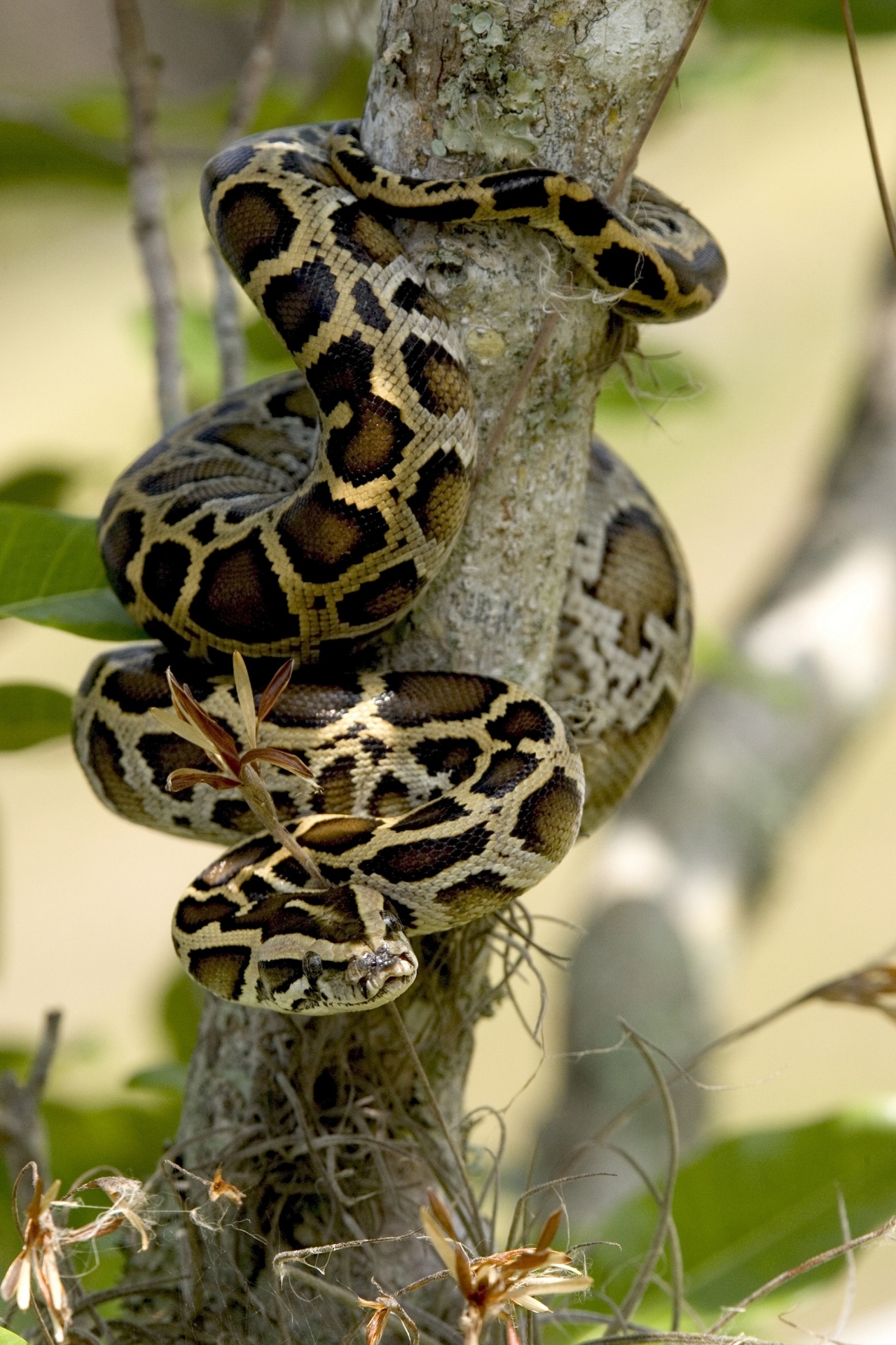
Skilled hunters, Burmese Pythons are one of the five largest species of snakes in the world and native to South and Southeast Asia. They are a threatened species in their native lands, but today there are breeding populations in a new environment, the Florida Everglades.  Image public domain.

I have this dream that I am enjoying walking around in my garden,  I look down, and there is a seventeen-foot python curled up under my house. Sounds ridiculous, but one day this may not be that far fetched.

This past week, the Florida Wildlife Commission (FWC) https://myfwc.com held their meeting at the Hutchinson Island Marriott, just over the Ernest Lyons Bridge from Sewall’s Point. One of the things they discussed was the overpopulation of Burmese Pythons that are ravaging native wildlife in Everglades National Park and other parts of South Florida.

I have been vaguely aware of this for years. My previous Sewall’s Point neighbor was a python enthusiast. Around 2012, he wrote TCPalm a letter to the editor in the python’s defense arguing that the Burmese Python did not bring itself to South Florida, people did! According to FWC pet pythons have been released since the 1960s but it was after Hurricane Andrew’s 1992 destruction that a breeding facility was destroyed, pythons escaped, the population exploded, and a breeding community arose.

I do believe “in all God’s Creatures,” but this is a nightmare-dynamic for Florida’s native wildlife. Public speakers noted Everglades National Park is “devoid of small mammals.” This is not an exaggeration, perhaps down 98%, and “small mammals” are not just what’s for dinner. Meals also include birds, eggs, bobcats, deer, alligators and who knows what else. Mr. Kipp Frohlich of FWC estimates a range from tens-of-thousands to over three-hundred-thousand snakes could be living in the Everglades. We really don’t know. One was even found in Florida Bay all curled up on a buoy. Oh yes, they can swim.

If I were a python and my friends and I  had eaten everything down south, what would I do? I’d slither north…

Opossums, armadillos, and families of raccoons visit my yard a few times a week. ~For now…

python-snake, public image


Please see links to learn about what is being done to controll and educate ourselves on the python:

FWC Presentation

Division: Habitat and Species Conservation
Authors: Sarah Funck, Kristen Sommers, and Melissa Miller, Ph.D. Report date: July 2019

Click to access 10b-presentation-python.pdf


Smithsonian article shared by SFWMD:  Snake Landia_Smithsonian Article_07-2019

*Florida still allows breeders of Burmese Pythons in Florida, but they can only sell the animals outside of the state. All things considered, at the meeting, FWC Commissioner Gary Lester questioning the wisdom in this. I agree. Considering this is how pythons got out of control in the first place.

The Florida Channel videos of FWC meetings in Hutchinson Island; pythons: day 2:

https://thefloridachannel.org/videos/7-17-19-florida-fish-wildlife-conservation-commission-part-2/

https://thefloridachannel.org/videos/7-18-19-florida-fish-wildlife-conservation-commission/

Gary Goforth Ph.D ~Comments for BMAP Deadline

As I wrote about yesterday, Governor DeSantis’ Executive Order 19-12 calls for the Basin Management Action Plans around Lake Okeechobee to be “updated” by January 10, 2020.

https://wp.me/p3UayJ-a2Q

Dr Goforth (http://www.garygoforth.net/Other%20projects.htm ) is a familiar and trusted friend in our fight to protect the St Lucie River/Indian River Lagoon. Today, I am sharing his comments made during the development of the Basin Management Action Plan for the St Lucie River; and also his easy to read charts presented at the June 10, 2019, SFWMD Northern Estuary Workshop. It is my hope, that my very oversimplified post from yesterday can be complemented by Dr. Goforth’s input.

From Dr. Gary Goforth, Ph.D

  1. Subject: Estuary Water Quality Protection, July 8, 2019

Looking forward to a productive workshop on Wednesday…

Gary Goforth

*Please see attached:

Key Recommendations for Enhancing the SLRE BMAP


2. Subject: RE: Estuary Water Quality Protection, July 12, 2019

Thank you for a very productive workshop Wednesday on water quality and its impacts to the northern estuaries.

I’ve been asked for copies of the documents I held up during my public comments. These were developed pursuant to the 2007 Northern Everglades and Estuary Protection Program (NEEPP), and were to serve as the technical foundation for an expanded Works of the District (Rule 40E-61) regulatory program administered by the SFWMD. These documents summarize the most comprehensive analyses of water quality and hydrology for the Lake Okeechobee and estuary watersheds. These were presented to DEP during the development of the BMAPs – but DEP chose not to take advantage of them. Even worse, prior SFWMD management worked with an agricultural lobbyist to remove all references to these documents from the 2015 SFWMD annual environmental report (“In 2014, South Florida water managers were on the verge of an agriculture pollution crackdown, but at the last minute reversed course. TCPalm obtained emails that show how a lobbyist influenced water policy. The South Florida Water Management District changed course immediately after a Dec. 3, 2014, meeting with U.S. Sugar Corp. lobbyist Irene Quincey, eventually halting its planned policy in favor of a plan that takes polluters at their word and holds no one accountable if water quality suffers.” http://www.tcpalm.com/story/news/investigations/2017/08/30/u-s-sugar-lobbyist-influence-over-florida-water-pollution-rules/464671001/).

They can be downloaded from the following links; I’m sure staff could provide hardcopies (they’re several hundred pages in length).

Lake Okeechobee Watershed:

Click to access Draft_LOW_TSD_-_Feb_2013.pdf

St. Lucie Watershed:

Click to access TSD%20for%20SLRW%20-%2012%2018%202013.pdf

Caloosahatchee Watershed:

Click to access Deliv%203%2015%20Draft%20TSD%20for%20the%20CRW%20-%209%2030%202013.pdf

Let me know if I can be of further assistance.

Gary Goforth
http://www.garygoforth.net/Other%20projects.htm

Dr Gary Goforth

Monitoring not Modeling! Meeting Governor DeSantis’ January 10, 2020 Deadline for Updating BMAPs

Executive Order 19-12 “What can we do to achieve more now for Florida’s Environment?”

Sometimes all the bureaucracy of water management makes it difficult to understand how things work. Today, I am going to summarize the goals and requirements of Governor DeSantis’ Executive Order 19-12 Section 1, C. in hopes of giving some simple insight into the responsibility of our state agencies to publicly come together to achieve the Governor’s goal; there are only six months remaining.

Click to access EO-19-12-.pdf

On January 10th, 2019, just days after being sworn into office, Governor DeSantis put forth Executive Order 19-12. This order has multiple components, but today, we will focus on Section 1, C:

It states: “Update and secure all restoration plans, within one year, for waterbodies impacting Soth Florida communities, including Lake Okeechobee, the Caloosahatchee, and the St Lucie Estuaries. These updates will ensure the Blue-Green Algae Task Force has the necessary information to provide guidance to the Department of Environmental Protection on maximizing the investments in water quality improvements. 

Blue-Green Algae Task Force: https://floridadep.gov/Blue-GreenAlgaeTaskForce

So in plain language what does this mean?

This means that the Basin Management Actions Plans, the system the state uses to try to improve water quality through lessening phosphorus and or nitrogen runoff have to be “updated” by January 10, 2020.

Prior to the Governor’s Executive Order 19-12, there was no unified update date, nor a clear deadline date. Why? Because state statute doesn’t give one. How come? Because over the years special interest has lobbied our state legislature to make it this way. Governor DeSantis’ order complicates this by giving a hard deadline to find out how these BMAPS are working or not working.

An update is an “update on the status of  implementation at the end of the first phase and  an opportunity to provide recommendations for future phases of the BMAP.”

The three Basin Management Actions Plans that need to be updated include the Okeechobee BMAP; the St Lucie BMAP and the Caloosahatchee BMAP.

Below are maps of these BMAPS; and you can read about the evolution of each one separately by looking it up alphabetically here: https://floridadep.gov/dear/water-quality-restoration/content/basin-management-action-plans-bmaps

The agencies that oversee this process are the Department of Environmental Protection (regulation of water quality standards); the Dept of Agriculture and Consumer Services (BMPs or Best Management Practices); and the South Florida Water Management District (water quantity or “projects)

You will see as you read about these BMAPS they are more of a soft than hard science. These maps were developed to meet a “total maximum daily load” reduction of phosphorus and or nitrogen, overtime – like 20 or 30 years!

To do this, basins and stakeholders are identified, and best management practices for agriculture and other stakeholders are implemented. Then the Dept of Environmental Protection models how much the best management practice will help remove phosphorus and or nitrogen and a certain amount of credit is given for using the Best Management Practice.

It’s kind of like giving a grade based on participation instead of performance. It’s time to raise the bar. In order for the Blue-Green Algae Task Force to have the necessary information to provide guidance to the Department of Environmental Protection on maximizing the investments in water quality improvements,” we must truly know the numbers.

~Monitoring not Modeling!

P.S. Why are the three BMAPs together in the executive order? Lake O is discharged into the St Lucie River and Caloosahatchee so for them to meet their goals, Lake Okeechobee has to meet its goals. For now, we are all connected.


Timeless Waters ~Suwannee Springs, by John Moran

Today, I am honored to share “Timeless Waters ~Suwannee Springs,” a recent photo essay by renowned Florida nature photographer, friend, and fellow water warrior, John Moran. https://www.johnmoranphoto.com/about.html
Timeless Waters ~ Suwannee Springs, by John Moran
Hello Springs Lovers,
Happy Fourth! I’m pleased to share my latest night-time photographic collaboration with my friend, David Moynahan.
The object of our attention (and affection) this time is historic Suwannee Springs. A series of photos sets the stage for our nocturnal photo adventure to follow.
Unlike most Florida springs with their famously (or formerly) blue waters, Suwannee Springs is characterized by a honey golden color, infused with the distinct aroma of sulphur water.
These walls remind us of a time when trainloads of visitors would come to take the healing waters at one of the South’s most celebrated spa springs, on the Suwannee north of Live Oak. The spring pool and adjacent lands and river access are now publicly owned under the stewardship of the Suwannee River Water Management District.
I have a long history with Suwannee Springs. A photo of friend George Tortorelli in 1987 was featured in an exhibit of my Suwannee photographs, which the Museum of Florida History toured around the state for many years. The photo also appeared on the cover of the Florida Humanities Council magazine. They don’t call me Suwannee Johnny for nothing.

A couple of hundred yards downstream, within sight of the springhouse ruins, one of Florida’s most beautiful old bridges spans the Suwannee. Shot on color slide film in 1989, this early endeavor in “light painting” was created by triggering an electronic flash 88 times as I crawled across the bridge (to stay out of the photo); uplighting the superstructure as the stars pinwheeled around the North Star during the course of a one-hour star trail exposure.
Abundantly tagged with graffiti, the bridge remains a sweet spot to take in a view of the river that inspired Florida’s state song. The bridge would factor into the picture David and I were determined to create.
Back at the springhouse, and well before sunset, David and I set up and secured twin JohnnyPods—our homemade climb-able tripods. The J-Pods independently supported the camera and camera operator, enabling precise alignment of the hundreds of photos we would shoot during the course of the night to come. David is pictured above at the camera.
When the sun went down, the lights came out and the fun began. Nearly every facet of this scene was lit over the course of the next six hours with a mix of underwater video lights, electronic flash or moonlight. In the photo above, I’m probing the depths of the spring with my 20-foot JohnnyPole and custom bare-bulb underwater flash, which David remotely triggered from the camera.
Back home on his computer, David would commence the days-long task to artfully build the picture in Photoshop, layer by layer. After extensive evaluation and discussion by phone and email, and multiple proof print revisions on my Epson printer, all those many photos finally merge as one, revealing the magic of Florida that can only be found in the dark.

Photography is ordinarily a solo pursuit but David and I have collaborated on many such light-painting photos over the past decade. We gratefully acknowledge the on-site assistance of our friends, Anthony Ackrill and Oscar Psychas.

David has put together a fine blog post of his own on this project, including a nifty little time-lapse video that sequentially shows nearly the entire collection of individual photos we shot that memorable night, baked down to just 60 seconds. https://www.davidmoynahan.com/blog/2019/7/suwannee-spring-illuminations

Feel free to share this email picture report and David’s blog.

To learn more about our priceless and irreplaceable springs and what you can do to help protect them, check out the following online resources…

Springs Eternal Project  ~ http://springseternalproject.org
Florida Springs Council  ~ https://www.floridaspringscouncil.org
Florida Springs Institute  ~ https://floridaspringsinstitute.org

John Moran

Adrift’s Indian River Lagoon Water Report, June-July 2019

July 5, 2019

Hi. I hope everyone had a wonderful 4th of July! Wasn’t it exceptional? Exceptional because the St Lucie/IRL’s water wasn’t toxic like so many times in recent years. So nice to be able to enjoy our waterways. No dumping of Lake O. I am grateful!

Today I am a back with an Indian River Lagoon Report for the entire Indian River Lagoon.

During my husband, Ed, and my recent 156 miles trip up the IRL, aboard ADRIFT, I contacted Duane DeFreese Ph.D., Executive Director for the Indian River Lagoon National Estuary Program. I called Duane because I knew why the southern lagoon looked better but was impressed by how good the water in the central and northern lagoon looked as well. No brown tide. No superbloom.

Since am unfamiliar with the waters north of the Treasure Coast, except by books, I wanted a scientific update. Well, boy, did I get it! See Dr. Duane’s comments below. Also included is the invaluable, recent St John’s Water Management District’s “June 20th Indian River Lagoon Conditions Update.”

For visual input as well, I am inserting some of Ed and my photos, with comments, of our incredible journey along what is still considered to be one of the world’s most biodiverse estuaries. What a treasure! From north to south, we must do all we can to ensure a toxic-free future.

Keep up the fight!

Jacqui

IRL map: Researchgate
Ed and JTL start of the trip on “Adrift.”
Location: Jupiter Island near the Jupiter Inlet, as almost always the water here is like the Bahamas, looking great! Near the border of Martin and Palm Beach Counties.
Near Jupiter Inlet, border of Martin and Palm Beach Counties. Wow!

JTL:

Duane, hi. Hope you are having a great summer. At this time, are there algae blooms reported in the IRL near Melbourne, the N. IRL north of Titusville, or anywhere in the Mosquito Lagoon? Thank you for letting me know. Jacqui TL

Duane DeFreese, Ph.D. Exec. Dir National IRL Estuary Program, http://www.irlcouncil.com

Conditions being reported to me by the local guides are consistent with the report and my own observations. Overall water quality looks pretty good, but small, patchy areas of poor water quality continue. The fishing guides tell me one day it looks great and a day later the same area will have color and turbidity (probably patchy bloom conditions). My personal observation is that we have been lucky so far and the system is vulnerable. I would not be surprised to see blooms intensify as we move deeper into summer and the rainy season. Lagoon water temperatures are also really warm. the SJRWMD Report documents that we have had patchy blooms occurring of multiple species. Two confirmed species of concern are Pseudo-nitzschia, a marine diatom and Pyrodinium bahamensis, a dinoflagellate. The worst water conditions continue to be in Banana River and in Sykes Creek. There are boater reports of patchy poor water quality in some areas of the northern IRL. The third species of significant recent concern has been Brown tide (Aureoumbra lagunendis). It was in almost in continuous bloom for most of last year in the Banana River. Bloom conditions have subsided. Aureoumbra thrives in warm, high salinity environments. It is not known to be toxic. Blooms of pseudo nitzschia, a marine diatom, can produce a neurotoxin called domoic acid. Blooms of Pyrodinium can produce saxitoxin. I expect that we will see patchy and flashy bloom conditions of multiple species throughout the summer. If we get lucky, I hope none of these blooms get intense enough to elevate toxin levels, low DO levels and fish kills. I’m very concerned about the slow recovery of seagrasses, even in areas of good water quality. Feel free to call me anytime.  Have a great 4th July!

Indian River Lagoon Conditions Update June 20

JTL:

Dear Duane, thank you so very much for the super informative reply! I wrote because my husband and I are taking our maiden voyage in a trawler. We have gone from Stuart to Jupiter to Vero to Cocoa, north as far as possible in IRL, past Titusville, and today-through the Haul-over Canal into the Mosquito Lagoon. Not being familiar with these waters, all I have seen visually appears quite good compared to the St Lucie and even parts of the S. IRL. Some varying coloration is apparent, but overall seems good and in the north, many baitfish balls are shimmering under the surface and dolphin families are gorging themselves and teaching their young! We have seen many dolphins everywhere. Throughout Indin River County, Ospreys nesting in channel markers. One after the other!  In the Mosquito Lagoon there were many more wading birds than S IRL. Even saw a few roseate spoonbills. I was not expecting it to be so full of life up here… a nice surprise. Not off the chart healthy, but marine and bird life very visible! I really appreciate the info you sent. I plan to blog on trip once home, so I can quote your knowledge. Happy 4th of July to you as well and I hope to see you soon.


The confluence of the St Lucie River and Indian River Lagoon off S. Sewall’s Point, Bird Island. Near Stuart, Martin County.
Sewall’s Point and Stuart, Martin County.
Beautiful blue water near the Ft Pierce Inlet, St Lucie County. Ft Pierce rocks!
Waters of Vero Beach, Indian River County.
Old map showing the designated area of famous INDIAN RIVER LAGOON CITRUS. Citrus Museum, Vero Beach, FL
1920 Blue Heron Map shows clearly the area of the Everglades, Heritage Center and Citrus Museum, Vero.
Street sign in Vero Beach, as everywhere ALL canals lead to Lagoon! No trash, fertilizer, pesticides, etc!
Sebastian Inlet, Indian River County, brings blue waters to the area. So pretty!
Approaching Cocoa Village, north of Melbourne in Brevard County.
Waters nearing Cocoa Village in Brevard County
Ed and I visited the Kennedy Space Center along the Indian River Lagoon and Banana River. Surrounded by the Merritt Island National Wildlife Refuge. Space & Nature. https://www.fws.gov/refuge/Merritt_Island/visit/plan_your_visit.html Such an inspiration!
3-D movie at Kennedy Space Center really took us to the moon, Mars, and beyond!
The ominous Vehicle Assemble Building, NASA, so large it is visible no matter where one is are along the central and northern IRL. It’s like it is following you!
Eau Gallie, Melbourne. The Eau Gallie River, or Turkey Creek,  is a small version of the St Lucie and also impaired due to runoff from agriculture and development.
Like a sentinel, the Vehicle Assembly Building as seen over the Indian River Lagoon north of Titusville.

Baitfish!

Waters approaching Titusville, Brevard County.
Train track bridge north of Titusville, Brevard County.
Train track bridge north of Titusville, Brevard County. Shortly beyond channel turns right through the Haulover Canal and into the Mosquito Lagoon.

Ed navigates through the Haulover Canal, connecting the northern IRL with the Mosquito Lagoon.
Water in the Haulover Canal was greenish.
Entering the stunningly beautiful, peaceful, undeveloped Mosquito Lagoon. This area is flanked by the Scottsmoor Flatwoods Sanctuary and Canaveral National Seashore. Wildlife abounds.

360 of the unforgettable Mosquito Lagoon:

Flora and fauna along shoreline, Mosquito Lagoon
Anhinga twins, Mosquito Lagoon

Incredible footage of 4 dolphins in our wake near Ft Pierce welcoming us home!

ADRIFT is a 2007 Mainship 400 trawler, top speed about 8 knots 🙂