Category Archives: Travel

We Can Always do a 180

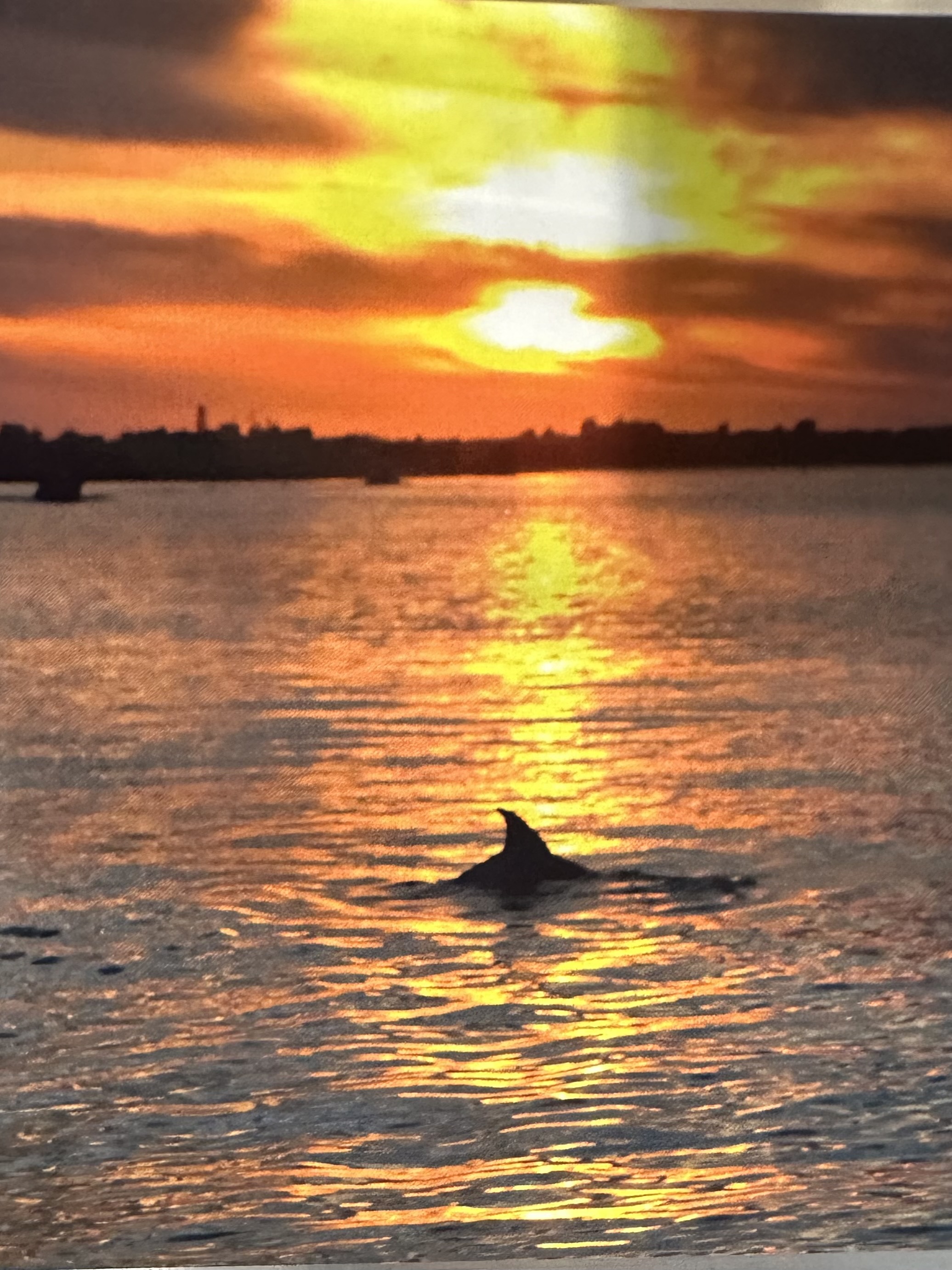
Bottlenose dolphin on post card, NC Maritime Museum, Beaufort, NC

I walked into the gift store at North Carolina’s Maritime Museum at Beaufort and saw a postcard: a bottlenose dolphin swam peacefully in the reflection of a setting sun…

“Wow.” I thought to myself,  What a 180″.

I had just walked out of an exhibit telling the history of North Carolin’a whaling past.  Bottlenose dolphins are technically whales. They are a toothed whale in the order of Cetacea. And not too long ago, bottlenose dolphin were hunted just like whales.

From about 1790 to 1920 per season several thousand bottlenose dolphins, mostly off Beaufort and Hatteras, were encircled with long nets and hauled to the beach to be “processed.” Beaufort’s Shackleford Banks lie just to the southeast and are part of a long string of barrier islands extending northward into the Atlantic as the Outer Banks, cresting at Cape Hatteras.
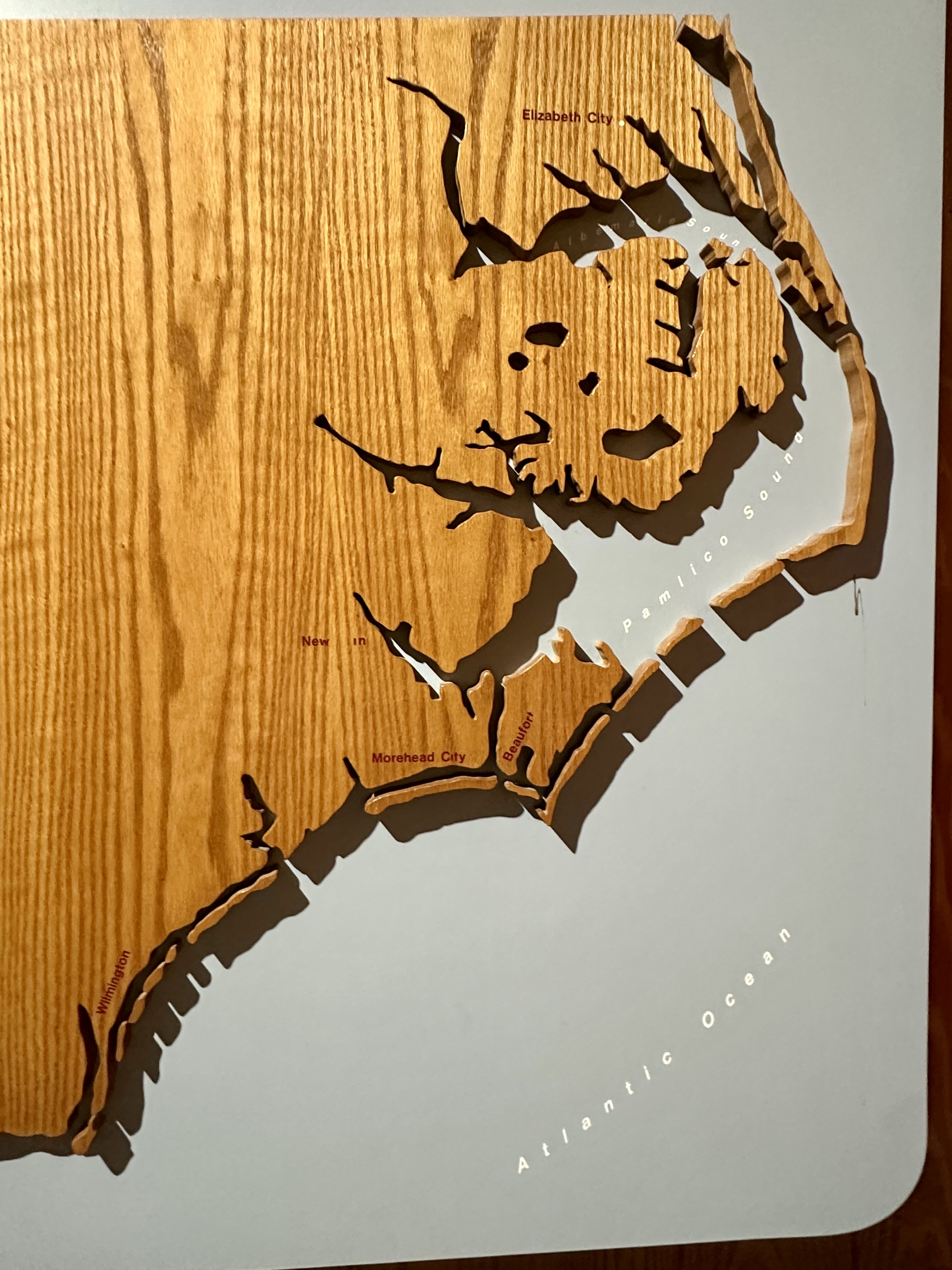
Carving shows NC’s Outer Banks.

I can’t even imagine what occurred while killing and processing the thousands of dolphins, but it is probably similar but en masse to the deaths of the much larger Right Whales, that also migrate and bring their young to these magnificent shorelines. This over-hunting remains with us today. Right Whales are now endangered with about 380 remaining and there are two stocks of bottlenose dolphins passing through North Carolina waters that are designated by NOAA as “depleted”.

Why were the dolphins hunted? For the same reason whales were hunted. Dolphins, what locals called “porpoises”, were hunted for their very valuable oil.  In fact those on the beach were called “oilers”. The oil was taken from  bottlenose dolphin jaws and melons (used for echo location) and utilized for many fine purposes including lighthouses and watch lubricant. Blubber was cooked down in large pots.
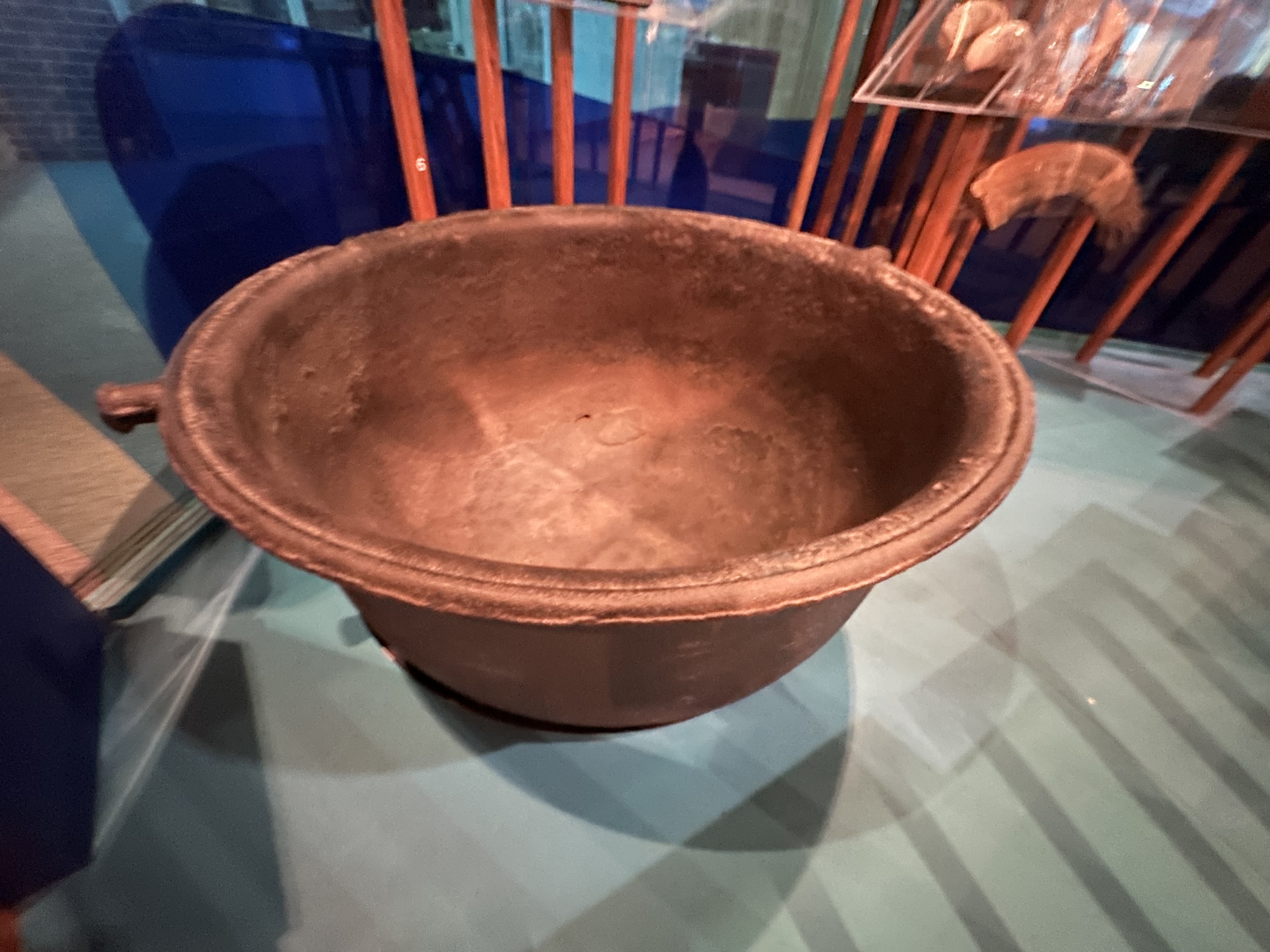
A huge pot used for cooking-down, NC Maritime Museum

Today in 2026, just over one-hundred years later, locals are not hunting dolphins but offering dolphin sunset tours. Do you think the dolphins know that we hunted their ancestors? I would think so as they are highly intelligent and perhaps transfer oral histories that we cannot understand.

https://www.greetwell.com/us/direct/sunset-dolphin-watch-morehead-city

The commercial fishing of dolphins lost steam in the 1920s when cheaper petroleum based products became available and the fishing industry fell upon difficult economic times. By the 1970s hunting dolphins had become illegal. In an incredible reaction to the loss of life, the Marine Mammal Act of 1972 banned the hunting, killing, capturing and harassing of all marine mammals in U.S. waters and  protects all marine mammals, including whales, dolphins, porpoises, seals, sea lions, manatees, sea otters and polar bears.

So here I am in Beaufort today, and I’m purchasing a post card with a dolphin on it, an animal that was once hunted by the thousands, by the hundreds of thousands.

Incredible….

As a nation, and as states, we have made 180s before, and we can do it again.🐬
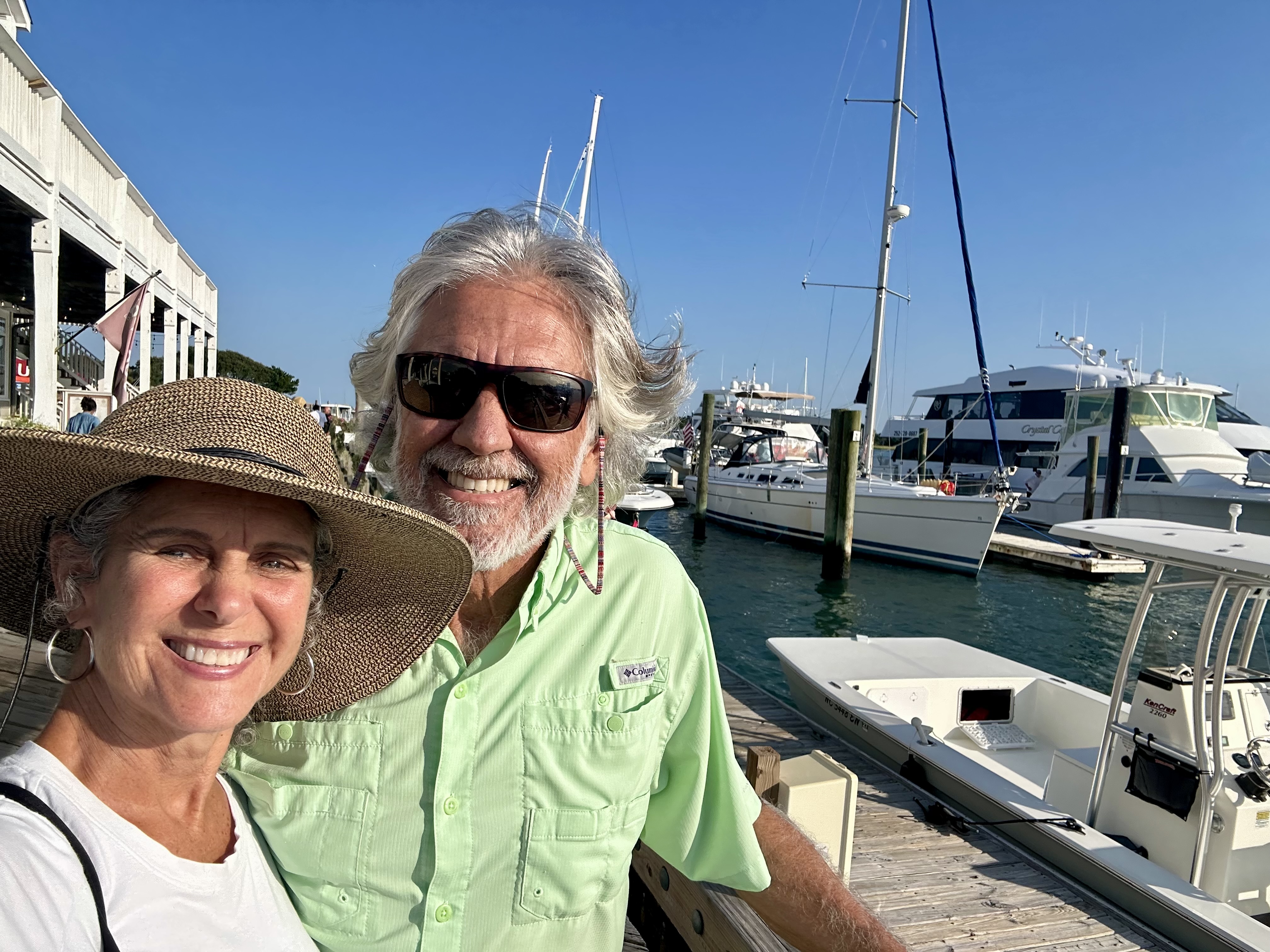
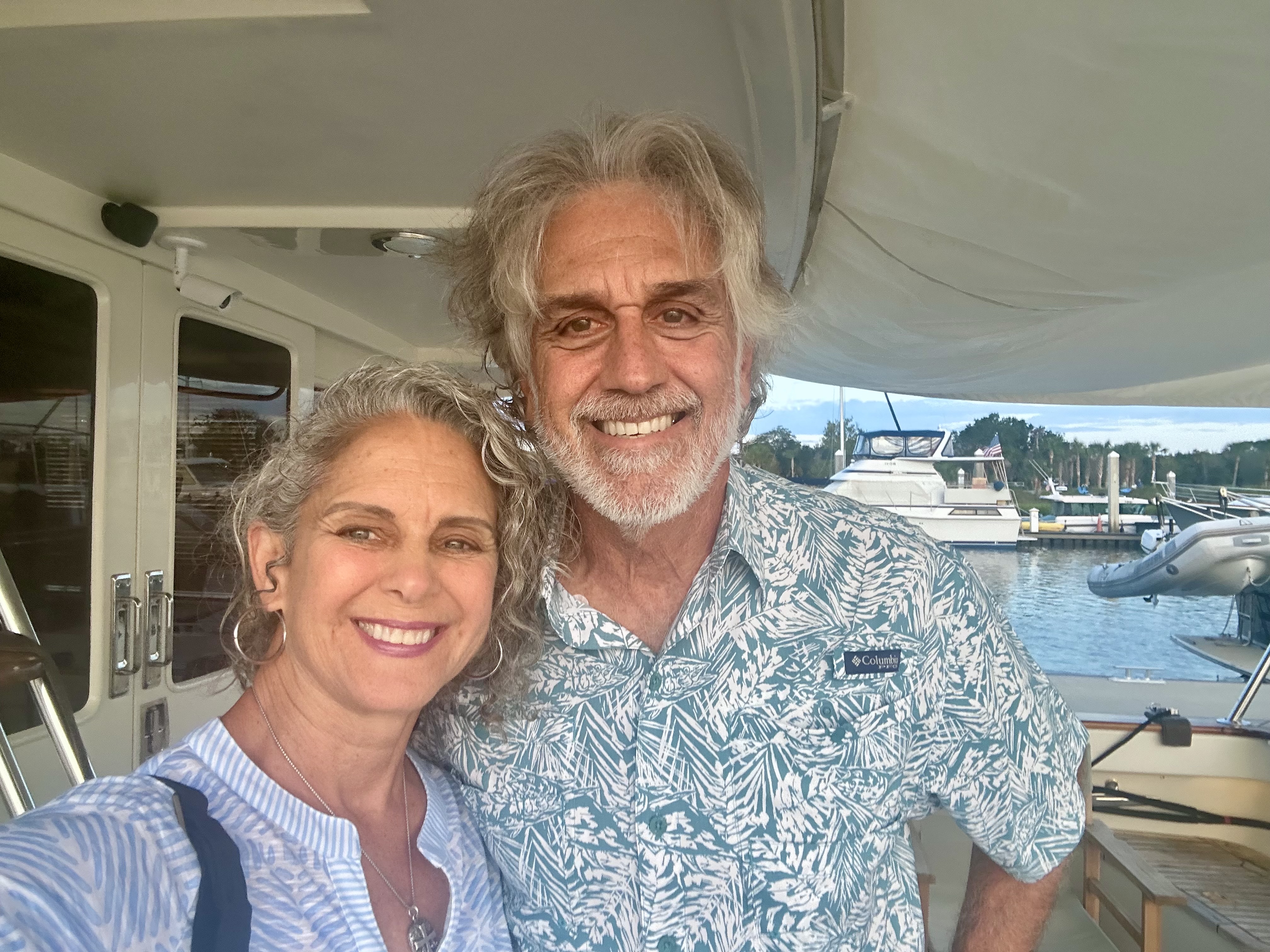
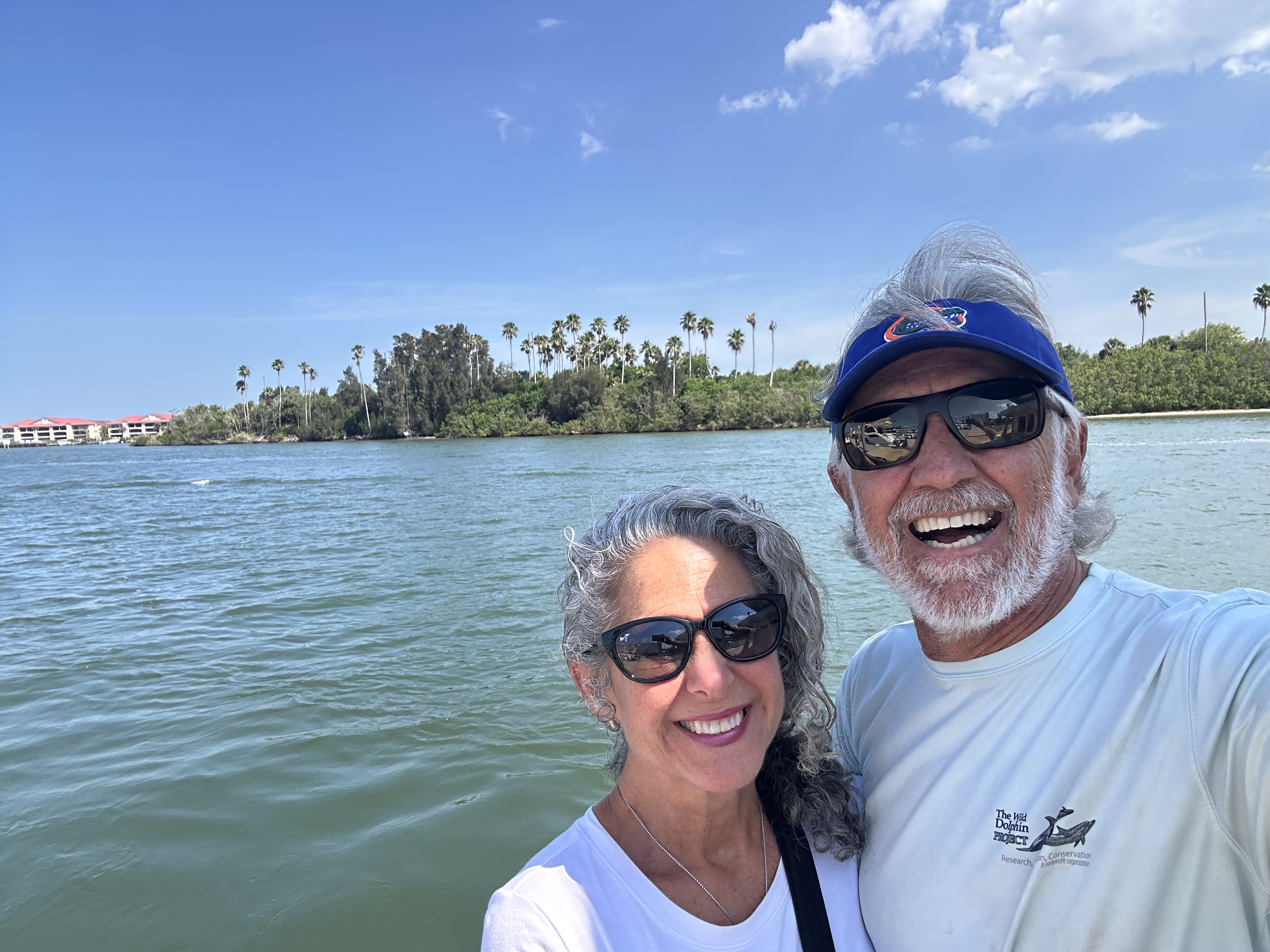
Jacqui and Ed, Beaufort, NC we have turned around from here!


The Timeless and Difficult Beauty of the South🌳

Live oaks first planted in 1743  leading to Boon Hall Plantation, Charleston, SC
View of the Wilmington River through a huge live oak on the high shoreline, Thunderbolt, GA
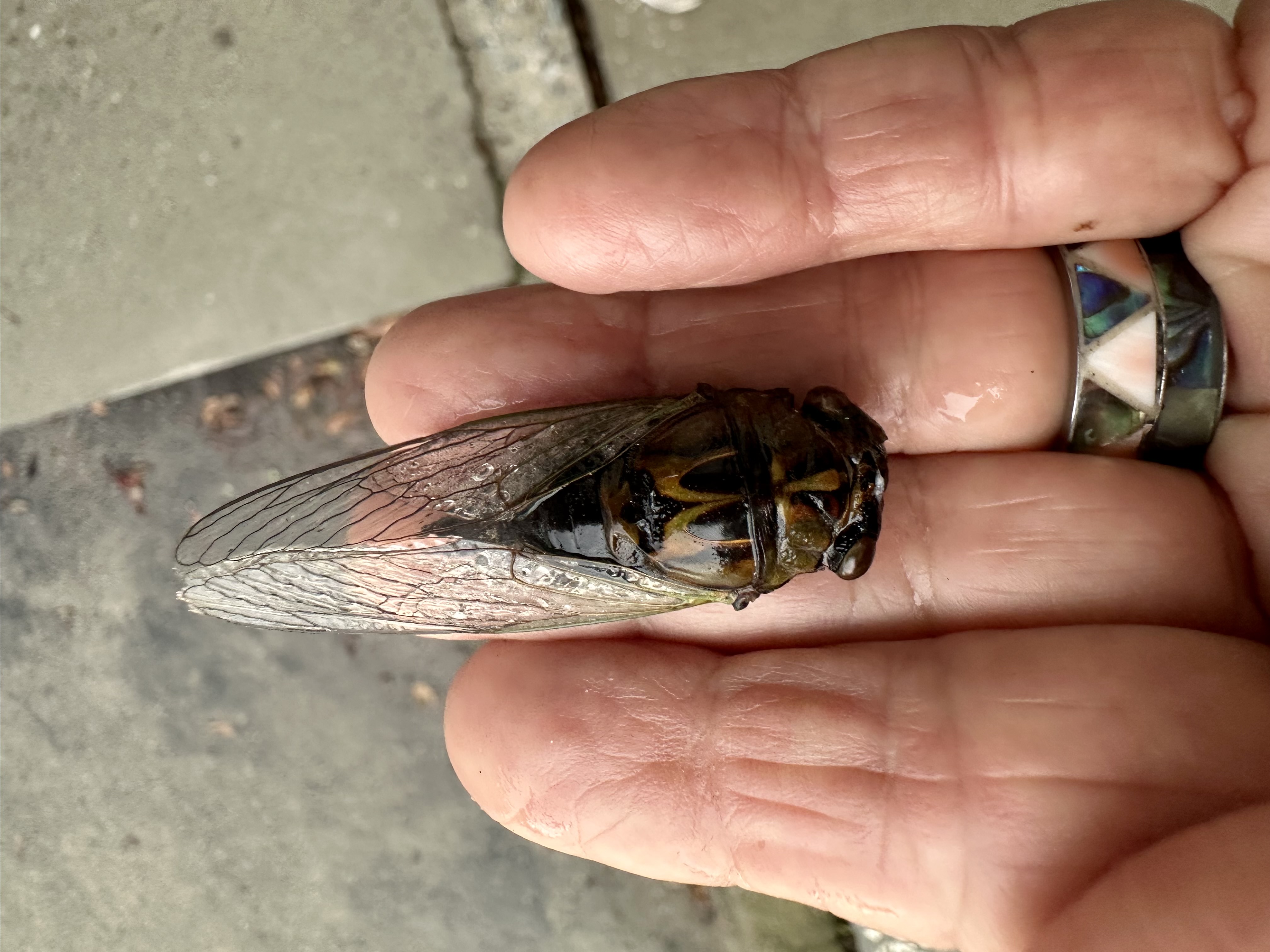
Cicadas hatch by the thousands in oak trees singing a deafening, pulsating song

Captain Ed and I have been traveling southern waterways for about one month. I have gone from crabby to cheerful, now as joyful as a cicada in an oak tree. My stress level has lessened and Ed likes being around me much better than at the beginning of the trip.

So far, my first-mate skills have been exemplary. There have been no catastrophes while docking and Ed has done a good job too. Captain Ed keeps telling me : “If you keep patting yourself on the back, you’re  going to break your arm!”  This makes me laugh.

Part of my elevated mood lies in the fact that we have been passing  through some of the most historic, beautiful and memorable cities along the southern Intercostal Waterway.

Thunderbolt, Georgia
Sunset in Beaufort, SC
Rain falls at sunset, Beaufort, SC

Thunderbolt,⚡️ Georgia

Yes, that’s the city’s name! According to legend, the native people reported that a severe lightning strike broke open the bluff causing a spring to gush from the ground. The location was named “Thunderbolt” by English General James Edward Oglethorpe in 1733 and is located just southeast of Savannah, on the Wilmington River.

The original commerce was maritime shipping, but it evolved into a major commercial fishing and seafood processing industry. You might recall, as a kid, eating flash-frozen, breaded, fan-tailed shrimp? In 1948 Henry Ambos commercialized the process right here in Thunderbolt. Today shrimp boats have given way to marinas and tourism, and the beautiful, marshy shoreline is quickly being developed for condominiums. Thunderbolt  actually reminds me of what Stuart, Florida, my hometown,  used to be. As Finito  pulled away from the dock  I waved  to the dockhand yelling: “Don’t let them destroy your beautiful little town!”  

Marsh, St. Helena’s Island, Beaufort, SC
St. Helena ‘s Parish, Beaufort, SC

~Beaufort, South Carolina

Beaufort may be my very favorite southern city. From the marshes of Port Royal extends the Beaufort River. The city is a living time capsule of American history. A striking sight with towering oaks and church steeples prominently visible across the horizon. Beaufort is  totally accessible by boat, meaning once docked, one doesn’t have to cross a freeway or worry about getting hit by a car. St. Helena Parish appears the tallest and is one of the oldest active churches in North America. Surrounded by a graveyard crowded with live oaks and Spanish moss, it entombs soldiers, politicians, and priests going all the way back to the 1700s. Noteworthy is that both Confederate and Union soldiers rest here.

“St. Helena” is also the name of a nearby island connected by bridge. Once home to  plantations, it became the headquarters of the “Port Royal Experiment”, a massive social, educational, and economic movement to assist with the chaos and difficulties resulting from the Civil War and the thousands of freed slaves. Direction was needed and Beaufort was the epicenter. Having fallen to Union forces in 1861, five years before the official end of the war, the city became  flooded with Northern missionaries, abolitionists, philanthropists and educators, leading the way.

Some historians  call the Port Royal Experiment  the “rehearsal for Reconstruction.” As part of this experiment, the Penn School was established and it was here that former slaves and the entire South really began to rebuild lives. I was told by Inda,  our Gullah-Geechee guide,  that years later, Martin Luther King Jr. drafted his “I have a Dream” speech in this sanctuary.

Part of the Penn School campus, the Brick Baptist Church served as a schoolhouse for the once enslaved.
Darrah Hall, community epicenter
Inside the Praise House with our Gullah guide
One of only three Praise Houses remaining on St. Helena’s Island where the enslaved gathered for worship as they were forced to praise God in small groups nonthreatening to plantation owners.

– Charleston, South Carolina

Charleston, was founded in 1670 and has  the deepest harbor on the US east coast. The historic map above shows early Charleston. Today the peninsula is fully developed by centuries of filled marshes, creeks, rivers and wetlands – 50% is fill..
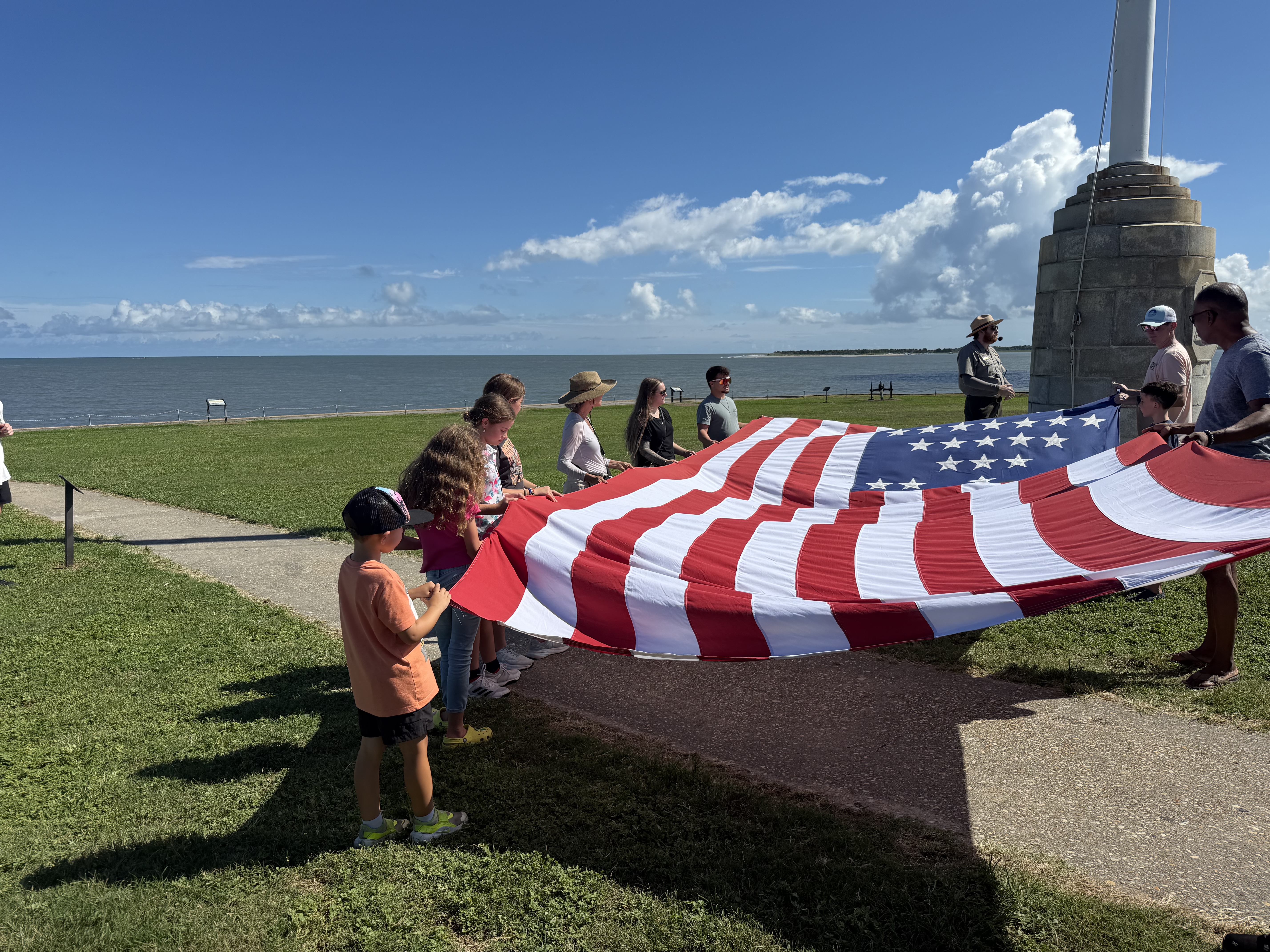
Lowering the flag at Fort Sumter National Park, SC Here the first shots of the American Civil War were fired.
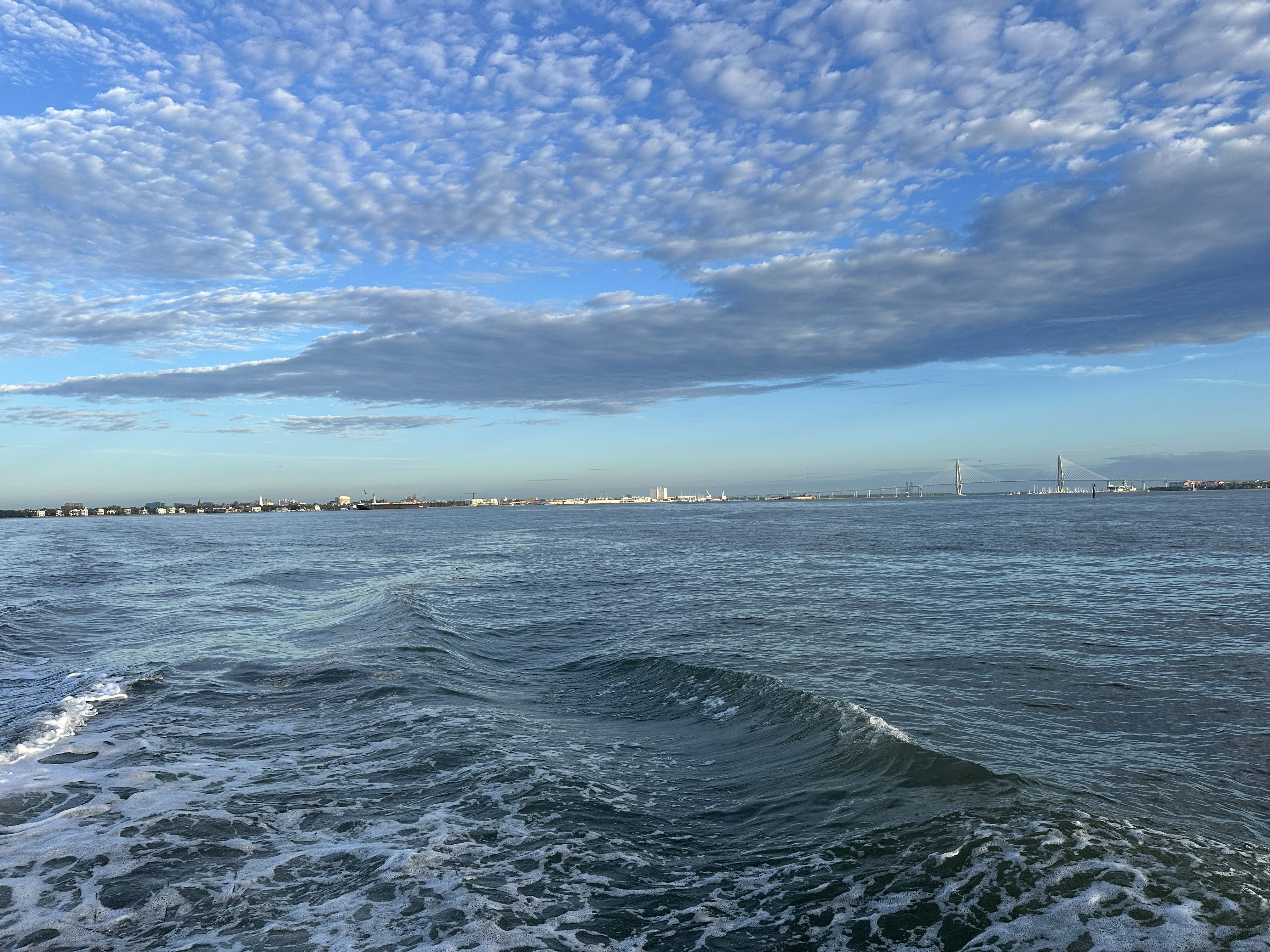
As seen from the confluence of the Ashley and Cooper Rivers. The once old city has expanded tremendously.

Charleston is a thriving modern city holding so much of the hard core Southern past; its   history, unparalleled and difficult. But the most memorable experience of Charleston had nothing to do with the man made world.  It was not the great food, visiting family and friends, walking King Street, visiting Gadsden’s  Wharf and the International African American Museum, or Fort Sumter. My favorite part of visiting Charleston was meeting its famous oak tree.

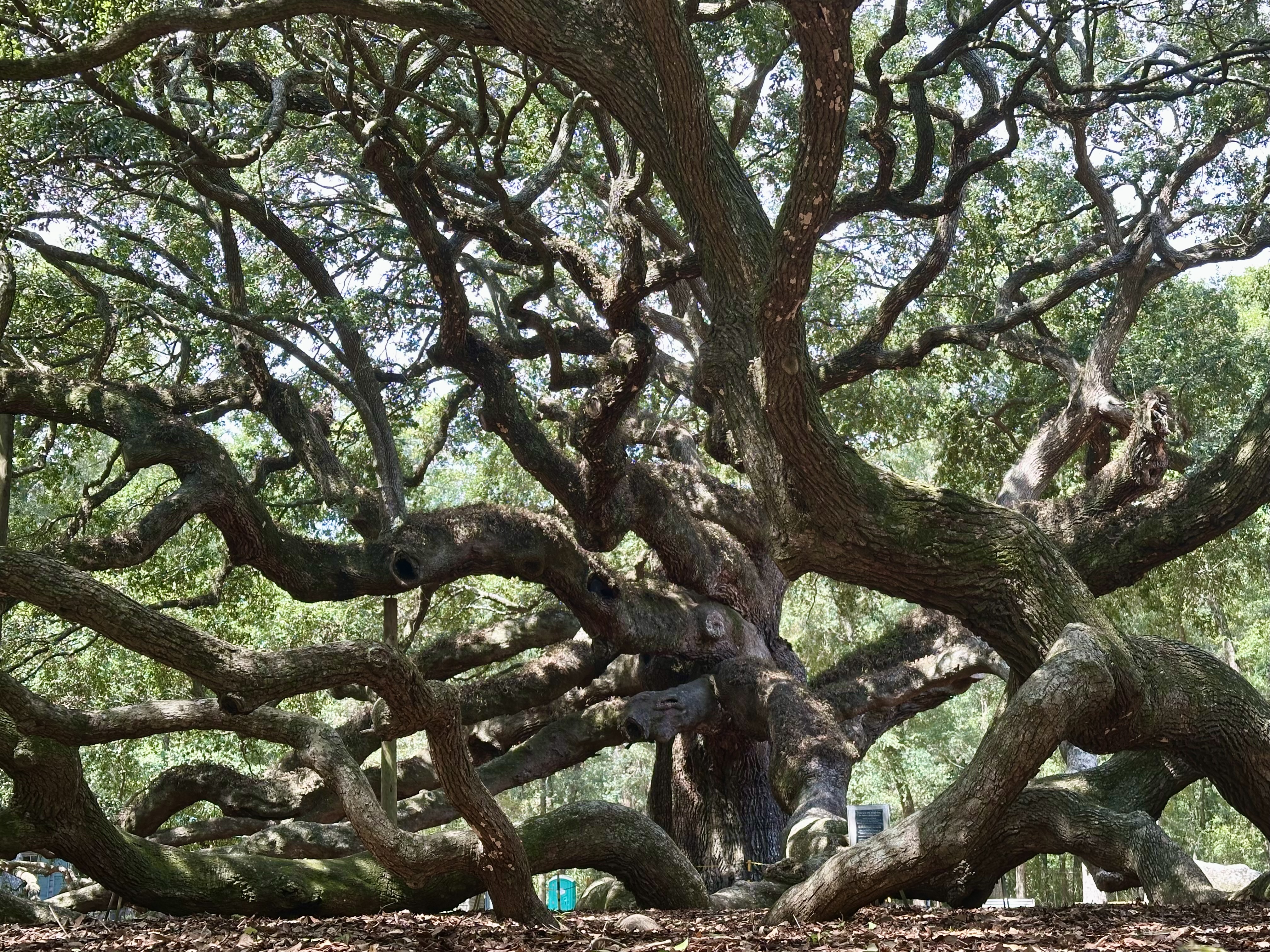
The Angel Oak, named after the family who owned the land, is located on John’s Island and is managed and protected by the City of Charleston. This magnificent live oak is between 300 and 400 years old and is the is the largest live oak east of the Mississippi. It is gigantic, mind blowing, measuring 25 and 1/2  feet in circumference, 66 feet high, with a canopy covering 17,200 square feet. The ancient tree’s  tangled and wind blown branches are fastened in time — going forward. Indeed, this strong, resilient, beautiful, and spectacular tree has seen “it all” and represents the difficult and timeless beauty of the South.

The Angel Oak, John’s Island, SC

Okee and Diesel
Having fun, Charleston, SC

The Golden Isles of Change


Amelia Island, FL

Tomorrow will be two weeks since Ed and I left Stuart on Finito. This is about the time I feel myself disengage from the world. Don’t get me wrong, I am still curious. Every day I check the news and see what’s going on but it’s kind of like watching a movie. The sagas and the players continue, whether it’s the City of Stuart, Martin County, or the powers of Tallahassee and the White House. But as my eyes scan the marshlands,  I am reminded “this too shall pass…”

Today the temperature has dropped from 96 to 90 degrees, and Finito is moving through Georgia’s Golden Isles.

“It feels like fall is here!” I yell to Ed. He rolls his eyes laughing.

The Golden Isles consist of four huge barrier islands: Jekyll, St. Simon, Sea, and Little St. Simon located between Jacksonville, Florida, and Savannah, Georgia. The Altamaha River’s Inlet breaks through here draining over one-quarter of the state of Georgia. Incredible, vast moving waters!  Thousands of fiddler crabs come out from their holes at low tide and the dolphins move into to eat fish as the tide rises. Tides range from 7 up to 10 feet.

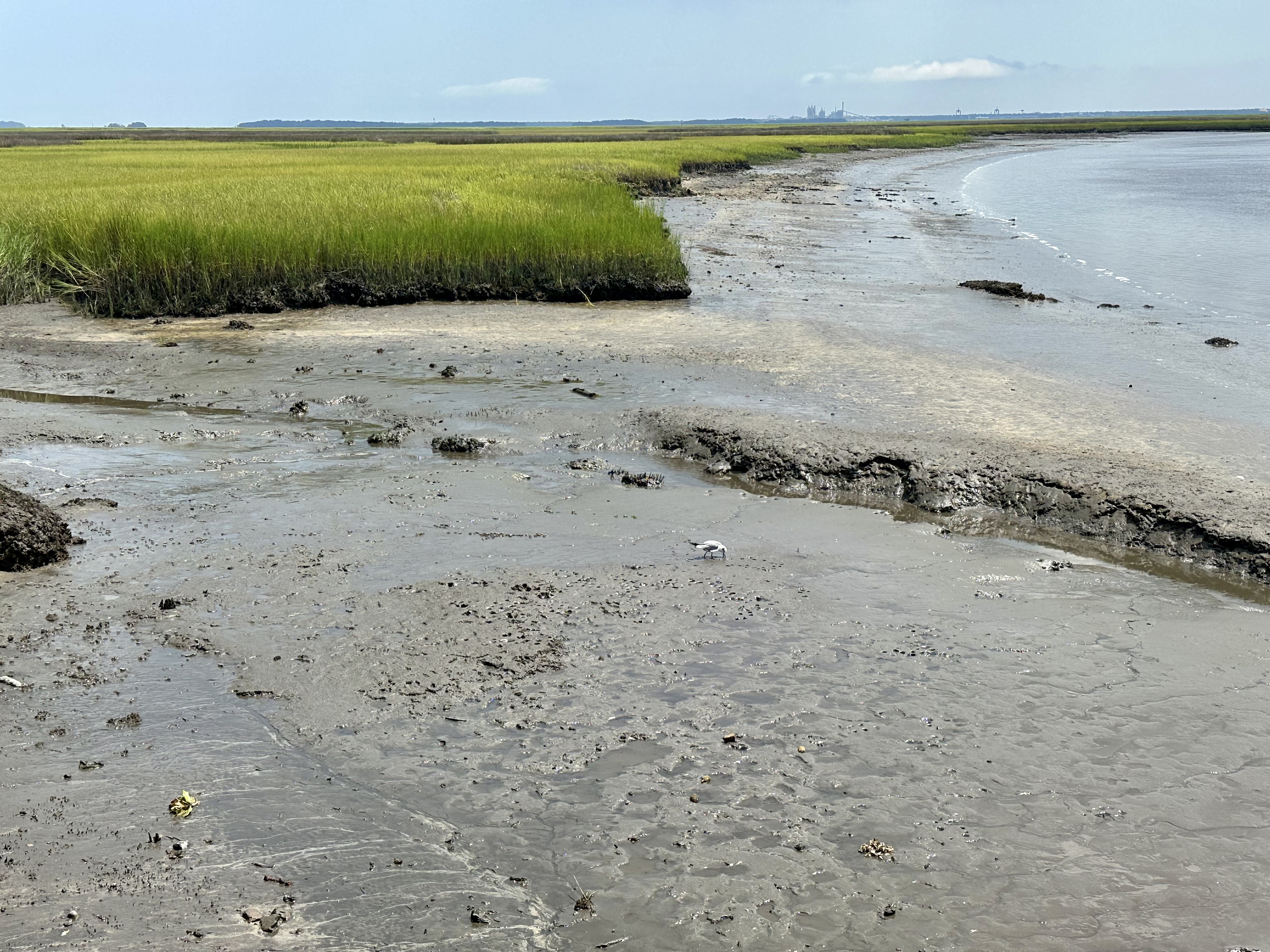
Low tide, seagull eating fiddler crabs like popcorn! St Marys, GA.

Today these golden lands are wild, but from the late 1700s until the American Civil War, rice plantations filled these quiet marshes creating some of the most valuable agricultural rice production on earth. Appropriately, these lands are now part of the Gulla Geechee Cultural Heritage Cooridor as they could not have profited without the Gulla people’s expertise.

The Golden Isles, GA

Oh the South….

As soon as Ed and I arrived in St. Augustine along the Intracoastal Waterway it became a different world. South Florida faded away and The South slowly came into focus. I do love it here. There is something about the marshes, the tides and the strong currents. Yesterday a flock of twenty roseate spoonbills flew overhead. I feel nature all around, all the time. My “crabbiness” has subsided and yes, I immediately walked to ATHENA, the Greek restaurant, and ordered Tzatziki when Ed and I got off the dock in St. Augustine!

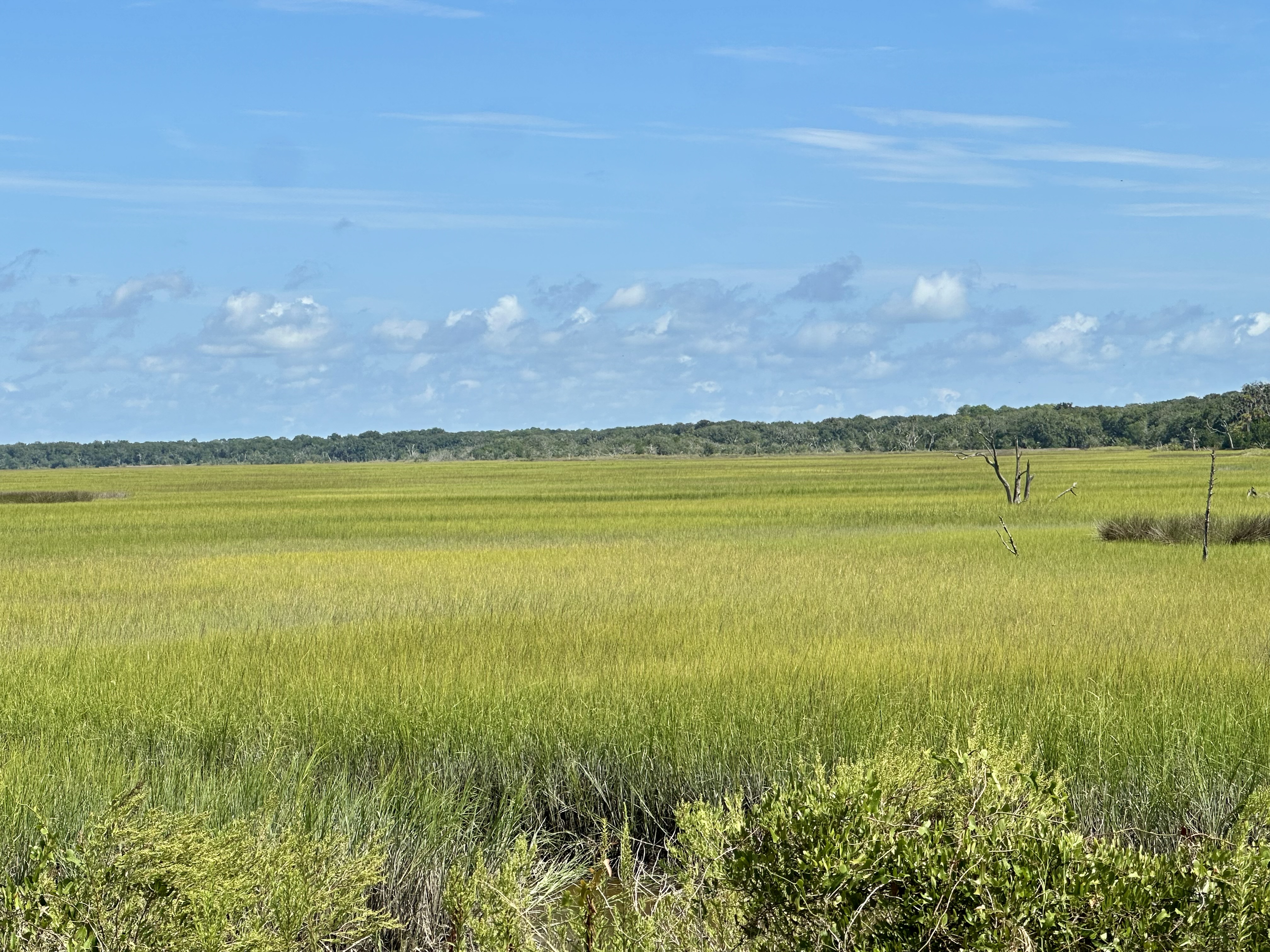
As I look out the window there are small and large islands everywhere. In fact it looks like the land is being born from the water. Brown pelicans and royal terns compete, diving over and over again for fish. Now and then an osprey or eagle joins the group. The water is moving and is not clear as it holds sediment but is clean. No muck from Lake Okeechobee! The quartz sand that makes up the beaches, islands and sandbars of this area originally came from the Appalachian Mountains pouring through the giant Altamaha River. Dramatic is an understatement.

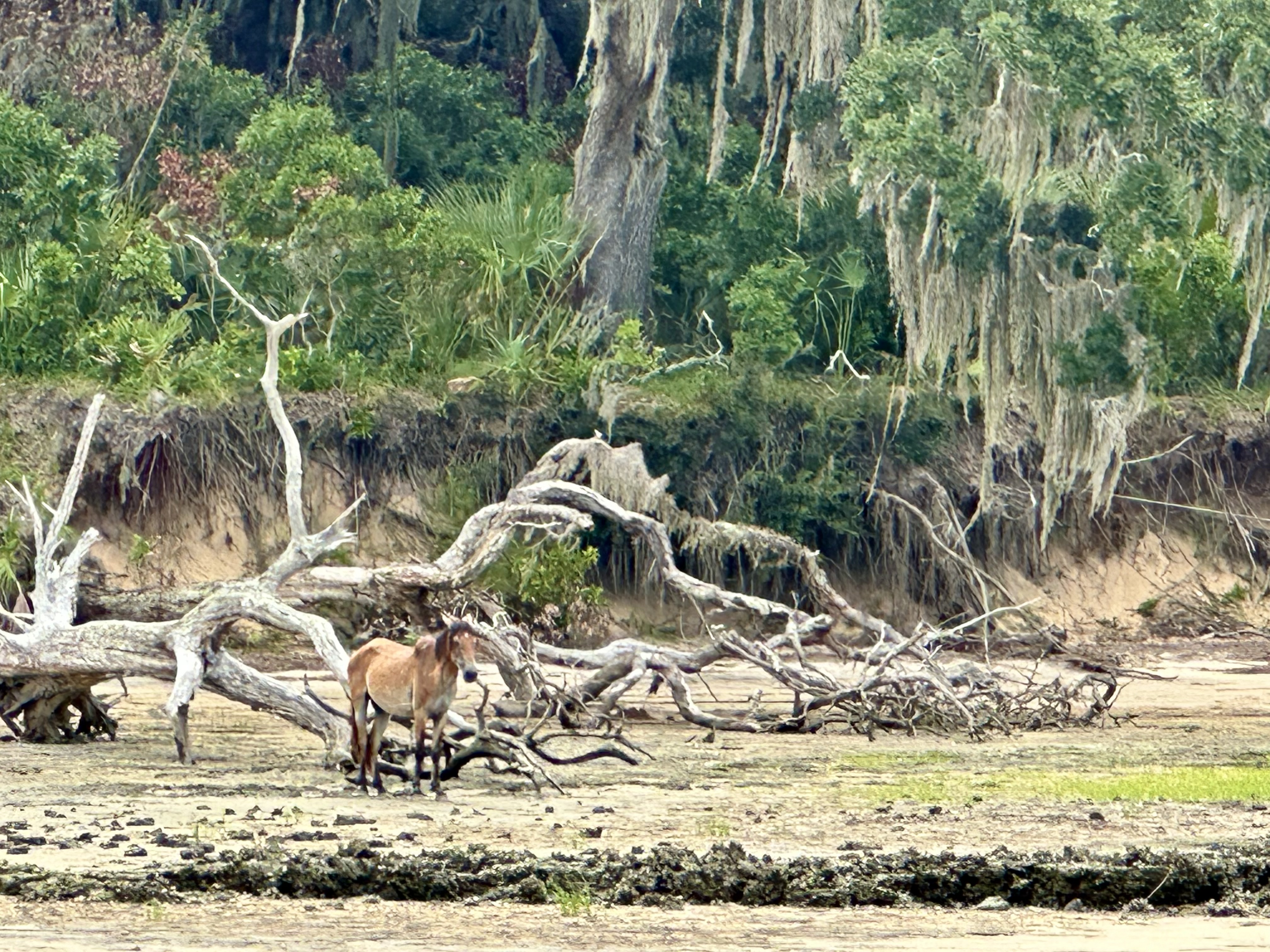
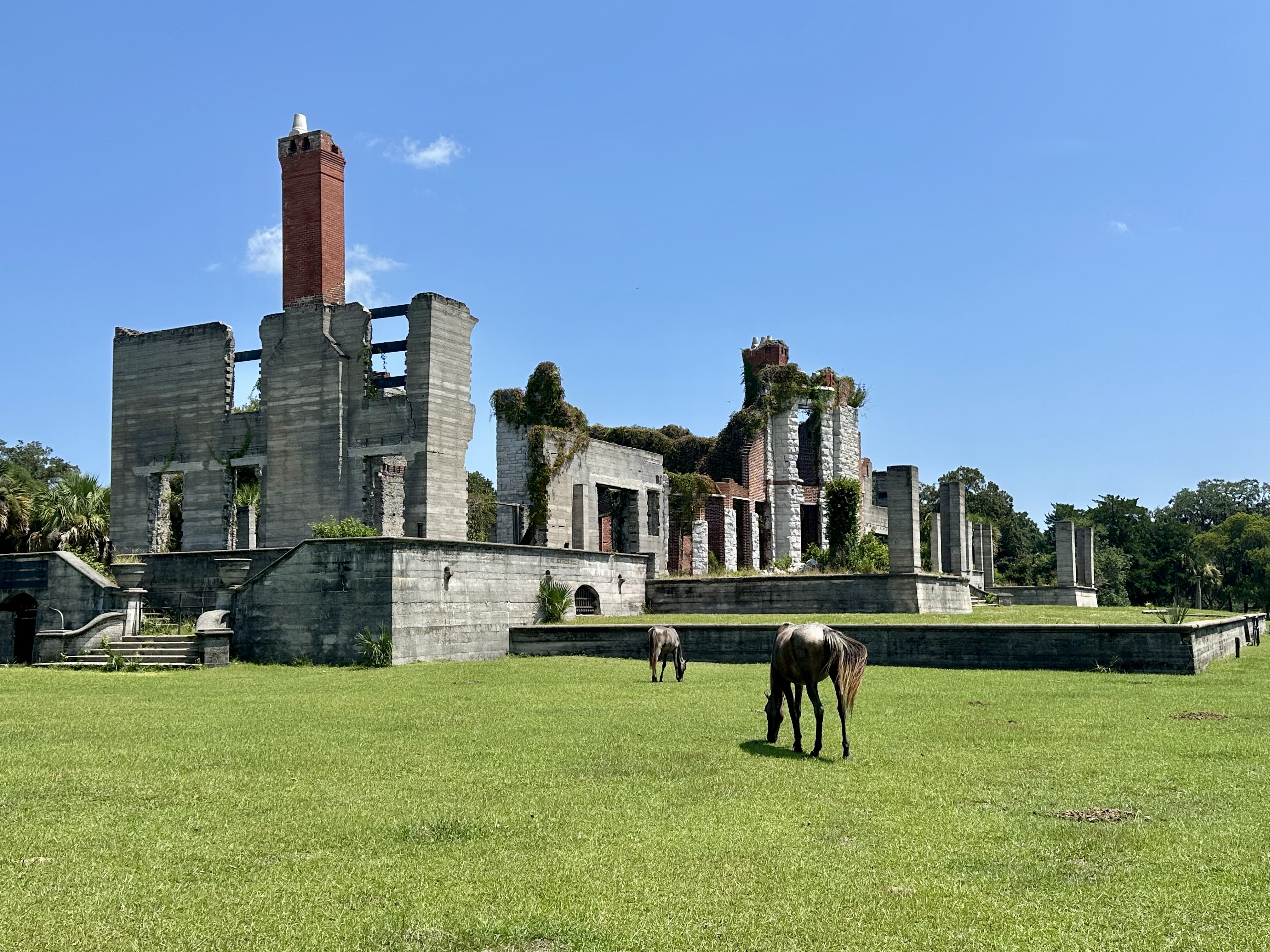
Wild horse on Cumberland Island, GA
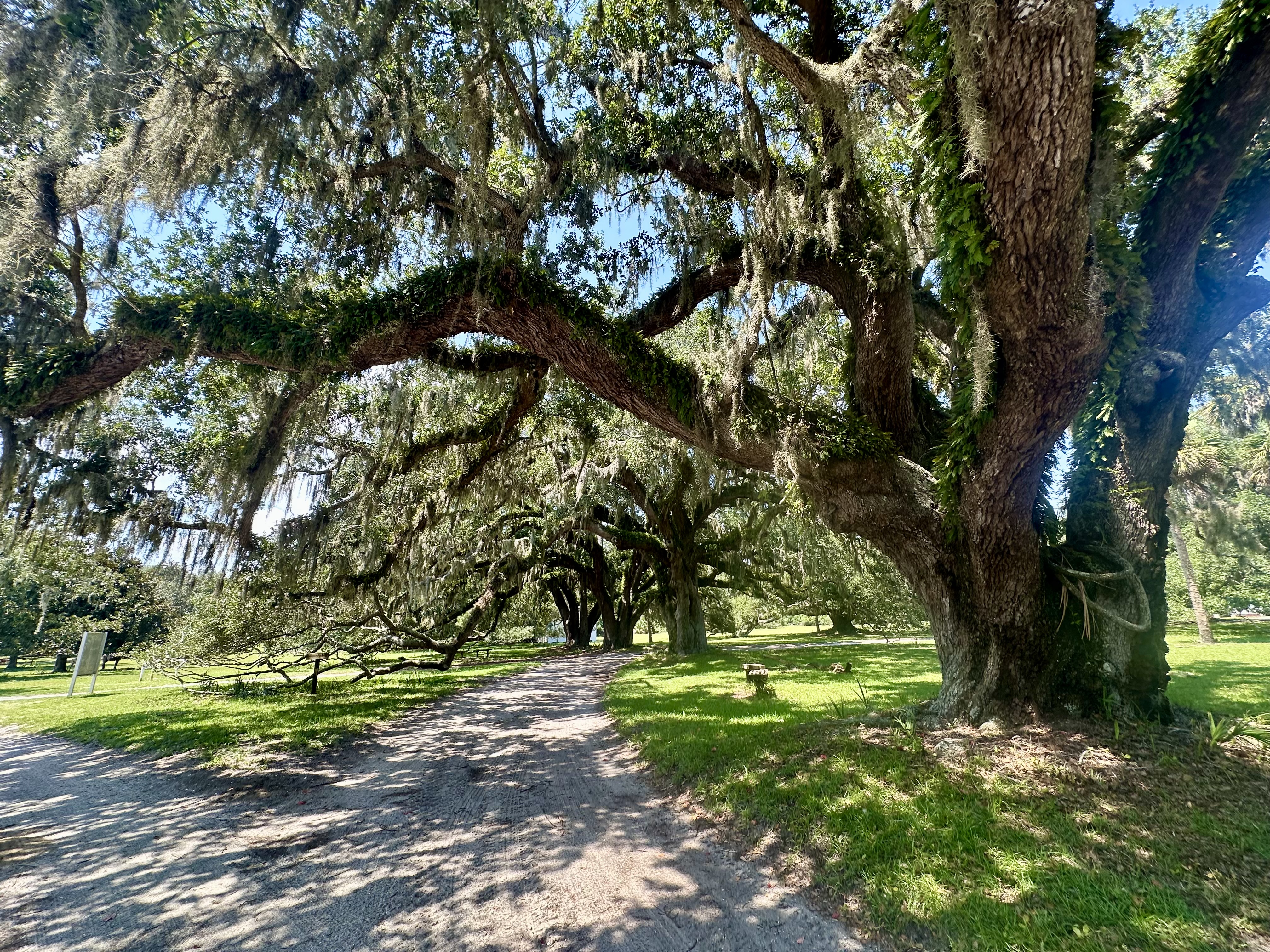
Oak trees Cumberland Island, GA
Dungeness was built by Thomas Carnegie and his wife Lucy In 1884 and burned later. Today wild horses walk the grounds. Cumberland Island, GA
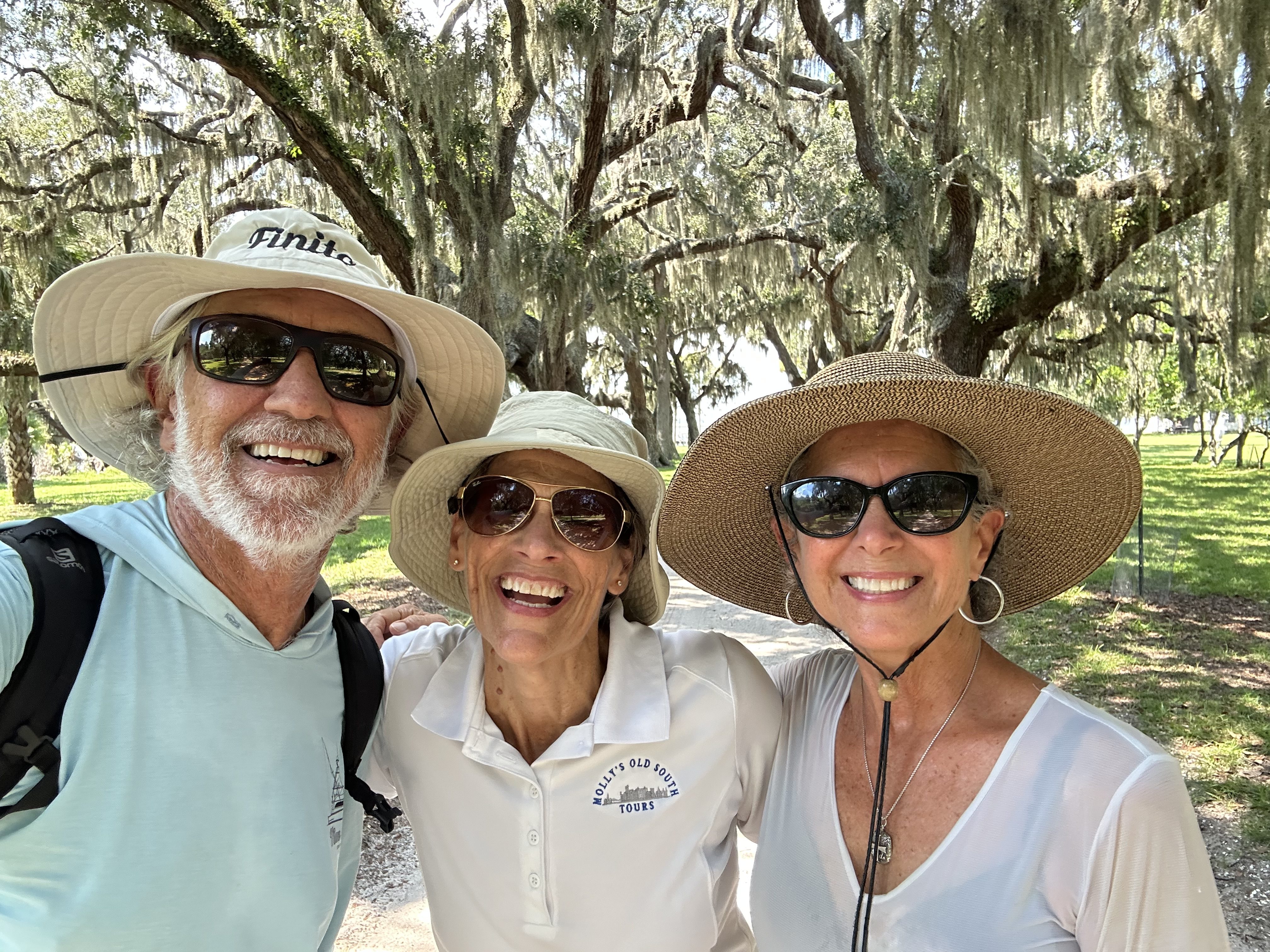
Ed and I with our excellent tour guide, Sonia, Cumberland Island, GA

So far my favorite place along the way has included Cumberland Island a federally protected national seashore between Amelia Island, Florida and St. Marys, Georgia. Although Cumberland is not part of the Golden Isles it lies just before them if you are going north on the Intracoastal Waterway.

Today, we will stop at Sunbury, Georgia,  once a thriving port city only second to Savannah, but now a “ghost town.” British forces captured the town, burning it down during the Revolutionary War.

The tide is coming up. Again, the only constant is change.

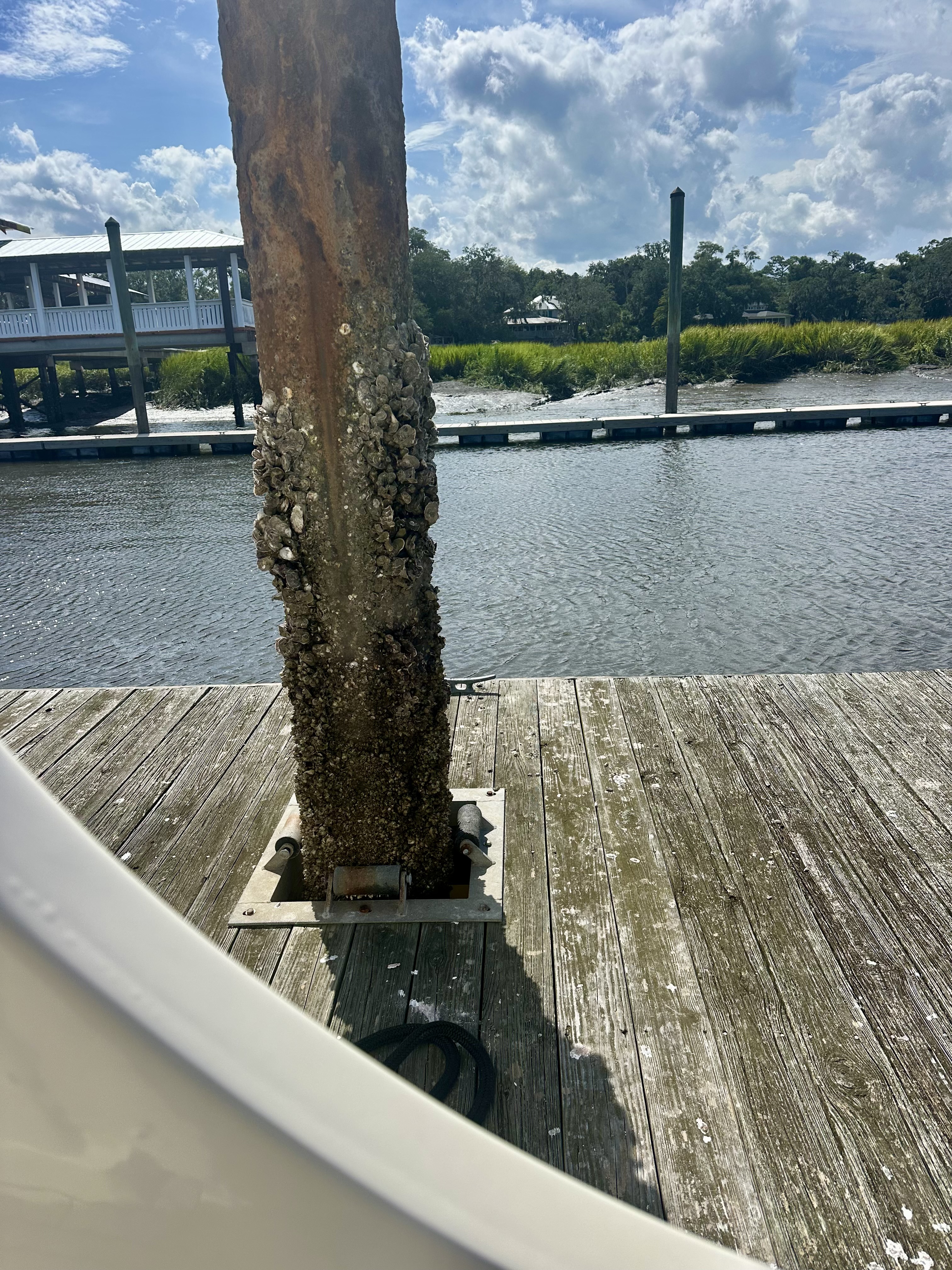
Floating dock, Sunbury, GA oysters tell of tide changes…
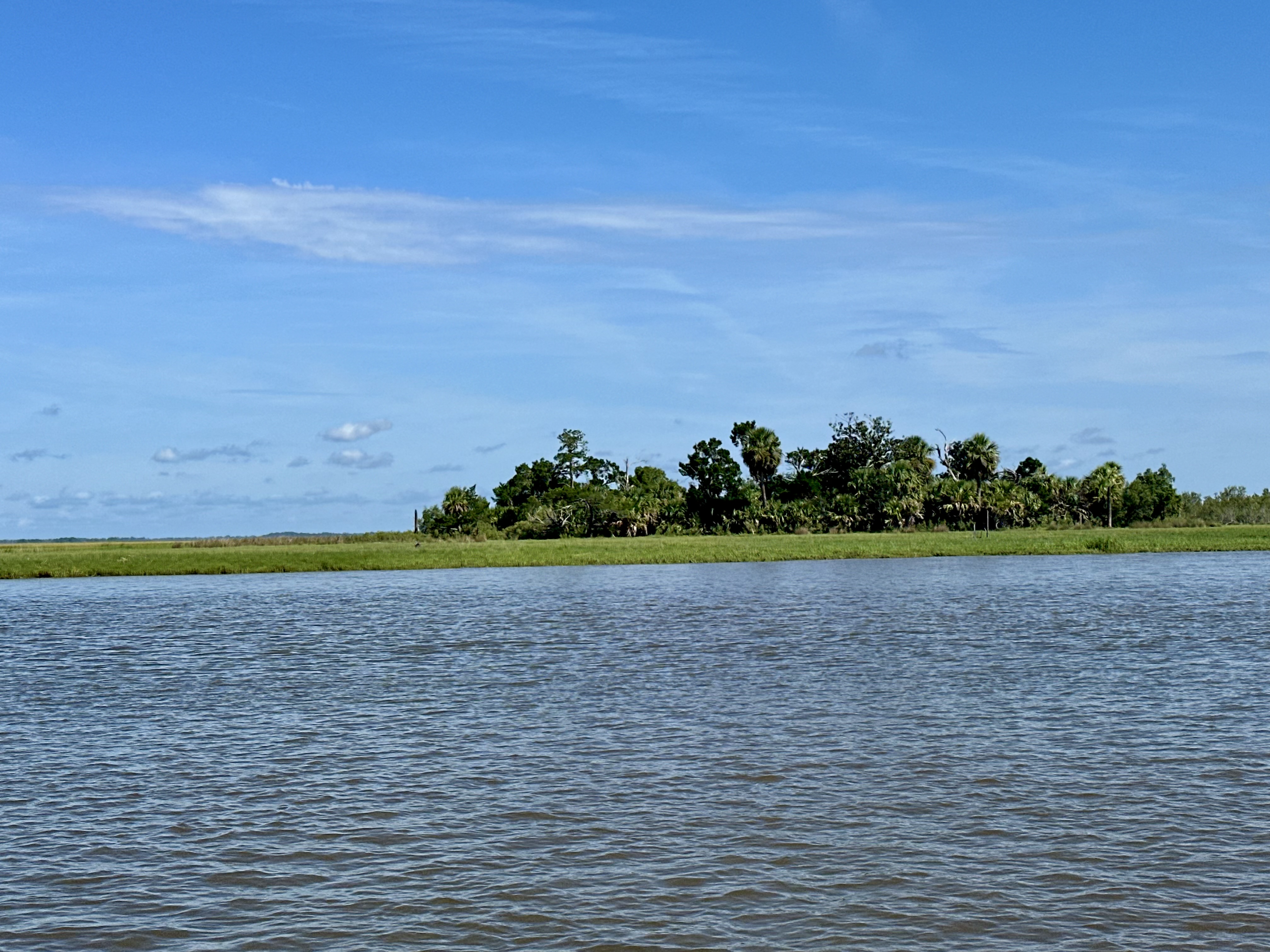
Marshlands, Amelia Island, FL
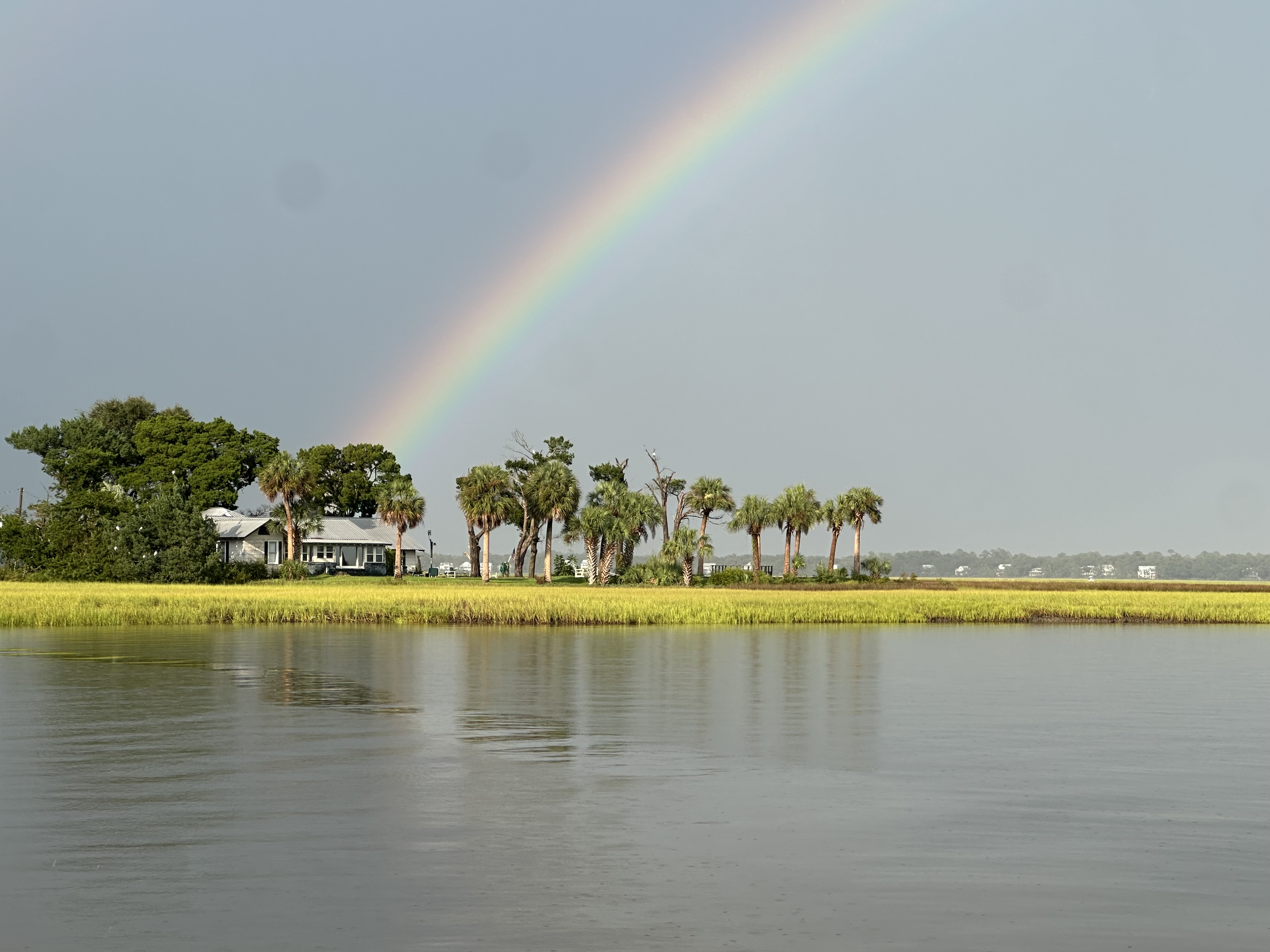
Rainbow after storm, St. Marys’, GA

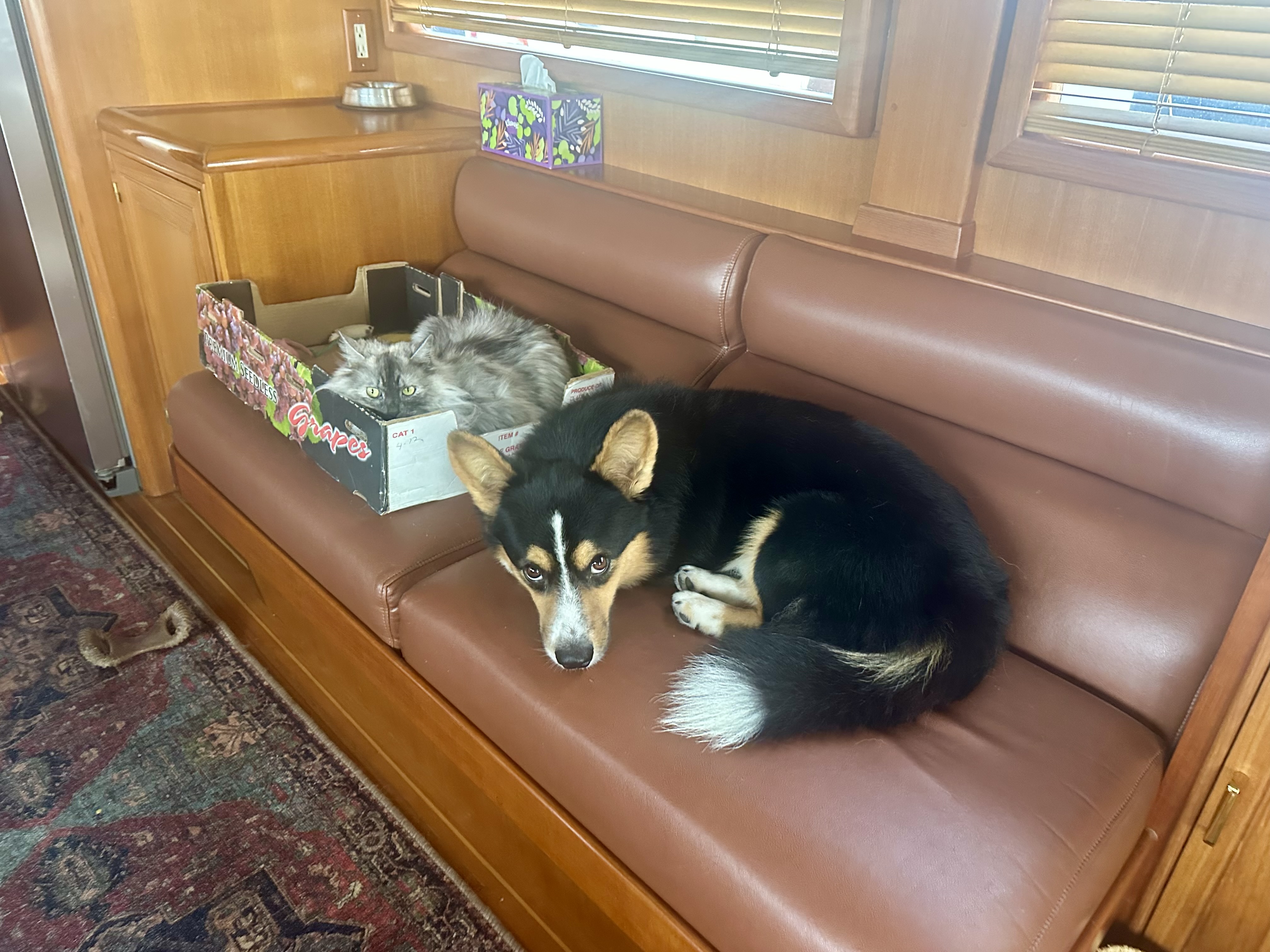
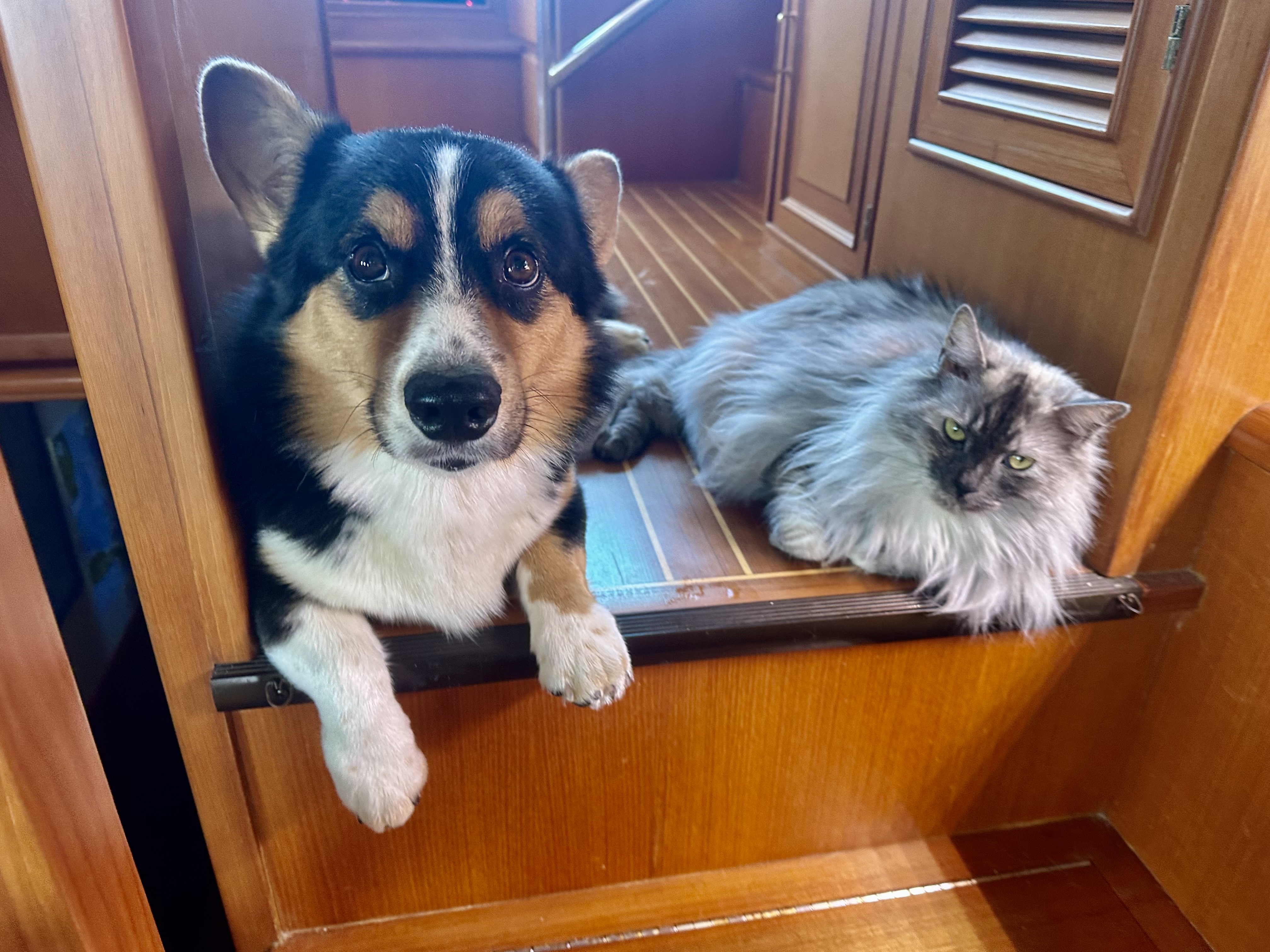
Diesel and Okee? 🙂

Okee & Diesel are great!
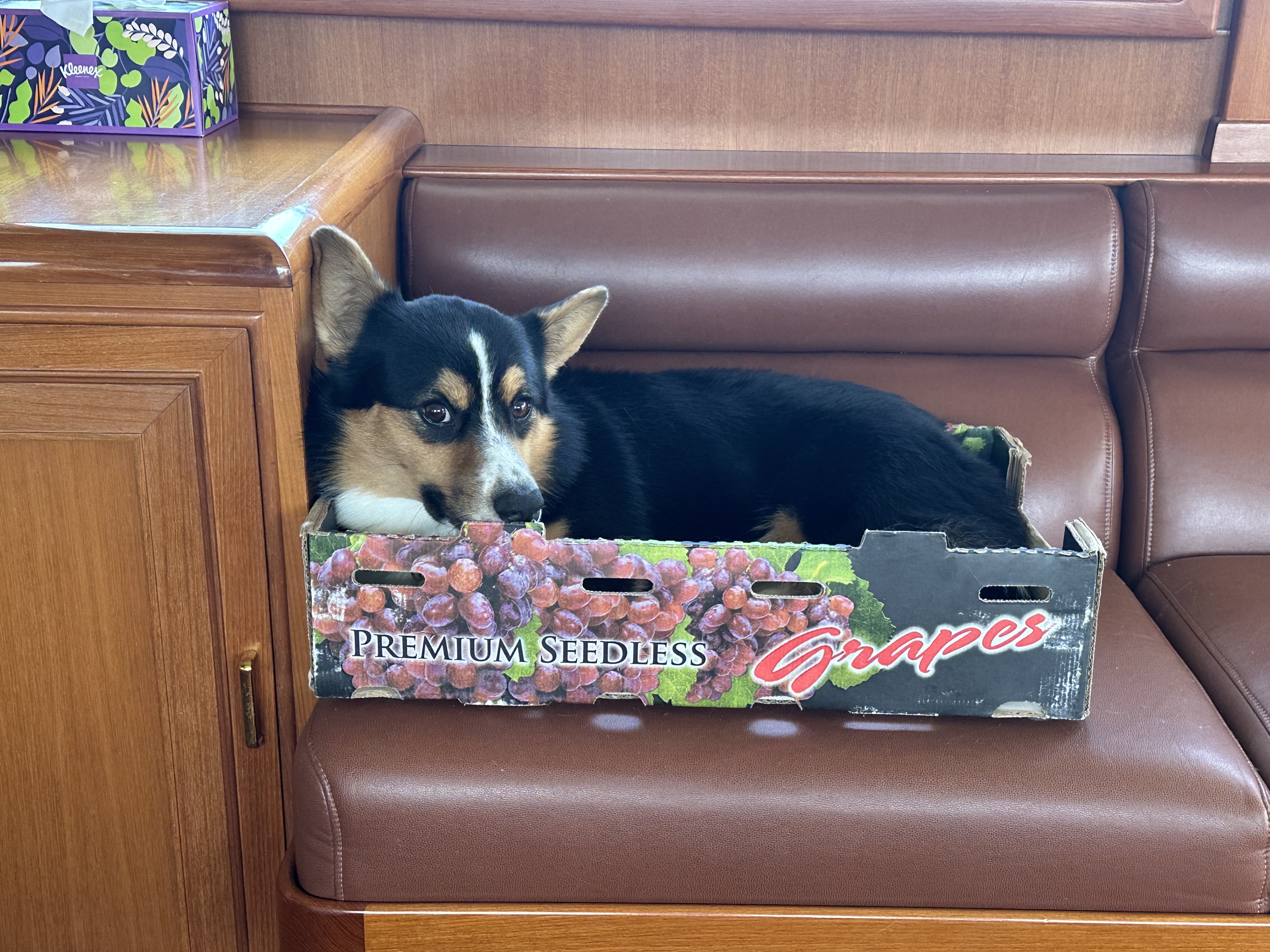
Sometimes Diesel wants Okee’s box for a change!


Feeling Crabby 🦀

New Smyrna, FL

Boating often starts out like this. Ed and I are traveling on our trawler, Finito, and beauty is all around us, but for some reason, I feel crabby.

I think it has something to do with adapting to my role as “first-mate.” It is difficult for me to take orders; it always has been. First-mate is a big job but it is not Captain. I am not in charge.

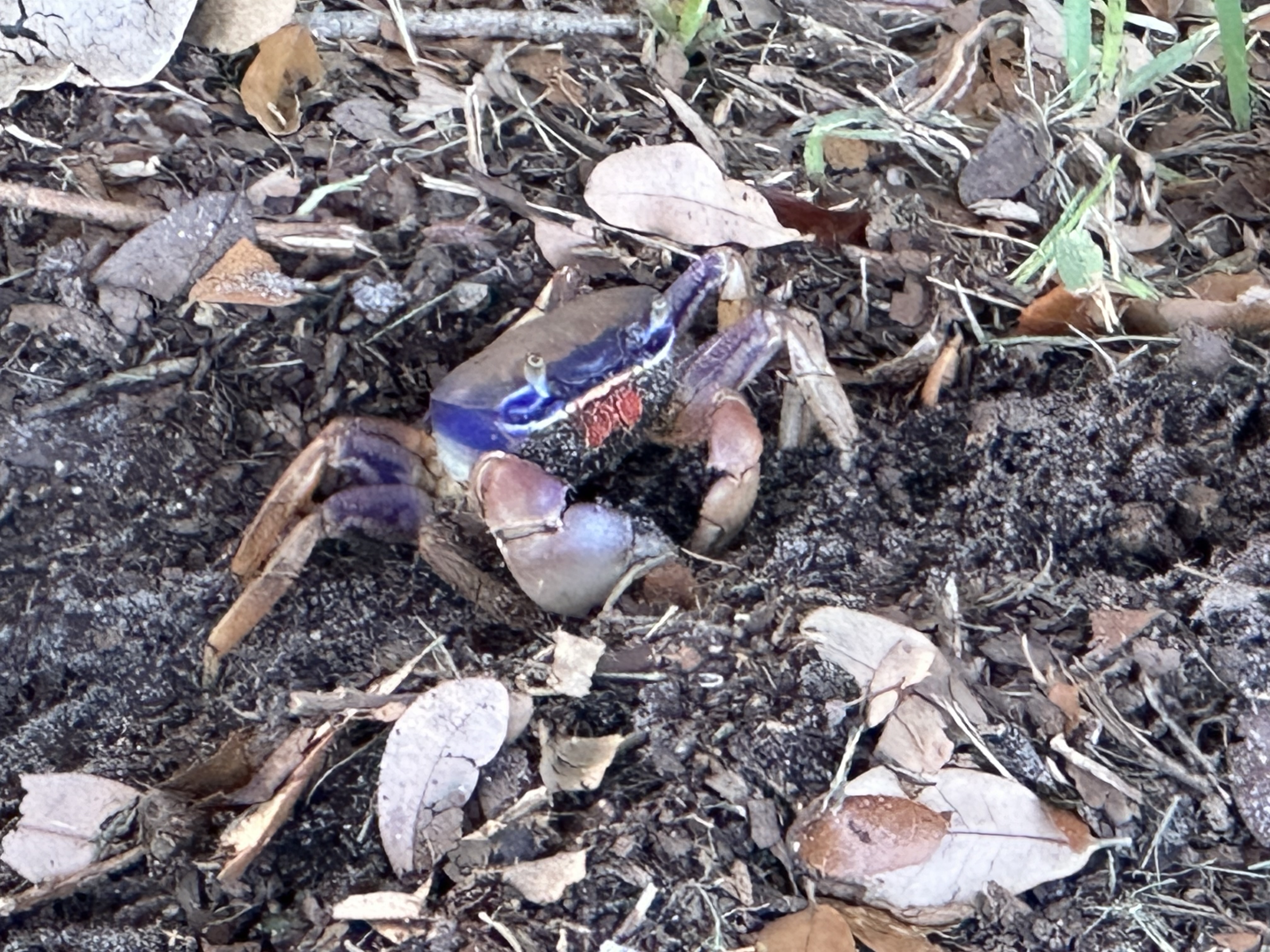
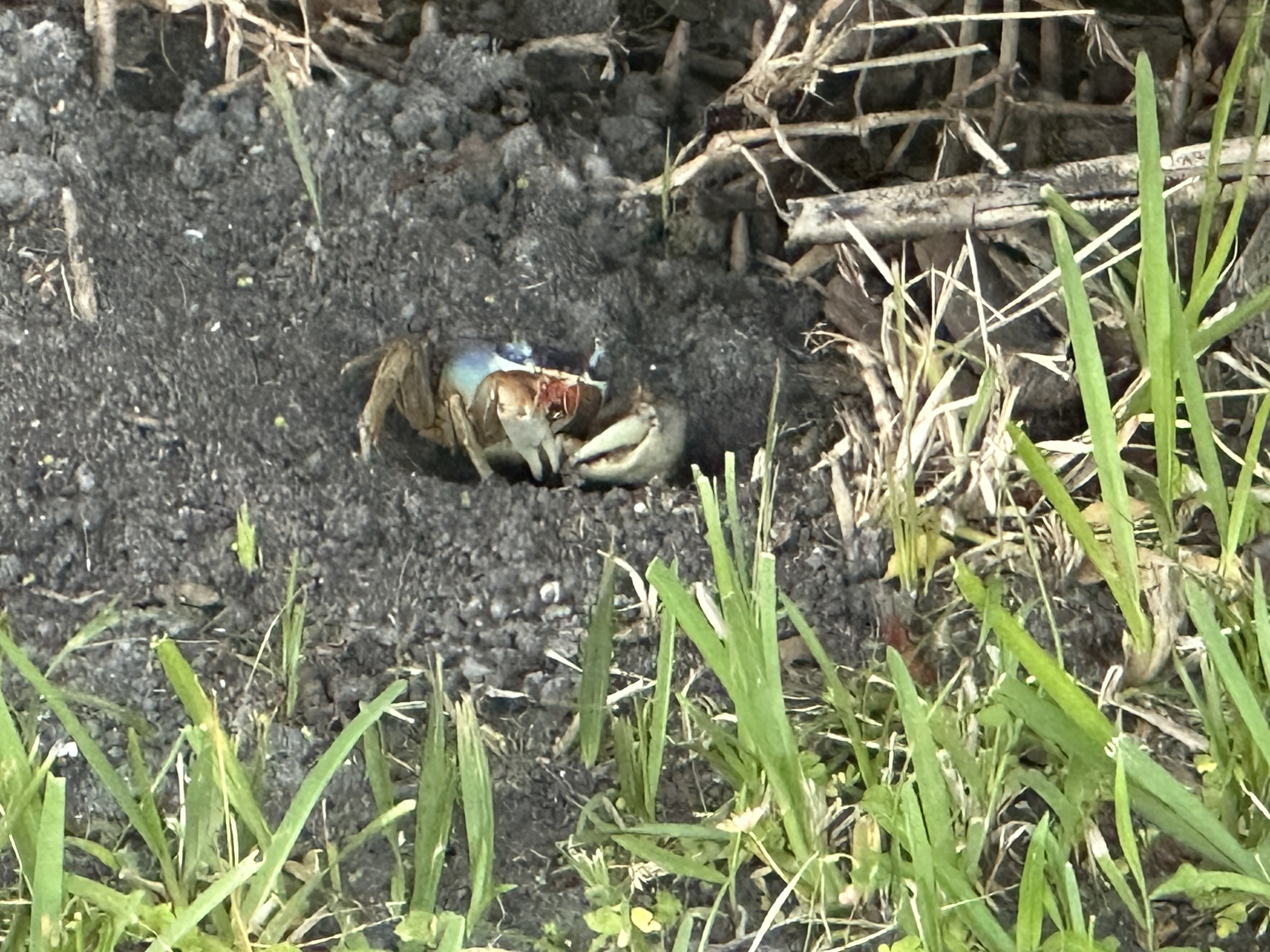
Land crab, Vero

I know that It is good to be humbled and I have been through this before, especially in 2024-25 when Ed and I took one year to complete the 6000 miles of America’s Great Loop. Thank goodness we had Luna and Okee with us. This year we have Diesel and Okee.

— Luna RIP🐾🌈

Diesel and Okee are good boaters and great companions!

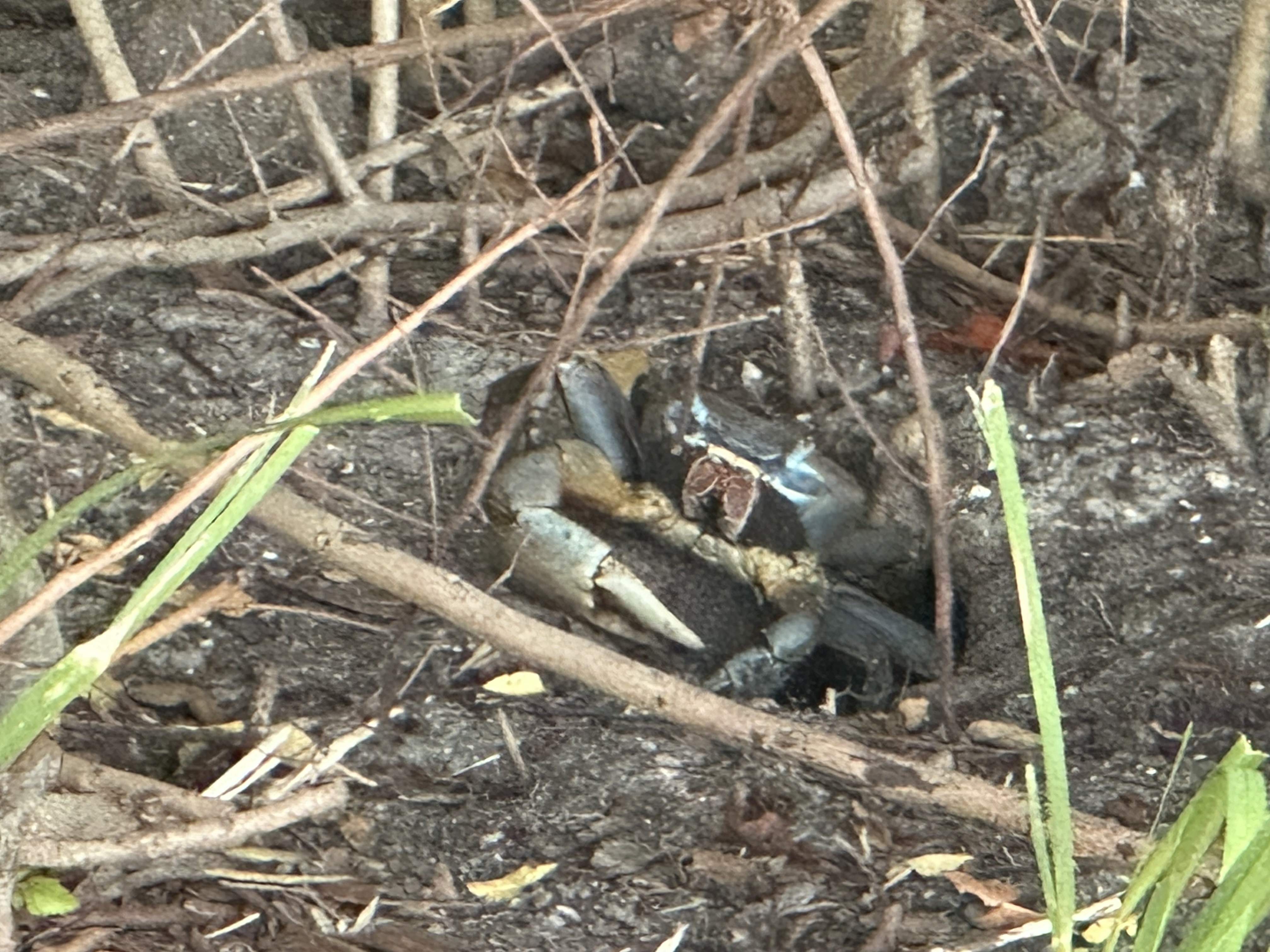
This crabbiness? I will snap out of it in a day or two, but in the meanwhile, I keep seeing crabs. I feel like Mother Nature is empathizing with me!

For instance, this morning, in New Smyrna, blue crabs were swim-dancing as they floated by- wading birds perched on boat transoms trying to catch one for breakfast.

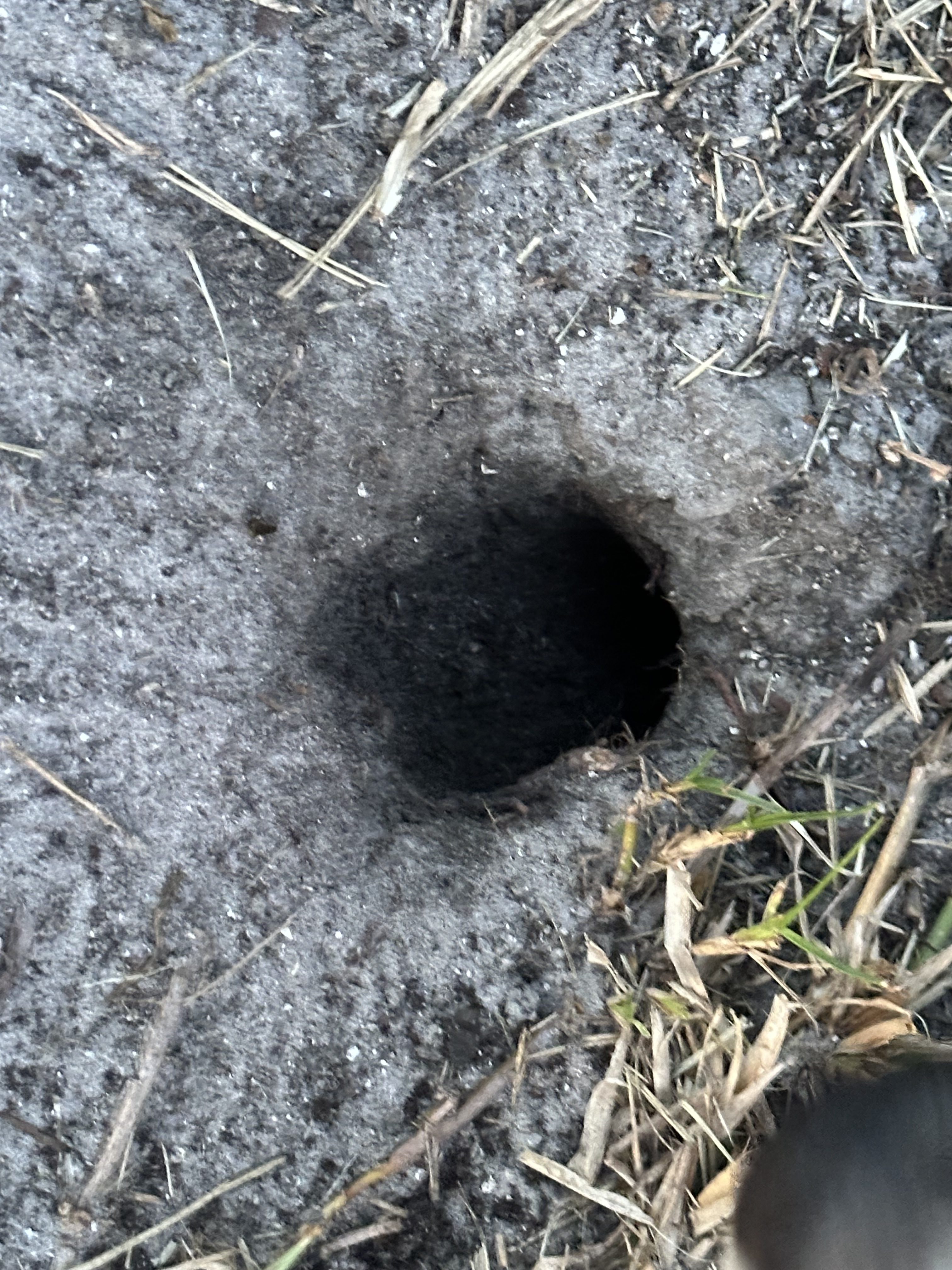
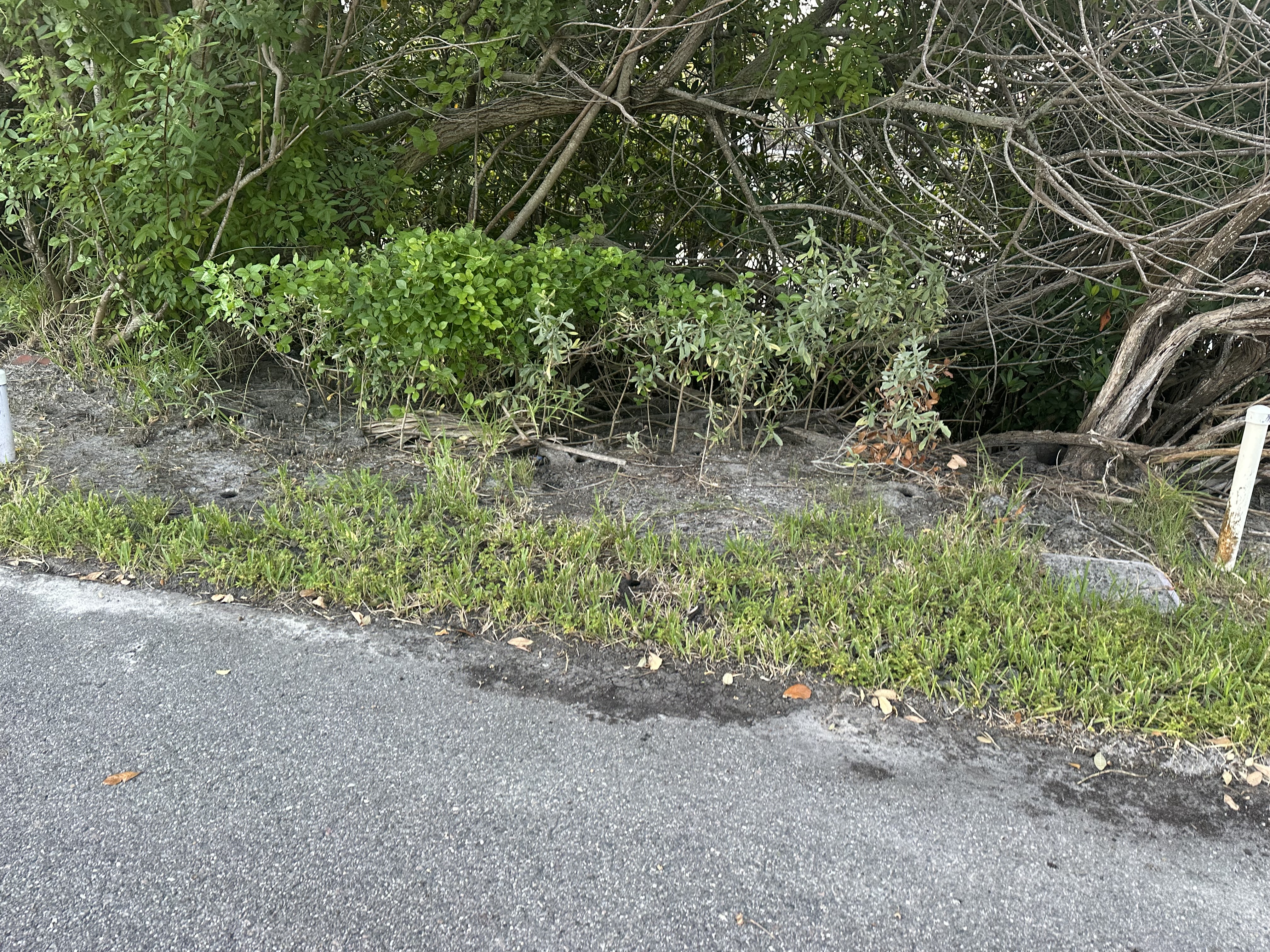
At our first stop along the Intracoastal, Vero Beach, there were magnificent oak trees, a book exchange, pin fish breeding by the docks, and a 5-acre dog park. When I was walking Diesel, I noticed a beautiful orange and blue land crab trying to make a life among floritam grass and expansive pavement. It ran into its hole as we approached. It made me recall as a girl growing up in Stuart when thousands of land crabs would make their way from the mangrove swamps and rivers’ edges to the ocean. What a sight to see!

Over the years in Martin County, AIA along Hutchinson Island was developed, mosquito ditches expanded, roads widened, and condominiums replaced dunes, and mangrove swamps were filled in for more condos or million- dollar homes. Eventually, it became all but impossible for the land crabs to make their annual migration to the sea . This is a non negotiable for the females as they must deposit their eggs in the ocean.

While following their urge to procreate they had to cross the highways and roads. They were crushed by cars – by the hundreds and by the thousands. Over time, their habitat was almost entirely gone and few crabs survived. But no person seemed to care. “They’re just crabs….and who cares about the food chain! ”

The Florida Wildlife Commission limits harvest but does not close roads as is the case in Australia’s Christmas Island that has made a tourist event of their amazing land crab migration.

I think this attitude of man over nature is the basic problem with our society, instead of trying to live with especially non-charasmatic native species, or at least protecting them in a humane way,  we often opt for just plowing them over…

Anyway, I better stop, I know I’m sounding “crabby.”

Land crab in New Smyrna

After Vero, Ed and I also stopped in Cocoa Village, another favorite, because of their awesome historic downtown. But like the land crabs one has to navigate two major highways to get to the downtown, praying the whole time that someone missing the light after coming down the bridge doesn’t hit you at 50 miles an hour. Ed, being impatient, ignores the WALK signs and jaywalks — with Diesel training behind. Me? I can’t do it. I wait. I am a cautious like a crab…

I actually am a crab if you believe in astrology. This ancient star-language of the Babylonians, the Greeks, then the Romans says that because my birthday falls on June 29th, my zodiac sign is Cancer- the crab🦀

“Represented by the moon, cancer is a cardinal water sign known for deep emotional sensitivity, strong intuitive abilities, and a fierce dedication to home and family. Weaknesses include being moody, overly sensitive, defensive, and prone to clinging or isolation. Just like a crab with a hard outer shell and a soft interior, Cancers project a tough or cautious exterior to protect their sensitive soul.”

Goodness! That sounds about right!

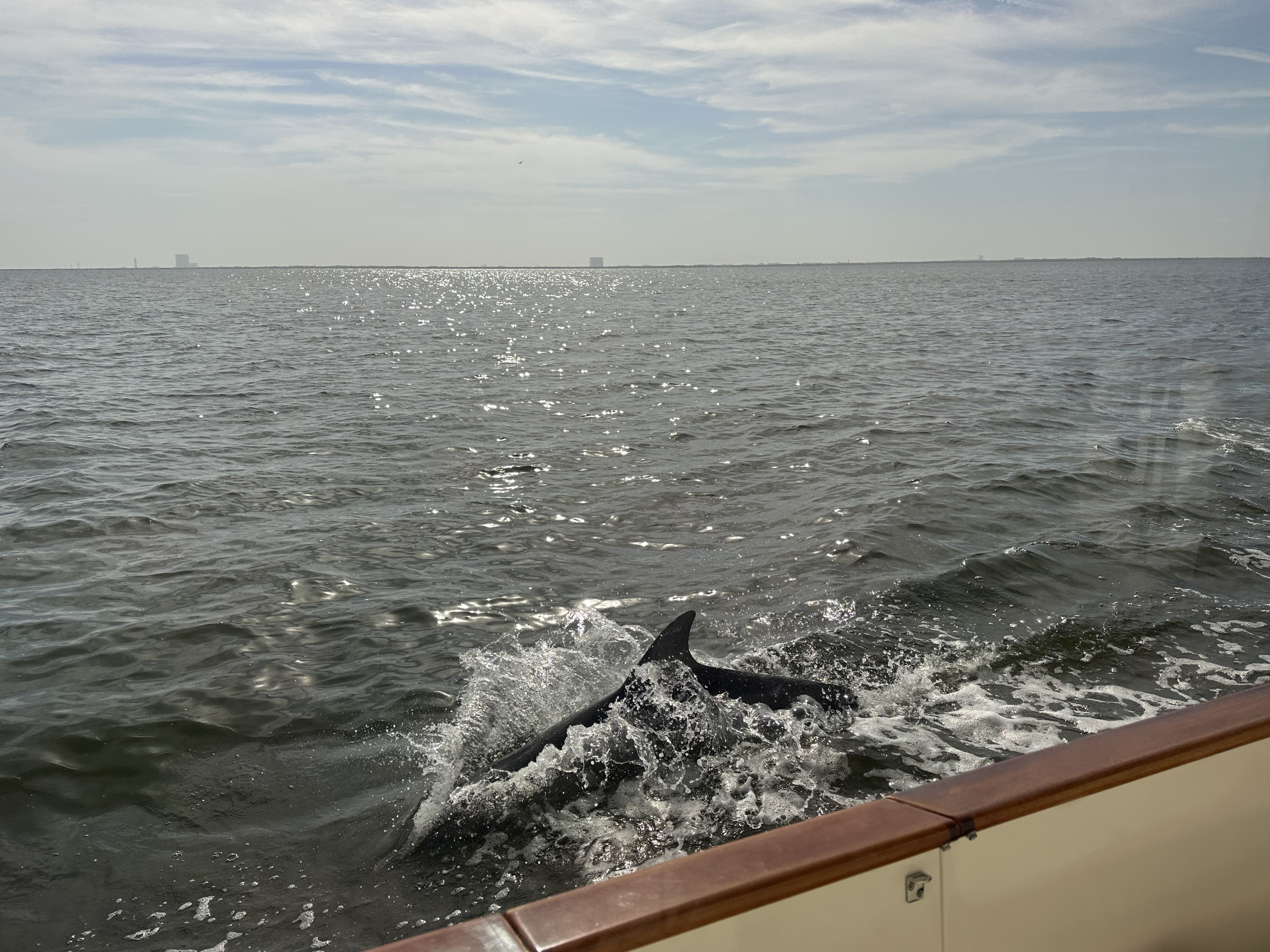
Bottle-nosed IRL dolphins welcome us to the Space Coast!
Liftoff over the IRL 8-15-26

At Cocoa Village Marina we were welcomed by bottlenose dolphins and witnessed the Space-X liftoff across the Indian River Lagoon at Cape Canaveral. It was amazing. Inspirational really. But I did wonder how many crabs and other animals got burned up or sprayed with chemicals at the liftoff site located on the Bannana River – part of the Indian River Lagoon – and natural lands region of Canaveral National Seashore and the Merritt island National Wildlife Refuge. 🦀 Oh, I’m so crabby!

Next we stopped at New Smyrna Marina only a few files away from the Turnbull Settlement of 1768 where over 1200 people from Menorca, Greece and Italy worked as indentured servants on an enormous indigo plantation until they rebelled for being treated like slaves half dying and half walking to St. Augustine to plea to the British Governor for refuge which was granted. I guess they were feeling crabby too! 🙂

As I look forward, I see the Halifax River and St. Augustine lies ahead. Maybe I can convince my Captian to take a break and eat Greek food? Then I’ll be as happy as a clam!

Drought, Doubt and Florida Bay

Dead seagrass in the shallows  of Florida Bay, Flamingo, Everglades National Park, FL 6-26.
Mangroves along Florida Bay are packed full of dead seagrasses, even so, I smile for the camera to alleviate the continual mosquito attack, June 2026. Photo Ed Lippisch.
Hardened shoreline and unhealthy looking waters of Florida Bay, Flamingo, ENP, June 2026.

As I write, the skies above me are electrified. Thor is throwing bolts angrily and I am wondering if my ancient oak trees might get struck. Rain is coming, again, to Martin County, Florida. Martin has been fortunate this year to receive these waters from Heaven while much of the state has not.

On my recent trip with my husband Ed in June to Florida Bay, the waters  looked thick and chalky. There were no manatees floating about lazily as in years past. Dead stinking seagrasses lifted from the bottom packed and covered the shoreline. Not a pretty sight.

As we all know, years ago, in an effort to develop our state, humans broke the flow of water flowing south from Lake Okeechobee to the Everglades, channelized the serpentine Kissimmee, and dug out multiple other canals to drain the state. The Buttonwood Canal connecting Coot and White Water Bay in Flamingo was one of the worst, injecting salt water into fresh and not allowing fresh to run into saline. A concrete barrier separates the two. The fallacy of this becomes especially evident during drought times.

According to the South Florida Water Management District’s DROUGHT IN SOUTH FLORIDA 2000-2001 “drought visits North America almost every year in some part of the United States and in nearly every decade. In Central and South Florida several droughts were reported:  in 1932, 1955-1957, 1961-1963, 1971-1972, 1973-1974, 1980-1982, 1985, 1988-1989, 1990, 2001-2001” and in 2011 the Boyer Survey, an Archaeological Investigation of Lake Okeechobee was conducted as the lake was so low ancient Indian burial grounds were exposed.

Drought visual FL, July 7, 2026.

Always, south of Lake Okeechobee is one of the most important areas for wading birds. This year it has been very dry, not good nesting conditions, as shown in red by the US. Drought Monitor for Florida.

The sun does shine though…

Much good work has occurred since the 1970s trying to improve Florida’s water disconnect and in wet years so long as the rain “falls in the right place” water can be sent south to Florida Bay. But in years like 2026, there really was not enough water to send as is reflected in this July 9th SFWMD chart as presented at the Governing Board Meeting. Not to mention the thirsty and politically savvy sugar fields are unquestionably first in line with permits, political contributions and history ….

SFWMD chart reflecting water sent south. 2026 so far is not much.

But there are alternatives….

Gil Smart and Eve Samples of Vote Water and Friends of the Everglades located in Stuart have been politely presenting a theory, really an old theory in new form. Their RESCUE THE RIVER OF GRASS campaign advocates for the public acquisition of at least 100,000 acres in the Everglades Agricultural Area for storage, treatment and to send clean water south to Florida Bay.

Of course the EAA Reservoir, which I completely support is the “crown jewel” of Everglades Restoration and the DeSantis Administration has done great job keeping this fire burning and funding this hard fought necessity. But I am worried that when this administration turns the page in November, that “the powers that be” could highjack the EAA Reservoir to service agricultural needs over sending water south to Florida Bay – the Savings Clause.

Maybe I’m paranoid? Maybe I’m afraid history will repeat itself?Maybe I’m right?

As we turn the corner this General Election, let’s keep our eye on restoring the River of Grass and the EAA Reservoir and all the politics that surround it. We have to.

An osprey perched above  Florida Bay looking  for fish…


The Best Fruit Stand in North America, “Robert is Here”

“Gateway to the Glades” Robert is Here Fruit Stand and Farm Est. 1959.

On our recent trip to Everglades National Park, Ed and I stumbled upon what I consider to be the best fruit stand in North America. On our American Great Loop Journey, Ed and I visited quite a few, but none compare to this. The name of the stand is “Robert is Here”  and it’s located in Homestead, Florida. If you want to visit, I’d go now as Robert’s is surrounded by conspicuous newly constructed  apartment buildings in just about every direction. As they used to say at the South Florida Water Management District, “houses, the final crop…”

Apartment buildings can be seen encroaching from every direction. Here just across the street

Ed and I stopped by on our way back to Stuart from fishing in White Water Bay. We’d noticed the fruit stand coming in, in fact I’d seen it multiple times over the years, but I’d never stopped. Ed is always in a hurry to get home…

“Hey Ed, for my birthday, let’s stop at this fruit stand”. He threw me a glance, then smiled, he knew he had to capitulate.

It was a Sunday and people were swarming the place. Finding a parking place was not easy. Once inside, we understood why. It was amazing!

There were tropical fruits of all kinds, some the size of footballs. Apparently Robert, standing behind the cash register in the photo below, established the stand by himself in 1959 when he was just six years old. His father, disappointed that little Robert had not sold the cucumbers given him, constructed a sign to accompany the boy at the table. The sign read: “ROBERT IS HERE.” By noon, all of the boy’s cucumbers were sold, and as they say, “the rest is history”.

Robert who started the fruit stand in 1959, stand behind the counter today. He added up what we bought on a paper bag and did the math in his head. Pretty cool!

The same corner little Robert stood on in 1959  is today the best fruit stand in North America..along with a petting zoo, wood carvers, artist, and specialty vendors. Like a time warp, one is transported back in time when Florida was Florida. So refreshing!

Jackfruit is the larges tropical fruit that grows on trees and can read 80 pounds.
I think this fruit is a sapodilla. It tasted like kind of like a pear and the flesh was a beautiful color.
Robert obviously bought up more than the corner, and today the fruit stand covers much land featuring artists and a petting zoo. Robert’s last name is Moehling.
The zoo included a number of emus of which the public, mostly joyful little kids, could feed fresh watermelon!

I cannot imagine that this iconic South Florida fruit stand, the best in North America, would ever be sold and turned into characterless apartment buildings, but in Florida, who knows. It seems in the present state we’re selling our soul for a bunch of houses.

Hand out available at check out
Inside cover


Afraid of Mosquitoes? Not me! Let’s go fishing! Everglades National Park

Ed and I were attacked by an army of mosquitoes at the entrance to Everglades National Park. 🙂

Ed asked me what I wanted to do for my 62nd birthday. My immediate reply was “Let’ go to Everglades National Park”!

In order to entice him, I even promised to go fishing, something I usually do not do as I feel sorry for the fish. “We’ll throw them back,” I laughed. I’ll learn to identity them. It will be fun”!

The traffic was brutal, but we made it there from Stuart to Flamingo, the resting place of Guy Bradley, who in 1902 became Florida Audubon’s first game warden tasked with protecting wading birds. Of course he was shot and killed after confronting a man and his two sons hunting egrets for their plumes. At the time plumes were worth more than gold. Warden Bradley and others like him changed the course of environmental history – with their lives. Many do not remember him today, but rather focus on enjoying the natural resources of the area.

Guy Bradley’s memorial, Flamingo, ENP.
Repurposed steel shipping containers provide a very nice hotel experience at Flamingo, ENP and have a beautiful view of Florida Bay.
View of Florida Bay from our lodge room.

Ed and I were pleasantly surprised by the quality of the lodge.  Repurposed steel shipping containers make for a great stay. Very clean, functional and affordable, Ed and I plan to return.

Carolina Skiff rented for the day provided a fun day on the Buttonwood Canal, Coot Bay and spectacular White Water Bay.
Ed practicing his casting on White Water Bay.
Ed teaches me how to tie a special knot.
I drove the boat. Captian for the day!

It was in the 90s , but with a breeze the mosquitos were in our wake. In the early morning Ed and I took to the water. I captained the skiff  and Ed practiced his fly-fishing.

So hot! Water so still! Not a one fish bite, but believe it or not, a school of mullet jumped into the boat!

Mullet jumped in the boat!

Ed asked if I wanted to cut them up for bait. “No”! I said, and we returned them to the water to reunite with their friends.

Smiling from ear to ear, I recalled the stories of the late Ernie Lyons, Editor of the Stuart News, who wrote about St. Lucie River’s early days when there were so many fish in the river they jumped into your boat.

“Ed we’re just like Ernie Lyons!” I teased. Ed rolled his eyes.

The mangroves provide habitat for crocodiles and many other birds and animals.
Crocodiles are salt water reptiles and prevalent in ENP.

As we approached the shoreline, I saw the crocodile. So ancient, so wise, so intimidating. I slowed down to be careful to go around him and thought of all the changes his kind have seen in 240 million years.

Harbour Master, Reuben, welcomed upon our return.

Returning after a great day, Harbour Master, Reuben provided excellent service helping bring in the skiff. As I stepped out of the boat, I asked about the gigantic osprey nest still ominous and hanging.

“This year the female osprey returned as she has for many years. She called and called and called, but the male did not return. You know they mate for life,”  Reuben said. “She was crying for over a month. But nothing, no mate, no chicks. We really miss them; they are like family.”

“So sad.” I replied….

I looked at Ed and thought about how lucky I am that he always comes home.

“Hey babe, do you want to get a drink”?

Osprey nest at Flamingo. No chicks in 2026.

We made our way to the Flamingo Lounge and Restaurant right next to our cargo lodge room, ordered a couple of vodka tonics, telling fish stories about the tarpon we will catch next time! 🦟

The Flamingo Lounge and Restaurant although redone, remains a classic.
Flamingo Lounge, a classic….

Flamingo Tours, Everglades National Park

Mosquitoes? I’m not afraid! Let’s walk the Guy Bradley Trail, Flamingo, ENP.